The 10 Best Electric Cord Reels
Updated by · How we research

Ceiling-mount, crank and compact reels compared by gauge, amps, length and breaker. The Dewenwils 50 Ft. 14/3 suits most garages; a 12-gauge reel runs saws. When users buy our independently chosen editorial picks, we may earn commissions to help fund the Wiki.
Most cord reels are rated for a cord pulled all the way out. Leave loops on the drum while a compressor or saw runs, and the wire can't shed its heat. So match the gauge to your heaviest tool and buy enough length to unspool fully. This list covers ceiling-mount garage reels, portable crank reels and compact household ones.
At a Glance


Editor's Notes
October 26, 2026, by Ezvid Wiki Editors:
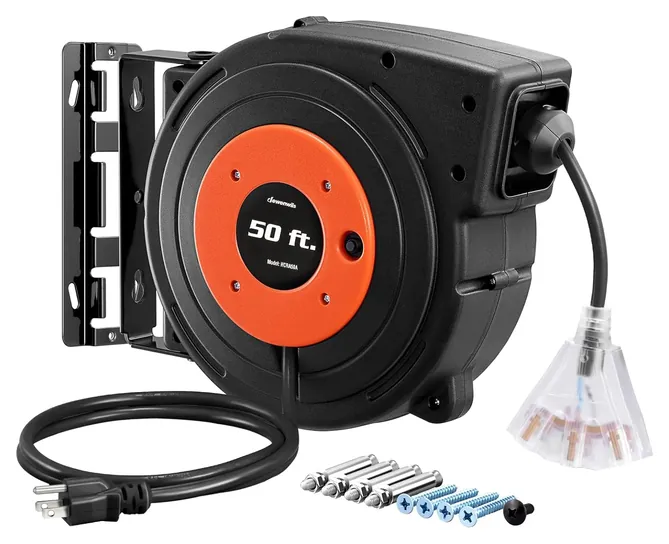
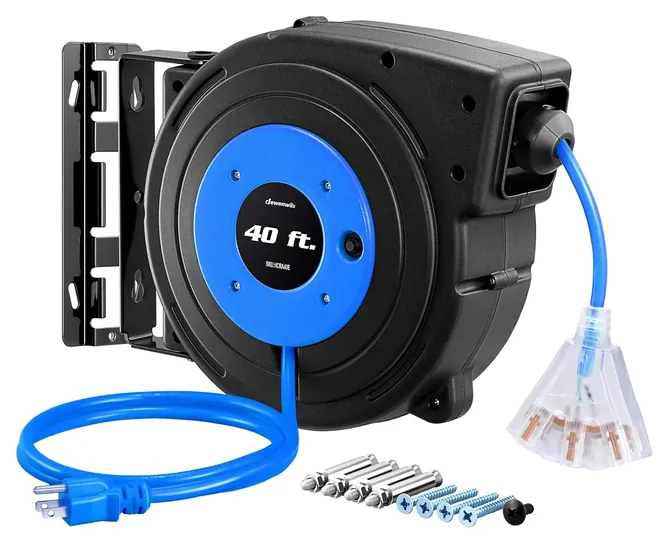
The Dewenwils 50 Ft. 14/3 is the new pick for most garages. Its 14-gauge cord is heavy enough for everyday shop tools, and it reaches around a parked car. For saws and compressors, the Dewenwils 40 Ft. 12/3 carries the thicker wire those motors want.
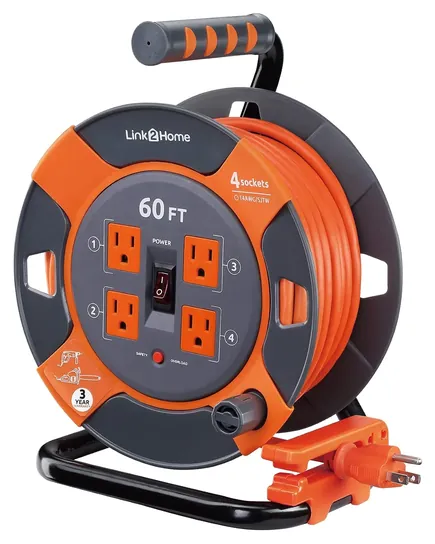
Almost nothing from the old list survived. The AlphaWorks Smart Plug and Poweradd Extension Cord weren't reels at all, and the Tacklife GCR2A, Reelworks Heavy-Duty and Goodyear Retractable are gone. Link2Home and Masterplug replaced the reels we had with new models, so the Link2Home 60 Ft. Open and two Masterplug reels come in. We dropped the Flexzilla Retractable because its short, thin cord costs about what a longer, thicker one does, and the Reelcraft and Coxreels industrial reels moved to special honors, since few home garages need a reel at that price.
What decided the order was wire gauge set against each breaker rating, the Electrical Safety Foundation's warning about running power through a coiled cord, and a pattern of owner complaints about weak return springs and ratchets that slip.
Earlier notes
January 12, 2021, by Chris Gillespie:
Choosing a suitable electric cord reel depends first and foremost on the power rating of the items you need to use it for. For regular home electronics and appliances, 16 or 14 AWG (American wire gauge) cable, such as found on the Masterplug 80-Foot should be sufficient. However, power-hungry tools and machinery will need to use a thicker gauge 12 AWG cable in order to prevent overheating, therefore options such as the Tacklife GCR2A or the Reelworks Heavy-Duty would be more suitable.
In this update, we added several reels that represent modern advancements in technology. The Poweradd Extension Cord is a compact option that, in addition to its five AC outlets, features two USB Type-A ports and a Type-C port. The Link2Home Cord Reel is a larger choice with 25 feet of cable, thermal overload protection, and two USB ports. Finally, the AlphaWorks Smart Plug boasts Wi-Fi connectivity that allows its twin sockets to be individually controlled from a smart device, and even responds to voice commands using Alexa or Google Assistant.
December 7, 2018, by Jeff Newburgh:
Added the Reelcraft L-4545 for its durability and declutching arbor. Also included the Flexzilla Retractable due to its illuminated power block and easily adjustable cord stop. The Coxreels Spring Rewind is easy to mount on walls, ceilings, and floors. The Reelworks Heavy-Duty offers an auto-guiding rewind system and is ideal for use in extreme temperatures. Included the Masterplug 80-Foot for its easy-to-store and open design. Finally, added the Thonapa TH-163CR30 for its weather-resistant vinyl covering and the Tacklife GCR2A due to its slide-mounting bracket and safety-conscious slow retracting function.
Special Honors
Reelcraft Reelcraft, based in Indiana since 1971, builds industrial spring-rewind cord reels with steel bases and rebuildable springs, sold through industrial distributors. Its L-4545 series pairs a 45-foot 12-gauge cord with a 20-amp rating, a step up for a commercial shop or fleet garage, at several times the price of a home reel. reelcraft.com
Coxreels Coxreels makes powder-coated steel power cord reels for auto shops, factories and fire apparatus, with quad-outlet boxes and replaceable parts. They cost many times what a home reel does and weigh several times as much, but they're built for daily pulls in a working shop. coxreels.com
Gauge, Length And What Your Tools Draw
Wire gauge runs backward: the smaller the number, the thicker the wire and the more current it carries without heating up.
Wire gauge runs backward: the smaller the number, the thicker the wire and the more current it carries without heating up. The Electrical Safety Foundation International puts a 16-gauge cord of 25 to 50 feet at roughly 13 amps, a 14-gauge cord at about 15, and a 12-gauge cord at up to 20. At 100 feet the numbers drop: a 14-gauge cord is good for about 13 amps, because a long, thin wire loses voltage along the way.
Reel makers print a rating that already accounts for this. The Dewenwils 30 Ft. Metal, with 16-gauge cord, is rated for 10 amps; the 14-gauge Dewenwils 50 Ft. 14/3 for 13 amps; and the 12-gauge Dewenwils 40 Ft. 12/3 for 15 amps. Check the nameplate on your hungriest tool. Drills, sanders and shop vacuums usually draw well under 13 amps. Circular saws, miter saws, table saws and compressors often draw 13 to 15 amps, so they belong on a 12-gauge reel, especially past 50 feet.
Length is the other half. Buy enough cord to reach the far corner of the job with a few feet to spare, because a reel that has to stay partly wound loses part of its rating (see the last section).
Retractable Or Crank, And Where To Mount It
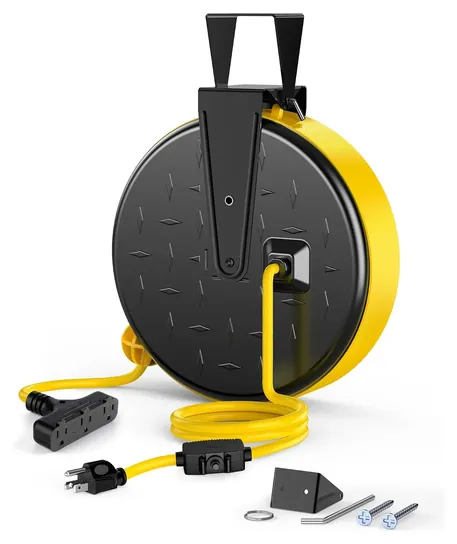
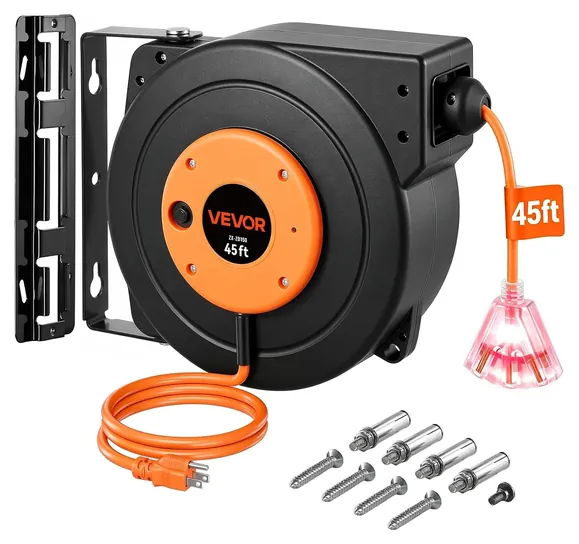
There are two kinds of reels. A retractable reel has a spring inside a closed case. You hang it from a wall or ceiling bracket, pull the cord down, and a ratchet holds it at the length you want; a short tug lets it rewind. The plug end is usually a lighted three-outlet block. It keeps the garage floor clear, but it stays where you mounted it.
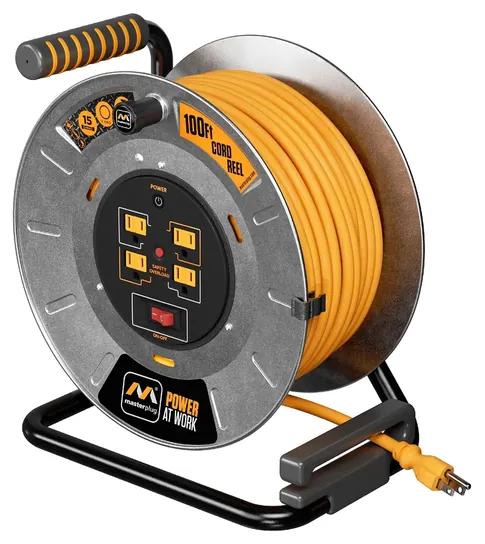
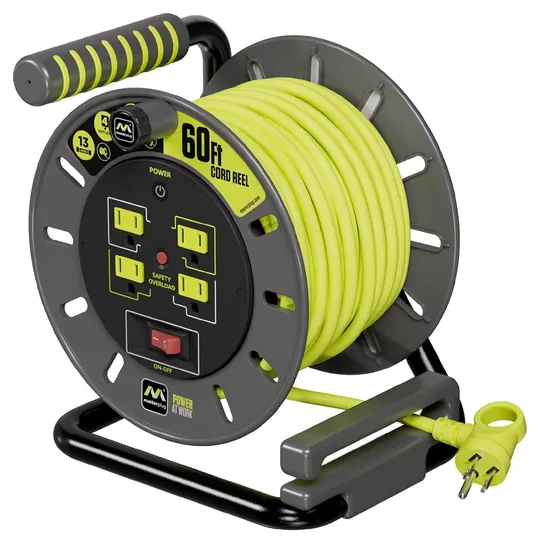
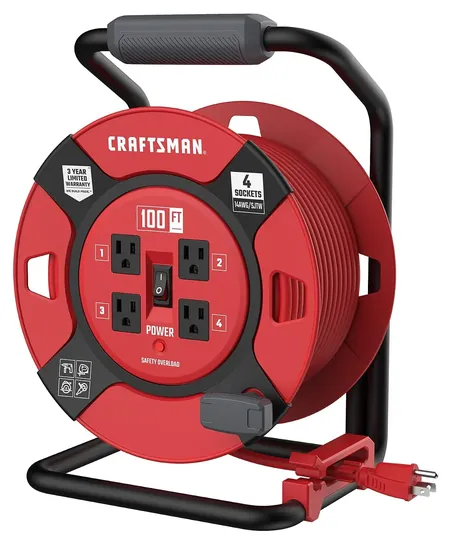
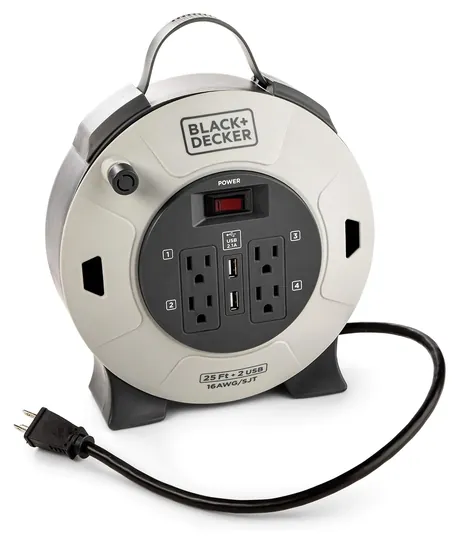
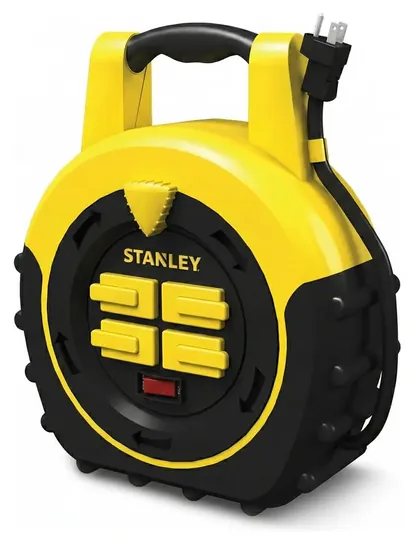
An open reel is a drum on a frame with a crank or handle, and the outlets sit on the drum's face. You carry it to the lawn, the shed or the job site and wind it back by hand. Masterplug, Link2Home and Craftsman reels work this way, and so do the compact Stanley and Black+Decker ones.
Retractable reels in the 12- and 14-gauge class weigh around 13 pounds, so screw the bracket into a wall stud or ceiling joist, not into drywall alone. Ceiling mounting over the middle of a two-car garage lets one reel reach both bays. A swivel bracket lets the cord pull out in any direction without rubbing the case. Some models, like the Dewenwils 30 Ft. Metal, have a fixed cord stop, so the plug always hangs at the same height.
Plug the reel's short lead-in cord into an outlet within reach. Don't run it through a hole in the wall or ceiling: OSHA's wiring rule for workplaces bars flexible cords from standing in for fixed wiring or passing through walls and ceilings, and the same logic holds at home.
Heat, Breakers And Safe Use
A coiled cord traps its own heat. The Electrical Safety Foundation International says never to use an extension cord while it is coiled or looped, and a reel is a tight coil. For a saw, compressor or any heavy load, pull the cord all the way out first. That matters most on open crank reels, which often get used half-wound.
Nearly every reel here has a built-in breaker that trips at 10, 13 or 15 amps. It protects against a short or a gross overload, but it doesn't measure heat building up inside a partly wound drum. ESFI also says not to plug space heaters into extension cords or power strips, and not to plug one cord into another.
Look for a safety mark from UL, ETL or CSA, which every reel on this list except the Vevor shows. Cord jackets marked SJTW or SJTOW are rated for outdoor use, and the O adds oil resistance, but the outlet blocks are not made to sit in rain or puddles. Replace any reel with a cut jacket or a warm plug. Two older reels were recalled for shock and fire hazards: a Harbor Freight industrial cord reel in 2004 and Woods Industries cords and reels in 2001. We found no recalls for any brand on this list's reels.
How we researched this
We compared 18 cord reels across ceiling-mount, crank and compact types; read the makers' gauge, amp, breaker and safety-listing ratings for the 10 finalists; used the Electrical Safety Foundation International's gauge and coiled-cord guidance; looked for patterns in owner feedback; and checked every brand against U.S. Consumer Product Safety Commission recalls. We found no independent lab test of cord reels.
Sources (7)
- Electrical Safety Foundation International: Extension cord safety
- CPSC: Harbor Freight heavy-duty portable industrial cord reel recall (2004)
- CPSC: Woods Industries extension cord and cord reel recall (2001)
- CPSC SaferProducts recall search
- OSHA 29 CFR 1910.305: wiring methods, flexible cords
- Reelcraft
- Coxreels
Frequently asked questions
Can I leave some cord on the reel while I use it?
For lamps and chargers, yes. For saws, compressors or anything that draws a lot of current, pull the cord all the way out. A coiled cord can't shed heat, and safety groups say not to run power through one.
Can I run a space heater on a cord reel?
No. The Electrical Safety Foundation International says space heaters should plug straight into a wall outlet, never into an extension cord or power strip.
What gauge cord reel do I need for a table saw?
Use 12-gauge. Most table, miter and circular saws draw 13 to 15 amps, which is at or past the limit of a 14-gauge cord, and more so at long lengths.
Can a cord reel be used outdoors?
Cords marked SJTW or SJTOW are rated for outdoor use, but the outlets are not made for rain or standing water. Use the reel in dry weather, keep the outlet end off wet ground, and plug it into a GFCI-protected outlet.
Should I mount a retractable reel on the wall or the ceiling?
Either works, since most come with a swivel bracket. A ceiling mount in the middle of a garage reaches more of the room. Screw it into a joist or stud, because the heavier reels weigh around 13 pounds.