The 9 Best Geiger Counters
Updated by · How we research

Nine Geiger counters and radiation detectors compared on alpha detection, range, logging and calibration, from pocket units to pro meters. The GQ GMC-800 leads. When users buy our independently chosen editorial selections, we may earn commissions to help fund the Wiki.
A classic Geiger counter tells you that radiation is there and roughly how much, but it can't name the source, and most pocket models miss alpha particles entirely. Normal background runs about 0.05 to 0.3 microsieverts an hour in most places. These picks suit preppers, rock and antique collectors, curious homeowners and anyone who wants a steady baseline reading.


Editor's Notes
November 1, 2026, by Ezvid Wiki Editors:
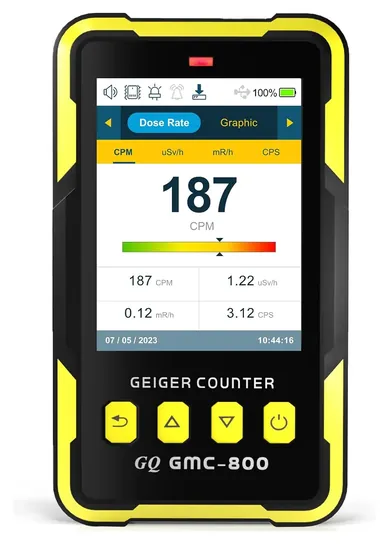
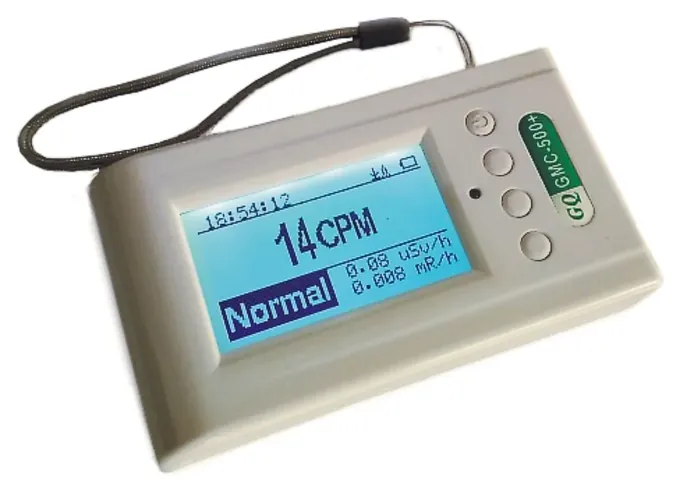
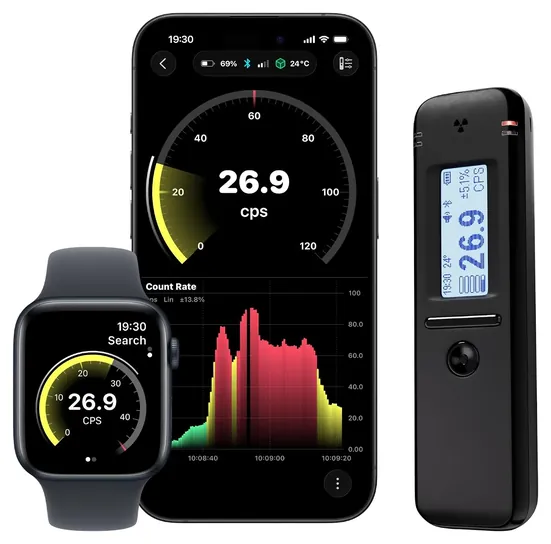
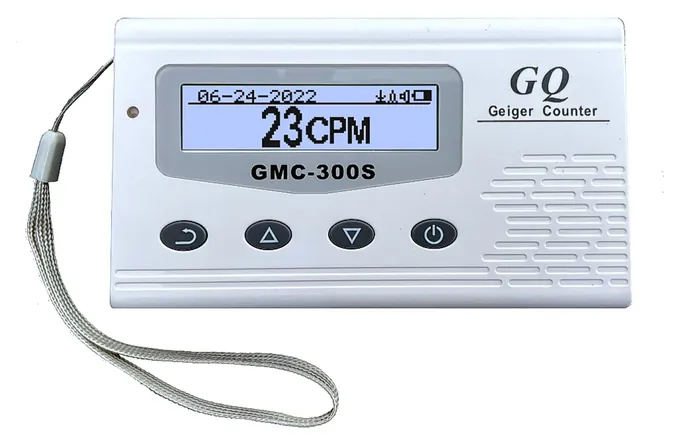
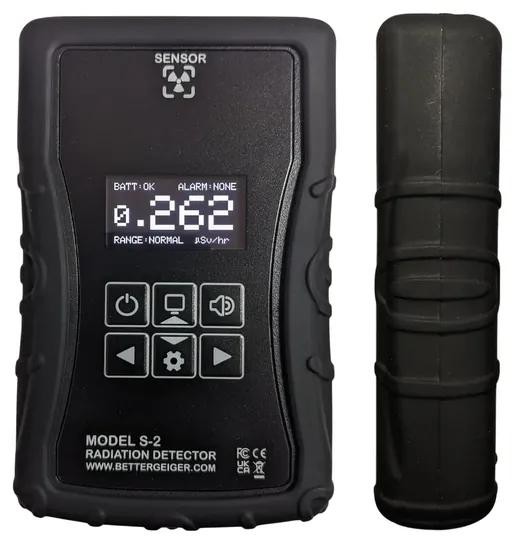
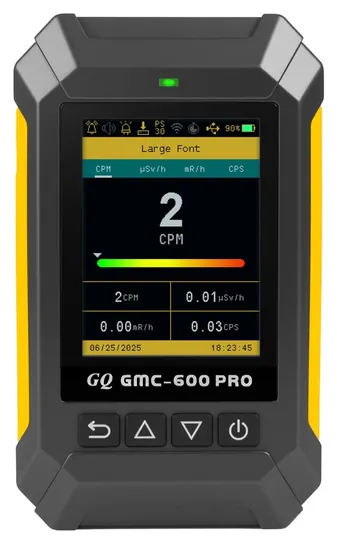
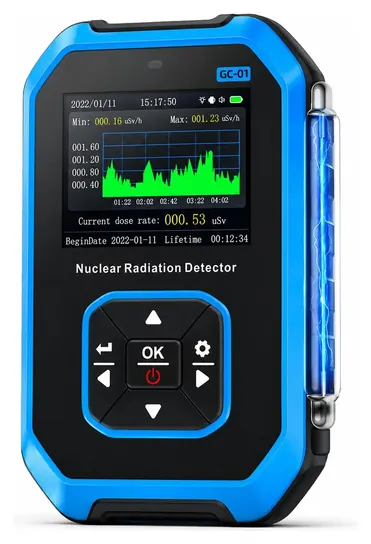
Our new first choice is the GQ GMC-800, which puts a color screen you can read outside, five kinds of alarms and data logging into one inexpensive pocket counter, which is what most people shopping for a home or fallout meter need. The GQ GMC-500Plus stays for its second tube and long logs, and the Mazur PRM-9000 and Images SI GCA-07W stay as the instruments for alpha work. New are the Radiacode 102 for naming isotopes, the Better Geiger S-2 for very strong fields, the GQ GMC-600 Pro, the GQ GMC-300S and the FNIRSI GC-01.
The Onyx Advanced, Radex One, Radex RD1212-BT, Ecotest Terra-P and Radex RD1503+ have dropped out of production or out of stock for good, so they're gone. The Soeks Ecovisor F4 has no current price and leans on nitrate and EMF tests outside this page's focus. The IMI Inspector Alert V2 is still a fine meter, but its price moved it to a special honor.
Lab tests of hobby counters are rare, so the evidence here is the makers' manuals and spec sheets, one detailed outside review of the Radiacode, the GQ owners' forum and patterns in long-run owner feedback. Whatever you buy, take your first readings outdoors to learn your normal background.
Earlier notes
November 12, 2020, by Daniel Imperiale:
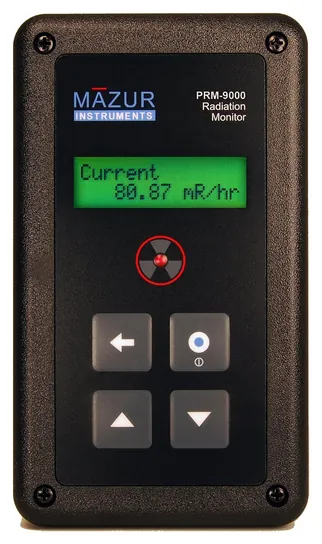
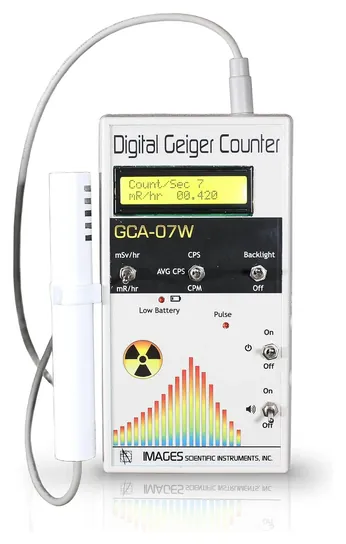
We upgraded to the Imagesco GCA-07W from our previously included 06W model. The two are remarkably similar in almost every way save for the layout of their controls and the extra feature on th 07 that lets you select an average count per second. That layout change also makes it much easier to use, as things are more streamlined. Another upgrade came in the Mazur Instruments PRM-9000, the increased sensitivity of which allows the company to claim its use in examining foods for trace levels of radiation. Since certain agricultural sectors will actually treat their produce with radioactive exposure, it's a nice feature to have.
The rest of our list remained pretty much intact, though we did find a wearable option that ended up in our special honors section with the MTM Black Rad, a tactical wrist watch with a Muller tube built-in. It's sensitive enough to be relied on for knowing the difference between a totally safe space and a potentially lethal dose of radiation, and the fact that you can use it hands-free, even when checking its readout, is a big plus.
November 25, 2019, by Daniel Imperiale:
While there isn't a lot of annual activity in this sector, we did find an interesting option available from Radex to complement the other two models that have remained on our list since its last iteration. This is the Radex RD1212-BT Outdoor Edition, which offers all the sensitivity of the Radex RD1503+, but in a more durable, bright orange housing. It also features Bluetooth connectivity so any of your readings can be readily shared through its dedicated app or the platform of your choice, including the company's PC software.
One of the most exciting new models is the Soeks Ecovisor F4, which replaces the company's previous offering, the 01M Plus 2nd Gen. This new model boasts a modern touchscreen interface and the ability to detect more than just alpha, beta, gamma, and x-rays, like nitrates in foods and the specific hardness or softness of a water supply. Ultimately, though, we had to tip our hats to the Imagesco GCA-06W, which utilizes an outboard wand with its Geiger-Muller tube in it, so you can save a little money if the sensor ever needs to be replaced.
Special Honors
MTM Black RAD MTM's Black RAD is a titanium watch with a built-in radiation sensor that shows gamma levels and keeps a running total of your exposure. It's the real answer to the search for a Geiger counter watch, but it costs far more than a handheld counter and senses gamma only. mtmwatch.com
IMI Inspector Alert V2 International Medcom's Inspector Alert V2 is a long-standing professional meter with a 2-inch pancake tube that reads alpha, beta, gamma and X-rays and shows results in several units. Medcom says an AA battery can last more than 3,500 hours. It costs well above the instruments on this list, which is why it sits here. medcom.com
Safecast Safecast is a volunteer group that formed after the 2011 Fukushima accident and now publishes more than 150 million radiation readings as free public data and a map. It's a handy way to see what background looks like near you, before or after you buy a counter. safecast.org
Tube Type Decides What You Can Detect
It counts beta, gamma and X-rays, but alpha particles can't get through its wall.
Most pocket Geiger counters use a small cylindrical tube. It counts beta, gamma and X-rays, but alpha particles can't get through its wall. Alpha is what radium paint, uranium ore and radon's decay products give off, so if that's what you want to check, you need a tube with a thin mica window. International Medcom, which builds professional meters, says that window is essential on any counter that might meet alpha sources.
Pancake tubes, like the LND 7317 in the GQ GMC-600 Pro and the Mazur PRM-9000, are wide and flat, so they catch more radiation and find faint sources sooner. An end-window tube on a probe, as on the Images SI GCA-07W, does the same job at the end of a cable. The Images SI buyer's guide walks through the trade-offs between tube styles and what each can see.
Scintillation detectors are a third option. The Radiacode 102 uses a cesium iodide crystal that measures the energy of each gamma ray, which lets its app suggest which isotope is present. A plain Geiger-Muller tube can't do that: every hit sounds the same, as one click.
Reading The Numbers: Counts, Dose And Normal Background
A counter's raw output is counts per minute (CPM). That number depends on the tube's size, so 30 CPM on one model and 60 on another can mean the same thing. To show a dose rate in microsieverts per hour (uSv/h), the counter multiplies by a factor set for its tube, and a small tube that isn't energy-compensated reads some gamma energies high and others low. Treat a pocket counter's dose figure as an estimate. In older U.S. units, 1 milliroentgen per hour is about 10 uSv/h.
Normal background in most places runs roughly 0.05 to 0.3 uSv/h, higher at altitude and over granite. The average American gets about 6.2 millisieverts a year from all sources, and about half of that is natural, mostly from radon, according to the Nuclear Regulatory Commission. Before you trust any alarm, take readings outdoors for a few days and learn your own baseline. The EPA's RadNet network posts near-real-time readings from monitors in all 50 states, and Safecast publishes a free map of volunteer measurements, so you can compare.
Very strong fields cause a different problem. A Geiger tube can saturate and read low, or even zero, when it's overwhelmed, which is the opposite of what you need in an emergency. Two-tube designs such as the GQ GMC-500Plus and solid-state units such as the Better Geiger S-2 are built to keep counting at much higher levels.
What A Home Counter Can't Tell You
A Geiger counter is a screening tool. It can't check food or water in any useful way: the levels that matter for health are far below what a handheld picks out from background, and that work takes lab equipment. It doesn't detect neutrons, and it doesn't protect you. In a real radiation emergency, follow official instructions; the EPA's RadTown has plain guides to radiation and emergencies. Don't use a reading to decide on potassium iodide. That's a call for public-health officials and your doctor.
Phone apps that claim to measure radiation with the camera aren't Geiger counters. The Radiacode pairs with a phone, but its sensor is in the device itself. The EPA's page on radiation sources and doses is a good primer on where everyday exposure comes from.
Care is simple. Remove batteries before long storage, keep the tube's window dry and never poke it, and expect a professional meter to need recalibration every year or two. If you buy a test source such as uranium ore or uranium glass to check that a counter works, keep it in a sealed bag away from children, and wash your hands after handling it.
How we researched this
We compared 16 Geiger counters and radiation detectors, including every item from the previous version of this page, and narrowed them to nine. We read the makers' manuals, spec sheets and product pages, a detailed independent review of the Radiacode 102, threads on the GQ Electronics owners' forum and government guidance on background radiation, looked at patterns in owner feedback, and checked every brand for recalls with the U.S. Consumer Product Safety Commission.
Sources (17)
- GQ Electronics: GMC-800 user guide
- GQ Electronics: GMC-500+ product page
- GQ Electronics forum: GMC-800 tube thread
- Radiacode: Radiacode 102
- tspi.at: Radiacode 102 review
- Better Geiger
- International Medcom: Inspector Alert V2
- Images SI: How to buy a Geiger counter
- Wikipedia: Geiger-Muller tube
- U.S. NRC: Doses in our daily lives
- EPA: Radiation sources and doses
- EPA: RadNet
- EPA: RadTown
- Safecast
- MTM: Black RAD
- Science Insights: Best Geiger counter to buy
- CPSC: SaferProducts.gov
Frequently asked questions
What is the best Geiger counter for home use?
For most homes, the GQ GMC-800. It's inexpensive, has a color screen you can read outside, alarms you can hear or feel, and it logs readings. If you want to check rocks or antiques for alpha, step up to a pancake-tube model such as the GQ GMC-600 Pro.
Can a Geiger counter tell me which isotope I'm detecting?
No. A Geiger tube counts hits without measuring their energy. A gamma spectrometer such as the Radiacode 102 can suggest an isotope from its spectrum, though weak samples take a long time to identify.
What radiation reading is normal?
Usually about 0.05 to 0.3 microsieverts per hour, depending on altitude and local rock. Learn your own baseline outdoors, and compare it with the EPA's RadNet readings for your area.
Can I use a Geiger counter to test food or water?
Not usefully. The levels that matter in food and water are far below what a handheld counter can pick out from background. That takes lab equipment.
Which Geiger counter is best for nuclear fallout?
Pick one that keeps counting in very strong fields, such as the two-tube GQ GMC-500Plus or the Better Geiger S-2, and keep spare power on hand. Follow official emergency instructions rather than a reading alone.
Do Geiger counter watches work?
A few exist, such as the MTM Black RAD, which senses gamma radiation and tracks your total dose. They cost far more than a handheld counter and can't detect alpha or beta.