The 6 Best Ultrasonic Leak Detectors
Updated by · How we research

Built for HVAC, compressed air and seals, six ultrasonic leak detectors compared by range, accessories and specs. The Inficon Whisper leads, now as a kit. When users buy our independently chosen editorial choices, we may earn commissions to help fund the Wiki.
An ultrasonic leak detector hears what a mechanical stethoscope can't: the hiss, around 40 kilohertz, that gas makes as it escapes through a small hole, which it turns into sound you can hear. HVAC techs, plant maintenance crews and mechanics use them on refrigerant, compressed-air and vacuum lines. Most figures here come from makers or sellers.


Why the Inficon Whisper is our top pick
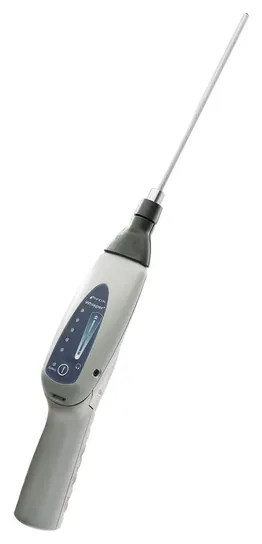
This kit covers both kinds of leak hunting out of one case: a transmitter for unpressurized doors, ducts and refrigerator cases, a twist-on contact probe for bearings and solenoids, and premium headphones.1,2 Our runner-up, the AccuTrak VPE Professional, ships a touch probe and noise-blocking headphones but no transmitter; its maker sells a sound generator separately.4,5
Our pick also has a laser pointer that marks where the nose is aimed,2 and distributors such as ITM list it as certified for mildly flammable A2L refrigerants, a rating we didn't find for any other pick here.3 Its maker backs it with a two-year replacement warranty.1 The runner-up gets a 30-day no-questions return, then one year against defects, with a diagnosis fee if a returned unit turns out fine.4
The runner-up wins on weight and runtime. It weighs under a third as much, and one 9-volt battery runs it up to 200 hours, against 165 hours on two D cells with the laser off and 115 with it on.5,4,2 Its manual also documents a peak-hold display and an alarm tone when the signal pins the scale.4 Inficon's current operating manual sits behind a download gate, so the Whisper's figures come from its product page and catalog sheet.
| Inficon Whisper | AccuTrak VPE Professional | |
|---|---|---|
| Transmitter for sealed spaces | Included in the kit | Sold separately |
| A2L refrigerant listing | Yes, at distributors | None found |
| Warranty | 2 years, replacement | 1 year, plus 30-day return |
| Power and runtime | 2 D cells, 165 h (115 h laser on) | One 9 V, up to 200 h |
| Weight with batteries | 482 g | 138 g |
Sources
- Inficon Whisper 1Product page 2Catalog pages with specs (PDF), pp. 9, 10 3ITM distributor spec listing
- AccuTrak VPE 4User's manual, 3rd generation (PDF), pp. 1, 7, 12, 14 5Professional kit specs, JJS Technical Services
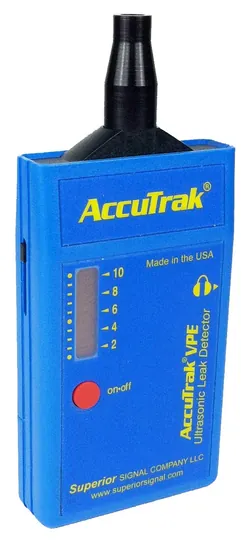
From the manual
- Tap the power button for about a second and let go; holding it isn't needed. Another tap toggles the peak-hold display. p. 7
- A high-pitched tone with the meter maxed out is the over-range alarm: lower the sensitivity to read strong signals. p. 7
- The touch probe for bearings and valves doesn't work on the gooseneck version, whose neck can't be removed. pp. 3, 12
- Full refund within 30 days, then one year on defects; shipping isn't covered, and a diagnosis fee applies if nothing's wrong. p. 14
Compare the specs
Swipe the table sideways to see every column.
| Product | Power | Battery life (hours) | Warranty | Readout | Transmitter in box |
|---|---|---|---|---|---|
| 1. Inficon Whisper | 2 D cells | 165 (115 laser on) | 2 yr, replacement | LED row, alarm tone | Yes, in this kit |
| 2. AccuTrak VPE Professional | One 9 V | Up to 200 | 1 yr + 30-day return | 10-light bar graph | No, sold separately |
| 3. Amprobe ULD-405 | 4 AA | 105 | 1 yr | Color screen, number | No, sold separately |
| 4. allsun Pro | — | — | — | — | — |
| 5. FOTRIC TD2e | Rechargeable pack | 3+ per pack | 1 yr; 18 mo with kit | Sound map on screen | No |
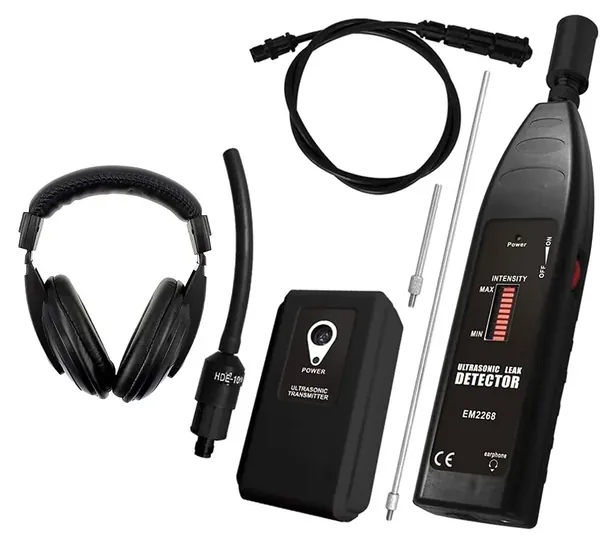
| 6. allsun EM282 | 9 V in each unit | Swap after 10 (advised) | — | One light, ticking tone | Yes |
Battery life is each maker's own figure under its own conditions; the EM282 number is a battery-change interval from its instructions, not a rating. The EM282 row comes from the instructions for the EM282-R receiver and EM282-T transmitter as sold under the BGS technic label. We couldn't reach a maker spec sheet or manual for the allsun Pro, so its row is blank.
Sources
- Inficon Whisper Product page Catalog pages with specs (PDF)
- AccuTrak VPE User's manual, 3rd generation (PDF)
- Amprobe ULD-405 User manual (PDF) Datasheet (PDF)
- FOTRIC TD2e Brochure with specifications (PDF) Support page and FAQ
- EM282 receiver and transmitter Instructions, BGS technic label (PDF)
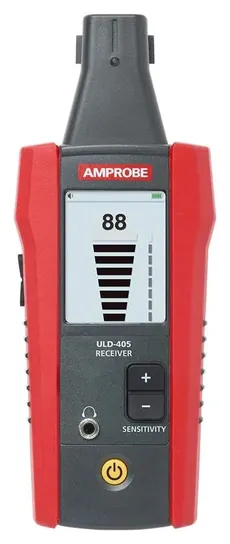
From the manual
- There's no speaker, so without headphones you hear nothing; any standard 3.5 mm headphones work. pp. 6, 7
- The AA batteries ship outside the receiver, and it switches itself off after an hour idle. pp. 4, 9
- The bar graph is relative: when it maxes out, lower sensitivity until it reads under 75. Only the sound tells a hiss from arcing. p. 7
- Not for explosive gases, and it has no water protection; clean it with mild soapy water, never gasoline or harsh solvents. pp. 2, 8, 9
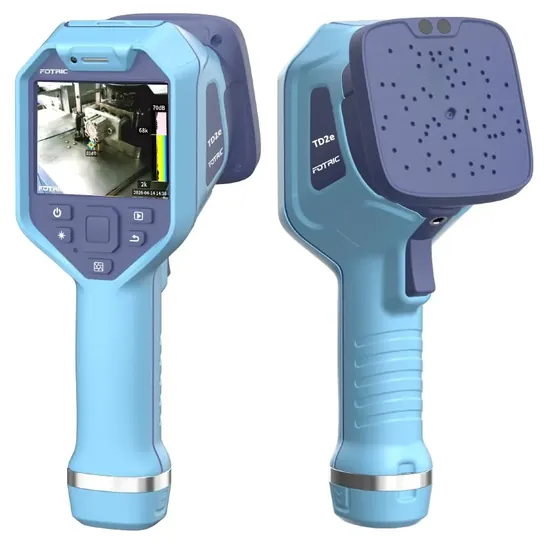
From the manual
- Each battery runs at least three hours and swaps out in the field; the standard package has one, the kit two. p. 6; support page
- Set the band by hand: FOTRIC suggests 20 to 40 kHz for compressed air and 30 to 60 kHz for vacuum leaks. support page
- It hears airborne sound only, so walls and soil hide leaks behind them; an exposed pipe spraying water can still show. support page
- Warranty is one year for the standard unit and 18 months for the kit; images save as JPGs with no raw sound data. support page
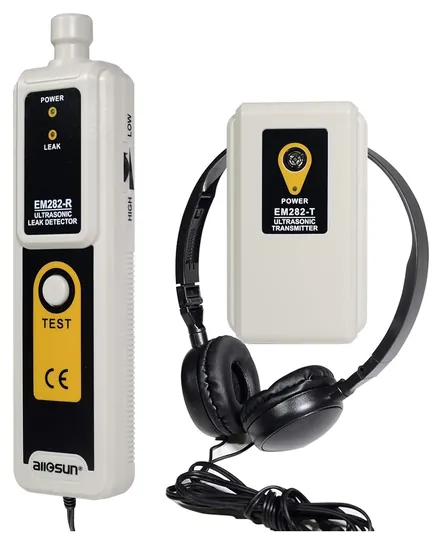
From the manual
- The receiver runs only while you hold its TEST button; letting go switches it off. p. 4
- Alone, it hears only leaks under enough pressure to hiss; unpressurized spaces need the transmitter shut inside. pp. 5, 6
- The instructions advise a fresh 9-volt battery after about 10 hours of receiver use. p. 6
- Keep it away from appliances giving off electromagnetic waves, which cause false readings, and never use it on flammable gas. p. 6
Editor's Notes
November 5, 2026, by Ezvid Wiki Editors:
We read the AccuTrak and Amprobe manuals, FOTRIC's spec sheet and the EM282 instructions, then added a spec table, a section on why the Whisper leads, and notes from those documents. We corrected the claim that the AccuTrak's battery life isn't published, the purpose of the Amprobe's dish and the water-leak answer, and added the EPA's 2026 leak-repair rule for HFC systems.
October 19, 2026, by Ezvid Wiki Editors:
Certified for the newer, mildly flammable refrigerants, the Inficon Whisper takes the top spot, now as the kit with a transmitter and a contact probe. It's also the detector readers search for by name. Much of the 2021 list was gone. The Robinair 16455 TruTrack and the Bacharach Tru Pointe are no longer available, and Amprobe replaced its ULD-300 with the Amprobe ULD-405, which is new here. We dropped the Allsun EM410 because it's a mechanical stethoscope that hears ordinary sound, not ultrasound. The Allsun EM2280 went too, since the allsun Pro covers the same jobs with more accessories.
The AccuTrak stays, now as the AccuTrak VPE Professional kit. A gooseneck version is still sold if you want to bend the sensor around a coil.
The FOTRIC TD2e is a new idea for this list: a camera that shows you where the sound is coming from.
Evidence is thin in this category. Apart from an HVAC School video that tests several detectors at once, we found no independent side-by-side tests, so we leaned on maker spec sheets, HVAC trade coverage and recall checks, and each entry says when a figure comes only from the seller.
Earlier notes
March 2, 2021, by Kaivaan Kermani:
I’ve added some more affordable models like the Allsun EM2280 and EM410, as well as one more to the higher end of our list in the Superior Signal AccuTrak Kit. It may seem like there’s a large price gap between the likes of higher end models like Bacharach Tru Pointe and Robinair 16455 TruTrack with the rest, you’ve got to remember that these options are both more sensitive to a wide variety of leaks, and are prone to less interference. As is expected, this discrepancy in quality between high-end and budget models can make a huge difference in the professional field where experts may be on multiple jobs a day and the accuracy with which they detect leaks is paramount to their employability.
High-end professional tools always cost quite a bit more to engineer, and you’ll see the same sort of discrepancies in refrigerant leak detectors too. Note that, unlike refrigerant leak detectors, ultrasonic leak detectors do not pick up refrigerants or other gases; rather, they detect the high-pitched sound of gas escaping from a system. As such, their advantage is that they can be used to detect a wider variety of leaks, but are also prone to sound interference in a way that refrigerant leak detectors aren’t.
April 8, 2019, by Quincy Miller:
While the selections on this list are all quality options, that doesn't necessarily mean that they're all equally suitable for whatever task you have at hand. For example, the Robinair 16455 TruTrack is ideal for HVAC technicians, whereas mechanics in busy garages may prefer the Amprobe ULD-300.
Some models come with their own headsets, like the Inficon Whisper, while others require you to purchase your own. Which one is preferable for you is a decision we can't make; some people will want to upgrade the basic models that come with the devices, while others will be more than happy to deal with a little less comfort and inferior sound quality in exchange for more money in their pockets. It's completely up to you, so long as you can still hear clearly, whichever one you choose.
Special Honors
UE Systems Ultraprobe 100 UE Systems builds the Ultraprobe line of ultrasonic inspection instruments used in plant maintenance programs, and it's a good place to learn ultrasound inspection beyond leaks. Its entry model, the Ultraprobe 100, is a handheld leak and steam-trap checker with an eight-step sensitivity dial and an LED bar graph that reads in decibels, powered by a single 9-volt battery. It's sold through the maker and its distributors rather than general retail sites, and it costs more than most handheld detectors. uesystems.com
How Ultrasonic Detection Works, And Where It Struggles
Cranking the sensitivity all the way up isn't always better; turn it down as you close in.
Gas forced through a tiny hole, or pulled into a vacuum, churns the air around the opening. That turbulence gives off ultrasound, mostly in the 36 to 44 kilohertz band, far above human hearing. A detector uses a microphone tuned to that band and shifts what it hears down to an audible hiss in the headphones, plus a bar graph or a number on a screen. The Inficon Whisper listens at about 40.5 kilohertz, while the Amprobe ULD-405 covers 20 to 90 kilohertz.
Because it listens instead of sniffing, an ultrasonic tool works with any gas: refrigerant, nitrogen, compressed air, steam or a vacuum. It also works on a system that's been emptied and pressurized with dry nitrogen. A field video from HVAC School shows a tech confirming a coil leak with one after a bubble test, and notes that because it hears escaping gas rather than refrigerant, it works on a system with no refrigerant in it.
It has limits. Wind and machinery noise make faint leaks hard to hear, and soap bubbles from an earlier check can plug a leak so it goes quiet, according to HVAC School's guide to electronic detectors. Cranking the sensitivity all the way up isn't always better; turn it down as you close in. An HVAC School podcast adds that ultrasonic works well right after shutdown, while pressures equalize, and that most misses come from inexperience rather than the tool. In a later HVAC School video, the presenter says ultrasonic worked better than he first thought after several detectors were compared side by side.
Ultrasonic, Heated Diode Or Infrared: Picking A Tool For The Job
Refrigerant sniffers, with heated-diode or infrared sensors, pull in air and react to the gas itself. They can be very sensitive to small refrigerant leaks, but heated-diode sensors wear out and can react to other chemicals, and infrared sensors must keep moving to avoid false alarms (HVAC School; an Inficon interview covers the trade-offs). An ultrasonic detector has no sensor to wear out and doesn't care what the gas is, but it takes practice. Many HVAC techs carry both and use one to confirm the other.
Match the tool to the work. For refrigerant and gas lines in noisy mechanical rooms, look for adjustable sensitivity, a focusing tip, and closed-back headphones. Superior Signal's AccuTrak VPE is sold in several kits, from a basic detector and headset to gooseneck and hard-hat versions. For compressed-air audits in loud plants, a parabola helps aim the detector past background noise, and a tube extension reaches spots you can't point at directly. For door, window, hatch and vehicle seals, you need a transmitter: it fills the closed space with ultrasound so the detector can find where it gets out.
Acoustic cameras take a different approach. They use dozens of microphones to place the sound on a camera image, which speeds up surveys of long pipe runs. Eric Bessey, president of the compressed-air consultancy TTed Solutions, said in a Plant Engineering webcast transcript published in January 2024 that ultrasonic detection is good at finding a leak's general area and sizing it as small, medium or large, and called acoustic imaging the newer step. Industrial models, such as Fluke's ii905, cost about as much as a used car, while a handheld wand can find the same leaks if you have the time to sweep.
Safety, Refrigerant Rules And Care
An ultrasonic leak detector isn't a gas alarm. It can't warn you about natural gas, propane, carbon monoxide or low oxygen, so use a proper gas detector around fuel lines and appliances. If you work on systems with mildly flammable A2L refrigerants such as R-32 or R-454B, check that any electronic tool you bring is rated for it; distributor spec sheets such as ITM's list the Whisper as A2L certified.
Pressure-test refrigeration lines with dry nitrogen, never with shop compressed air, and never above the system's rated test pressure. Over-pressurizing can create the very leaks you're hunting (HVAC School). When you use a detector to find electrical arcing or corona, keep your body and the tool clear of live parts and follow your site's lockout rules. Set the headphone volume just above the background noise.
Buying a detector needs no license, but handling refrigerant does: EPA Section 608 certification in the U.S. The EPA also sets leak-rate limits for appliances with 50 pounds or more of ozone-depleting refrigerant, at 10% a year for comfort cooling, 20% for commercial refrigeration and 30% for industrial process systems, with 30 days to repair. Since January 1, 2026, similar rules also cover appliances holding 15 pounds or more of HFC refrigerant, with the same three thresholds; home and light-commercial air conditioners and heat pumps are exempt. For care, take the batteries out before storage, keep the sensor tip clean and dry, and read the manual's notes on sensitivity settings before your first job.
How we researched this
We compared 16 ultrasonic leak detectors, acoustic cameras and look-alike tools and kept six. We read Superior Signal's AccuTrak VPE user's manual (third generation, 2015), Amprobe's ULD-405 user manual and datasheet, FOTRIC's TD2e brochure and support page, the EM282-R and EM282-T instructions sold under the BGS technic label, and Inficon's Whisper product page and catalog sheet; Inficon's operating manual and allsun's EM2268 manual sit behind download gates, so the allsun Pro relies on seller data. HVAC School's leak-detection articles and videos, a Plant Engineering webcast and the EPA's 2026 leak-repair fact sheet shaped the guide. Web searches of CPSC and Health Canada recall notices for Inficon, Superior Signal, Amprobe, FOTRIC and allsun found no leak-detector recalls.
Sources (23)
- Inficon: Whisper ultrasonic leak detector
- Inficon: Whisper datasheet
- Superior Signal: AccuTrak VPE
- Amprobe: ULD-405
- UE Systems: Ultraprobe 100
- HVAC School: Callback prevention, electronic leak detection
- HVAC School podcast: Is ultrasonic leak detection best?
- HVAC School video: finding a leak with an AccuTrak ultrasonic
- HVAC School podcast: Understanding leak detectors with Inficon
- HVAC School video: I changed my mind about ultrasonic leak detection
- U.S. EPA: Stationary refrigeration leak repair requirements
- U.S. CPSC: SaferProducts.gov
- Inficon: Whisper catalog pages with laser-pointer specs (PDF)
- ITM: Inficon Whisper 711-202-G1 spec listing
- Superior Signal: AccuTrak VPE and VPE-GN user's manual, 3rd generation (PDF)
- JJS Technical Services: AccuTrak VPE Professional kit specs
- Amprobe: ULD-405 user manual (PDF)
- Amprobe: ULD-405 datasheet (PDF)
- FOTRIC: TD2e brochure and specifications (PDF)
- FOTRIC: TD2e support and FAQ
- BGS technic: EM282-R and EM282-T instructions (PDF)
- U.S. EPA: Leak repair requirements for HFC appliances, fact sheet (January 2026)
- Plant Engineering: Do you know how to ID compressed air leaks? (Eric Bessey)
Frequently asked questions
What does an ultrasonic leak detector actually detect?
It hears the high-frequency hiss, roughly 36 to 44 kilohertz, that gas makes as it rushes through a small opening. It doesn't sense the gas itself, so it works with refrigerant, nitrogen, compressed air, steam or a vacuum.
Is an ultrasonic leak detector good for HVAC refrigerant leaks?
Yes, if the system is under pressure so gas is moving through the leak. It also works on a system pressurized with nitrogen. Very small leaks in windy or noisy spots are hard to hear, so many techs pair it with a heated-diode or infrared sniffer.
Can an ultrasonic leak detector find water leaks?
Not hidden ones. These tools hear sound traveling through air, so a wall or soil blocks a leak behind it. An exposed pipe spraying water under pressure can be heard, and with a transmitter inside, a detector can find gaps where rain gets past a windshield, door or window seal. For leaks inside walls or underground, a moisture meter, thermal camera or a plumber's acoustic locator is the better tool.
Do I need a transmitter?
Only for spaces with no pressure in them, like a car cabin, a cooler lid or a door seal. You put the transmitter inside, close it up, and listen outside for where the sound escapes. For pressurized lines you don't need one.
Is the Inficon Whisper worth it?
Its strengths on paper are a laser pointer, about 165 hours on two D cells with the laser off (115 with it on), a two-year replacement warranty and an A2L listing at distributors. We found no independent lab test of it. If you don't need a transmitter or contact probe, the bare wand costs much less than the kit.
Do I need a license to use one?
No license is needed to buy or use the detector. In the U.S., anyone who opens a refrigerant circuit or handles refrigerant needs EPA Section 608 certification.