The 8 Best Solar Chargers
Updated by · How we research

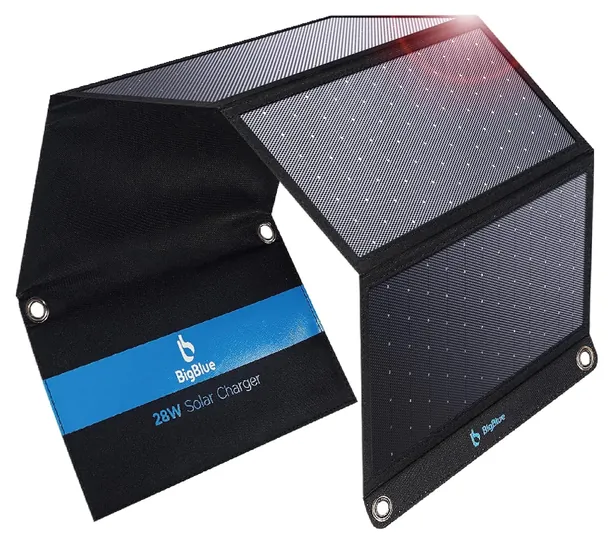
Seven folding USB solar panels and one solar power bank, compared on output in sun and cloud, ports and weather sealing. The BigBlue 28W leads for most trips. When users buy our independently chosen editorial recommendations, we may earn commissions to help fund the Wiki.
Clouds are the catch with solar chargers. In one independent test, most small panels made less than half their sunny-day power under a sheet that mimics overcast skies, and solar power banks barely charged at all. The smart setup is a folding panel that fills a battery pack by day for your phone at night.


Editor's Notes
November 1, 2026, by Ezvid Wiki Editors:
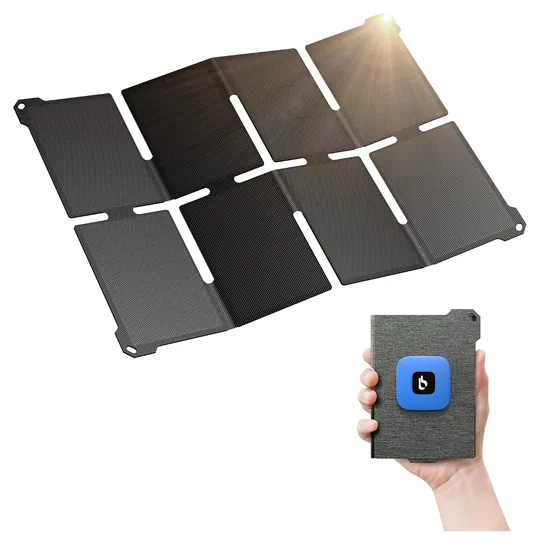
The BigBlue 28W stays on top. It has the longest record among small folding panels, and outdoor reviewers still pick it first for trips where a phone and a battery pack need topping up. This page now sticks to chargers that fit in or on a backpack; bigger panels and solar generators have their own lists.
Only one solar charger from the 2019 lineup survives. The MegaSolar LSC060PD, RavPower Foldable, Eceen 626, X-Dragon Sunpower and the three SunTactics panels have left the market, while the Voltaic Systems Arc is out of stock with no return date. The ACOPower 105W belongs with the 100-watt panels. We wanted the FlexSolar 40W, a strong performer in independent testing, but it couldn't be bought when we checked.
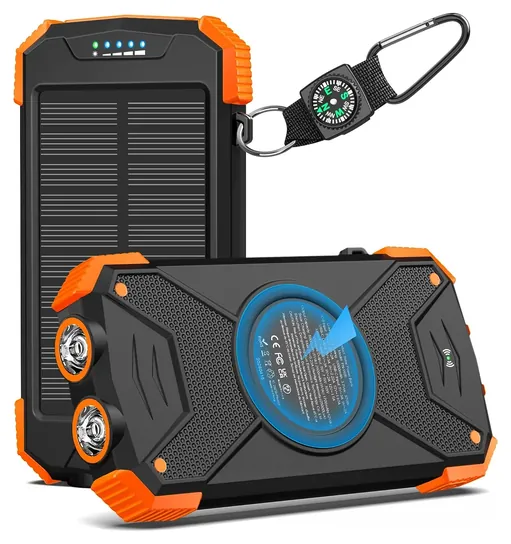
The deciding evidence was a test of 19 chargers that logged how much each one delivered in direct sun and again under a sheet standing in for clouds. We matched those results to the makers' port ratings and checked recall records, including a 2026 recall of a solar power bank that could swell. That's why the BLAVOR Solar Power Bank is here as a battery to charge at home, not as a panel.
Earlier notes
April 15, 2019, by Christopher Thomas:
Portable electronics, and particularly their charging circuitry, are only get more advanced and more reliable, so there's a host of worthwhile options for keeping all of your various devices' batteries topped off when the only power source you have is the sun. The Big Blue offers an excellent balance of performance, size, and price, and can fulfill a wide range of functions aside from directly powering a laptop. The RAVPower, Voltaic, and X-Dragon perform similarly well, just with different power levels. If you are trying to keep a computer going, or you want to ensure that your high-end battery bank gets juiced up as quickly as possible, check out the MegaSolar. It's almost the only one with USB-C Power Delivery support, which can pump 60 watts of power into a range of supported devices at a truly impressive speed. That's enough to accommodate some of today's high-end ultraportables. For maximum power-to-weight ratio, take a look at SunTactics' products. They're all built quite similarly, with extremely small and lightweight bodies, and while they don't have a lot of frills, they're exceptionally portable. The Eceen is another very compact unit and is great for backpacking, though at only 13 watts, it's one of the least powerful on the list. And if you're going for sheer performance, the ACOPower is almost unbeatable. While it is not very small or compact, it offers a higher maximum output than pretty much everything else, and is great for car camping or emergency preparedness kits.
Special Honors
Goal Zero Goal Zero builds rugged folding panels such as the Nomad line, with a fold-out kickstand that aims the panel without propping it on rocks. They cost far more per watt than the picks above, but they plug straight into the company's Yeti power stations and Sherpa battery packs, which makes them a good fit for anyone already using that gear. goalzero.com
Watts, Ports And What A Phone Really Needs
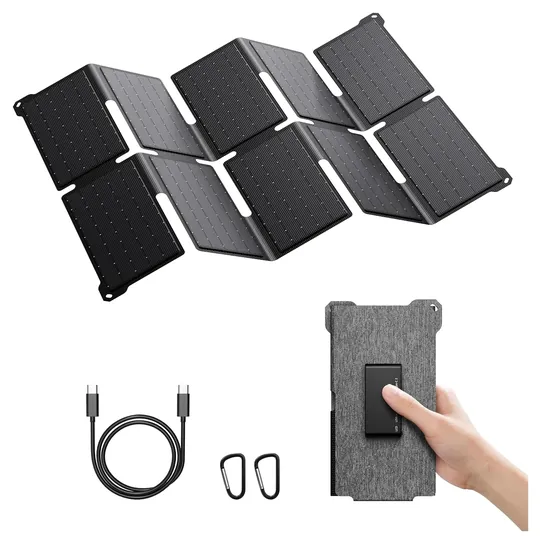
The BigBlue 35W adds a fast-charging USB-C port for newer Android phones.
A phone draws about 5 to 15 watts while charging, so a 10-watt panel can keep one phone going in strong sun, while 20 to 60 watts suits a tablet, a laptop or several devices at once (OutdoorGearLab). The rating on the label is a best case. Real output in good sun often lands well below it, and the angle matters: point the panel straight at the sun and turn it as the day moves (Emergency Gear Lab).
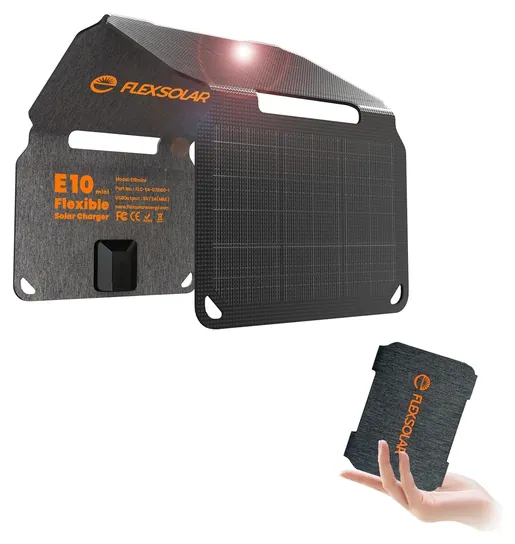
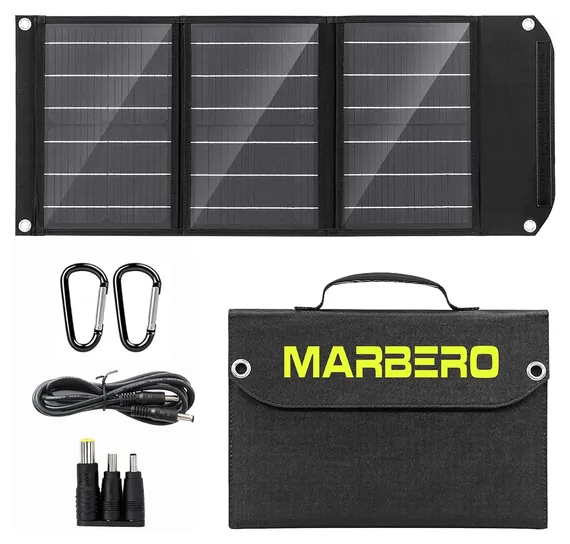
Ports matter as much as watts. Plain USB-A ports top out around 12 watts, and many small panels run every port at the basic 5-volt rate (MyOutdoorsLife). That's fine for a battery pack but slow for a big phone. The BigBlue 35W adds a fast-charging USB-C port for newer Android phones. A barrel plug, as on the FlexSolar 36W and MARBERO 30W, only pays off when you feed a small power station; on little panels it adds little (OutdoorGearLab).
For a cabin, an RV or a long outage, a bigger system makes more sense. See our portable solar generators, or a solar backpack if you want the panel built into your pack.
Panel Or Solar Power Bank, And Why Clouds Matter
A folding panel has no battery. It charges only while the sun is on it, and it stops when a cloud passes or the sun goes down. Some phones won't restart charging on their own after a dip, which is why reviewers suggest charging a battery pack from the panel and the phone from the pack (MyOutdoorsLife).
Clouds hurt more than most people expect. In OutdoorGearLab's test, a sheet held over each panel to mimic overcast skies cut most of them to between a tenth and a little under half of their direct-sun output (OutdoorGearLab). Plan around clear hours, not the label.
A solar power bank is a battery with a small panel stuck on top. The same test found the solar side of these banks added almost nothing, and one would have needed about 29 hours of strong midday sun to refill. Buy one for its battery and flashlights, charge it from the wall, and treat the panel as a last resort (OutdoorGearLab). Consumer groups also note that small panels charge slowly and suffer in overcast weather.
Care, Heat And Flying With Batteries
Most folding panels shed rain on the cells, but the little box that holds the ports often isn't sealed. BigBlue says so plainly for its panels. Tuck the box under a flap or into a pocket when it rains, and keep the phone in the shade while it charges, since a hot phone slows or stops charging to protect itself. Don't charge through a window: glass cuts output and traps heat.
Lithium batteries don't like heat. In June 2026 the CPSC announced a recall of Super Off-Road solar wireless power banks after reports of swelling and overheating (CPSC), and OutdoorGearLab saw built-in batteries overheat when left on the ground in the sun. Don't leave a solar power bank on a dashboard or in a closed car.
Flying is simple with a bare panel, since it holds no battery. Power banks are another matter: they must go in carry-on bags, not checked luggage, and packs over 100 watt-hours need the airline's approval (FAA PackSafe). A 10,000 mAh bank is well under that limit.
How we researched this
We compared 21 current solar chargers and solar power banks, read the makers' specifications for the eight finalists, used an independent test that measured output in sun and simulated cloud, analyzed owner feedback, and checked each brand against the CPSC recall database.
Frequently asked questions
Do solar chargers really work?
Yes, in direct sun. A folding panel can keep a phone or a battery pack charging on a clear day, but output drops sharply under clouds and stops at dusk, since most panels have no battery.
How long does it take to charge a phone with a solar charger?
On a 20- to 28-watt panel in strong sun, expect roughly 2 to 4 hours for a full phone charge. Clouds, a poor angle or a hot phone can stretch that a lot.
Can a solar power bank recharge itself from the sun?
Barely. Its small panel adds only a trickle, and an independent test estimated one would need about 29 hours of strong sun to refill. Charge it from the wall and use the panel for emergencies.
Do solar chargers work on cloudy days?
Somewhat. In one test that mimicked overcast skies, most panels made between a tenth and a little under half of their direct-sun output.
Are solar chargers waterproof?
The panels usually handle rain, but the box holding the USB ports often isn't sealed. Keep it covered and dry.
Can I take a solar power bank on a plane?
Yes, in carry-on bags only. Banks over 100 watt-hours need airline approval; a typical 10,000 mAh bank is far below that.