The 10 Best Portable Solar Generators
Updated by · How we research

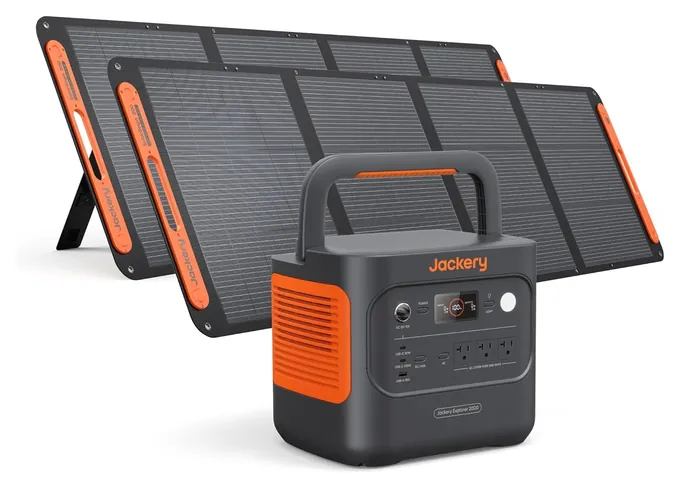
Capacity, output, solar input and weight decide which of 10 portable solar generators fits home backup, camping or RVs. The Jackery Explorer 2000 v2 kit leads. When users buy our independently chosen editorial choices, we may earn commissions to help fund the Wiki.
Rated capacity overstates what you can actually use: OutdoorGearLab drew roughly 84% to 93% of the rated watt-hours from the stations here that it tested. A portable solar generator is a battery power station, often sold with folding panels, that runs devices without fuel, fumes or engine noise. Campers, RV owners and households planning for outages use them.


Editor's Notes
October 18, 2026, by Ezvid Wiki Admin:
The Jackery Explorer 2000 v2 kit is our favorite overall because a well-tested 2-kilowatt-hour station comes with two panels. Nearly everything on the old list had aged out. The Jackery Explorer 1000, Jackery Explorer 500, Jackery Explorer 160, EcoFlow Delta 1300 and EcoFlow River 600 all have newer replacements, and the Renogy Phoenix, TrekPow G300 and Wawui Travel are either gone or too small to matter. The Goal Zero Yeti 3000X was recalled in August 2026 for a circuit board that can overheat, so it's out, and we couldn't find the Goal Zero Yeti 400 for sale.
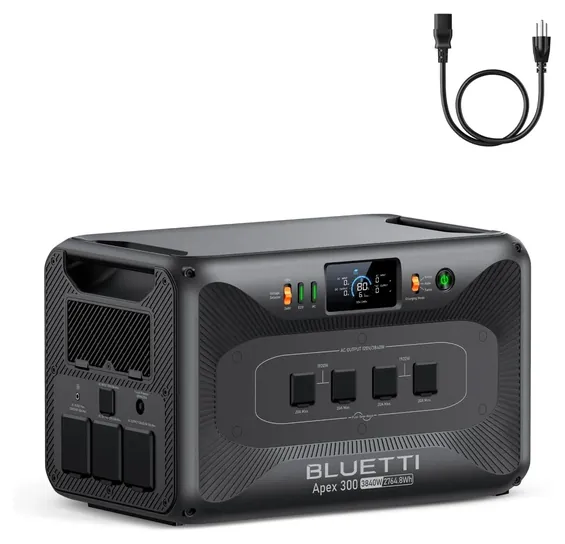
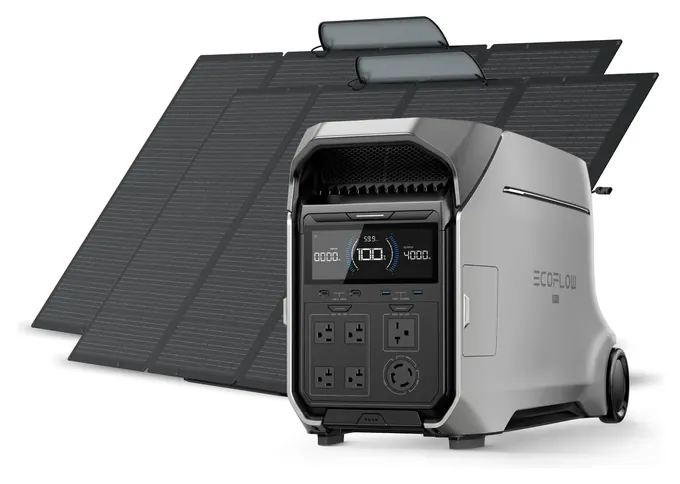
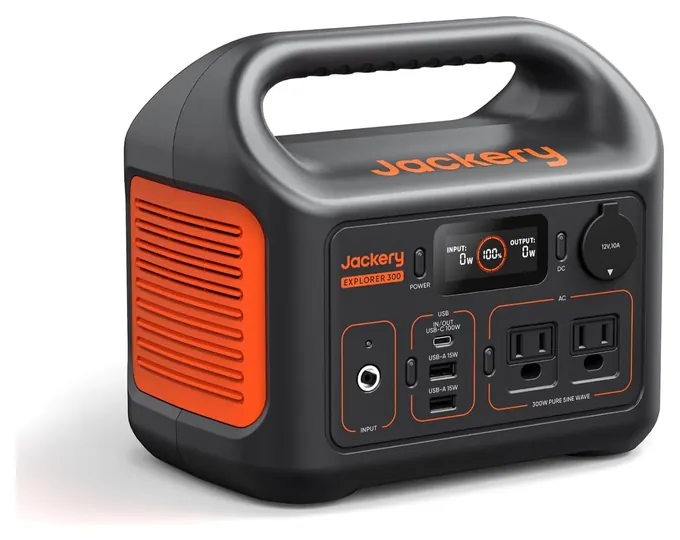
Every pick now uses lithium iron phosphate cells, which last thousands of charge cycles. For home backup, the Bluetti Apex 300 and EcoFlow Delta Pro 3 handle 240-volt loads, while the Jackery Explorer 300 covers phones and laptops on a day trip.
Some of these come with panels and some don't, so check the kit before you buy. Measured usable capacity comes from OutdoorGearLab's lab results. Where no lab test exists yet, the text says so.
December 17, 2020:
Unsurprisingly, given the current trajectory of solar-power technologies, it was a very busy round of updates. A combination of availability issues, poor consumer feedback and new-and-improved models led us to all but rebuild this list from scratch, with our only remaining selection being the Renogy Phoenix.
If you aren’t particularly electrically inclined, this can be a bit of a confusing category to shop in. If that’s the case, we likely don’t have enough space here to provide you with the answers to all of your questions, but we can give you a few tips.
Here’s three important things to keep an eye on while you assess your options:
Solar Panels: Not all models come with one. In fact, it seems that many top companies sell their panels separately, affording their customers the flexibility of being able to decide just how much panel (or how many, for that matter) they need. Without a companion panel, your solar generator will essentially act as a basic (though, albeit, sometimes very large) external battery pack. You can use their adapters to charge them up with a standard 120-volt receptacle or your 12-volt car outlet, but when they run out of juice, you’ll be out of luck — until you can find your way back to a power source.
Models we ranked that come with, or have an option to come with, a solar panel include the Wawui Travel, Jackery Explorer 500, Jackery Explorer 1000 and Goal Zero Yeti 400. If you're considering a model that doesn't come standard with hardware, then you might be interested in checking out our list of Best 100-Watt Solar Panels.
Capacity: The vast majority of the time, battery capacities in this category are expressed in watt-hours. Efficiency ratings can complicate this calculation, but for the sake of keeping things basic: a watt-hour denotes, quite simply, that a battery can put out a watt for an hour.
So, for example…
a fully charged 1,000-watt-hour battery can provide 1,000 watts to a single load for one hour;
a fully charged 1,000-watt-hour battery can provide 500 watts to two loads for one hour;
a fully charged 1,000-watt-hour battery can provide 500 watts to a single load for two hours;
and so on.
In this respect, models we ranked varied drastically. Units with larger capacities will very typically have bigger dimensions and larger unit weights, not to mention heftier price tags, so you’ll likely want to select a unit that balances portability and affordability with a capacity equal to or greater than your needs. At 84 watt-hours the Wawui Travel has the lowest capacity of any model we ranked, while the Goal Zero Yeti 3000X has the largest, at 2,982 watt-hours.
Output: Regardless of what their rated watt-hour capacity is, each of these machines will have a separate maximum power output that's rated in watts. While a unit's rated capacity will determine how long it can keep a load running for, its rated output determines which loads it can accommodate without causing an overload or overcurrent fault.
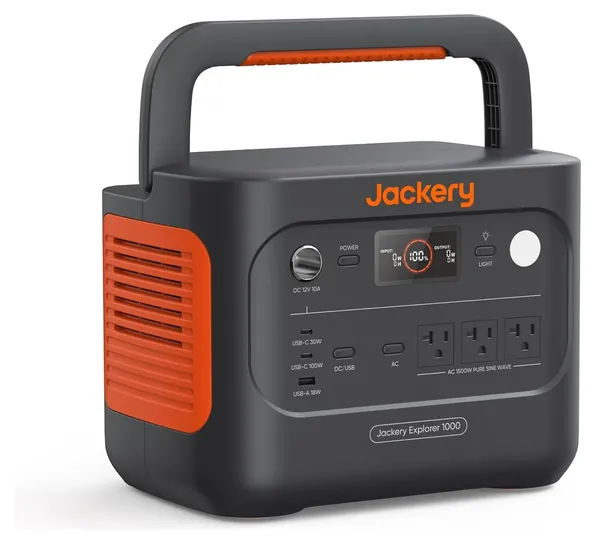
For example, The 120-volt AC outlet on the Jackery Explorer 160 has a 100-watt maximum output, which restricts it to things like charging laptops or powering small lamps. By contrast, the three 120-volt AC outlets on the Jackery Explorer 1000 have a 1,000-watt maximum output, which makes it possible for them to supply more demanding loads, like an electric grill or pressure cooker.
If you have a good idea what loads you're hoping to supply with this generator, it's a good idea to check what their rated watt demands are, and make sure that they're equal to or lesser than the generator in question's maximum output rating.
June 14, 2019:
A solar generator usually consists of two main components: A panel and a portable power generator. The panel converts sunlight into electricity, and the generator is made up of an inverter and a battery. The inverter converts DC power from the panel into AC power, which is what’s used in the vast majority of homes today. The battery stores any energy that’s not currently being used – ensuring you’ll have use of your electronics and maybe some light appliances in the event of a power outage.
There are many solar generators on the market today, and they couldn’t vary more as far as features and price. You’ll surely pay for reliability and convenience, and whether you’re willing and able to make such a significant investment is no small question. Our selection here covers a full range of models, to help take some of the guesswork out of your search process.
Speaking of investments, joining the list is the Renogy Lycan Powerbox, which boasts a large watt-hour capacity and can therefore power many devices, both small and not-so-small, at once. These include things like toasters, hair dryers, and even CPAP machines. It features four USB outlets and four DC ports, as well as a handy LCD screen that provides a battery status reading. Solar panels can be daisy-chained and plugged into it, for charging. At 60 pounds, it’s on the heavy side, but you’ll appreciate the two wheels and suitcase-style handle for easy pulling. Note that you’ll have to purchase your panel(s) separately, as none come with it. On the bright side, you can carefully select the shapes and sizes of panels that are right for you. (And Renogy makes some top-of-the-line ones.)
Another newly added item is the Goal Zero Yeti 400, which also features a convenient light-up screen with the status and a countdown in hours until it will no longer have charge. Price-wise, it’s pretty middle-of-the-road, so it’s great for the more budget-minded shopper who wants a reliable selection that can handle small-to-medium devices during camping, power outages, etc. It conveniently can be charged through either an AC outlet or a solar panel. It’s relatively lightweight at 16 pounds, and it’s around the size of a lunchbox.
Both of these new additions are backed by 12-month warranties and do not come with panels. No matter which you go with, always follow the included instructions carefully to ensure you're using them in a safe, proper way.
Special Honors
FranklinWH For whole-home backup that never needs carrying, FranklinWH sells home battery systems that a certified installer wires into your main electrical panel, alongside rooftop solar or on their own. The system switches over by itself when the grid fails. It costs far more than a portable station, and installation needs permits, but it can back up much more of a house. franklinwh.com
Reliance Controls Reliance Controls makes manual transfer switches and power inlet boxes, the hardware that lets a generator or a 240-volt power station feed chosen household circuits safely instead of through extension cords. It also prevents backfeeding into utility lines. A licensed electrician should install it. reliancecontrols.com
Sizing: Watts, Watt-Hours And The 30% Rule
Add up the watts of everything you want to run together and pick a station whose continuous output beats that total.
Two numbers decide what a solar generator can do. Output, in watts, is how much it can power at once. Capacity, in watt-hours, is how long it can keep going. Add up the watts of everything you want to run together and pick a station whose continuous output beats that total. Motors in fridges, pumps and power tools draw a short surge when they start, so check the surge rating too.
Then size the battery. Multiply each device's watts by the hours you need it, add them up, and add about 30%, because no station delivers its full rating. Outdoor Life recommends that cushion, and its tests delivered 49% to 88% of rated capacity depending on the load. OutdoorGearLab measured 60% to 93% across 14 stations.
Rough sizes: about 300 watt-hours charges phones, laptops and cameras for a weekend. About 1 kilowatt-hour handles camping, a van or a short outage, and it can run a typical fridge for roughly a day. Two kilowatt-hours covers a fridge and lights through a longer outage. Home backup with 240-volt loads starts around 3.5 to 4 kilowatt-hours and 3,600 watts or more. Space heaters, kettles and hair dryers draw so much that they empty a 1-kilowatt-hour unit in about an hour.
Solar Panels: What Comes In The Box And How Fast They Charge
Not every solar generator includes panels. Some listings are kits with panels, and others are the station alone, so read the contents before comparing prices. If you buy panels separately, check the station's maximum solar input in watts and its connector. OutdoorGearLab notes that other brands' panels may need an adapter, and a few makers use their own plug.
For a 1- to 2-kilowatt-hour station, OGL suggests starting with one or two 200-watt panels. Small 100-watt panels make sense only for stations under about 1 kilowatt-hour. Real output depends on sun angle, clouds and heat, so a pair of 200-watt panels needs about six hours of strong sun to refill a 2-kilowatt-hour station. The biggest home-backup units accept 2,400 watts of solar or more, but only if you own that many panels.
Solar matters most when an outage runs past a day or two, or when you camp off-grid for days. For a short outage, a fully charged station and a wall outlet afterward may be all you need. Fold-up panels are light, but they still need room in the car and a way to face the sun.
Safety, Home Hookup And Storage
A power station burns no fuel, so it makes no carbon monoxide and can run indoors, unlike a gas generator. Keep its vents clear. Never plug a station into a wall outlet to power the house. That can send power back into the utility lines and endanger line workers. To run home circuits, have a licensed electrician install a transfer switch or a power inlet box.
Check recalls before buying a used unit, and install firmware updates. The U.S. Consumer Product Safety Commission announced a recall of the Goal Zero Yeti 3000X for an overheating circuit board, and an earlier one of the EcoFlow Delta Max 2000. Both fixes were firmware updates. We found no power station recalls for Jackery, Bluetti or Anker.
Lithium iron phosphate cells last thousands of cycles, but most shouldn't be charged below about 32 degrees Fahrenheit unless the maker says the battery management system allows it. For storage, keep the station somewhere cool and dry and top it up about every three months, as Outdoor Life advises. Check the water-resistance rating before using one outdoors in wet weather. Larger stations also can't fly: the FAA bars passengers from carrying lithium batteries over 160 watt-hours.
How we researched this
We compared 17 portable power stations and solar kits from major brands, read the independent lab results from OutdoorGearLab and Outdoor Life, makers' specifications from product listings, and summaries of other reviews, and we checked every brand against the U.S. Consumer Product Safety Commission's recall database.
Frequently asked questions
Can a portable solar generator run a refrigerator?
Yes. A 1-kilowatt-hour station runs a typical fridge for roughly a day, and a 2-kilowatt-hour unit for one to two days. Results vary with the fridge, so tests of the same station have ranged from 18 to 39 hours.
Can a solar generator power a whole house?
Not a portable one on its own. Whole-house backup needs 3,600 watts or more, 240 volts, a lot of stored energy and a transfer switch installed by an electrician. Expandable home-backup stations can cover key circuits like the fridge, furnace fan, well pump and lights.
How long do solar panels take to charge a solar generator?
In strong sun, two 200-watt panels refill a 2-kilowatt-hour station in about six hours. Clouds, heat and panel angle slow that down, and a station can't take more solar power than its maximum input.
Do solar generators come with solar panels?
Some do and some don't. Kits include one or more panels, while many stations are sold alone. Check the contents and the station's solar input and connector before buying panels separately.
Is a LiFePO4 battery better than other lithium batteries?
For a power station, usually yes. Lithium iron phosphate cells are rated for thousands of cycles and are more heat-stable than the NMC lithium-ion cells in many older models, at the cost of more weight.
Can I use a solar generator indoors?
Yes. It burns no fuel and makes no carbon monoxide, so it's safe indoors with its vents clear. Never connect it to a wall outlet to power the house.