The 6 Best RF Modulators
Updated by · How we research

Analog channel 3/4 boxes reach only old TVs. We compared six RF modulators, analog and digital, for CRTs, retro consoles and coax; the AoeSpy RF61M01B leads. When users buy our independently chosen editorial picks, we may earn commissions to help fund the Wiki.
A classic channel 3 modulator only shows up on a TV with an analog tuner, which means tube sets and some older flat screens. Most TVs sold in recent years tune only digital channels and need a digital modulator instead. These boxes suit retro gamers, VCR and DVD fans with coax-only sets, and anyone sending one video source to several rooms over coax.


Editor's Notes
October 19, 2026, by Ezvid Wiki Admin:
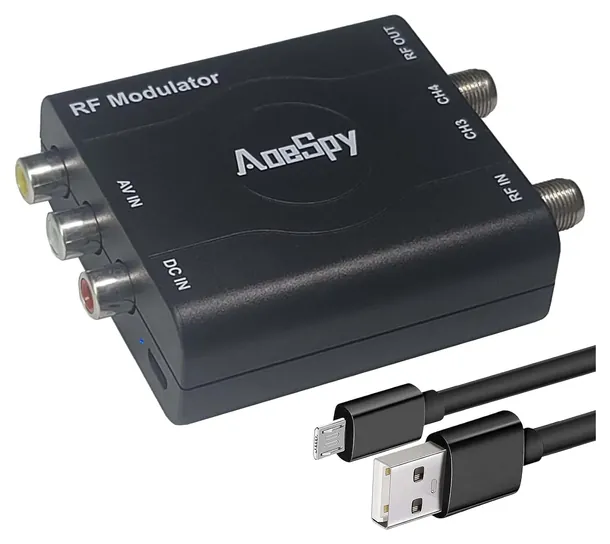
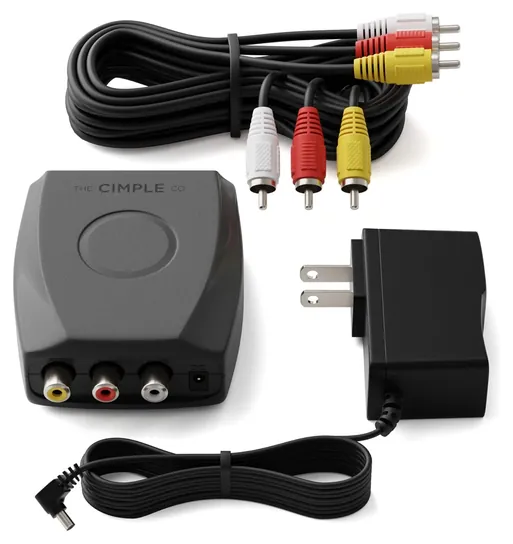
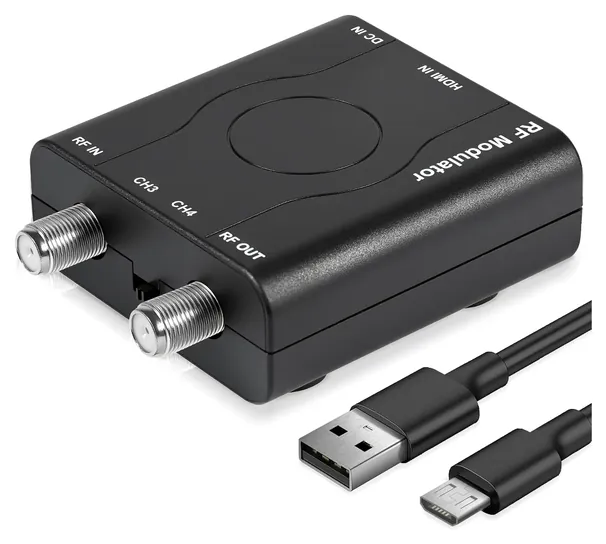
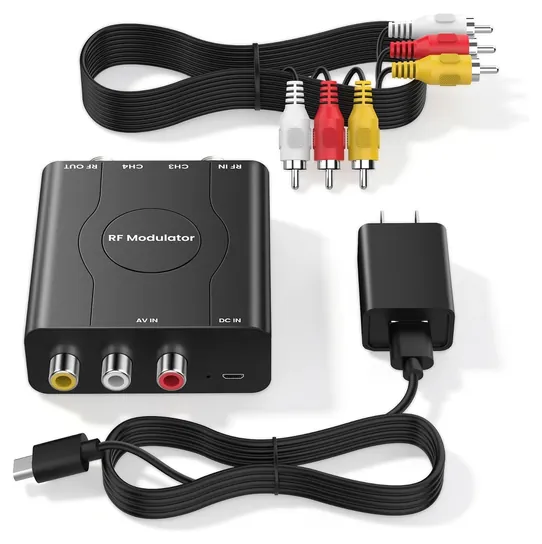
The AoeSpy RF61M01B leads this new page because it does the core job, composite video in and channel 3 or 4 out, for very little, with an antenna pass-through and steady owner feedback. The Cimple Co CMP-RFMOD-RCA is the better-known name and the easiest pick for a second TV, but a run of units dying within months kept it from leading.
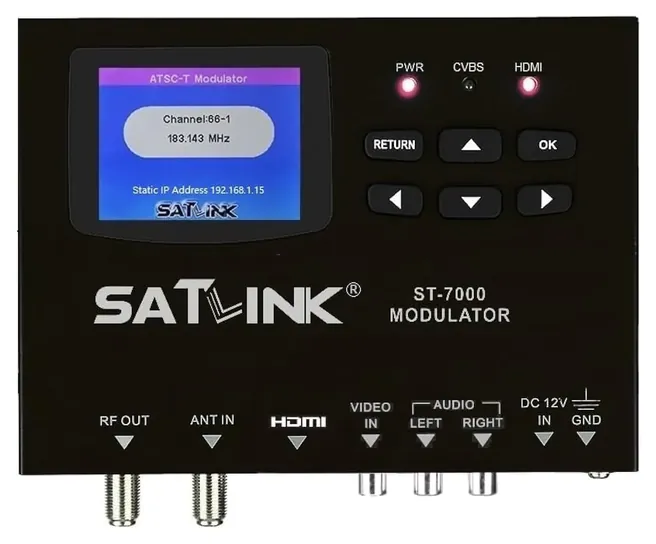
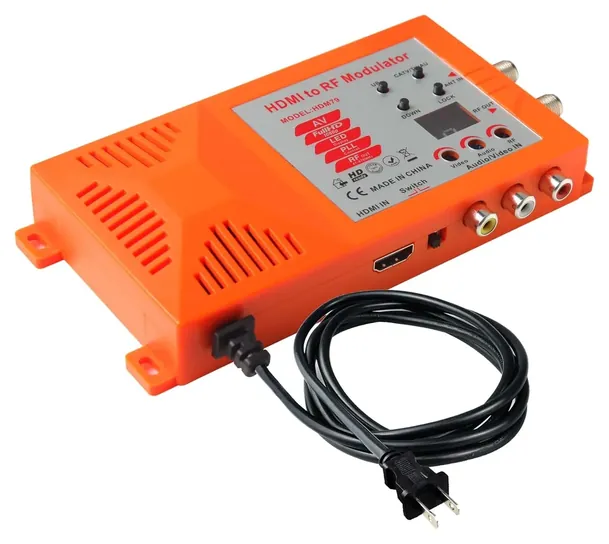
The list covers both kinds of modulator. Most are analog boxes for tube TVs and retro consoles, including the VQP HDM61 for HDMI sources. The SatLink ST-7000 is here for anyone whose TV has only a digital tuner, which an analog box can't reach.
Nobody seems to publish lab tests of these boxes, so we leaned on the channel frequency tables in makers' spec sheets, the digital TV rules that decide which sets can tune each box, and patterns in owner feedback. We left out a blue HDMI box that duplicates the ADRFClub HDMI/RCA Modulator, a stack of look-alike composite boxes with weaker feedback, and an eight-channel rack unit priced for professional installers.
Special Honors
Thor Broadcast Thor Broadcast, based in California, sells trade-grade cable TV gear, including HDMI-to-digital modulators that put many sources on one coax network for hotels, campuses, bars and offices. It's the route for a building-wide system with support behind it, rather than a single box for one TV. thorbroadcast.com
Do You Need An RF Modulator?
Squeezing video into a broadcast channel and back softens the picture, and most cheap boxes send mono sound.
An RF modulator turns the video and sound from RCA jacks, or HDMI on newer boxes, into a TV channel that travels over coax, the same way an antenna signal does. The TV tunes it like a station. VCRs, early game consoles and home computers used them because many TVs of the era had only an antenna jack (Wikipedia: RF modulator).
If your TV has any yellow composite, component or HDMI input, skip the modulator and connect directly. Squeezing video into a broadcast channel and back softens the picture, and most cheap boxes send mono sound. For a modern TV with only HDMI, an AV-to-HDMI converter is the better route for an old console. For a newer HDMI source and an older TV with RCA jacks, use an HDMI-to-composite converter.
Modulators only work one way. None of them takes a coax signal and turns it into RCA video; that job needs a tuner, such as a VCR or a converter box with composite outputs.
Analog Channel 3/4 Or Digital ATSC And QAM
In North America, the cheap boxes put out an analog NTSC signal on channel 3 or 4. Those two channels were rarely both used in one area, so you pick whichever is empty where you live (Wikipedia: Channel 3). The VQP spec sheet puts channel 3 at 61.25 MHz and channel 4 at 67.25 MHz. Some boxes, like the ADRFClub, add dozens of VHF and UHF channels and the PAL format used in much of Europe and Asia.
The catch is the TV. Full-power U.S. stations had to stop analog broadcasts by June 12, 2009 (Wikipedia: Digital television transition), and most sets made in recent years have only digital tuners. An analog modulator shows nothing on them. For those you need a digital modulator that outputs an ATSC channel, the U.S. over-the-air standard (Wikipedia: ATSC standards), or a QAM channel, the format digital cable uses (Wikipedia: QAM). Set the TV's scan to match: antenna for ATSC, cable for QAM.
Digital units cost roughly ten times what an analog box does. Multi-channel rack models for hotels, schools and bars, like the StarMax MX-800R with eight channels, cost several times more again and are usually set up by an installer.
Sending One Source To Several TVs
A modulator is the cheap way to put one DVD player, security recorder or streaming box on every TV already wired with coax. Run the modulator's output into a splitter and the splitter's outputs to each room. If you also want antenna channels, feed the antenna into the modulator's RF input so both share the line, and pick a channel no local station uses.
Each split cuts the signal. An ideal two-way splitter sends half the power to each port, and real ones lose a bit more (Wikipedia: Power dividers). Consumer modulators are weak, so after three or four splits, or a long run, add a cable amplifier.
Keep the modulator on your own wiring. Never connect its output to an outdoor antenna or to the cable company's incoming line, where it can leak into the provider's network and interfere with service. A splitter that separates your home network from the incoming cable, or a separate coax run, avoids the problem.
How we researched this
We compared 15 RF modulators, analog and digital, and screened eight in depth. We read makers' spec tables and package lists, the channel and digital TV standards that decide which sets can tune each box, and patterns in owner feedback, and we checked every brand for recalls with the U.S. Consumer Product Safety Commission. We found no independent lab tests of RF modulators.
Frequently asked questions
Do I need an RF modulator?
Only if your TV has just a coax or antenna jack, or you want to send one source to several TVs over coax. If the TV has composite, component or HDMI inputs, a direct connection gives a better picture.
What does an RF modulator do?
It turns video and sound from RCA or HDMI jacks into a TV channel on coax, usually channel 3 or 4. You tune the TV to that channel to watch.
Does an RF modulator work in reverse?
No. It only turns AV or HDMI into coax. To get RCA video out of a coax signal you need a tuner, such as a VCR or a converter box with composite outputs.
Will an RF modulator work with a new TV?
An analog channel 3/4 box only works on TVs with an analog tuner, mostly older sets. TVs with digital-only tuners need a digital ATSC or QAM modulator, which costs much more.
Can I connect an RF modulator to my cable line?
Not to the incoming line from the cable company. Use it on your own coax wiring through a splitter, so its signal can't leak into the provider's network.
Channel 3 or channel 4: which should I use?
Pick whichever one has no local station where you live. If you see interference or a faint second picture, switch to the other.