The 9 Best Rack Mount Power Strips
Updated by · How we research

Not every rack mount power strip has surge protection. Nine PDUs and surge bars compared on outlets, joules, amps and warranty; the CyberPower CPS1215RMS leads. When users buy our independently chosen editorial choices, we may earn commissions to help fund the Wiki.
A surge strip on a UPS output adds nothing and can cause trouble, so a rack already fed by a UPS needs only a plain distribution bar. A rack mount power strip, or PDU, is a metal bar of outlets that bolts into a 19-inch equipment rack. It's for network closets, home labs, studios and AV cabinets.






Editor's Notes
October 18, 2026, by Ezvid Wiki Admin:
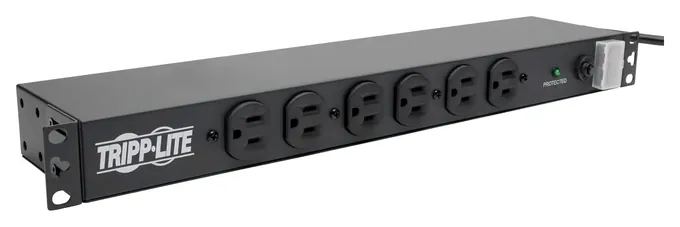
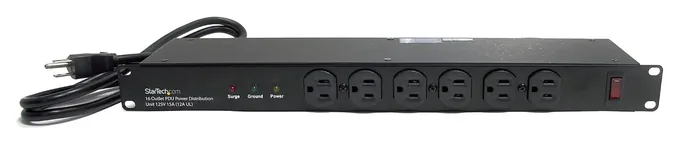
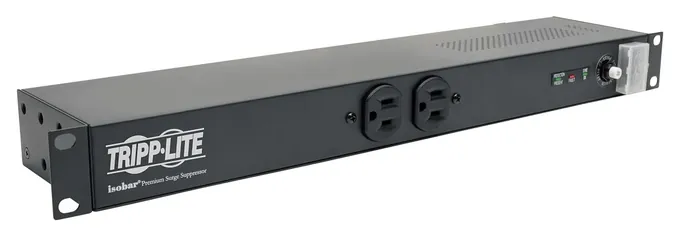
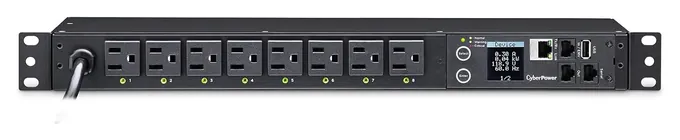
For less than comparable bars from the big rack brands, the CyberPower CPS1215RMS gives you a solid surge bar with outlets front and back, which is why it now leads. Most of the old list had to go. The Hereta High-Precision, WatchfulEye WTH-CS, Technical Pro Heavy Duty, Pyle PCO860, Pyle PCO850 and KMC 8-Outlet no longer turn up from the usual sellers, and we couldn't confirm that any of them is still sold new. The Tripp Lite PDUMH20, CyberPower PDU41001, Tripp Lite IBAR12-20ULTRA and StarTech RKPW161915 stay. They're still made, and they're still the right tools for metering, remote control, 20-amp racks and lots of outlets.
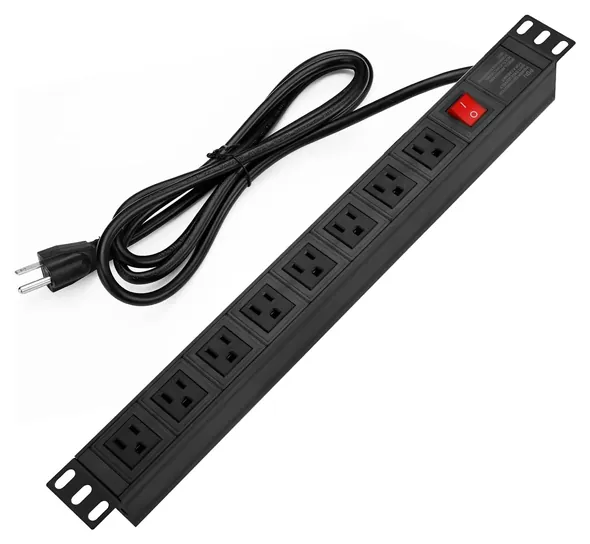
We added the CyberPower CPS1215RM on purpose, even though it has no surge protection. Plenty of racks run off a UPS, and a plain distribution bar is the correct choice there.
Most people who find this page are searching for a rack mount surge protector, so the guide now explains which bars actually have one and how to read joule and amp ratings.
A word on evidence: we found no outside lab tests of rack power strips. The specs come from the makers' published listings, and we checked every brand for recalls.
December 30, 2020:
In this latest update, we have selected three power strips, each with a slightly different function to the last. Firstly, we added the Hereta High-Precision, with its large industrial-grade switch on the front. This unit is characterized by its highly accurate digital display that measures current, voltage, and power, to help you ensure things are running smoothly.
Next, we selected the basic, yet high-quality WatchfulEye WTH-CS. Among its features are its three color-coded lamps that assure you that your devices are protected, and reversible rack ears so you can set it up with forward-facing or rear-facing sockets. And finally, we added the Technical Pro Heavy Duty, with its 1,800-watt load capacity and independent illuminated switches, which give you complete control over your rack system and make the unit ideal for work in low-lighting environments.
September 03, 2019:
Rack mount power strips are essential to [cable management](CyberPower CPS1215) and equipment protection in data centers and A/V setups. Whether for home or business use, it is important that you choose the right product for your needs. For example, if you are just running some audio equipment for home use, EMI and RMI filtering may not be as important, however it is necessary for data centers. To ensure we have included options to suit every need, you'll find both professional- and consumer-grade options on our list.
Without a doubt, the most feature-packed model on our list is the CyberPower PDU41001. It features an RJ45 Ethernet port for network connection and allows for remote management, making it ideal for servers and data centers where you may need the ability to reboot equipment when you are not on site. In addition to the CyberPower PDU41001, the Tripp Lite Metered PDUMH20 is also good for setups where you need to keep tabs on power usage at all times. If accidental downtime can be a costly problem, you may want to look to the Tripp Lite Basic PDU1230, which features a locking plug specifically to prevent that from happening.
For those with a lot of large transformers, the Pyle PCO860 is a smart option, since nearly all of its outlets are connected to short cords. This means you'll actually be able to use every one, even if plugging in large power bricks. The CyberPower CPS1215 also has well-spaced outlets, and has the added bonus of coming for an affordable price.
For consumer-level use, we have the budget-friendly Pyle PCO850 and KMC 8-Outlet. While we wouldn't recommend keeping very expensive equipment plugged into them continuously due to their low surge protection ratings, they will provide you with more outlets and help you keep your cables organized.
Special Honors
APC NetShelter Rack PDUs APC by Schneider Electric sells a wide range of NetShelter rack PDUs for server rooms and data centers, including metered and switched models with higher-amperage inputs than most retail strips. They cost more than home-lab gear, but they are a common choice when a rack needs per-outlet control and monitoring at scale. apc.com
Furman Power Conditioners Furman makes rack power conditioners and power sequencers for audio and video systems, from small studio racks to live sound rigs. Some models add a front-panel meter or turn gear on in a set order, which protects speakers from start-up pops. They're worth a look for a music or AV rack rather than a network closet. furmanpower.com
Surge Protector, Basic PDU Or Smart PDU
A rack fed by a UPS doesn't, because the UPS already filters the power.
Start with where the strip gets its power. A rack plugged straight into a wall outlet needs surge protection, and a bar like the CyberPower CPS1215RMS or Tripp Lite DRS-1215 does that job. A rack fed by a UPS doesn't, because the UPS already filters the power. Putting a surge strip on a UPS output is redundant and can cause problems for the UPS (Wikipedia: Power strip). That's where a basic distribution bar such as the CyberPower CPS1215RM fits. Its listing says plainly that it has no surge suppression.
Above that sit metered and switched PDUs. A metered unit shows the total load on a display, so you know how much headroom is left. A switched unit lets you turn single outlets off and on over the network, which is how data centers reboot hung equipment without a site visit (Wikipedia: Power distribution unit). A home-lab roundup notes that each step up costs more: a metered unit runs a few times the price of a basic bar, and switched units cost more again (HomeNode).
When comparing surge ratings, joules describe how much energy the suppressor can absorb before it fails. Higher is better, but most everyday surges are small. The voltage protection rating from UL 1449 testing is the more comparable figure, and listings rarely print it. Surge parts wear out, so a light that shows when protection is spent is worth having (Wikipedia: Surge protector).
Amps, Plugs And How Much You Can Load
Most rack strips have a 15-amp plug that fits any standard outlet. Electricians follow an 80 percent rule for steady loads, so plan on about 12 amps, or roughly 1,440 watts at 120 volts, of continuous draw (HomeNode). Add up the power ratings of the gear in the rack, and leave room for a server that spikes at startup.
A busy rack can outgrow that. The Tripp Lite IBAR12-20ULTRA and Tripp Lite PDUMH20 are 20-amp units, good for about 16 amps of steady load. They need a 20-amp circuit and the matching receptacle: a NEMA 5-20 outlet, which has one T-shaped slot, for the IBAR, and an L5-20 twist-lock outlet for the PDUMH20. A 20-amp plug won't fit a standard outlet, and an adapter that defeats that is a fire risk.
Don't plug one power strip into another. Chaining them doesn't add protection, and fire codes require power strips to plug directly into a permanent outlet (Wikipedia: Power strip). If you need more outlets, buy a bigger bar.
Fitting It In The Rack
Horizontal bars take one rack unit, 1.75 inches of height. Vertical, or 0U, mounting stands the strip upright along a rack post so it uses no rack space; the CyberPower RKBS15S2F10R Rackbar ships with brackets for both. Check depth too: StarTech says its 16-outlet bar needs at least 4 inches behind the rails.
Look at where the outlets face. Rear outlets keep the rack's permanent cords tidy. Front outlets are handy for a laptop charger, a work light or a test device. Power bricks are the usual headache, since a wide adapter can block the outlet next to it. Wide-spaced, sideways outlets like those on the BTU QP2 help, as do short extension pigtails.
Cord length matters more than people expect. Bars with a 15-foot cord can reach a wall outlet from the top of a full-height rack, while a 6-foot cord may only reach from the bottom. Plan the rack's layout first, then pick the strip. Finally, look for a safety mark from a recognized lab, such as UL or ETL, on any strip you buy, and check recall notices with the U.S. Consumer Product Safety Commission.
How we researched this
We compared 22 rack power strips and PDUs, including the six from the previous list, and read the retailer listings and spec tables for 15 of them. Maker pages did not load during our research, so the specs come from those listings. We found no independent lab tests of rack power strips.
Frequently asked questions
Is a rack mount power strip the same as a surge protector?
Not always. Many rack strips include surge suppression, but basic PDUs like the CyberPower CPS1215RM have none. Check the listing for a joule rating and a UL 1449 listing before you assume it protects anything.
Can I plug a rack power strip into a UPS?
Yes, but use a basic PDU without surge suppression. The UPS already conditions the power, and a surge strip on a UPS output is redundant and can cause problems.
What is the best rack mount surge protector?
For most network and home-lab racks, the CyberPower CPS1215RMS. It has 12 outlets front and back, surge and noise filtering, a 15-foot cord and a three-year warranty. For a higher rating, the Tripp Lite DRS-1215 is rated at 3,000 joules.
Do I need a 15-amp or a 20-amp power strip?
A 15-amp strip handles about 12 amps of steady load, enough for most home and small-office racks. Choose a 20-amp unit only if your gear draws more and you have a 20-amp circuit with the matching outlet.
How many outlets do I need?
Count the devices in the rack and add 20 to 30 percent for growth. Remember that wide power adapters can block a neighboring outlet.
Should I mount it horizontally or vertically?
Horizontal 1U mounting works in any 19-inch rack. Vertical 0U mounting saves rack space but needs room along a post, so check your rack before choosing brackets.