The 10 Best Precalculus Textbooks
Updated by · How we research

The right precalculus book depends on the goal: college, high school, AP, self-study or honors. Stewart's Precalculus, 7th Edition, tops 10, plus free OpenStax. When users buy our independently chosen editorial selections, we may earn commissions to help fund the Wiki.
An older edition of a precalculus text can cover the same material as the new one for under half the price, and one full college textbook is free online. College students usually need the edition their instructor assigns. High schoolers, AP students and self-learners can pick any book they like.
At a Glance
-
1
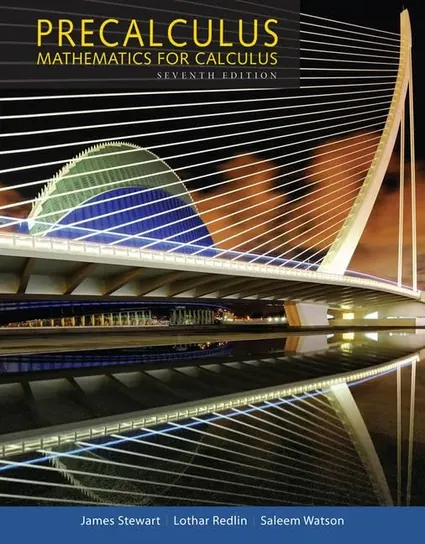
 Stewart Precalculus 7th Edition
$111
-
2
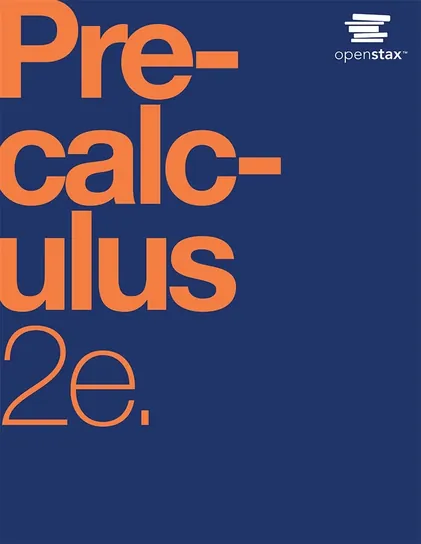
 OpenStax Precalculus 2e
$50
-
3
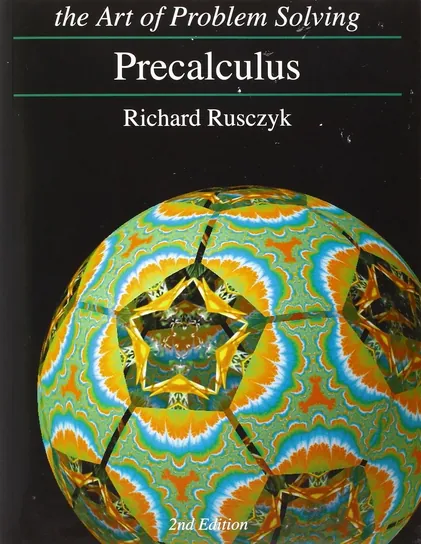
 AoPS Precalculus
$30
-
4
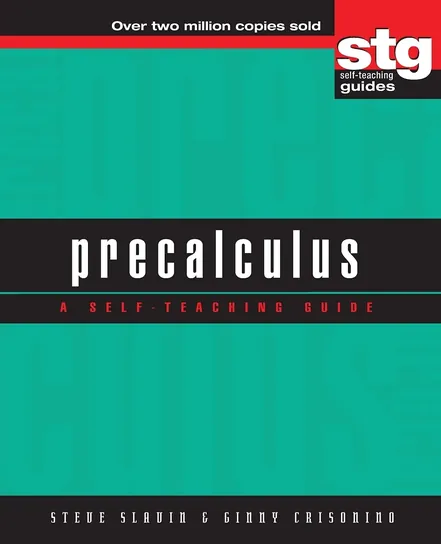
 Precalculus: A Self-Teaching Guide
$12
-
5
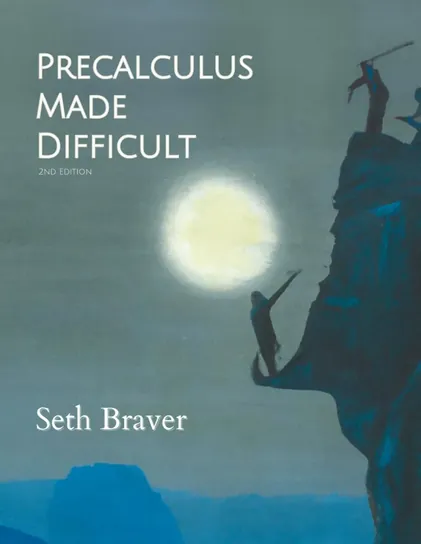
 Precalculus Made Difficult
$35
-
6
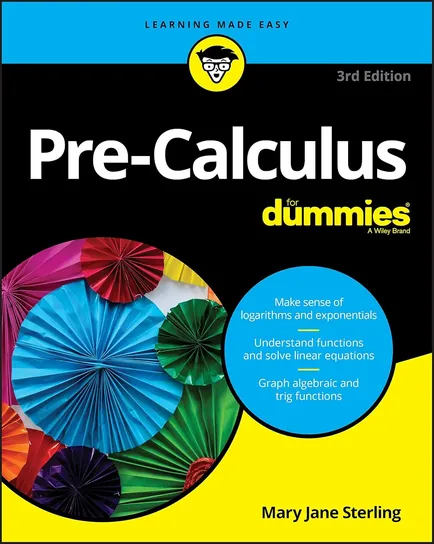
 Pre-Calculus For Dummies
$13
-
7
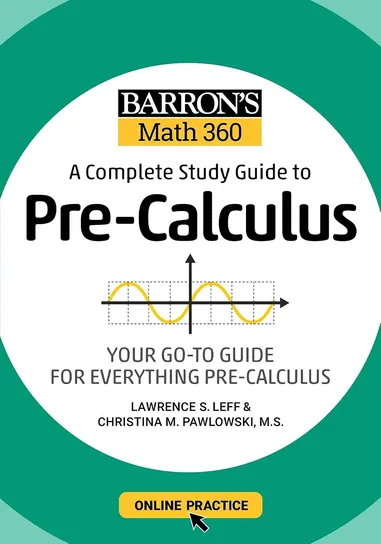
 Barron's Math 360 Pre-Calculus
$24
-
8
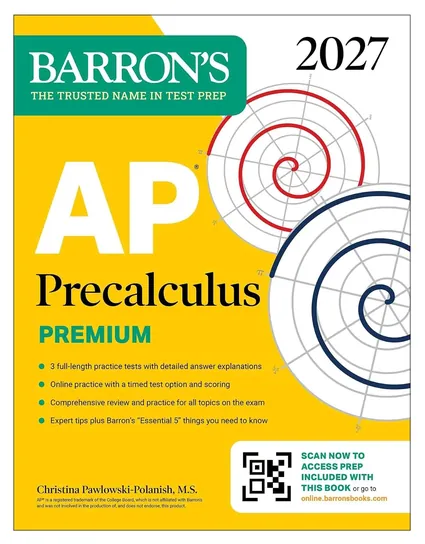
 Barron's AP Precalculus Premium
$22
-
9
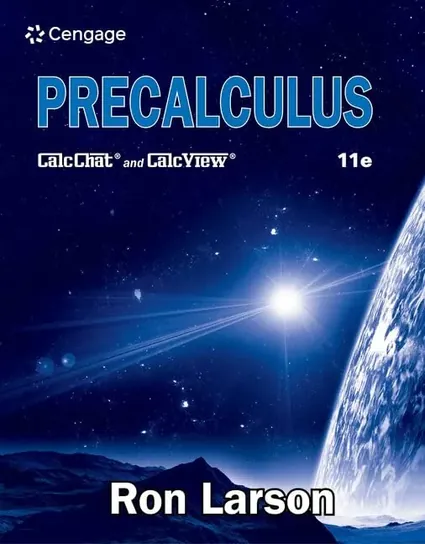
 Larson Precalculus 11th Edition
$203
-
10
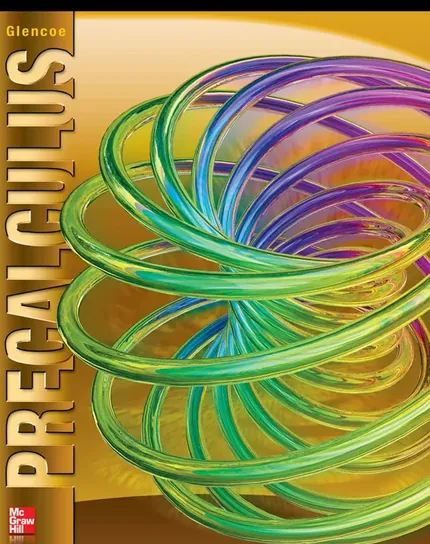
 Glencoe Precalculus
$43
Editor's Notes
October 17, 2026, by Ezvid Wiki Admin:
Most readers want one good book, not a stack, so we sorted this list by purpose: a college course, high school, the AP exam, self-study and honors work. The Stewart Precalculus 7th Edition stays, and it costs far less than the newer 8th edition with the same subject matter. The OpenStax Precalculus 2e takes over from the old Abramson print copy, since it's the revised version of that same free book, and the Larson Precalculus 11th Edition replaces the 10th.
Sullivan, Blitzer, Demana and Lial all wrote solid course texts, but each overlaps the college books we kept, most cost more, and a couple were down to a single copy. Buy one if your class assigns it. Miller's book gave way to the much cheaper Glencoe Precalculus for high school use. New picks cover readers the old list ignored: Precalculus: A Self-Teaching Guide and Pre-Calculus For Dummies for self-learners, Precalculus Made Difficult for anyone who wants the ideas explained, and two Barron's books for review and the AP exam.
Nobody lab-tests textbooks, so we went by publishers' tables of contents, course use, independent roundups and owner feedback. The free online books in the special honors are worth a look before you spend anything.
October 30, 2020:
The biggest consideration this time around was who exactly is buying these textbooks? There are four main consumers: students, teachers, homeschool parents, and self-guided learners. Students are generally forced to get whatever book their professor recommends, so unfortunately they lack a lot of choice. Teachers and professors have an advantage with this material in that they can supplement the instruction, meaning their primary concern should be how many problem sets there are, and how easy it will be for their students to understand those problems. That's why Pearson Precalculus has been added, and why Miller's Precalculus is hanging on.
For homeschool parents and self-guided learners, the biggest challenge is connecting with the material. Coburn's Precalculus has been removed because it's simply too dry, and tough to get through without an instructor. Blitzer's Precalculus, on the other hand, is given preference over other texts because it deals with real-world examples, so you won't always be asking yourself, "Why do I need to know this?"
The top four choices are all textbooks that can appeal to each of the aforementioned groups. They're often used in high school and college classes, which is great if you want to keep up with a standard course. They're also clear while covering difficult concepts, and include a wealth of practice problems. Precalculus: The Art of Problem Solving retains the top spot because, in addition to all these benefits, it's also reasonably priced, unlike some textbooks that are out of many people's range.
March 18, 2019:
While the math might be basically the same in all these books, that doesn't mean they all take the same approach or are all intended for the same audience. Some, like Miller's Precalculus, are aimed at students who might be overwhelmed by the material, especially if they lack a firm grasp of the prerequisites. Others, like Larson's Precalculus, are more geared to students who are looking to advance in mathematics and require a challenge. Sullivan's Precalculus is a nice middle-of-the-road solution, as it pushes learners to prepare themselves for more difficult material while also gently forcing them to brush up on things they should already know.
Special Honors
Stitz-Zeager Open Source Mathematics Community college instructors Carl Stitz and Jeff Zeager wrote a complete precalculus textbook, over 1,000 pages, and give it away as a PDF. A newer interactive edition runs free on the Ximera platform, and printed copies are sold at low cost through OpenIntro. The book is also split into separate college algebra and trigonometry volumes. stitz-zeager.com
Precalculus: An Investigation of Functions David Lippman and Melonie Rasmussen of Pierce College in Washington wrote this free, open textbook for a two-quarter precalculus sequence that includes trigonometry. It focuses on functions, modeling and interpretation. The PDF is free, a low-cost print copy is available, and instructors can get online homework built around it. opentextbookstore.com
Start With Your Course And Edition
Stewart's 8th edition from 2023 costs more than twice as much as the 7th, yet both cover the same subject.
If you're taking a class, ask for the exact title, edition and ISBN before you buy. College courses usually assign one book and build homework around it, and some publisher editions come bundled with an online homework code, such as WebAssign or MyLab, that a used copy won't include. Ask whether your course actually requires that code.
The edition matters for price. Stewart's 8th edition from 2023 costs more than twice as much as the 7th, yet both cover the same subject. For self-study, an earlier edition is almost always fine. Free lecture videos help too: instructors at City College of New York and the University of Alabama have posted course videos that follow Stewart's book (Celsius Elements).
A full course text covers numbers, functions, exponential and logarithmic functions, equations and inequalities, trigonometry, sequences and series, the binomial theorem, induction and analytic geometry. Many add vectors, matrices and a preview of calculus. Shorter books leave some of these out, so check the table of contents against your syllabus.
Textbook, Study Guide Or AP Prep?
Textbooks teach from scratch, with explanations, worked examples and long exercise sets. College titles run 900 to 1,500 pages and weigh 5 to 7 pounds. Study guides and refreshers, like the Dummies and Barron's Math 360 books, explain topics in short pieces and work best next to a class or for a review.
AP Precalculus is a College Board course that began in the 2023-24 school year. The exam tests three units: polynomial and rational functions (30 to 40 percent of the multiple-choice section), exponential and logarithmic functions (25 to 40 percent), and trigonometric and polar functions (30 to 35 percent). A fourth unit on parameters, vectors and matrices is taught in some schools but isn't on the exam (AP Central). An AP review book drills that scope, but it isn't meant to teach the course.
Strong students who enjoy hard problems can go further. Art of Problem Solving's book has nearly 1,000 problems, some drawn from the AIME and USA Mathematical Olympiad, and teaches by having students attempt problems first. About half are solved in the text, and the rest are in a separate solutions manual (Art of Problem Solving).
Free And Low-Cost Legal Options
You don't need to pay to learn precalculus. OpenStax Precalculus 2e is free to read online or download, and its Creative Commons license allows noncommercial sharing and adaptation (OpenStax). The PDF is large, about 110 megabytes. Carl Stitz and Jeff Zeager offer their complete Precalculus as a free PDF, with an interactive fourth edition and low-cost printed copies (Stitz-Zeager). David Lippman and Melonie Rasmussen's Precalculus: An Investigation of Functions is also free, with an inexpensive paperback (Lippman and Rasmussen).
Skip pirated PDFs of commercial textbooks. They're illegal to share, often incomplete, and sometimes carry malware, and the free books above are just as complete.
Printed textbooks are safe products, and we found no textbook recalls for any publisher on this list in the U.S. Consumer Product Safety Commission database.
How we researched this
We compared 18 precalculus textbooks, study guides and test-prep books, checked publishers' pages and tables of contents, read an independent math-resource roundup and a tutoring site's AP list, reviewed the College Board's AP Precalculus course framework, looked at course use and owner feedback patterns, and checked each publisher for recalls with the U.S. Consumer Product Safety Commission. No lab testing exists for textbooks.
Frequently asked questions
What is the best precalculus textbook?
For a college course, get the book your instructor assigns. Otherwise, Stewart's Precalculus, 7th Edition, is clear and complete, and OpenStax Precalculus 2e covers the same ground for free online.
What is the best precalculus book for self-study?
Precalculus: A Self-Teaching Guide is built for learning alone, Pre-Calculus For Dummies is a friendly refresher, and OpenStax Precalculus 2e gives you a full free course text.
Is there a free precalculus textbook?
Yes. OpenStax Precalculus 2e, the Stitz-Zeager Precalculus and Lippman and Rasmussen's Precalculus: An Investigation of Functions are all free and legal to download.
What does the AP Precalculus exam cover?
Units 1 to 3: polynomial and rational, exponential and logarithmic, and trigonometric and polar functions. Unit 4, on parameters, vectors and matrices, isn't tested.
Is an older edition of a precalculus textbook OK?
For self-study, yes. For a class, check with your instructor: homework problems and page numbers can change between editions, and older copies won't include online homework codes.
Do I need the AoPS Precalculus solutions manual?
Probably. About half of the book's problems are solved in the text, and full solutions to the rest are only in the separate manual.