The 10 Best Physics Textbooks
Updated by · How we research

Ten physics textbooks compared by level, math and practice problems, from beginner guides to graduate texts. The Feynman Lectures on Physics set leads the list. When users buy our independently chosen editorial choices, we may earn commissions to help fund the Wiki.
College physics runs on two tracks: algebra-based courses for many life-science majors, and calculus-based ones for physics and engineering students, and a book from the wrong track will frustrate you. Self-learners have more room, because free lectures and open textbooks now cover a full first course. This list serves students, returning adults and anyone willing to work problems.
At a Glance
-
1
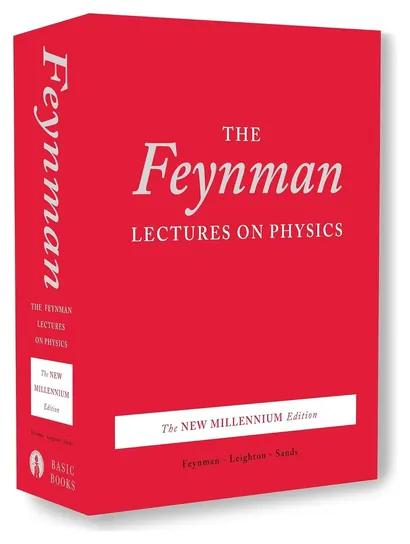
 Feynman Lectures on Physics
$106
-
2
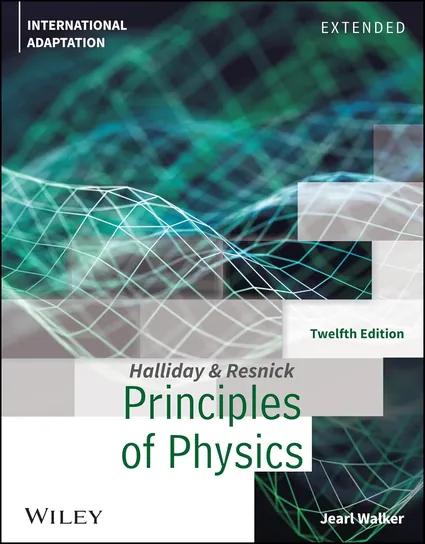
 Halliday Principles of Physics
$77
-
3
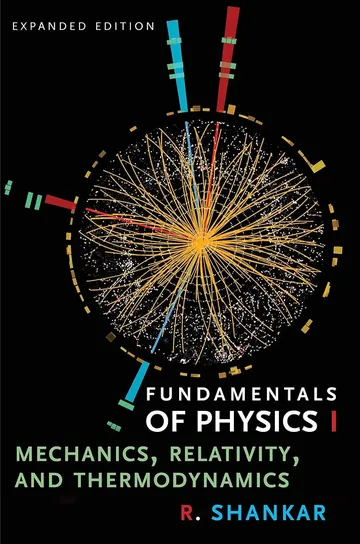
 Shankar Fundamentals of Physics I
$35
-
4
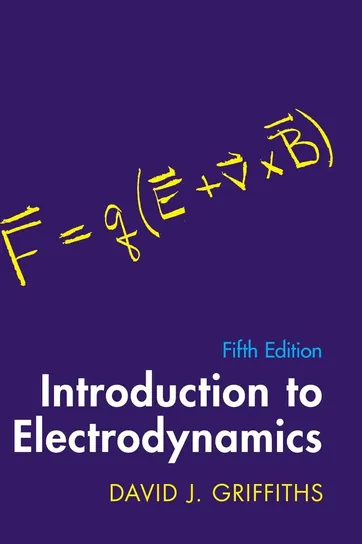
 Griffiths Introduction to Electrodynamics
$52
-
5
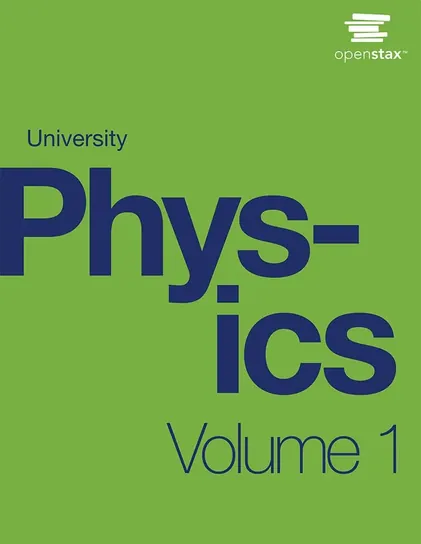
 OpenStax University Physics
$55
-
6
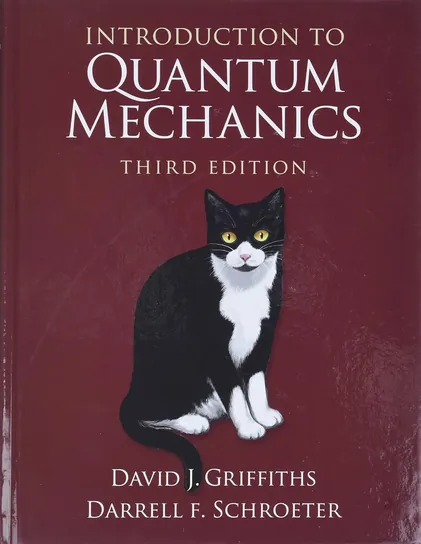
 Griffiths Introduction to Quantum Mechanics
$56
-
7
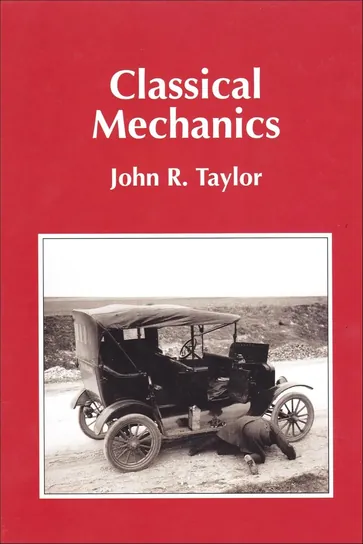
 Taylor Classical Mechanics
$99
-
8
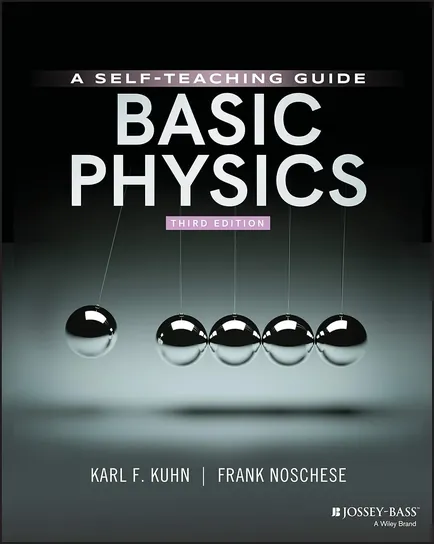
 Kuhn Basic Physics
$10
-
9
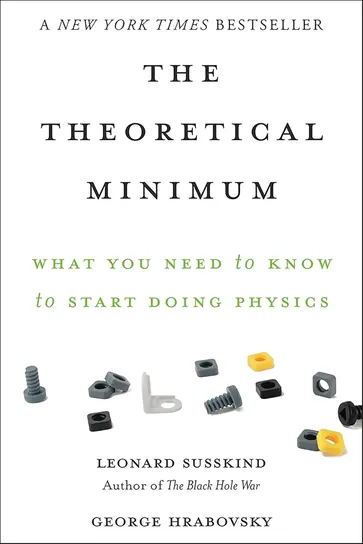
 The Theoretical Minimum
$12
-
10
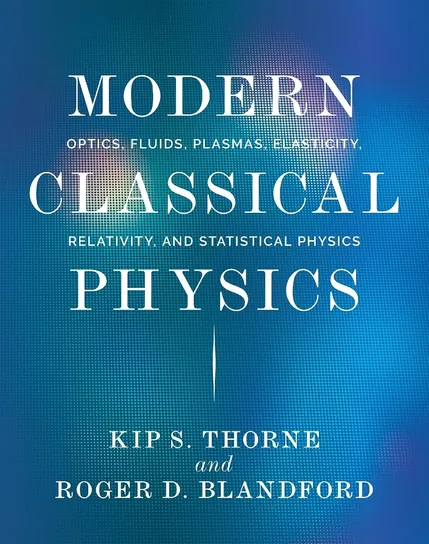
 Modern Classical Physics
$77
Editor's Notes
November 1, 2026, by Ezvid Wiki Editors:
The Feynman Lectures on Physics now top this list. No other set explains the ideas as well, and Caltech's free web edition lets anyone try it first. We rebuilt the page around the questions people bring here: which book for a first college course, which for teaching yourself, and what comes after. Halliday Principles of Physics covers the first course, Shankar Fundamentals of Physics I and Kuhn Basic Physics serve learners at home, and the two Griffiths books and Taylor Classical Mechanics carry you through the upper-level years.
Shankar's book and Basic Physics stay in newer editions, and Modern Classical Physics and Introduction to Quantum Mechanics stay as they were. Conceptual Physics and the algebra-based Giancoli and Knight books are gone, because current copies cost far more than they're worth when free alternatives exist. We dropped the general relativity primer as too narrow and the No Bulls--t Guide in favor of self-study books with answers. An older international edition of University Physics gave way to the free OpenStax book of the same name.
Nobody lab-tests textbooks, so we weighed course adoption, an award from physicists, each publisher's account of what an edition contains and how much practice material each book carries. If your class names an edition, buy that one.
Earlier notes
July 17, 2020, by Gia Vescovi-Chiordi:
We ensured every edition was completely up to date and maintained the balance between straightforward tomes geared toward the student with little prior knowledge, like Conceptual Physics, No Bulls--t Guide To Math And Physics, and Basic Physics and selections that focus on deeper concepts, like Introduction To Quantum Mechanics and Modern Classical Physics.
And while Physics For Scientists And Engineers is a rigorous text that can be beneficial to some, the way it's written can leave others frustrated and scratching their heads due to thin explanations, typos, and difficult problem sets that cover concepts that haven't been taught. We decided to replace it with College Physics: A Strategic Approach. This volume keeps mixed-major students in mind and features examples, explanations, and problems that use real data from research to show physics at work in relatable situations. This one is ideal for readers who want to see how physics plays a part in the world around them.
If you're looking for additional, non-textbook selections to help boost your knowledge, consider checking out our list of physics books as well.
July 11, 2019, by Daniel Imperiale:
As with any textbook that delves deeply into a complicated subject, the clarity of the voice in which it's written is paramount. Some of the books on our list may seem too straightforward and simplistic if you have any background in physics, however, so the depth at which each entry dives was also of major concern. The question becomes how one rates an aspect of a textbook that is partially dependent on the reader's foreknowledge of the field. For this we wanted to strike as nice of a balance as possible without ending up with a bland list of middle-of-the-road options.
For example, our previous number one pick earned its place largely for its lack of confusing jargon and plain, but entertaining, writing style. It remains an excellent choice for newer students, but those with a bit of background or a deep understanding of trigonometry might find it less useful. Our new number one entry, the 12th edition of Conceptual Physics, also aims to make its lessons easy for most students to understand, but it does so with real-world examples that are backed up by thorough mathematical explanation. The result is a text that's easy to read, comprehensive in its approach, and applicable to a wide range of students.
Special Honors
The American Physical Society The American Physical Society, founded in 1899, is a nonprofit of about 50,000 physicists and publishes the Physical Review journals. For students and teachers, it runs the PhysicsCentral outreach site, a program that trains future physics teachers, conferences for undergraduates and a careers center. It's a good place to see where a physics degree can lead. aps.org
MIT OpenCourseWare MIT has published its course materials free online since 2002, under a Creative Commons license. The physics catalog runs from first-year mechanics to graduate courses, and several include lecture videos, problem sets and solutions. It pairs well with any textbook on this list when you want a second explanation or more problems to work. ocw.mit.edu
Match The Book To Your Math
These assume calculus in several variables and differential equations, and quantum mechanics adds linear algebra.
Physics textbooks split first by the math they expect, and a book from the wrong track is the most common way to waste money. College courses come in two kinds. Algebra-based courses, often taken by biology and pre-med students, use algebra and trigonometry; OpenStax College Physics is a free example. Calculus-based courses, for physics and engineering majors, use derivatives and integrals from the first weeks. Halliday's book (sold in the U.S. as Fundamentals of Physics) and Young and Freedman's University Physics are the long-running choices there, and OpenStax University Physics covers the same ground in three free volumes.
After the first year, physics majors take separate courses in mechanics, electricity and magnetism, and quantum mechanics, each with its own book. These assume calculus in several variables and differential equations, and quantum mechanics adds linear algebra. Introduction to Electrodynamics and Introduction to Quantum Mechanics are widely treated as the standard undergraduate texts for their courses.
If you're not sure where you stand, try a chapter of a free book first. If the math in the worked examples looks unfamiliar, step down a level.
Free And Legal Ways To Study Physics
You can learn a great deal of physics without paying for anything, and every source below is legal. Caltech hosts a free web edition of the Feynman Lectures on Physics, launched in 2013. OpenStax, a nonprofit at Rice University, publishes its physics books as free web pages and PDFs under a Creative Commons license (OpenStax).
Video courses help when a chapter won't click. R. Shankar's Yale course, Fundamentals of Physics, is free on Open Yale Courses and follows his book closely. MIT OpenCourseWare posts full courses, including a self-paced first-semester mechanics course with lecture videos and problem sets with solutions. Leonard Susskind's Theoretical Minimum site links the Stanford lectures behind his book series.
A printed book still earns its place. It's easier to flip between a problem and the chapter that explains it, to write in the margins and to study away from a screen. Many self-learners read a free text online and buy a print copy of the one they end up using most.
Editions, International Copies And Doing The Problems
For a class, buy the edition on the syllabus. Homework is often assigned by problem number, and numbers shift between editions. For self-study, an older edition of a survey text is usually fine, since the physics doesn't change much; a newer edition mostly adds and reorders problems. The Griffiths electrodynamics fifth edition, for example, added worked examples and computer-based problems to a book whose structure stayed familiar.
International editions are common in this category. They're printed for markets outside the U.S. at lower prices, often with different covers, titles and problem sets. Halliday's book is sold abroad as Principles of Physics. Reselling such copies in the U.S. is legal: the Supreme Court said so in Kirtsaeng v. John Wiley and Sons in 2013. The risk is only a mismatch with a U.S. course.
Whatever you buy, the problems are where the learning happens. Read a section, close the book and try to rebuild the main result, then work several problems before moving on. Books with answers, such as the Shankar expanded edition and the Basic Physics self-teaching guide, make it easier to check your work when nobody is grading it.
How we researched this
We compared 20 physics textbooks from beginner guides to graduate texts, read each publisher's description of the current edition and its practice material, checked reference entries on the standard texts and the free course materials that go with several of them, confirmed which editions are in print and in stock, and searched federal recall records.
Sources (12)
- Wikipedia: The Feynman Lectures on Physics
- Wikipedia: Fundamentals of Physics
- Yale University Press: Fundamentals of Physics I, Expanded Edition
- Open Yale Courses: Fundamentals of Physics (PHYS 200)
- Wikipedia: Introduction to Electrodynamics
- OpenStax: University Physics Volume 1
- Wikipedia: Introduction to Quantum Mechanics
- Wikipedia: The Theoretical Minimum
- Wikipedia: Kip Thorne
- Wikipedia: Kirtsaeng v. John Wiley and Sons
- MIT OpenCourseWare
- U.S. Consumer Product Safety Commission: SaferProducts.gov
Frequently asked questions
What is the best physics textbook for self-study?
Pick a book with worked examples and answers. Shankar's Fundamentals of Physics I pairs with his free Yale video lectures and now includes exercises with an answer key. If calculus is new to you, start with the Basic Physics self-teaching guide.
Are the Feynman Lectures good for beginners?
They're brilliant, but they were written for strong students and have almost no exercises. Many readers get the most from them alongside a standard course text, or after a first pass through the subject.
Which physics textbook do colleges use for the first year?
Calculus-based courses commonly use Halliday's Fundamentals of Physics, Young and Freedman's University Physics or the free OpenStax University Physics. Algebra-based courses use books such as OpenStax College Physics. Always check your syllabus for the exact edition.
Is an older edition good enough?
For self-study, usually yes, since the physics hasn't changed. For a class, buy the assigned edition, because homework problems are often numbered differently from one edition to the next.
What should I read after an introductory physics textbook?
Most physics majors move on to Taylor's Classical Mechanics, Griffiths' Introduction to Electrodynamics and Griffiths' Introduction to Quantum Mechanics. Thorne and Blandford's Modern Classical Physics is a graduate-level step beyond those.
Can I get physics textbooks free and legally?
Yes. OpenStax publishes free physics textbooks, Caltech hosts the Feynman Lectures online, and MIT OpenCourseWare and Open Yale Courses post full physics courses with lectures and problems.