The 10 Best Ecology Textbooks
Updated by · How we research

Which ecology textbook fits your course? Ten compared, from first-course texts to a research handbook, with Ecology: From Individuals to Ecosystems on top. When users buy our independently chosen editorial selections, we may earn commissions to help fund the Wiki.
The ecology textbook a course assigns often comes with a catch: an online homework code sold separately, a loose-leaf printing, or an international edition marked for use outside the U.S. This list sorts university texts for first courses and deeper study, then adds a reference, a field-research handbook and two short reads for the curious. Check your syllabus first.
At a Glance
-
1
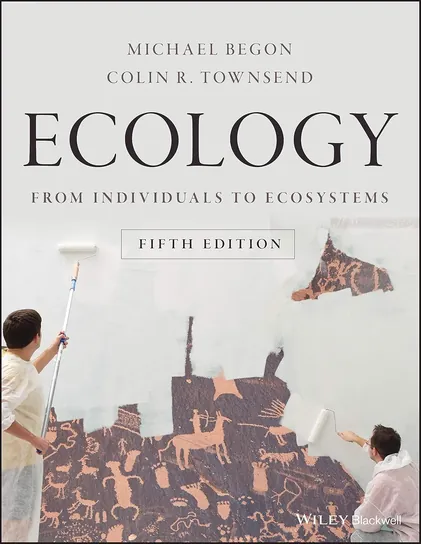
 Ecology: From Individuals to Ecosystems
$63
-
2
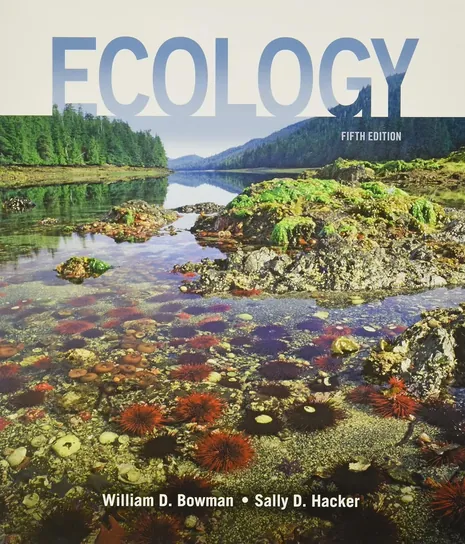
 Bowman and Hacker Ecology
$49
-
3
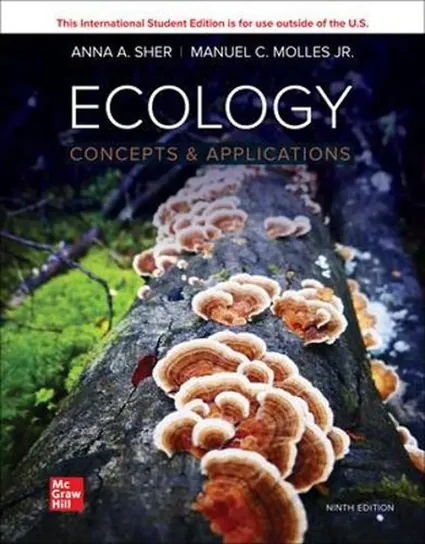
 Ecology: Concepts and Applications
$56
-
4
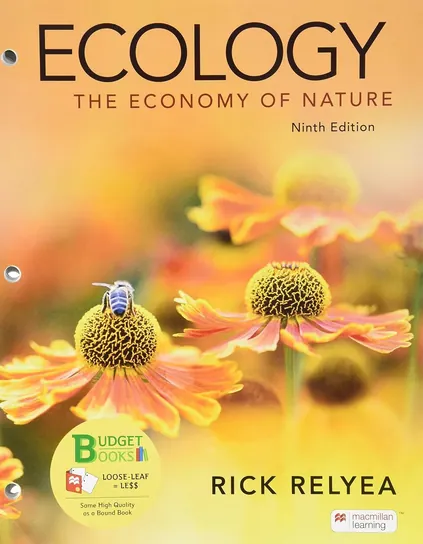
 Ecology: The Economy of Nature
$124
-
5
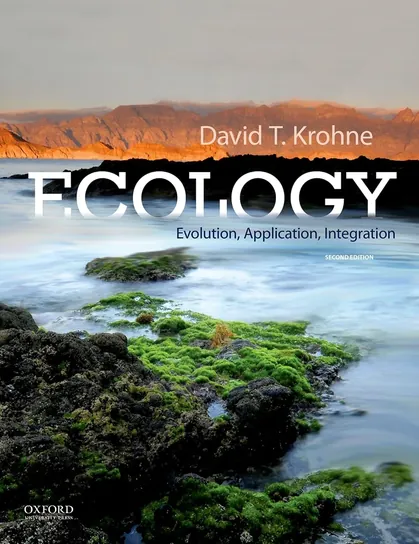
 Ecology: Evolution, Application, Integration
$96
-
6
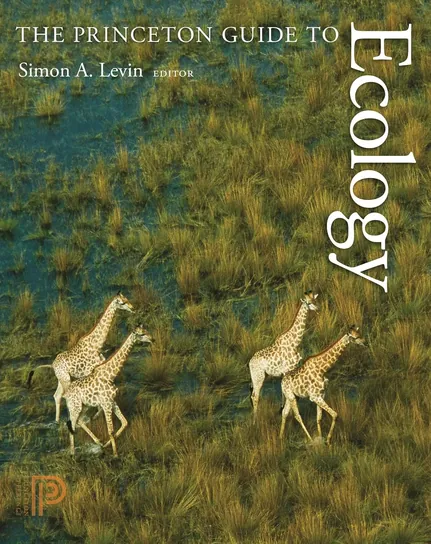
 The Princeton Guide to Ecology
$52
-
7
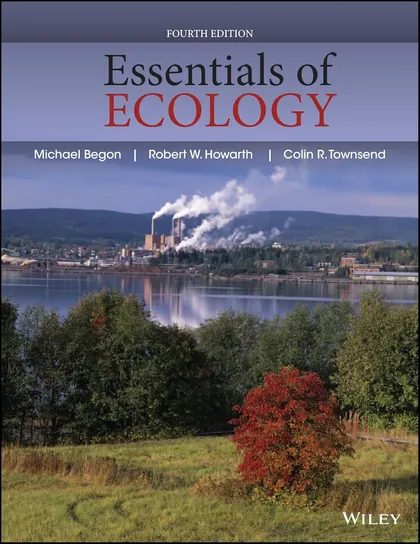
 Essentials of Ecology
$74
-
8
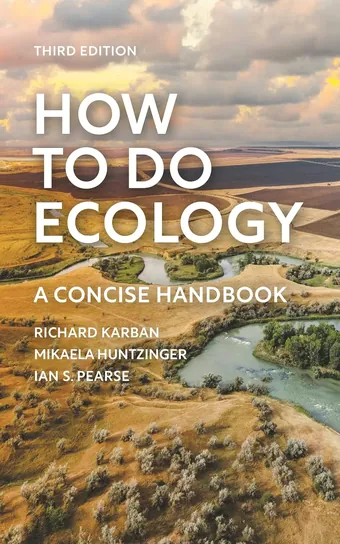
 How to Do Ecology
$22
-
9
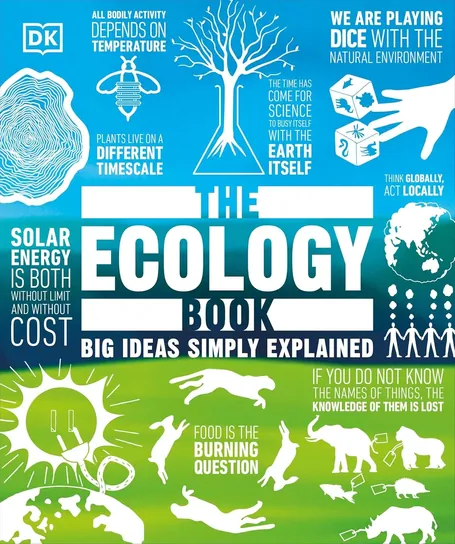
 The Ecology Book
$19
-
10
 Ecology: A Very Short Introduction
$12
Editor's Notes
November 16, 2026, by Ezvid Wiki Editors:
Ecology: From Individuals to Ecosystems now sits on top. It's the current edition, it costs far less than most new course texts, and ecologists still point to it as the book with the best grip on theory and evidence. Bowman and Hacker Ecology stays as the value pick even though a sixth edition is out, because the fifth costs about a third as much and follows the same chapter plan. Ecology: Concepts and Applications and Ecology: The Economy of Nature move up to their ninth editions, and The Ecology Book to DK's revised printing.
Freshwater Ecology and Environmental DNA left because they're specialist books rather than general texts. Elements of Ecology and Krebs's Ecology: Pearson New International Edition went too, since both are well over a decade old, and the last new copies of Elements cost far more than any current text. The Princeton Guide to Ecology, Essentials of Ecology, How to Do Ecology and Ecology: A Very Short Introduction are new, for reference, one-term courses, research skills and a quick start.
With books, the evidence that counts is which edition is current, what the table of contents covers and what working ecologists recommend on their blogs and reading lists, so that's what we weighed. For the wider life sciences, see our biology textbooks and zoology textbooks.
Earlier notes
November 30, 2020, by Gia Vescovi-Chiordi:
Ecology continues to be a critical field as we face mounting environmental issues, so we looked to broaden our list a bit to include fresh approaches to appeal to students of all stripes as well as laypeople interested in the problems humanity faces.
First, we finally removed McDougal Littell Ecology, as its last update was in 2003, and at this point, that gap is just too large. For kids today, we felt The Ecology Book is much more compelling thanks to its punchy, graphic nature and updated content. It talks about recent developments like the Paris Agreement and the environmental movement, the latter of which is particularly relevant to youngsters now.
And while we love the concepts behind Ecological Economics: Principles and Applications, this was another text that we felt was just too out of date to keep around. Instead, we filled the vacancy with Ecology 5th Edition, a bestselling tome packed with recent data and examples meant to motivate and inform undergrads. It also looks at global ecology and large-scale applications as the effects countries have on each other become increasingly impossible to ignore.
Finally, you'll notice Environmental DNA joining the ranks today for those interested in biodiversity research. This relatively new field is equally amenable to those interested in both aquatic and terrestrial ecosystems and is expected to help advance applications for a range of biological, geological, and environmental sciences. Though technical, this volume can be helpful for a host of ecology and biology students, especially those looking to inform policy or go into conservation.
December 16, 2019, by Gia Vescovi-Chiordi:
Thanks to a rapidly changing environment and newly formed challenges that require immediate consideration, the study of ecology has never been more important. With that urgency in mind, we wanted to ensure we included a handful of texts that address climate change, use data from recent studies, and focus on applied topics for the issues ecologists will be facing in the next few decades. That is why you'll find the newly added Ecology: From Individuals to Ecosystems in place of Ecology (Fourth Edition), which we still believe is a valuable text, but less compelling and a bit broader.
And while we love A Pocket Guide for its concise, short explanations and appeal to the layperson, we feel that it is overly general. Its essays have a negative bent that while likely written that way to impress upon readers the gravity of certain situations, come off as unpleasantly preachy. We think that students looking to get an introductory grip on the subject would appreciate The Princeton Guide to Ecology, a relatively unbiased, authoritative volume, instead.
Elements of Ecology and Ecology: Evolution, Application, Integration are excellent for students wanting to hone their research, quantitative and analytical skills. The former, however, is intended for advanced students and excessively detailed to the point of being overwhelming at times, so it's best read in digestible sections.
With youth activism on the rise, more and more youngsters are looking for information on the workings of the environment. McDougal Littell Science Ecology makes an ideal volume for middle schoolers interested in learning about such things. It's easy to read, formatted well, and full of informative illustrations. It hasn't been updated since 2003, however, so you'll need to supplement it with up-to-date research so as not to confuse. Picking up a zoology textbook can also help to broaden the reader's understanding and help them prepare for university courses.
Special Honors
Ecology for All! This free, openly licensed ecology textbook lives on LibreTexts and was written for an undergraduate course at Gettysburg College. It's organized in modules covering populations, communities, ecosystems and applied topics, so instructors can assign only the parts they need, and students can read the whole thing online at no cost. Its open license allows sharing and adapting for noncommercial use. bio.libretexts.org
Ecological Society of America The Ecological Society of America is the main professional home for ecologists in the U.S., with thousands of members who research, teach and manage natural resources. Students can join at reduced dues, and membership includes online access to all of the society's journals, a free student section, meetings and career resources. It's a practical next step for anyone who finishes an ecology textbook wanting more. esa.org
First Course Or Deeper Theory
What changes from book to book is the pace and the emphasis.
Every major ecology text climbs the same ladder: individual organisms and their physical surroundings, then populations, then the interactions between species (competition, predation and mutualism), then communities, ecosystems and global change. What changes from book to book is the pace and the emphasis. In a long-running discussion on the Dynamic Ecology blog, working ecologists named Molles or the Ricklefs and Relyea text as the undergraduate books they would recommend, and singled out Ricklefs and the Begon, Harper and Townsend text for the strongest coverage of theory.
For a first course, Sher and Molles keeps the explanations plain, and its ninth edition added more than 100 updated research examples and 42 new figures, according to the University of Denver, where lead author Anna Sher teaches. Bowman and Hacker builds each chapter around a case study, according to Oxford University Press. Relyea adds graphing and statistics exercises with answers at the back (Macmillan Learning), and Krohne frames each section as a question with an evolutionary answer (Oxford University Press).
Begon and Townsend's fifth edition runs to 864 pages and leans hardest on the experiments behind each idea. It works for a motivated first-year student, but it's built to carry you through upper-level courses too. If the math worries you, look for a book with worked graphing exercises rather than one heavy on models.
Editions, Loose-Leaf Copies And International Editions
Publishers revise the big ecology texts every three to five years: Bowman and Hacker moved from the fifth edition in 2020 to the sixth in 2023, and Sher and Molles and Relyea both reached their ninth editions in 2021. The science in an intro course changes slowly, so an edition one step back usually serves well, and it can cost a third as much. The catch is homework: if your instructor assigns numbered problems or an online platform, page and question numbers may not match. Ask before you buy.
Two formats save money with strings attached. Loose-leaf copies are unbound, three-hole-punched pages that need a binder and are hard to resell. International student editions are softcover printings marked for use outside the U.S.; the text is usually the same, but online homework codes are rarely included and some instructors object. Reselling a copy printed abroad is legal in the U.S. since the Supreme Court's 2013 decision in Kirtsaeng v. John Wiley and Sons, a case that involved a Wiley textbook.
Online access codes (Achieve for Relyea, Connect for McGraw Hill titles) are usually sold separately from the printed book. A used copy won't carry a working code, so price the code in if your course grades homework online.
Beyond The Main Textbook: Free Texts, Methods And Reading
You don't have to pay for a solid introduction. Ecology for All! is a free, openly licensed textbook on LibreTexts, built in modules so instructors can pick and choose, and the Open Textbook Library lists more free life-science texts with faculty reviews.
A textbook teaches what ecologists know, not how to find out. How to Do Ecology fills that gap with advice on choosing a question, designing a study and presenting the results, and Nicholas Gotelli's A Primer of Ecology is the classic short guide to the population models behind the graphs. Look for a recent edition of the Primer from its publisher; older printings sell for collector prices. Paul Keddy's annotated reading list is a good map of the field's classic texts and papers.
If you came here for ecology books to read for pleasure, that's a different shelf. Five Books has an ecologist's picks of field narratives, and classics such as Silent Spring and A Sand County Almanac still hold up as reading, not as course material.
How we researched this
We compared 15 ecology textbooks and companion books in 21 editions and formats, from first-course texts to a research handbook. We checked each book's current edition, publisher, page count and format against publisher pages and library catalogs, read tables of contents, weighed recommendations from ecologists' blogs and annotated reading lists, looked at reader feedback patterns, and screened out superseded editions and copies priced far above the rest. Books carry no safety recalls, and we found none.
Sources (15)
- Wiley: Ecology: From Individuals to Ecosystems, 5th edition
- Oxford University Press Canada: Ecology, 6th edition (Bowman, Hacker)
- University of Denver: New edition of popular ecology textbook published
- McGraw Hill: Ecology: Concepts and Applications
- Macmillan Learning: Ecology: The Economy of Nature
- Oxford University Press Canada: Ecology: Evolution, Application, Integration
- Princeton University Press: The Princeton Guide to Ecology
- Princeton University Press: How to Do Ecology
- Oxford University Press: Ecology: A Very Short Introduction
- Penguin Random House: The Ecology Book (DK)
- Dynamic Ecology: What theories should a beginning ecology student read up on?
- Paul Keddy: Introductory sources for ecology
- LibreTexts: Ecology for All!
- Supreme Court: Kirtsaeng v. John Wiley and Sons (2013)
- Ecological Society of America: Membership
Frequently asked questions
What is the best ecology textbook for beginners?
For a first course, Ecology: Concepts and Applications and Bowman and Hacker Ecology are the most approachable full texts. Ecology: From Individuals to Ecosystems goes deeper and suits students who want one book from intro through upper-level courses.
Is Begon's Ecology too hard for a first course?
Not for a motivated reader. It's dense and long, but it explains each idea through real experiments. Many students meet it in upper-level courses, so it's worth keeping after the first class.
Can I use an older edition of an ecology textbook?
Usually, yes. The core science changes slowly between editions, and an older copy can cost a fraction as much. Check with your instructor if the course assigns numbered problems or online homework.
Is there a free ecology textbook?
Yes. Ecology for All! is a free, openly licensed textbook on LibreTexts, and the Open Textbook Library lists other free life-science titles.
What's the difference between an ecology textbook and an environmental science textbook?
Ecology is the science of how living things interact with each other and their surroundings. Environmental science textbooks add pollution, energy, policy and human systems, with less depth on the biology.
What are good ecology books for general readers?
The Ecology Book and Ecology: A Very Short Introduction are friendly introductions. For narrative nature writing, classics such as Silent Spring and A Sand County Almanac are a better fit than any textbook.