The 10 Best Diesel Additives
Updated by · How we research

Ten diesel fuel additives compared for lubricity, cetane, injector cleaning, gelling and stored fuel. Stanadyne Performance Formula is the all-season pick. When users buy our independently chosen editorial choices, we may earn commissions to help fund the Wiki.
Since 2010, U.S. road diesel has been ultra-low sulfur, and removing that sulfur also took away much of the fuel's natural slipperiness, which modern high-pressure pumps rely on. Most pump fuel already carries some additives, so a bottle matters most in cold snaps, stored fuel and older or hard-worked engines. This guide is for truck, tractor, boat and generator owners.
At a Glance
-
1
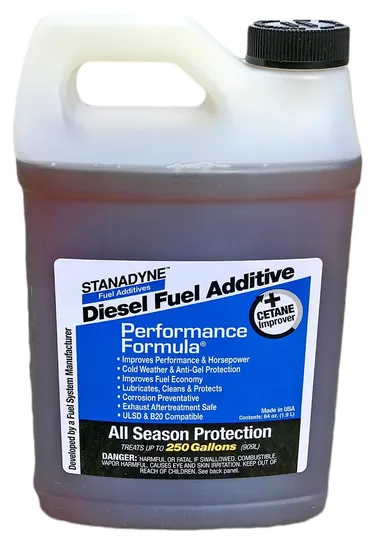
 Stanadyne Performance Formula
$39
-
2
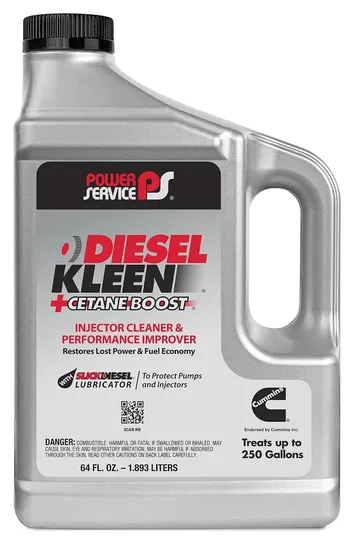
 Power Service Diesel Kleen
$21
-
3
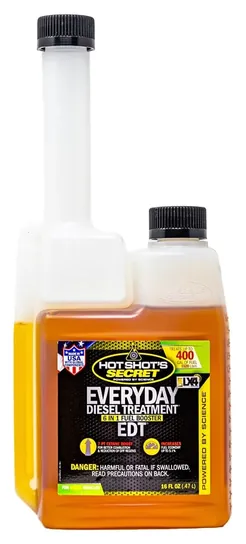
 Hot Shot's Secret EDT
$17
-
4
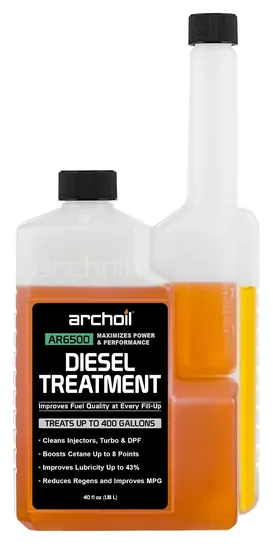
 Archoil AR6500
$44
-
5
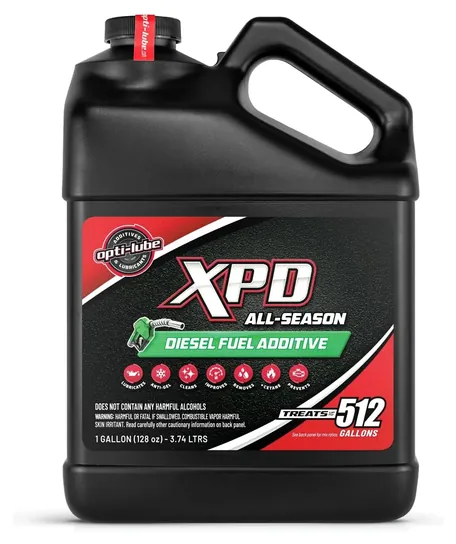
 Opti-Lube XPD
$87
-
6
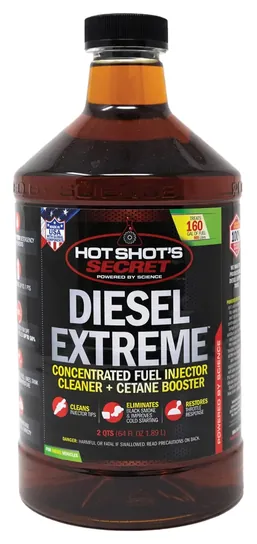
 Hot Shot's Secret Diesel Extreme
$31
-
7
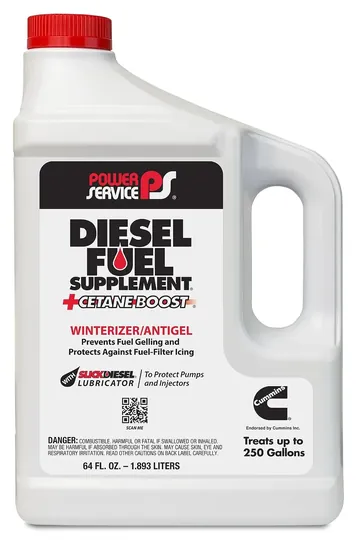
 Power Service Diesel Fuel Supplement
$21
-
8
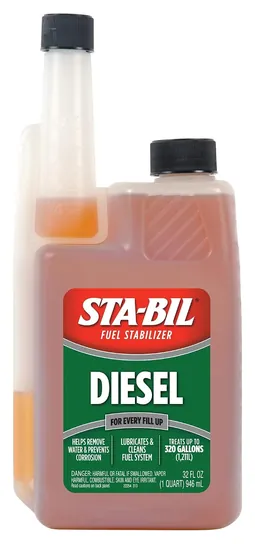
 Sta-Bil Diesel Fuel Stabilizer
$21
-
9
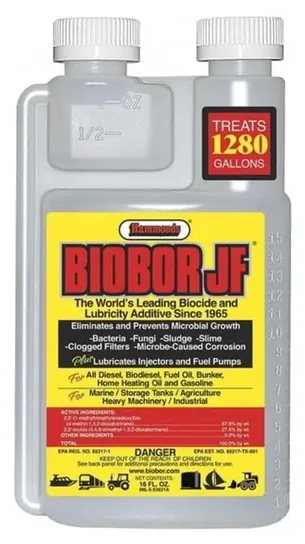
 Biobor JF
$28
-
10
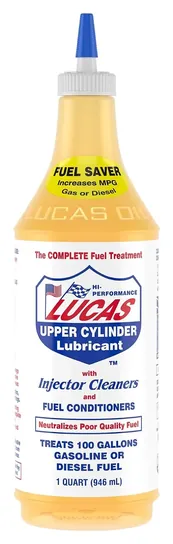
 Lucas Oil Fuel Treatment
$12
Editor's Notes
October 27, 2026, by Ezvid Wiki Editors:
The Stanadyne Performance Formula keeps its place at the top. Stanadyne builds diesel fuel pumps, its all-season blend carries approvals from several engine makers, and the label says it's safe for modern exhaust filters.
The Power Service 03080 is no longer sold, so the same formula in its current bottle, the Power Service Diesel Kleen, takes over, and the Lucas Oil Fuel Treatment now appears in its quart size. We dropped the Red Line 85 Plus, which only comes by the case right now, along with the Rev-X Distance+Boost and Liqui Moly 2002 Super, which come with too little detail to rank. New picks fill gaps readers ask about: the Hot Shot's Secret EDT for every fill-up, the Archoil AR6500 for late-model trucks with soot filters, and the Power Service Diesel Fuel Supplement for winter gelling.
The cetane and wear figures printed on these bottles come from the makers' own runs of standard lab tests, so we leaned on what each formula is built to do, the dosing and engine-safety statements on labels, the EPA's fuel rules and years of truck-owner forum threads. If your truck fills up at a busy station and runs well, an additive is optional. Winter, stored fuel and tired injectors are where one earns its keep.
Earlier notes
March 15, 2021, by Christopher Thomas:
We haven't altered our rankings of diesel fuel additives recently, because many of these have been around for quite some time, and are all still excellent choices. If you're only using it periodically, Sta-Bil Stabilizer is a familiar and reliable choice that doesn't make any ridiculous claims, but simply works well. Alternatively, if you need to treat a few vehicles, the professional-grade Stanadyne Performance Formula four-pac can help you do so at a reasonable cost. Others, like Lucas LUC10013, are suitable for both gasoline and diesel engines.
All told, make sure that the one you choose is geared toward your specific issue, because there's a variety of formulations that can all accomplish slightly different goals.
May 10, 2019, by Brett Dvoretz:
There is no question that diesel systems offer a number of advantages of their gasoline brethren, such as better towing capabilities, improved miles per gallon, and longer engine life. Unfortunately, they also have their fair share of drawbacks, like the tendency to be louder, rougher, dirtier, and release more emissions. They can also cost a lot to fix when regular maintenance is ignored. That's where these diesel additives come into the picture. They can smooth rough idling, reduce emissions, lubricate the fuel system, minimize the build up of sludge, and more, ensuring your diesel engine stays in tip-top shape for years to come. Whether you live in a hot climate or a cold one, Stanadyne Performance Formula is a suitable option that has been a top choice of professional mechanics for years, so you definitely can't go wrong with it. If you notice your ride has been idling a little rough lately, we recommend Opti-Lube XPD Improver or Power Service 03080-06. If your goal is to minimize smoking and engine emissions, you'll want to consider Lucas LUC10013, Red Line 85 Plus, Rev-X Distance+Boost. On the other hand, if the elimination of sludge and algae buildup is a top priority, we recommend Sta-Bil Stabilizer and Hot Shots Secret Extreme Clean & Boost, both of which can reduce water in the system. For marine engines, Lucas LUC10013 and Hammonds Biobor JF are the best options.
What Ultra-Low Sulfur Fuel Changed
The cleaner fuel lets modern exhaust filters work, but the refining that strips sulfur also strips some natural lubricity.
Since 2006 the EPA has phased in ultra-low sulfur diesel, capped at 15 parts per million of sulfur, for highway use, and it reached off-road, rail and marine fuel by 2014 (EPA diesel fuel standards). The cleaner fuel lets modern exhaust filters work, but the refining that strips sulfur also strips some natural lubricity. Refiners add lubricity improvers to meet the fuel standard, and the common-rail pumps on late-model trucks run at very high pressure, so many owners add a lubricity treatment for margin.
Cetane is the other number on most bottles. It measures how readily diesel ignites under compression, and a higher number means quicker starts and a quieter, smoother burn (Wikipedia: Diesel fuel). U.S. pump diesel often sits in the low to mid 40s. Additives that claim a gain of a few points use chemistry that does work, but the real gain depends on the fuel you start with.
Most claims on these labels, from wear reduction to fuel economy, come from the makers' own runs of standard lab tests. Treat them as a sign of what a formula is built for rather than a promise for your truck, and judge by the jobs listed: lubricity, cleaning, cetane, water control and cold flow.
Winter Gelling: Add It Before The Cold
Diesel contains paraffin wax, and as it cools the wax forms crystals that cloud the fuel, then thicken it until it clogs the filter. Number 2 diesel can gel in the single digits Fahrenheit, and biodiesel blends start to cloud at much warmer temperatures (Wikipedia: Diesel fuel). Fuel stations sell winter blends in cold regions, but a cold snap or a tank filled in fall can still catch you.
An anti-gel has to be in the tank before the wax forms. Power Service tells owners to start its winter formula below about 30 degrees and to double the dose below zero or with biodiesel (Power Service Diesel Fuel Supplement). All-season blends with cold-flow help, such as the Stanadyne Performance Formula and Opti-Lube XPD, can cover mild winters at their cold-weather dose.
If fuel has already gelled, a regular anti-gel won't fix it. You need a rescue product made to reliquefy gelled fuel and thaw an iced filter, such as Power Service Diesel 911, plus a new fuel filter in most cases. Keep one in the truck in winter.
Stored Fuel, Water And Microbes
Fuel that sits for months in a generator, tractor, boat or backup tank breaks down. It oxidizes into gums and sludge, and condensation adds water at the bottom of the tank. Bacteria and fungi live at the line where water meets fuel, and their slime clogs filters (Wikipedia: Diesel fuel). A stabilizer slows the aging, while a biocide kills what's already growing. They do different jobs, and stored fuel in warm, damp places may need both. Keeping tanks full and draining water traps helps as much as any bottle.
A few safety rules apply to every additive here. They're combustible and harmful if swallowed, so store them sealed and away from children. Never pour one into the blue diesel exhaust fluid tank, which Power Service warns about on its pages (Power Service Diesel Kleen). Follow the label dose, since more is not better, and don't stack two products that do the same job. Makers often state that their formula won't void an engine warranty, but a warranty claim can still turn on what caused a fuel-system failure, so use known brands and keep receipts.
How we researched this
We compared 22 diesel additives, read the makers' dosing, engine-safety and warranty statements on their sites and bottle labels, the EPA's diesel fuel rules and the standard test methods behind lubricity and cetane claims, reviewed long-running truck and fleet owner forum threads, and checked every brand for recalls with the U.S. Consumer Product Safety Commission. We found no independent lab comparison of named brands, so every performance figure on this page is the maker's own.
Frequently asked questions
Do diesel additives actually work?
Some jobs clearly pay off: anti-gel in winter, stabilizer and biocide for stored fuel, and cleaners for dirty injectors. For a healthy engine that runs on fresh fuel from a busy station, the gains in power or mileage are small and hard to measure.
Are diesel additives safe for engines with a DPF?
Many are. Look for a statement that the formula is safe for 2007 and newer engines or exhaust aftertreatment, as Stanadyne and Power Service give, and follow the label dose.
What's the difference between a cetane booster and a lubricity additive?
A cetane booster helps fuel ignite faster, for easier starts and a smoother, quieter run. A lubricity additive coats the fuel pump and injectors to cut wear. Many all-season treatments do both.
When should I add an anti-gel?
Before the cold arrives, ideally just before you fill up so it mixes in. Power Service suggests starting below about 30 degrees. Once fuel has gelled, you need a rescue product instead.
Can I use two diesel additives at once?
Products that do different jobs, such as a stabilizer and a biocide, are often used together. Don't stack two that do the same job, and check both labels for warnings.
Can I put a diesel additive in the DEF tank?
No. Diesel exhaust fluid goes in its own blue-capped tank, and any fuel additive in it can damage the exhaust system. Additives go in the fuel tank only.