The 9 Best Call Blockers
Updated by · How we research

Blocker boxes and phones with built-in call blocking, compared on line type, block lists and allow lists. The CPR V5000 wins for its one-button simplicity. When users buy our independently chosen editorial choices, we may earn commissions to help fund the Wiki.
A landline call blocker can only judge the number your phone company sends, so it needs Caller ID, and most boxes work only on a traditional copper line, not cable or internet phone service. Check your bill before buying. A box suits people who like the phone they have, while a phone with blocking built in suits anyone due for a new handset.


Editor's Notes
November 1, 2026, by Ezvid Wiki Editors:
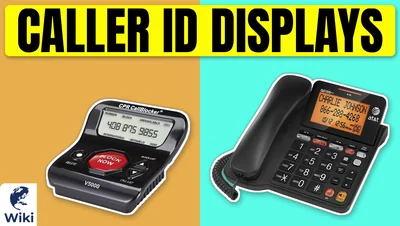
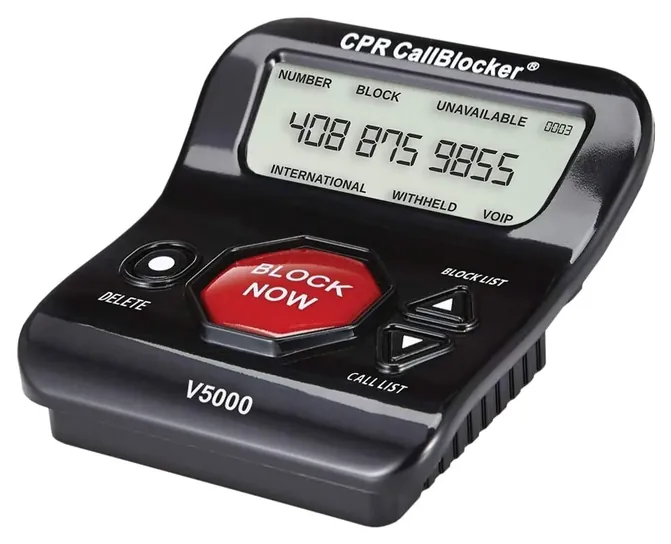
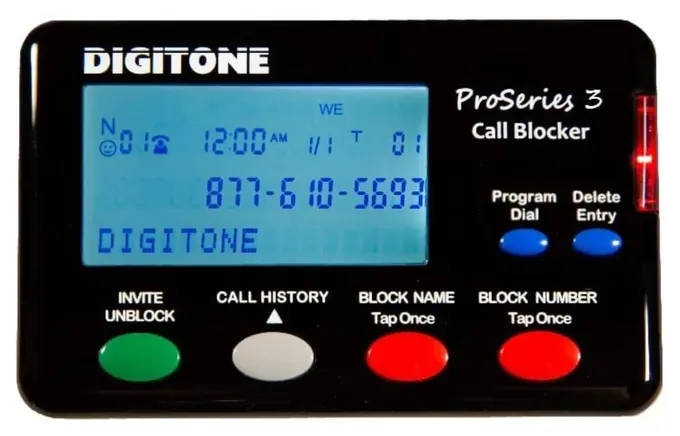
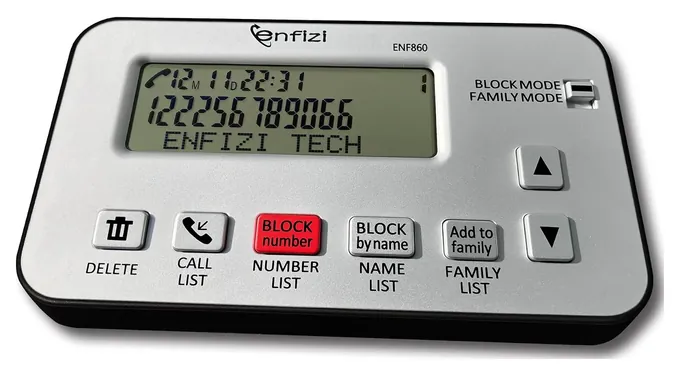
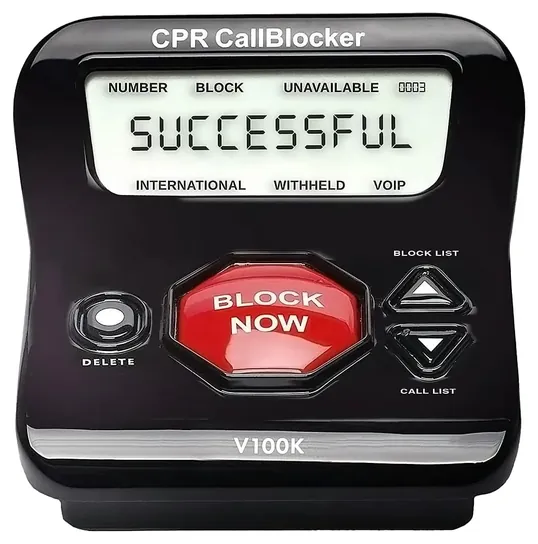
The CPR V5000 stays on top. It is still sold, it needs no power cord, and a single red button stops a repeat caller, which makes it the simplest box here for an older relative. Six of the seven old picks have left the market: the CPR Shield, Digitone ProSeries II, Sentry 3.1, CPR V108 and TelPal 1500 have all dropped out of stores, and Panasonic has discontinued its One-Touch blocker. The Digitone ProSeries 3 takes its predecessor's place, and the CPR V100K and Enfizi Enf860 join as stand-alone boxes.
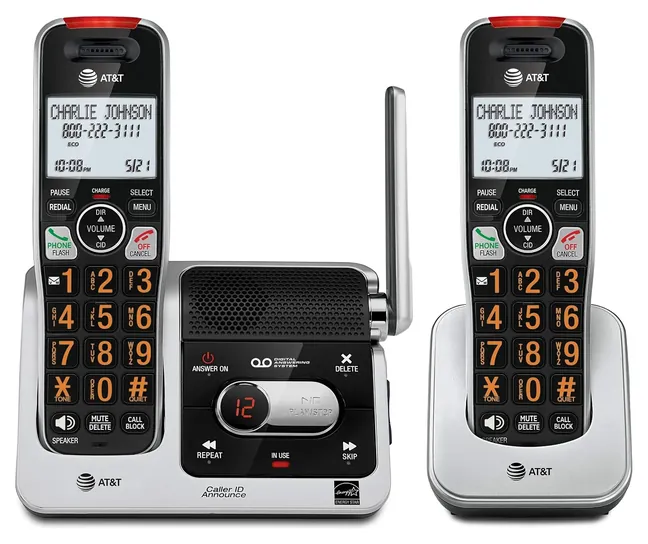
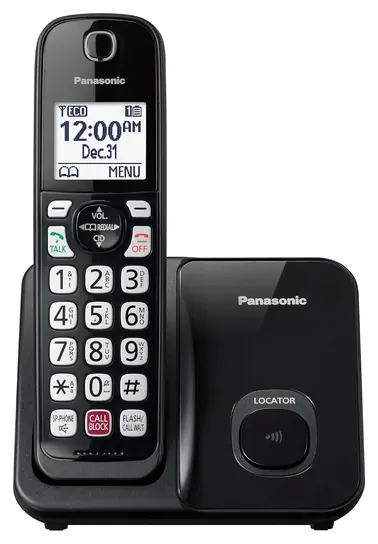
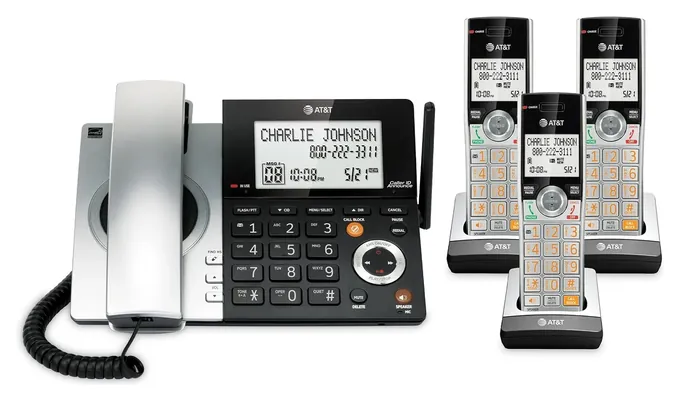
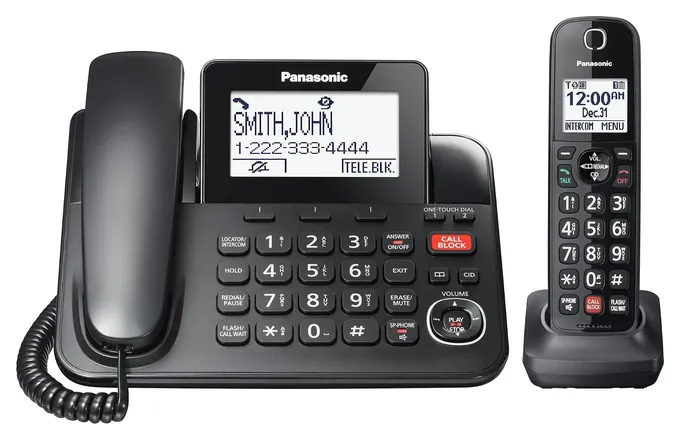
The bigger change is that phones with blocking built in, like the AT&T BL102-2 and Panasonic KX-TGD810B, now share the list. Many homes have moved to cable or internet phone service, which CPR says its boxes can't handle, and a phone that screens its own calls sidesteps that. No lab has tested landline blockers, so this ranking rests on makers' compatibility notes, FTC and FCC guidance, one TV station's five-day trial in a real home and the problems owners report most.
Earlier notes
November 13, 2020, by Brett Dvoretz:
Our first priority when selecting the best call blockers was effectiveness. Sure, we looked at things like counter footprint, overall aesthetics, and the user interface, but all these features took a back seat to finding options that blocked the majority of, it not all, unwanted calls. We feel that no matter how a sleek a device looks or how easy it is to use doesn't matter in the slightest unless the machine actually stops bothersome callers.
CPR Global makes some of the best devices, so we were surprised to learn that their newest model, the CPR V10000 seemed to have significant problems ranging from delaying a dial tone, blocking either all calls or no calls, a shoddy build quality, and more. With this in mind, we decided to forgo including it and instead kept the tried and true CPR V5000 and CPR Shield, despite the fact that they are older models.
A new addition is the Digitone ProSeries II, which takes the place of the original Digitone ProSeries. Along with all regular landline providers, the ProSeries II supports DSL modems or gateways, VoIP digital to analog telephone service, and broadband analog adapters, making it suitable for most applications. Additionally, it can block a virtually unlimited amount of numbers. The Sentry 3.1 is another option making its debut. We like it for the built-in keypad that makes it easy to add contacts to its whitelist, rather than having to wait for them to call or go through an arduous process on your handset.
The TelPal 1500 is a budget-friendly addition to the list, and while it does have its drawbacks, namely a limited 1,500-number blacklist capacity and the inability to work with cordless phones, it can still block a lot of those pesky callers who might otherwise disturb you.
May 26, 2019, by Brett Dvoretz:
When it comes to call blockers, the most important thing to most consumers is how effective the unit is. That being said, there are some additional features that can make a particular model easier or more convenient to use. For example, the CPR V5000, CPR V10000, Mcheeta 801, and a few others allow you to block numbers directly from your handset. The CPR V108 not only blocks robocalls, but even stops the first ring on any phone that is hardwired to it, which most other models don't. The LeeKer LK-P06B utilizes a flashing light to provide you with a visual incoming call alert, and the Digitone ProSeries features a three-line display that shows the name of the caller along with the number. Of all the options on our list, the CPR V10000 has the largest number storage capacity, with the ability to block an impressive 12,000 numbers in total, in addition to being able to blanket block international calls, all those from particular area codes, and masked numbers. The CPR V5000 has similar features to the CPR V10000 and is slightly more affordable, too, so if a 6,500 number capacity is enough for you, which should be for most people, there is no reason not to choose this model instead.
Check Your Phone Line Before You Buy
Digitone says its ProSeries 3 works with VoIP adapters, but treat that as the maker's claim.
A call blocker reads the Caller ID signal on the first ring, compares the number to its lists and decides whether to let the call through. No Caller ID, no blocking: CPR says plainly that without the service a box can't identify anyone (CPR Call Blocker). If your bill doesn't list Caller ID, add it first.
The second check is the line itself. If your phone plugs into a cable modem, a fiber box or an adapter from Vonage or Ooma, you have internet phone service, often called VoIP. CPR says the V5000 doesn't work with Vonage, Ooma, Xfinity Voice or Quantum Fiber, and that the V100K doesn't work with many VoIP services (CPR V100K). Digitone says its ProSeries 3 works with VoIP adapters, but treat that as the maker's claim.
On a VoIP line, two better routes exist. Most carriers offer free blocking tools, and the FCC keeps a list of them (FCC). Or buy a phone with blocking built in, since it reads Caller ID itself and doesn't care how the call arrived.
Block Lists, Allow Lists And Screening
Boxes and phones use three tools. A preloaded block list stops numbers already known for spam. Your own block list grows each time you press the block button after a bad call. An allow list, often called family mode, does the opposite: only the numbers you've saved ring, and everyone else is turned away.
None of these catches everything. Scammers spoof local numbers and switch them constantly, so a new number rings once before you can block it. In a five-day trial in one household, dozens of suspected telemarketing calls got past both a CPR V5000 and a Digitone ProSeries (ABC15). The FTC also warns that blocking can stop calls you want (FTC).
Phones with call screening add a middle step. Unknown callers hear a prompt to press a key or say their name, which robocall systems can't do, while saved contacts ring straight through. That's the best match for people who get calls from doctors, pharmacies or schools that may come from unfamiliar numbers.
Setting Up A Box, And What It Can't Do
A box sits between the wall jack and the phone. Only phones plugged into its phone port are behind it, so other jacks in the house can still ring. The easy fix is to plug the base of a cordless set into the box, which covers every handset that pairs with it.
Most CPR boxes take their power from the phone line, while the Digitone needs a wall outlet. None needs an app or a subscription. Keep Caller ID active, and block each new nuisance number the moment it calls, because the list you build matters more than the one it ships with.
Register your number with the National Do Not Call Registry too (DoNotCall.gov). It stops legitimate telemarketers, though scammers ignore it. Political robocalls to landlines are allowed without consent within limits (FCC), so expect some during election season unless you block them by hand. Outgoing calls, including 911, aren't affected by any blocker.
How we researched this
We compared 15 landline call blockers and home phones with built-in blocking, read the makers' compatibility notes and support pages for the 9 finalists, used FTC and FCC guidance on unwanted calls, weighed the one independent home trial we could find, analyzed owner feedback and checked each brand against CPSC recall records.
Sources (9)
- CPR Call Blocker: V5000 product page
- CPR Call Blocker: V100K product page
- Panasonic support: KX-TGA710B
- AT&T Telephones: product support FAQs
- FTC: How to block unwanted calls
- FCC: Call blocking tools and resources
- FCC: Political campaign robocalls consumer guide
- ABC15: Home phone call blockers, do they work?
- National Do Not Call Registry
Frequently asked questions
Will a call blocker work with Xfinity Voice, Vonage or Ooma?
Usually not. CPR says its V5000 doesn't work with those services. Digitone claims VoIP support for the ProSeries 3, but check with the maker first. A phone with built-in blocking or your carrier's free tools are safer bets on internet phone service.
Do I need Caller ID for a call blocker to work?
Yes. A blocker can only act on the number or name your phone company sends. Some models, like the Digitone ProSeries 3, need Caller ID with names to block automatically.
Will a call blocker stop every robocall?
No. Scammers switch and spoof numbers, so a new one can ring once before you block it. An allow-list mode or call screening stops more, at the cost of turning away some unknown callers you might want.
Does a call blocker need power, an app or a monthly fee?
No app or fee. CPR boxes and the Enfizi Enf860 run on phone-line power, while the Digitone ProSeries 3 uses a wall adapter. Phones with blocking built in plug into an outlet like any cordless phone.
Can a landline call blocker stop spam on my cellphone?
No. These work on home phone lines only. For a cellphone, use your carrier's blocking tools or the phone's own call filter; the FCC lists carrier options at fcc.gov/call-blocking.