The 5 Best Bluetooth GPS Receivers
Updated by · How we research

The Garmin GLO 2 leads our five Bluetooth GPS receivers for phones, tablets and laptops, compared on battery life, satellite systems, accuracy and setup. When users buy our independently chosen editorial picks, we may earn commissions to help fund the Wiki.
On an iPhone or iPad, a receiver made for Apple devices feeds its position to every location app, while Android needs a helper app and a mock-location setting. These small battery-powered units send satellite position over Bluetooth. Pilots pair them with Wi-Fi iPads, and boaters, drivers, photographers and mapping crews use them where a built-in chip falls short.


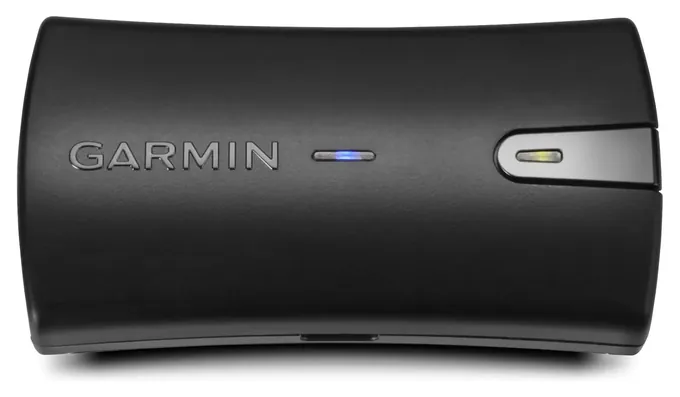
From the manual
- It turns itself off if no Bluetooth link forms within several minutes, so pair the phone soon after switching it on. p. 3
- A battery left uncharged for a long time may need removing and reinserting with the cable connected before it will charge. p. 2
- It runs while charging, so a vehicle power cable, included in some packages, keeps it going on long trips. pp. 2, 4
- Use only Garmin's replacement battery, part 010-10840-00; the manual warns another battery risks fire or explosion. pp. 2, 5
Why the Garmin GLO 2 is our top pick
For one phone or tablet, the GLO 2 runs longer, and its battery can be replaced. Its maker rates a charge at about 13 hours,1 against about 10 hours with one device linked for our runner-up, the Dual XGPS160.3 When the cell wears out, a new one slips in under a thumb-release cover,1 and the receiver keeps working while it charges.1
It is rated for colder days, too, down to -4 degrees F,1 where the runner-up stops at 14.3 It is also a little lighter, about 2.1 ounces to 2.5.2,4 Both track GPS and GLONASS satellites,2,4 and both can update 10 times a second, though the GLO 2's maker says iPhones and iPads won't take that rate.2
The runner-up wins where several screens share one fix. It links with up to five devices3 and records up to 20 hours of track,3 and neither appears in our pick's specs. Dual also quotes a faster first fix, under 29 seconds against a 60-second cold start for the GLO 2.3,2 It also charges over USB-C,4 where the GLO 2 still uses mini-USB.1 For a cockpit with two iPads, take the XGPS160; for one device, our pick.
| Garmin GLO 2 | Dual XGPS160 | |
|---|---|---|
| Battery per charge | About 13 hours | About 10 hours, one device |
| User-replaceable battery | Yes | Not stated |
| Operating range | -4 to 140 F | 14 to 140 F |
| Devices at once | Not stated | Up to 5 |
| Built-in track log | None listed | Up to 20 hours |
Sources
- Garmin GLO 2 1Instructions (PDF), pp. 2, 4 2Specifications
- Dual XGPS160 3Owner's manual (PDF), pp. 4, 5, 13, 14 4Product page
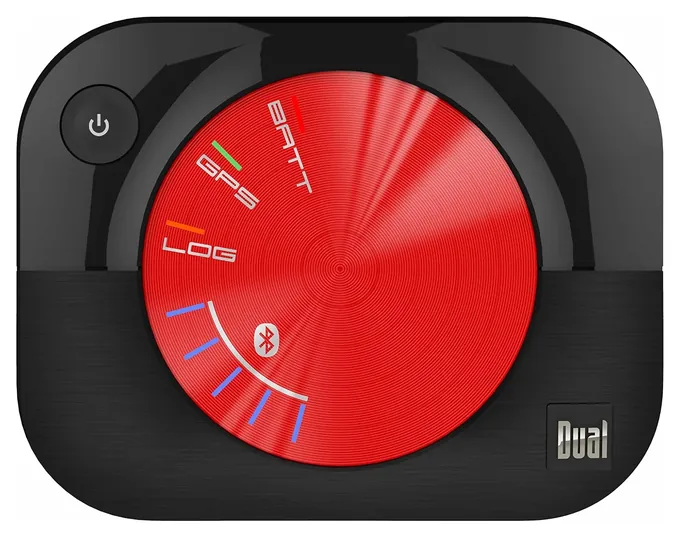
From the manual
- Double-click the power button to log one trip, triple-click to log whenever it's on; Dual's free app exports the track. pp. 4-5
- In planes with heated windshields, use a side window: the heating mesh in the front glass blocks satellite signals. p. 12
- Bluetooth range shrinks as the battery runs down, so recharge first if the link keeps dropping. p. 12
- The one-year warranty covers only the original buyer from an authorized Dual dealer, for use in the U.S. p. 17
Compare the specs
Swipe the table sideways to see every column.
| Product | Battery (hours) | Satellite systems | Maker's accuracy (m) | Fastest updates (per second) | Devices at once | Water |
|---|---|---|---|---|---|---|
| 1. Garmin GLO 2 | 13 | GPS+GLONASS | 3 | 10, not on iOS | — | Not water-resistant |
| 2. Dual XGPS160 | 10, one device | GPS+GLONASS | 2.5 (CEP) | 10 | Up to 5 | Light splashes, in pad |
| 3. Bad Elf Flex Mini | 24 | GPS+GLONASS+Galileo+BeiDou | 1-2 with SBAS | 1, up to 10 in some apps | At least 3 | Waterproof (IPX7) |
| 4. Dual XGPS150A | 8.5 | GPS only | 2.5 (CEP) | At least 1 | 1 | Light splashes, in pad |
| 5. Qstarz BT-Q818XT | 42 at 1 Hz, 24 at 10 Hz | GPS only | 3, or 2.5 with SBAS | 10 | — | Not waterproof |
Makers' own figures. Accuracy statistics differ between makers (CEP is the circle that holds half the fixes), so half-meter gaps mean little. The Flex Mini row is the Standard version; Bad Elf's product page says IP67 where its manual says IPX7. The Qstarz is discontinued.
Sources
- Garmin GLO 2 Instructions (PDF) Specifications
- Dual XGPS160 Owner's manual (PDF) Product page
- Bad Elf Flex Mini User manual v1.2 (PDF) Product page
- Dual XGPS150A Owner's manual (PDF) Product page
- Qstarz BT-Q818XT User's manual (PDF) Product page
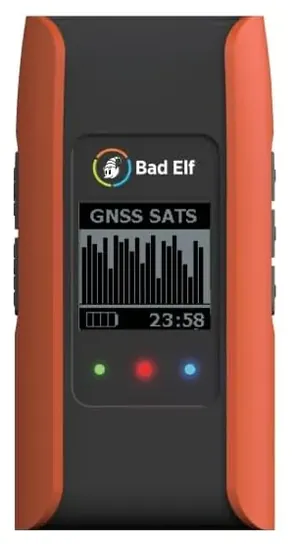
From the manual
- A USB source supplying at least 500 mA runs it indefinitely while charging, whatever the battery level. p. 4
- On Android it shows Connected, then Disconnected a few seconds later; that's normal, and the link opens when an app asks. p. 9
- If it freezes, holding the power button for 15 seconds forces a hard reset. p. 5
- Despite the waterproof rating, the one-year warranty excludes water damage, and units bought at online auctions aren't covered. pp. 12, 15-16
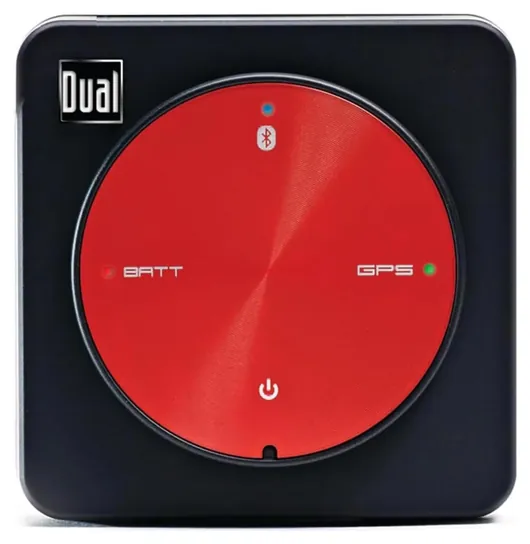
From the manual
- Set the mode switch with a pen tip before pairing: away from the USB port for Apple devices, toward it for everything else. pp. 5-6
- An iPhone or iPad may say an app is required after pairing; Dual says nothing needs installing. p. 9
- It serves one device at a time; to switch, turn off Bluetooth on the first device or move it out of range. pp. 16-17
- The battery isn't user-serviceable, so a worn battery means contacting Dual's customer support. p. 17
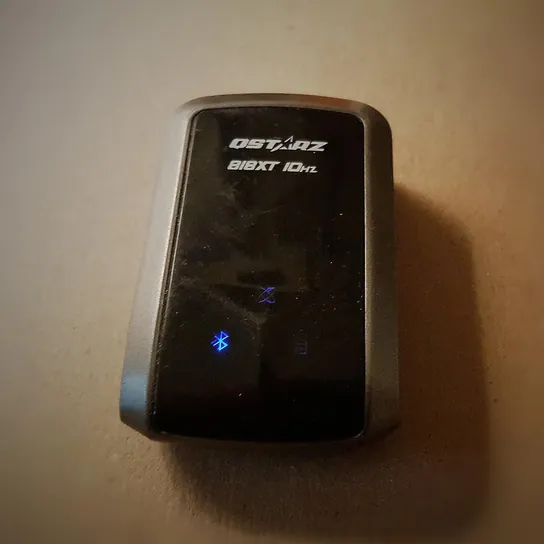
From the manual
- In 10-updates-a-second mode the satellite correction signal switches off, so lap timing gives up some accuracy for speed. p. 14
- Rates between one and five updates a second are set on a Windows PC over USB with Qstarz's software. pp. 14-16
- It sleeps when Bluetooth disconnects and wakes on a new link, but that power saving stops while USB is plugged in. p. 7
Editor's Notes
November 5, 2026, by Ezvid Wiki Editors:
We read the makers' manuals for all five receivers, added a spec table, a section on why the Garmin GLO 2 leads and manual notes under each pick. We corrected the claim that an iPhone uses an external receiver only in apps that support it: Garmin, Dual and Bad Elf receivers feed every location app. We also fixed the Dual XGPS150A's age, removed a car adapter the XGPS160 doesn't include, and note that Qstarz has discontinued the BT-Q818XT.
October 17, 2026, by Ezvid Wiki Editors:
Our new No. 1 is the Garmin GLO 2, for its 13-hour battery that you can swap, two satellite systems and wide temperature range. Most of the earlier list had disappeared. The Dual Electronics XGPS170D, Bad Elf GPS Lightning, Bad Elf 2300 Pro+ and Qstarz BT-Q1000XT are no longer available, and the Solmeta GMax-GD listing is gone. The Garmin GLO 2 replaced the original Garmin GLO, so we list the newer one. We also moved the Garmin Aera 660 to special honors. It's a fine aviation navigator with its own screen, but it isn't a receiver for a phone or tablet.
The Dual XGPS160 and Dual XGPS150A stay. New are the Bad Elf Flex Mini, for mapping work that needs better accuracy, and the Qstarz BT-Q818XT, a cheap option for laptops and lap timers. [2026 update: Qstarz now lists the BT-Q818XT as discontinued.]
Why only five? The category has shrunk. Phones and cellular tablets carry good GPS chips, and many older receivers were discontinued without a replacement. We'd rather list a few well-documented receivers than pad the page.
One thing to know before buying: Android needs a mock-location setup, while an iPhone or iPad uses a receiver made for Apple devices in any location app. The guide explains both. Evidence is thin here, too. We found no current lab tests of these receivers, so makers' manuals, dealer spec sheets, owner reports and recall checks shaped the picks.
Earlier notes
November 5, 2020:
As smartphone and laptop technology gets better, the need for better supporting hardware increases. This is true of Bluetooth GPS receivers for your boat, bike, car, or when you are out hiking so you can find out where you are anywhere in the world. Some of these options are even powerful enough to use for aviation purposes.
We added the Qstarz BT-Q1000XT as it offers a lot of features for the price. The fact that it is compatible with Google maps was a factor, as was its ability to save 400,000 trips. It is incredibly accurate which makes it perfect for recording timed laps on a track, and it will connect to any operating system on any smartphone.
The Bad Elf GPS Lightning is a neat addition to any navigation software that you run on your Apple device. It was added to our list as a simple solution to any geolocation problem, and it fits in your pocket. Aviators can also use it for speed and altitude data as well as a simple GPS reading.
February 19, 2019, by Christopher Thomas:
GPS technology is an absolute requirement of modern life, even if it usually operates just below the surface. While smartphones typically have their own, built-in receiver, those are often somewhat underpowered. They're rarely, if ever, sufficient for flying, and sometimes even the interior of a car or truck is too shielded for them to give very accurate readings. If you're in the market for something to add precision to automotive travel, consider the Garmin GLO, Bad Elf, or either of the less-expensive Dual Electronics units. Aviators, who more often than not require the most dependable option available, should look at the high-end Garmin and Dual models, which are quite pricey, but are built specifically with pilots in mind. The top-level Garmin is basically a self-contained flight instrument, even offering 3D visuals to help with low-visibility flight. And while it's awfully expensive, the Emlid is an extremely interesting choice. It combines a handful of technologies, resulting in incredibly accurate reporting, and it features a wider variety of connectivity options than almost any other.
Special Honors
Eos Positioning Arrow Series Eos Positioning Systems makes the Arrow series, high-accuracy GNSS receivers that pair over Bluetooth with iPhones, iPads, Android devices and Windows tablets and are widely used with GIS mapping apps. The higher models accept RTK corrections for centimeter-level work. They're sold through dealers rather than general retailers, and Eos publishes free guides to setting up external receivers. eos-gnss.com
Garmin Aera 660 Pilots who would rather not depend on a tablet can look at Garmin's aera 660, a portable aviation navigator with its own touchscreen and built-in GPS. It's a complete navigator rather than a receiver for another device, and it costs several times as much as a Bluetooth receiver. garmin.com
Accuracy, Satellites And What A Receiver Adds
The Garmin GLO 2 tracks GPS and GLONASS, while the Dual XGPS150A uses GPS alone.
A consumer Bluetooth receiver is usually good to about 2.5 to 3 meters under open sky, a little better than the roughly 5 meters GPS.gov gives for a typical smartphone (GPS.gov). Its bigger value is elsewhere. It gives a Wi-Fi iPad a position it otherwise lacks, it can sit on a dashboard or glare shield with a clear view of the sky while the tablet stays in your lap, and it takes the GPS load off the phone's battery. Some, like the Dual XGPS160, also log a track or serve several devices at once.
More satellite systems help most in cities, canyons and under trees. The Garmin GLO 2 tracks GPS and GLONASS, while the Dual XGPS150A uses GPS alone. SBAS correction (WAAS in North America) tightens the fix toward a meter or two.
Mapping-grade receivers go further. The Bad Elf Flex Mini listens on two frequency bands, and Bad Elf rates the Standard version at 1 to 2 meters with SBAS (Bad Elf Flex Mini manual). Gavin Schrock, a professional land surveyor (PLS) and consulting editor at GoGeomatics, wrote in an April 2024 test drive that with SBAS the Standard "can get 1.5-2 m results," which he called "suitable for coarse asset/GIS mapping" (GoGeomatics). Centimeter-level work needs RTK, which means an RTK-capable receiver plus a correction stream, usually a paid NTRIP network delivered over the phone's data connection (Eos Positioning). If you only need to see yourself on a chart or a trail map, a 2- to 3-meter receiver is plenty.
Making It Work With iPhone, iPad, Android And Laptops
Check your device and your app before you buy. Garmin, Dual and Bad Elf build their receivers for Apple devices, so once one is paired, an iPhone or iPad hands its position to any app that uses Location Services (Bad Elf iOS guide, RaceChrono). A few apps refuse to install on a Wi-Fi-only iPad because it has no GPS chip, Dual warns, so look for that before you count on one (Dual XGPS160 FAQ). Aviation apps such as ForeFlight name popular receivers, Bad Elf and Garmin among them (ForeFlight support). iOS updates have broken external receivers before, as Bad Elf warned after iOS 8.3 (Bad Elf), so it's worth waiting a few days after a major update if you fly or work with one.
Android takes more setup. You turn on Developer Options, install a bridge app that reads the receiver over Bluetooth, and pick that app as the mock location app, so other apps see the receiver's position (Emlid, Fulcrum). Dual's manual names two free bridge apps, and Garmin says Android needs an app built for the GLO 2.
The Dual XGPS150A has a small mode switch: one side for Apple devices, the other for Android, Windows and laptops. If a receiver pairs but no app sees a position, check that switch, the bridge app and the app's own settings. The GLO 2 can send 10 updates a second, but Garmin says iPhones and iPads won't take that rate (Garmin GLO 2 specs).
Battery, Mounting And Safe Use
Makers' battery ratings run from about 8.5 hours for the Dual XGPS150A and 13 for the Garmin GLO 2 to 24 for the Bad Elf Flex Mini. Qstarz rates the BT-Q818XT at about 42 hours at its normal rate and 24 in its fast mode. Charge before a trip and carry a cable for long days. Garmin's manual lists an operating range of -4 to 140 degrees Fahrenheit (-20 to 60 Celsius) and charging only between 32 and 113 degrees Fahrenheit (0 and 45 Celsius), and warns against leaving the receiver in a hot car or puncturing the lithium-ion battery (Garmin GLO 2 instructions).
Place the receiver where it sees the sky: on the dashboard, a window ledge or an aircraft glare shield. A heated or metal-coated windshield can block satellite signals, so Dual's manuals suggest a side window in those cars and planes. Garmin's manual says not to mount anything where it blocks the driver's view or an airbag, and to keep the receiver within about 30 feet of the paired device. Makers list a first fix of 30 seconds to a minute under open sky, and Garmin warns it can take a few minutes.
For pilots, a portable receiver feeding a tablet is a situational-awareness aid, not an approved navigation source for instrument flight; Garmin's manual says the GLO 2 shouldn't be used to judge ground proximity. In November 2026 we searched the U.S. Consumer Product Safety Commission's recall database for all four brands and found no recalls (CPSC).
How we researched this
We compared 15 Bluetooth GPS receivers and kept five. We read Garmin's GLO 2 instructions, Dual's 2024 owner's manuals for the XGPS160 and XGPS150A, Bad Elf's Flex Mini manual (version 1.2) and Qstarz's BT-Q818XT user's manual, and checked each against the maker's spec page, which is how we learned Qstarz has discontinued the BT-Q818XT. Bad Elf's iOS developer guide, Dual's FAQ, setup guides from Emlid, Fulcrum and Eos Positioning, and surveyor Gavin Schrock's GoGeomatics test of the Flex Mini shaped the setup and accuracy advice. A search of the CPSC recall database in November 2026 found no recalls for Garmin, Dual, Bad Elf or Qstarz.
Sources (21)
- Garmin: GLO 2 instructions (PDF)
- Garmin: GLO 2 specifications
- Dual: XGPS160 owner's manual (PDF)
- Dual: XGPS160 SkyPro product page
- Dual: XGPS160 FAQ
- Bad Elf: Flex Mini user manual v1.2 (PDF)
- Bad Elf: Flex Mini specifications
- Bad Elf: iOS integration guide
- RaceChrono: connecting a Garmin GLO or GLO 2 on iOS
- Dual: XGPS150A owner's manual (PDF)
- Dual: XGPS150A product page
- Qstarz: BT-Q818XT user's manual (PDF)
- Qstarz: BT-Q818XT product page (discontinued)
- Gavin Schrock, GoGeomatics: Bad Elf Flex Mini test drive
- GPS.gov: GPS accuracy
- Eos Positioning: getting started with external Bluetooth GPS receivers
- Emlid: mock location on Android
- Fulcrum: external GPS devices on Android
- ForeFlight: are external GPS receivers supported?
- Bad Elf: iOS 8.3 compatibility alert
- U.S. Consumer Product Safety Commission: recalls
Frequently asked questions
Will an iPhone or iPad use a Bluetooth GPS receiver?
Yes, if the receiver is made for Apple devices, as the Garmin, Dual and Bad Elf units are: once paired, every app that uses the device's location gets its position. A Wi-Fi-only iPad has no GPS chip, which is the most common reason to buy one, though a few apps won't install on it. The Qstarz manual covers only Windows setup.
How do I use a Bluetooth GPS receiver with Android?
Pair the receiver, install a bridge app that reads it, turn on Developer Options and choose the bridge app as the mock location app. Other apps then see the receiver's position.
How accurate is a Bluetooth GPS receiver?
A consumer receiver is usually accurate to about 2.5 to 3 meters in open sky, a little better than a typical phone. Mapping-grade receivers reach about 1 to 2 meters with SBAS, and RTK receivers with a correction service reach centimeters.
How long do the batteries last?
Makers rate them from about 8.5 hours (Dual XGPS150A) to 24 hours (Bad Elf Flex Mini), with the Garmin GLO 2 at about 13. The Dual XGPS160's 10 hours assumes one linked device. Qstarz rates the discontinued BT-Q818XT at about 42 hours at its normal rate and 24 in fast mode.
Can I fly instruments with a portable GPS receiver?
No. A portable receiver feeding a tablet app is an aid to situational awareness. It isn't an approved navigation source for instrument flight.