The 9 Best Cell Phone Signal Boosters
Updated by · How we research

Nine cell signal boosters: home kits claim one room to 15,000 square feet; vehicle kits run at the FCC's 50-decibel cap. The weBoost Home MultiRoom leads. When users buy our independently chosen editorial selections, we may earn commissions to help fund the Wiki.
If you get no bars anywhere outdoors, no signal booster will help, because a booster only amplifies signal that already reaches its outside antenna. Wi-Fi calling may be the better fix there. Where a bar or two does reach the roof or vehicle, a kit can steady calls and data for homeowners, renters, truckers and RV owners.


Editor's Notes
October 17, 2026, by Ezvid Wiki Admin:
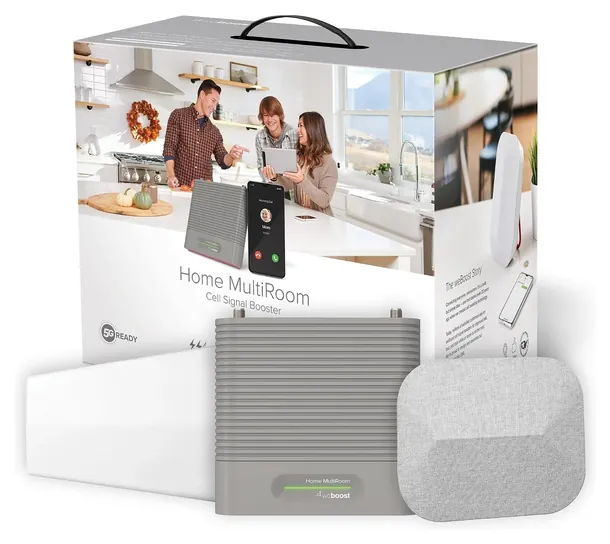
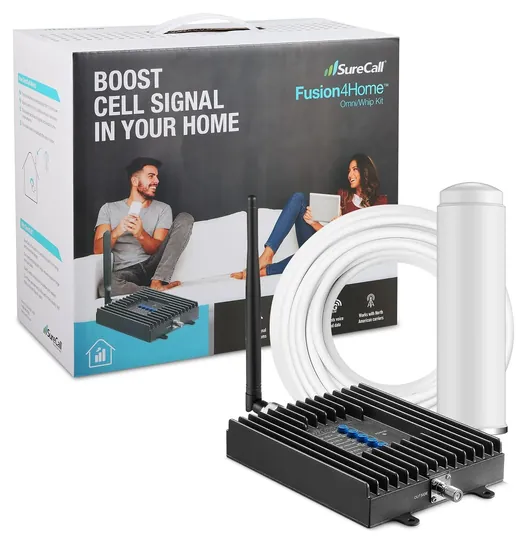
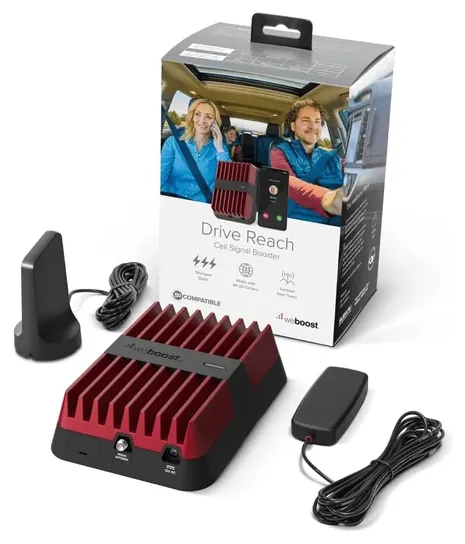
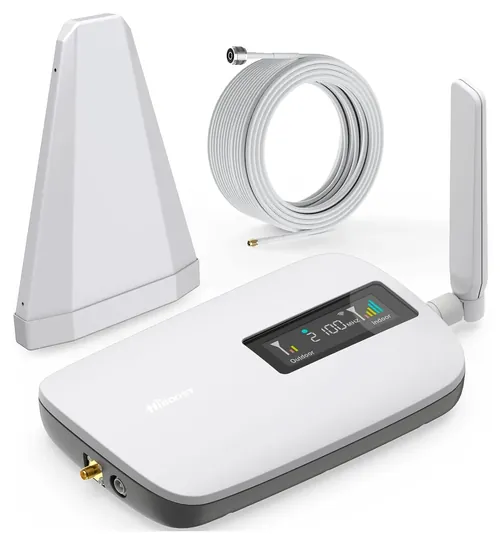
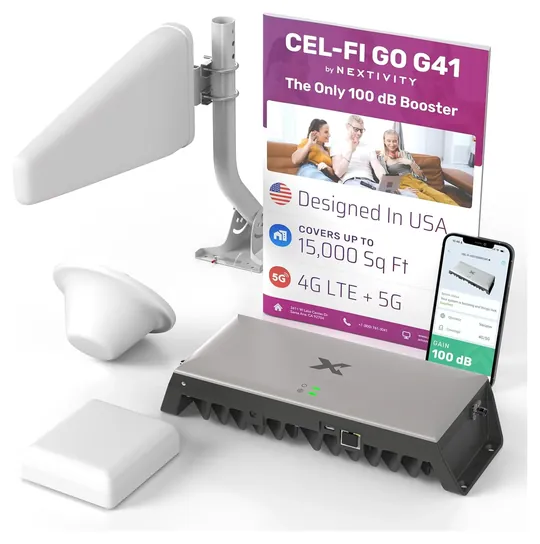
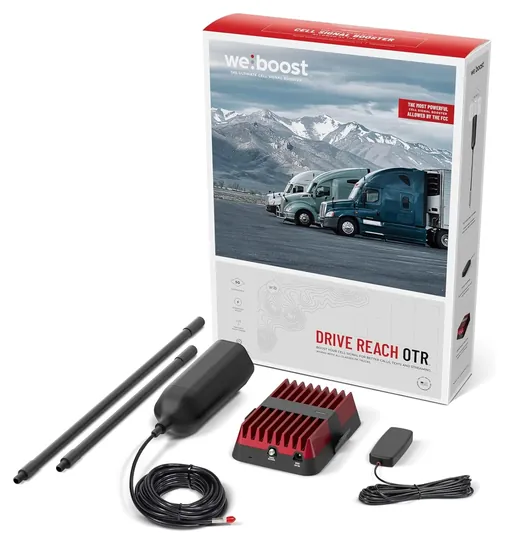
Top billing now goes to the weBoost Home MultiRoom, the best-documented whole-house kit we found. Most of the 2020 list had gone stale. The Phonelex Booster, Obdator Booster and SolidRF Multiroom are no longer available, and the HiBoost 15K Smart Link is out of stock. The Cel-Fi Go X was discontinued, so the Cel-Fi GO G41 takes its place, and the weBoost Drive 4G gives way to the weBoost Drive Reach OTR for truckers. We also dropped the SureCall Flare, because the version on sale is still the original, which SureCall has since replaced, and the SureCall Fusion4Home does the same small-home job. The old HiBoost Smart Link entry now sells HiBoost's 4,000-square-foot kit, so it stays under its real name, the HiBoost F10G-5S-BTW.
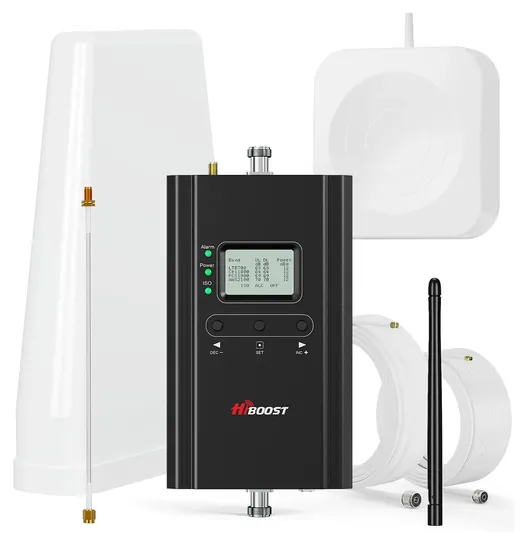
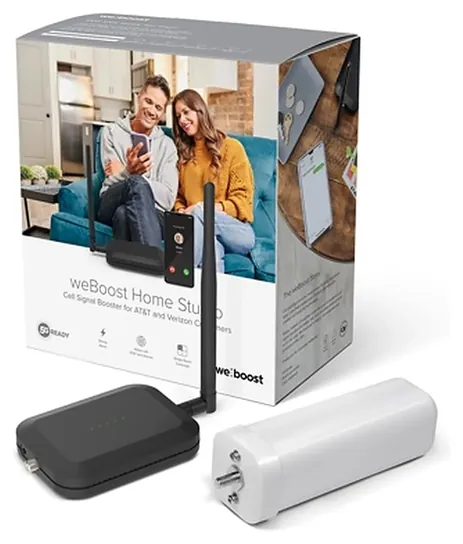
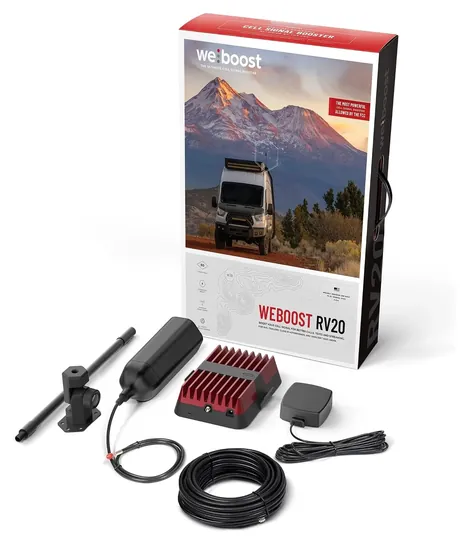
The MultiRoom's aimed outside antenna can pull in distant towers. New are the weBoost Drive Reach for cars, the weBoost RV20 for campers, the weBoost Home Studio Omni for a single room and the HiBoost F08G-5S-IOT for tighter budgets.
One thing to know before you buy: a booster only amplifies signal that already reaches its outside antenna. If you get no bars anywhere outdoors, no booster will help, and Wi-Fi calling may be the better fix. We also skipped cheap no-name boosters, including one that claims it never needs to be registered with your carrier.
Independent tests of these kits are scarce. We took gain and coverage from makers' spec pages, or from the seller's graphics for two HiBoost kits, and added the few published reviews we could find, owner feedback and recall checks. Each entry says when a fact comes only from the seller.
November 16, 2020:
Whether the area where you live has limited cell coverage or you're frequently on the road, it can be difficult and frustrating to maintain a reliable signal. For the sake of safety, productivity, and overall sanity, a tool like a cell phone signal booster can come in handy.
Significant advances continue to be made in the technology used in these devices, prompting us to update our list to reflect the latest options on the market. In some cases, brands have simply come out with better models. For instance, the SolidRF 4G was replaced by the SolidRF Multiroom due to improved coverage and more powerful performance at a relatively similar price point.
Another consideration was the longevity of the value presented by the device. While 5G service may not be available in all areas as of yet, the fact that products like the weBoost Drive 4G and weBoost Home Multiroom are prepared to operate at that level make them attractive options.
In some instances, products with lesser-known brand names like the Phonelex Booster and Obdator Booster, despite boasting some impressive specifications and pricing, simply did not have enough market exposure and evidence of performance for us to confidently recommend them as options. As time has gone on, those issues have been resolved.
Where and how you intend to use a signal booster may influence which one is best suited for your needs. For instance, the weBoost Drive 4G makes a lot of sense for truckers, but a family of four with kids constantly streaming on their phones might do better with something like the Phonelex Booster. The SureCall Flare might be appealing for the fashion-focused apartment dweller, but won't do much good in a large office building. A company with multiple floors and a huge workforce might benefit from the HiBoost Smart Link, but a small accountant's place of business may only need the power of the SureCall Fusion4Home. And while someone living in a more rural location might be able to justify the cost of the powerful Cel-Fi Go X, most city dwellers don't need that kind of reach.
It's worth noting that different boosters work with different networks. While most of the picks on this list work with all major North American service providers, the weBoost Drive 4G, for example, won't do you much good in Canada. It's crucial to check the product specifications and with your carrier before making a purchase.
Finally, it's important to remember that sometimes there is no booster on the planet that's going to be able to help you. If you live in an extremely remote area or like to do a lot of backpacking, your best and safest bet may be to look into a satellite phone for reliable communication.
February 03, 2019:
There are a few different reasons why you might have poor signal; maybe you live in a rural area, or you spend a lot of time traveling through one. Some locations' geography, like hills and mountains, can drastically affect signal strength. Maybe your provider of choice doesn't have any towers nearby; in fact, even being too close to multiple towers at once can cause static-inducing interference. SureCall makes a variety of excellent products, and their Fusion4Home is a good all-around performer, at quite a reasonable price. Larger homes, and mid-size offices, should consider the WeBoost Connect, while offers a specialized unit that's ideal for large commercial and industrial operations. Of particular note is the Cel-Fi Go X, which takes advantage of a carrier-specific focus to provide a stronger link than is legally allowed by all-provider models. For that reason, it's one of the most powerful, and it's most useful in corporate-driven situations where everyone in the building shares the same provider. The Smart Link comes in three models, with distinct maximum coverage areas, for businesses of various sizes. The Fusion2Go, SolidRF, and Flare are decent low-cost solutions, and travelers will appreciate the WeBoost Drive Sleek, which is compact and omnidirectional, and works great in cars, trucks, RVs, and even boats (though, not on the high seas).
Special Honors
weBoost Home Complete Installed If you'd rather not climb onto the roof, weBoost sells its Home Complete kit as an installed package: a technician mounts the outside antenna, runs the cable and sets up the booster. It covers larger homes than weBoost's do-it-yourself kits, but it costs roughly three times as much as the Home MultiRoom. weboost.com
Start With The Signal Outside
Gain is measured in decibels, and every 3 decibels roughly doubles the power.
A booster is a cellular repeater with three parts: an outside antenna that catches the existing tower signal, an amplifier, and an inside antenna that rebroadcasts it, all joined by coaxial cable. It can't create signal. If your phone shows no bars anywhere outside the house, a booster has nothing to work with, and HiBoost tells buyers to confirm at least one bar outdoors first.
Walk around the property with your phone and find where the signal is best, usually high up and on the side facing the nearest tower. That's where the outside antenna belongs, and SureCall's own troubleshooting advice starts with antenna placement (SureCall).
Gain is measured in decibels, and every 3 decibels roughly doubles the power. All-carrier home kits run from about 60 to 72 decibels, and vehicle kits are capped at 50. Single-carrier units such as the Cel-Fi GO G41 reach 100. Coverage claims assume a strong outside signal: SureCall's own chart for the Fusion4Home shrinks from up to 2,000 square feet with five bars to about 500 with one or two. Treat the big number on any box as a best case.
Antennas, Separation And Installation
Outside antennas come in two kinds. An omnidirectional pole pulls signal from every direction and needs no aiming, which suits areas with decent signal from several towers. A directional antenna, like the one in the weBoost Home MultiRoom kit, has to be pointed at a tower but reaches farther, which matters on the fringes. Inside, a panel antenna on a wall or ceiling spreads signal across rooms, while a small antenna on the booster covers mostly the room it sits in.
Keep the inside and outside antennas well apart. If they're too close, the booster hears its own output, starts to oscillate, and turns its gain down or shuts off. SureCall recommends at least 30 feet of horizontal separation for the Fusion4Home, and putting the outside antenna on the roof with the booster on a lower floor helps, since vertical separation counts for more. If a booster keeps cutting out, weBoost's manuals suggest unplugging it, moving the antennas farther apart and plugging it back in.
Use the shortest cable run that reaches, because long coaxial cable loses signal. Flat cables that slip under a window, included with some HiBoost kits, can save drilling. Vehicle kits are simpler: a roof antenna, a small inside antenna and 12-volt power. A home booster isn't meant for a car, and a vehicle booster is limited to 50 decibels by FCC rules.
Carriers, 5G And The Rules
All-carrier kits boost the main 4G LTE bands used by AT&T, Verizon and T-Mobile in the U.S.: bands 2, 4, 5, 12, 13, 17 and 25. They help 5G phones on those bands, including 5G that carriers run on 4G spectrum, but they don't boost millimeter-wave 5G or most newer 5G bands. A single-carrier booster such as the Cel-Fi GO G41 boosts much more, but only for the carrier you pick.
In the U.S., consumer boosters must be FCC certified and carry a label, and the major carriers ask owners to register them, which is free and done online (RV Mobile Internet). If your carrier or the FCC reports interference, you must turn the booster off. The FCC also notes that a booster can make 911 location less accurate, and labels ask you to keep antennas at least 8 inches from people (FCC). Be wary of no-name kits that claim you never need to register; you can look up any printed FCC ID in the FCC equipment database to see what it was issued for.
Before buying any booster, try the free fixes. Turn on Wi-Fi calling if you have home internet, take calls near a window or upstairs, and remove a metal phone case, which can block signal, though plastic and silicone cases rarely matter (SlashGear). We checked every brand on this list in the U.S. Consumer Product Safety Commission's database and found no recalls (CPSC).
How we researched this
We screened 24 signal booster kits and compared nine in depth. We read the makers' spec pages for the weBoost and SureCall kits and a Nextivity datasheet for the Cel-Fi, used listing specs where a maker page didn't cover a model (we say so in those entries), read the few independent reviews we could find, analyzed patterns in owner feedback, and checked every brand for recalls with the U.S. Consumer Product Safety Commission.
Sources (16)
- weBoost: Home MultiRoom
- weBoost: Home Studio
- weBoost: Drive Reach
- weBoost: Drive Reach OTR
- weBoost: RV20
- SureCall: Fusion4Home Omni/Whip
- SureCall: Flare 3.0
- SureCall: weak signal after installing a booster
- HiBoost
- Nextivity: Cel-Fi GO G41 datasheet
- Tom's Guide: best cell phone signal boosters
- FCC: signal boosters FAQ
- RV Mobile Internet: booster registration
- Wikipedia: cellular repeater
- SlashGear: do phone cases affect signal
- CPSC recalls
Frequently asked questions
Does a cell phone signal booster work with no signal at all?
No. A booster only amplifies signal that already reaches its outside antenna. You need at least one bar somewhere outside, ideally where the antenna will go.
Do I need to register a signal booster?
In the U.S., the major carriers ask you to register a consumer booster with them. It's free and done online. Customers of prepaid and smaller carriers usually don't register, according to RV Mobile Internet's guide.
Will a signal booster improve 5G?
Partly. Consumer boosters cover the main 4G LTE bands, so they help 5G that carriers run on those bands. They don't boost millimeter-wave 5G or most newer 5G bands.
Do boosters work with iPhones and every carrier?
They work with any phone. All-carrier kits boost AT&T, Verizon, T-Mobile and smaller carriers at the same time. Single-carrier boosters such as the Cel-Fi GO G41 boost one carrier at a time.
How can I boost cell signal without a booster?
Turn on Wi-Fi calling if you have home internet, take calls near a window or on an upper floor, and remove a metal phone case. Switching to a carrier with a closer tower can also help.
Can I use a home booster in my car?
No. Vehicle boosters are certified for use while moving and limited to 50 decibels of gain, while home kits run on wall power and need far more antenna separation than a car allows.