The 10 Best Statistics Textbooks
Updated by · How we research

Free college course texts, gentle first books and data science classics compared. OpenIntro Statistics leads for its complete intro course and free, legal PDF. When users buy our independently chosen editorial recommendations, we may earn commissions to help fund the Wiki.
The edition named on a syllabus matters more than the book's age: publishers renumber chapters and exercises every few years, and a new copy bundled with a homework code can cost several times an older printing. Free, legal course texts now match paid ones for a first college class. This list serves students, self-learners and future data scientists.
At a Glance
-
1
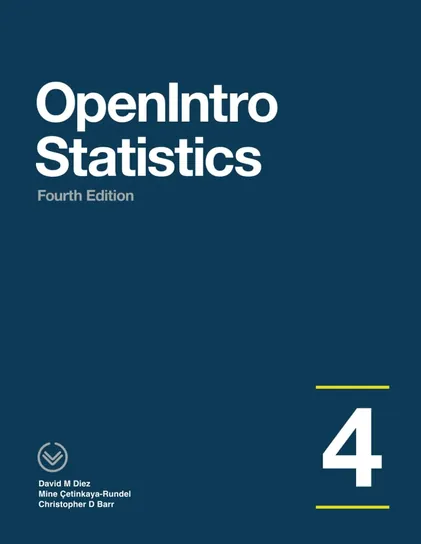
 OpenIntro Statistics
$25
-
2
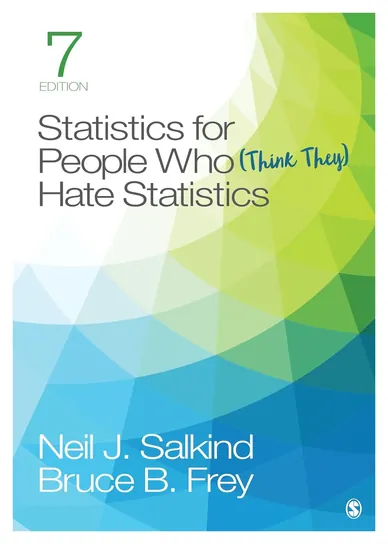
 Statistics for People Who (Think They) Hate Statistics
$54
-
3
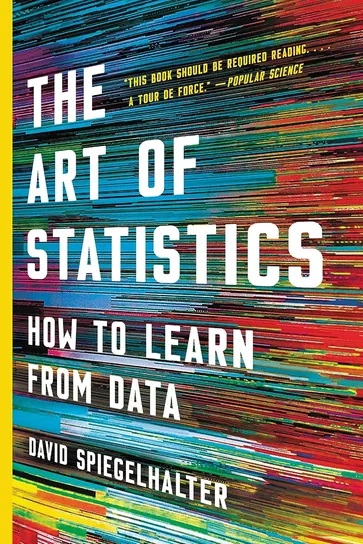
 The Art of Statistics
$13
-
4
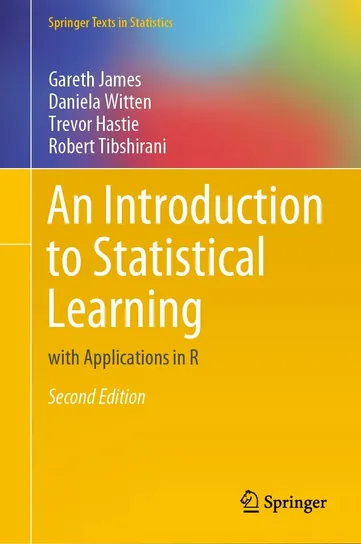
 An Introduction to Statistical Learning
$58
-
5
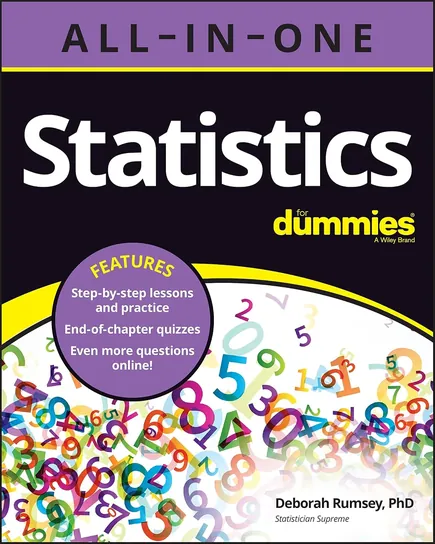
 Statistics All-in-One For Dummies
$35
-
6
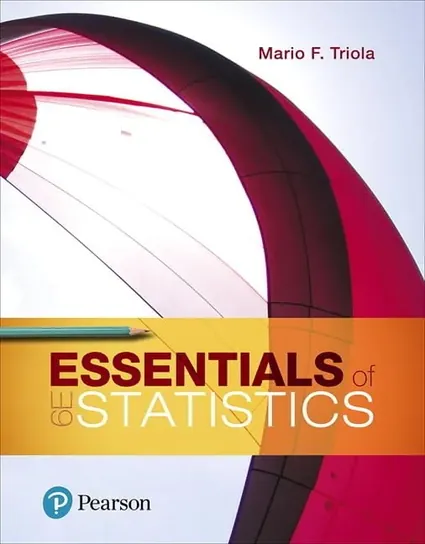
 Essentials of Statistics
$54
-
7
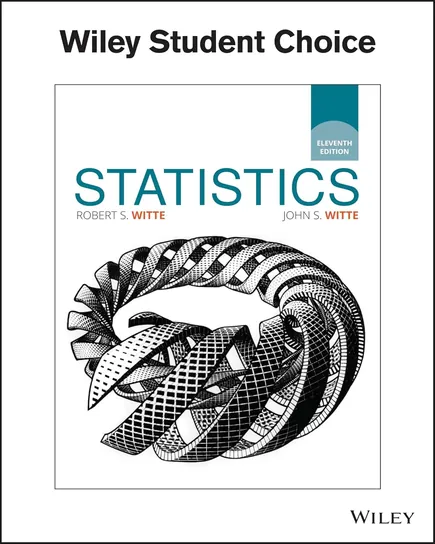
 Witte and Witte Statistics
$50
-
8
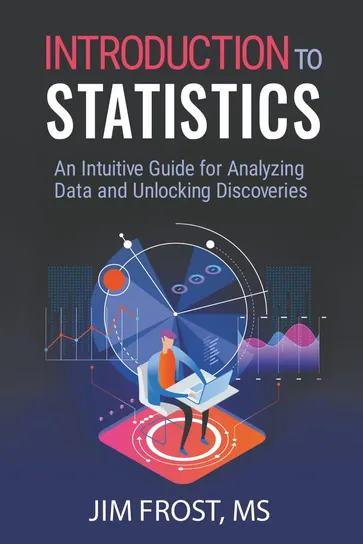
 Jim Frost's Introduction to Statistics
$17
-
9
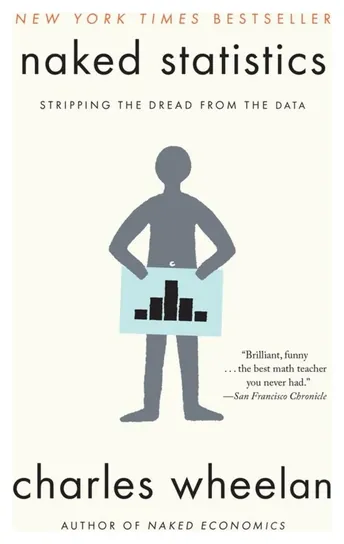
 Naked Statistics
$10
-
10
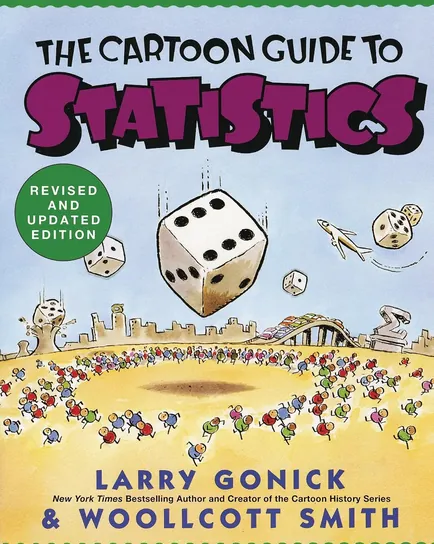
 The Cartoon Guide to Statistics
$15
Editor's Notes
November 1, 2026, by Ezvid Wiki Editors:
When new course books can cost a small fortune, a complete college course text that its authors give away as a free PDF is hard to beat, so OpenIntro Statistics takes the top spot. Four books from the old list stay: Statistics for People Who (Think They) Hate Statistics in its seventh edition, The Art of Statistics, An Introduction to Statistical Learning in its second edition, and Witte and Witte Statistics, now in a cheaper student paperback of the same edition.
The McClave and Sincich text and Triola's Elementary Statistics left because the few new copies cost far too much, and Triola's shorter Essentials of Statistics covers the same ground. We dropped the business and engineering titles to keep the page general, and two older course books whose current printings we couldn't confirm. New additions run from Statistics All-in-One For Dummies to Naked Statistics and The Cartoon Guide to Statistics, because many readers want to learn the subject, not just pass a class.
No one runs side-by-side trials of textbooks, so we read tables of contents, publisher and author pages, the free editions themselves and university open textbook listings. If your syllabus names a book and edition, buy that one.
Earlier notes
August 31, 2020, by Gia Vescovi-Chiordi:
Not too much has changed in this category since our last update, but we decided to prune our list a bit in order to bring on a few new relevant selections. We also updated Statistics for People Who (Think They) Hate Statistics to its newest seventh edition. We said goodbye to Statistics For Dummies, which can sometimes manage to be confusing while simultaneously not going deep enough into the concepts. It's supposed to track with most first-semester intro courses, however, many students find they still need another textbook.
We still wanted to have something on deck to cater to laypeople, though, and so brought on The Art of Statistics. Written with enthusiasm by an expert, this volume takes extremely relatable and interesting real-life scenarios and shows readers how statistics affect them. It's also meant to empower the everyday person to know when they are being confronted with biased data that lacks context, a skill anyone in the information age should welcome. It's a good supplement to get you thinking outside the box for class and is ideal for anyone toying with entering this field.
We also removed Statistics for Management and Economics, which is still a solid text, however, isn't as compelling as Statistics for Business & Economics, which covers many of the same bases. With the new vacancy, we added another beginner-friendly tome with Elementary Statistics. This one was written to be flexible and accessible to readers of all backgrounds, and strives to incorporate as many recent developments as possible. It's geared toward students of any major, so it would be just as relevant supplementing an economics textbook as it would a psychology one.
March 5, 2019, by Brett Dvoretz:
Statistics has long been a subject many people struggle with. Luckily, there are a lot of great textbooks out there that can make learning about it just a little bit easier. If you feel like you have a slight aversion to the concepts and methodologies statistics makes use of or feel like there is a wall around your brain preventing you from understanding them, you would do well with a book that explains them in simple terms, such as Statistics for People Who (Think They) Hate Statistics, Statistics: The Art and Science of Learning from Data, Statistics: The Exploration & Analysis of Data, or Statistics For Dummies. Students looking for a tome to accompany their main textbook or help them delve further into concepts they are learning in their coursework should consider Statistics 11th Edition and "Statistics" by McClave and Sincich. Professionals who need to brush up on statistical methodology to help them make informed business decisions based on large data sets will find An Introduction to Statistical Learning: with Applications in R, Statistics for Business & Economics, and Statistics for Management and Economics very helpful. If you plan on entering into engineering or a science-based profession, Statistics for Engineers and Scientists is your best option.
Special Honors
Introduction to Modern Statistics OpenIntro's newer free text, by Mine Cetinkaya-Rundel and Johanna Hardin, teaches the same first course with more emphasis on data visualization and computer-based methods such as simulation. The PDF is free, and print copies are inexpensive. openintro.org
OpenStax Introductory Statistics Rice University's OpenStax publishes a free, peer-reviewed intro text that many colleges assign in place of a commercial book. Read it online or as a PDF at no cost, or order an inexpensive printed copy. openstax.org
Khan Academy Statistics and Probability Khan Academy's free statistics and probability course pairs short videos with practice problems that check your answers on the spot, which makes it a good partner for any reading book on this list. khanacademy.org
Course Text Or Self-Study Book
Triola's and the Wittes' books are classic examples from commercial publishers.
A course text is built to be taught: short sections, many exercises, review problems and a matching set of slides and homework for the instructor. OpenIntro Statistics is that kind of book, and its authors pitch it at both college courses and self-study, with videos, slides and software labs for each section. Triola's and the Wittes' books are classic examples from commercial publishers.
A self-study book trades exercises for explanation. Jim Frost's guides grew out of his Statistics By Jim site, and David Spiegelhalter's The Art of Statistics reads like a long, careful essay about evidence. These won't prepare you for a graded exam on their own, but they make the ideas behind a course stick. Many learners pair one of each: a reading book for intuition and a course text or free online course for practice, such as Khan Academy's statistics units.
Editions, Homework Codes And Free Copies
Course publishers release new editions every few years. The core topics barely change, but exercise numbers, page references and data sets do, which matters if homework is assigned by number. A new copy often bundles an online homework code, and that code, not the paper, is what many classes actually require. Ask the instructor before paying for the most recent edition.
Some of the best texts are free and legal. OpenIntro posts its PDF at no charge and sells low-cost print copies. The authors of An Introduction to Statistical Learning post free PDFs of the R and Python editions on statlearning.com. OpenStax Introductory Statistics is another free intro text, and the University of Minnesota's Open Textbook Library lists more, with faculty reviews. Pirated PDFs of commercial books are common in search results; skip them, since a free legal option nearly always exists.
How Much Math You Need
Most introductory statistics, including every course text on this list, needs only high school algebra. You'll compute averages, read graphs and plug numbers into a handful of formulas, usually with a calculator or spreadsheet doing the arithmetic. High school students taking the College Board's AP Statistics course work at about the same level.
The step up is statistical learning. An Introduction to Statistical Learning assumes some comfort with matrices and with writing code in R or Python, and it moves quickly. Calculus-based mathematical statistics, the kind taught to statistics majors, is a different shelf altogether: those books prove the results the intro texts only use. If you're unsure where you stand, read a sample chapter of a free text first; the PDFs make that easy.
How we researched this
We compared 18 statistics books, from free open texts to college course books and popular guides. We read publishers' and authors' pages for editions, contents and free versions, checked university open textbook listings, weighed patterns in reader feedback, and checked the publishers against the U.S. Consumer Product Safety Commission's recall database.
Sources (9)
- OpenIntro: OpenIntro Statistics, 4th edition
- OpenIntro: Introduction to Modern Statistics
- An Introduction to Statistical Learning (authors' site)
- University of Minnesota Open Textbook Library: statistics
- OpenStax: Introductory Statistics 2e
- Khan Academy: Statistics and Probability
- College Board: AP Statistics
- Open Library ISBN records
- U.S. Consumer Product Safety Commission: SaferProducts.gov
Frequently asked questions
Is OpenIntro Statistics really free?
Yes. The authors offer the full PDF at no charge on openintro.org and sell print copies at a low price. Videos, slides and software labs are free as well.
Do I need the most recent edition of a statistics textbook?
Only if your class assigns homework by exercise number or requires an online code. The core topics rarely change between editions, so an older printing usually works for self-study.
What is the best statistics book for self-study?
Pair a readable explainer, such as The Art of Statistics or Jim Frost's Introduction to Statistics, with a free course text like OpenIntro Statistics for practice problems.
Which statistics book is best for data science?
An Introduction to Statistical Learning. It covers regression through deep learning with coding labs, and the authors post free R and Python editions.
Do I need calculus to learn statistics?
No. Introductory courses and all the course texts here need only high school algebra. Calculus comes in only with mathematical statistics, which is usually taught to statistics majors.