The 9 Best Quarterback Training Targets
Updated by · How we research

Throwing nets, a dummy defender and a toss game for quarterbacks, compared on pockets, frame and setup. The GoSports 6x6 Throwing Net leads for most families. When users buy our independently chosen editorial recommendations, we may earn commissions to help fund the Wiki.
A throwing net can't run a route or tell a passer why a ball sailed, but it gives an honest hit or miss on every rep, with nobody needed to shag the ball. Pocket size sets the challenge, and wide pockets keep young players from getting discouraged. These picks suit backyard passers, the parents who set the nets up, and youth coaches.


Editor's Notes
October 26, 2026, by Ezvid Wiki Editors:
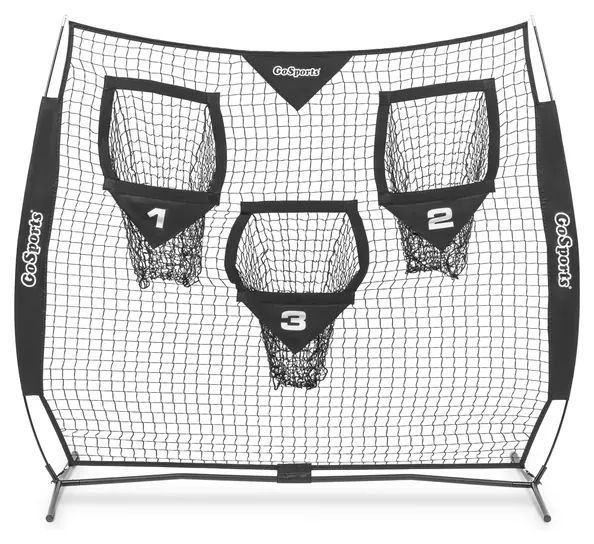
The GoSports 6x6 Throwing Net is the new first choice. Its steel frame and three pockets suit a small yard and a young passer, and it comes from the maker with the longest record in backyard football nets, at a fair price.
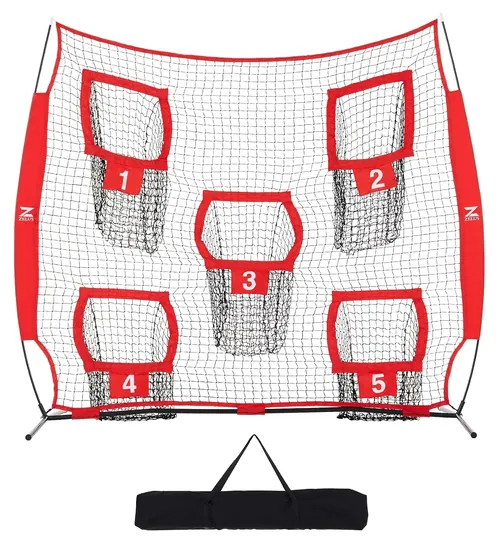
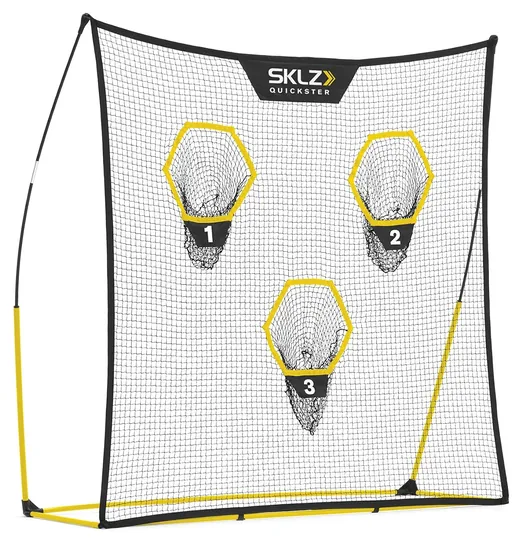
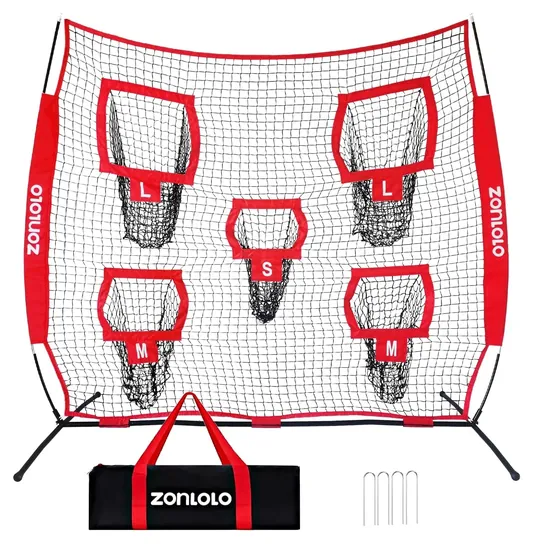
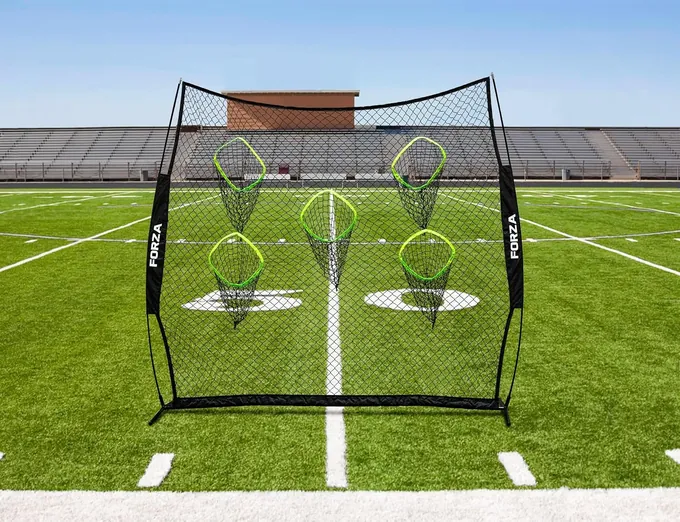
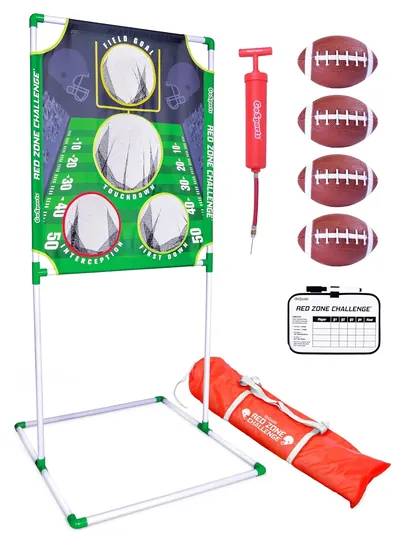
Five earlier picks are gone. The Sklz QB Trainer Pro, Powernet Pass Accuracy and Kapler Football Zone have vanished from sale, while the Forza Fade Trainer drew too little owner feedback, and too mixed, to recommend. The Sklz Quickster 4-in-1 gave one target for a steep price, so the Sklz Quickster QB Trainer takes its place. The GoSports 8x4 Target Net, Franklin NFL Kick + Pass, Forza 8x8 Throwing Net, GoSports Xtraman and GoSports Red Zone Challenge stay, and the Zelus 7x7 Throwing Net and Zonlolo 7x7 Throwing Net join for players who want more pockets to aim at.
Throwing nets don't get lab tests, so we worked from the makers' pocket layouts, frame materials and package photos, a few football buying guides, patterns in owner feedback about bent poles and wind, and a recall check on every brand.
Earlier notes
November 12, 2020:
Football training targets are great for practicing at home or on the field. The Kapler Football Zone is good for backyards that might be limited in space. It's not as large as other options but still provides a sufficient backstop for blocking missed throws. The Gosports Football Toss, while not intended for team practice, is great for kids looking to both have fun and improve their accuracy.
Coaches of youth teams or personal trainers should consider the Kapler Football Zone, GoSports Vertical, Sklz Quickster 4-in-1, Forza Portable Net, Franklin Sports 8 Foot, and Powernet Pass Accuracy. These are highly portable and offer a good balance of price and function. Further, the Powernet Pass Accuracy and Sklz Quickster 4-in-1 double as a kick training net.
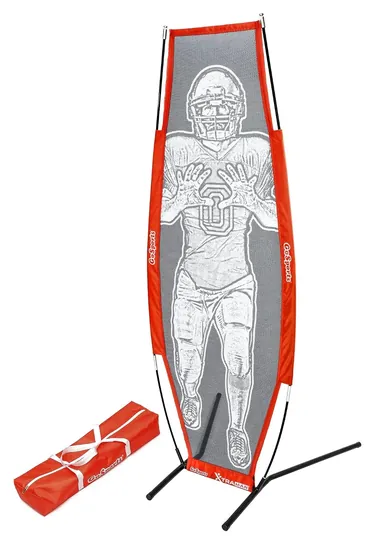
The Gosports Dummy Xtraman and Forza Fade Trainer are great for their specific purposes but not very versatile. The Gosports Dummy Xtraman is designed to simulate defensive coverage while the Forza Fade Trainer is only a target for fade passes. Both are valuable in practice but their lack of versatility might leave them as an option only considered by coaches and trainers.
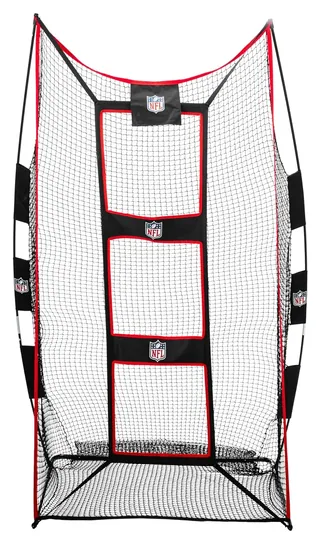
The Sklz QB Trainer Pro has a steep price that might deter coaches in youth leagues but its function and durability make it great for high school, college, and maybe even professional-level teams. It's designed to withstand powerful throws, and it features three targets at the main receiving areas and a basket on top for fade passes. Further, it has wheels that allow it to roll around and an area for balls to collect at the bottom.
Special Honors
Gilman Gear High Release Net This aluminum quarterback net from a longtime maker of football sleds and dummies rolls on swivel wheels and raises its target to about 10 feet, so a passer can work high throws over a rush without a receiver. It is priced for school programs, not backyards. gilmangear.com
Rogers Athletic Combo Passing Trainer Three nets in one towable cart: a drop-in net for fade routes, a target net that adjusts in height, and a floor for hauling balls. Several can hitch together into a train. It weighs about 300 pounds and is built for team practice fields. rogersathletic.com
Pockets, Size And Shape
Five add low windows for passes thrown away from a defender.
A target net is a backstop with holes. The holes, usually called pockets, stand in for the spots where a receiver catches the ball, and their size sets the difficulty. Big pockets keep beginners and young players hitting often enough to stay with it. Smaller pockets tighten the window for older passers. Nets with large, medium and small pockets let one player move up as accuracy improves, a point the All About Football net guide also makes when it separates beginner nets from ones for advanced throwers.
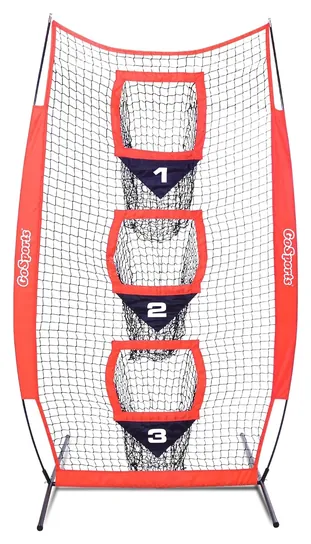
Size matters for the yard and for misses. A 6-by-6-foot net fits a small backyard and suits players up to about middle school. A 7-by-7 or 8-by-8 net gives more room for a miss on longer throws, but it needs more space and more stakes. Tall, narrow nets around 8 feet high and 4 feet wide are shaped like a receiver, with pockets stacked at shoulder, chest and waist height. They train throws to a body, but wild passes sail past them, so expect more walking.
Count the pockets you will use. Three pockets cover the usual high-left, high-right and middle targets. Five add low windows for passes thrown away from a defender. A youth gear guide from Sports Gadget Review suggests simple, forgiving targets for younger players and receiver-shaped ones once accuracy becomes the goal.
Frames, Stakes And Weather
The frame is where cheap nets fail. Steel bends rather than snaps and holds the net taut, while fiberglass poles are lighter but flex more, and a cracked fiberglass pole can splinter. Retire a cracked section instead of taping it. Bow-type frames fold flat in a minute or two; tension frames, like the one Sklz uses on its Quickster nets, go up fast but weigh more.
Wind is the other enemy. A 7-foot net is a sail, and the ground stakes that come in the box are often the difference between a net that stands and one that tips mid-drill. On turf or a hard floor, where stakes won't go in, use sandbags on the base. Some makers treat the netting against sun damage, but any net lasts longer if it comes in after practice, dries before it is folded, and stays out of storms.
Check what's in the box before you count on it. Some nets include a carry bag and four stakes; others store in their shipping box with two stakes. A bag matters if the net travels to a field.
Safety, Young Arms And Team-Grade Gear
Set the net where a full-speed throw that misses won't reach a window, a car, a fence line or a person. Keep younger children and pets out of the zone behind and beside the net, and don't let anyone climb on the frame. We found no recalls for these brands' throwing nets in the U.S. Consumer Product Safety Commission's SaferProducts.gov database.
Young arms need rest. The Sports Gadget Review youth guide notes that growth plates in the shoulder and elbow stay open into the mid to late teens. The throw-count limits that circulate online come from baseball pitching, so ask a coach or a pediatrician how many throws a day make sense for your player, and stop at any arm pain.
High school and college programs use a different class of gear. The Gilman Gear High Release net is an aluminum net on swivel wheels that raises to about 10 feet for drills over a pass rush, and the Rogers Athletic quarterback line runs to a towable trainer that weighs about 300 pounds. They cost many times more than a backyard net and make sense only for a team.
How we researched this
We compared 16 throwing nets and passing trainers, including every pick from the earlier version of this page, read the makers' descriptions, pocket layouts and package photos for the nine finalists, read the few football net buying guides that exist, analyzed owner feedback, and checked every brand for recalls with the U.S. Consumer Product Safety Commission. No independent lab test of throwing nets exists.
Frequently asked questions
What size quarterback target net should I buy?
A 6-by-6-foot net fits a small yard and suits players through middle school. A 7-by-7 or 8-by-8 net gives older passers more room for misses on longer throws. A tall, narrow net trains throws to a receiver's body.
How far should a quarterback stand from a throwing net?
No standard exists. Start close enough to hit the pockets most of the time, then step back toward game distances as accuracy improves. Keep the area behind the net clear.
Can a throwing net replace a receiver?
No. A net shows hit or miss, but it doesn't move, run routes or react. Use it for reps and accuracy, and throw to a partner whenever you can.
Can I leave a football net outside?
Bring it in after practice. Some nets have sun-resistant netting, but wind can tip a staked net, and wet netting folded away can mildew.
Is a team-grade passing net worth it at home?
Rarely. Nets from Gilman Gear and Rogers Athletic are built for school fields, with wheels, height adjustment and prices to match. A backyard net covers individual practice.