The 10 Best Floor Jacks
Updated by · How we research

Floor jacks for sedans, trucks, lowered cars and off-road rigs, compared by capacity, lift range, pump and weight. The Big Red AT84007R suits the most garages. When users buy our independently chosen editorial recommendations, we may earn commissions to help fund the Wiki.
A floor jack is built to lift a car, never to hold it. Every maker says to set rated jack stands under the frame before you reach underneath, because a hydraulic seal can let go without warning. So how high a jack climbs matters as much as how low it starts, for sports cars and pickups alike.


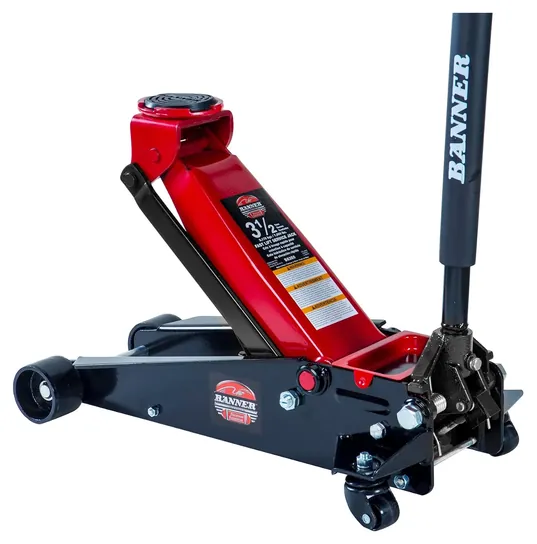
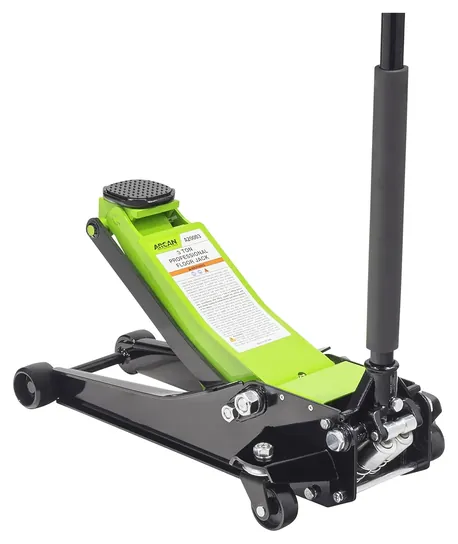
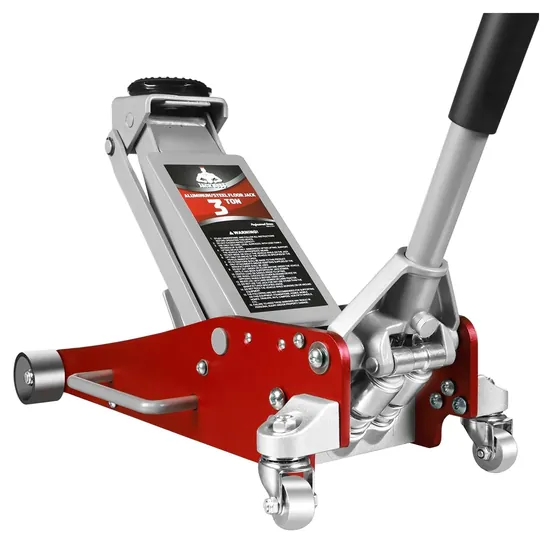
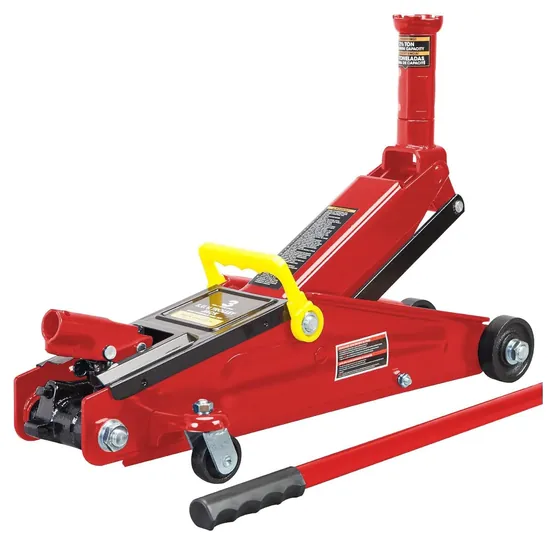
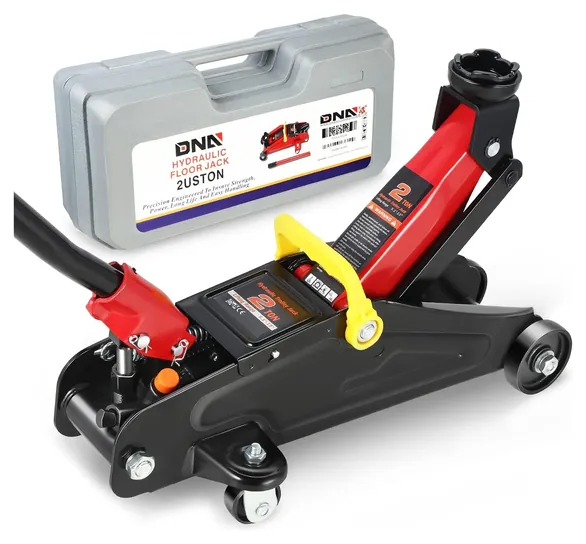
Editor's Notes
October 27, 2026, by Ezvid Wiki Editors:
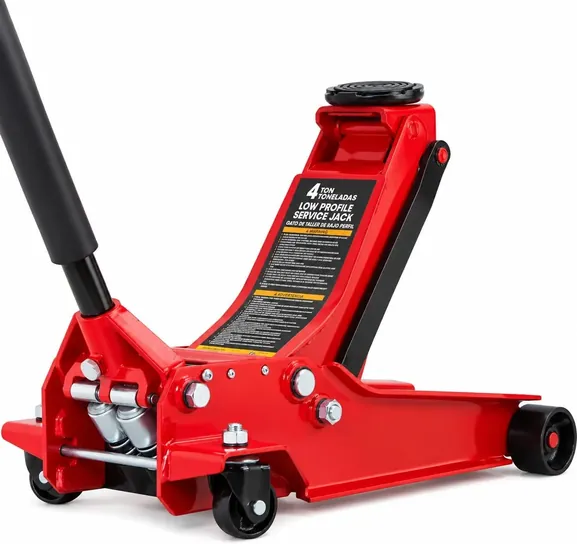
The Big Red AT84007R now leads, and the reason is range: it starts low enough for most cars, climbs high enough for a pickup's jack stands, and carries a four-ton rating.
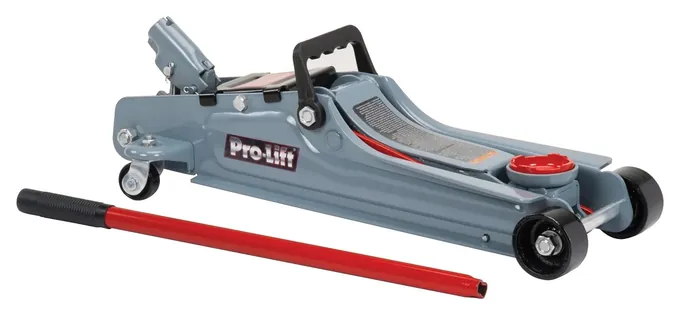
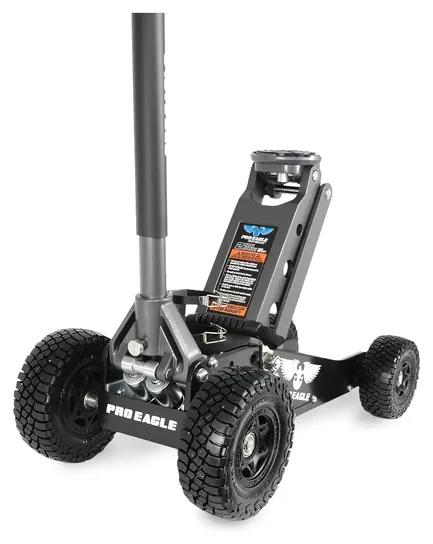
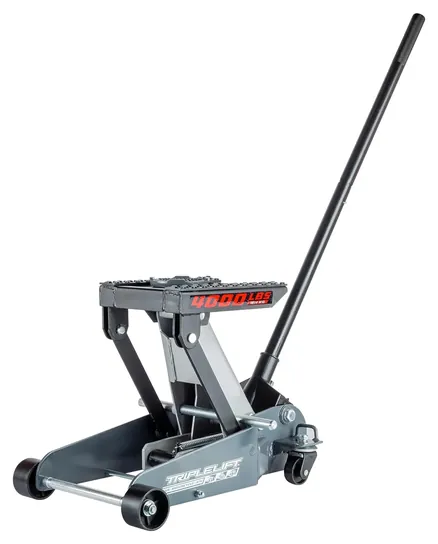
Seven of the ten old picks had to go. You can't buy the Big Red T83014, Arcan XL2T, Hein-Werner HW93642 or Eambrite Electric anymore, the Nos Pro Style is out of stock with no return date, and the Jegs 80077 shows no price at all. The Torin Big Red T64017 turned out to be a motorcycle lift, so it went too. The Pro-Lift F-767 stays for low cars, the Cooke Pro Eagle stays as the off-road pick, now sold as the Pro Eagle Beast, and the Powerbuilt 620422E stays for riders who also lift bikes and ATVs.
The best evidence here came from Car and Driver, which measured each jack's lowest and highest saddle heights and checked for sag under load, and from The Drive's buying advice. Several test winners come from Harbor Freight and Home Depot house brands, and we explain in the guide why they aren't ranked.
Earlier notes
February 12, 2021, by Chris Gillespie:
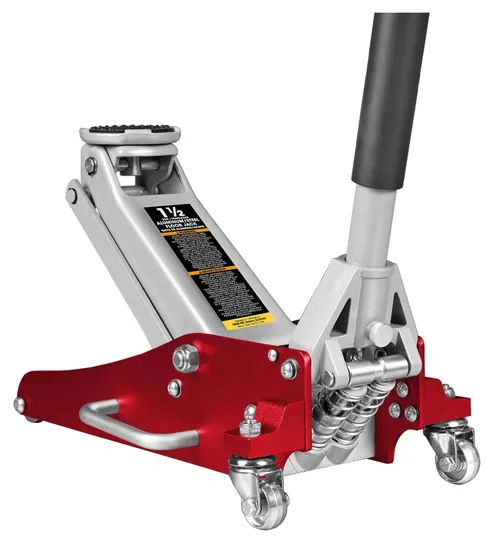
Floor jacks, by and large, have a high weight capacity and therefore need to be well-built and sturdy. This of course makes them rather heavy, and even the aluminum models, such as the Jegs 80077 or the Nos Pro Style are not particularly portable. Aside from their weight capacity, there are several factors to consider before making a choice. Ground clearance varies somewhat and for low vehicles, it's hard to beat the Arcan XL2T which sits at only two and three-quarter inches. Tall vehicles, on the other hand, will benefit from a jack with an extension piece such as found on the Cooke Pro Eagle, which also features composite wheels to prevent it from sinking into sand or mud.
In this update, we switched the Torin Big Red T835020 for the Big Red T83014, which has a flanged body to prevent twisting and a quick lift design that allows the saddle to be lowered and raised via a foot pedal. Similar to the Pro-Lift F-767, it also features a safety valve that prevents over pumping and thereby exceeding the capacity of the jack.
December 19, 2019, by Rafael Perez:
Removed the GoPlus Low Lift and the PowerZone Motorcycle because of availability concerns. Added the Torin Big Red T835020, the Jegs 80077, and the Torin Big Red T64017.
The T835020 is very affordable while providing the durability and capability of more expensive models. It can lift everything from lowered exotic cars to raised off-road trucks. While there are many people (I would say a majority) for which a 3 ton jack is overkill, I generally advise against trolley jacks. They're unstable, poorly sealed, and many of them have built-in failure points at the shear pins used to keep the handle socket attached to the piston. The Hein-Werner HW93642 has excellent build quality and a robust sealing system. It has been demoted simply because of its high cost which puts it out of most people's price range.
Using hydraulic jacks to lift heavy objects is inherently dangerous. Always use jack stands to fully support the raised weight of the vehicle to avoid personal injury or property damage. Never trust a jack to hold when sliding under a car. Make sure that you position the jack's saddle on either the jack rail, the frame, or a suspension component that can withstand the pressure.
Capacity, Low Point And High Point
Your vehicle's weight is on the placard inside the driver's door.
Start with capacity, and buy more than you think you need. The Drive suggests choosing a rating above the heaviest vehicle you'll lift (The Drive). A floor jack only raises one end or one corner at a time, so a two-ton jack handles most sedans and small crossovers, a three-ton jack covers most SUVs and half-ton pickups, and a four-ton jack gives a heavy truck some margin. Your vehicle's weight is on the placard inside the driver's door.
Next, check the two heights. The minimum height is how low the saddle sits. Many sports cars and lowered cars leave only about 3 to 4 inches under the side skirts, and a jack that starts near 6 inches simply won't fit. The maximum height matters more than people expect: the jack has to lift the car higher than the lowest setting of your jack stands, with room to slide them in. Car and Driver measured both numbers for every jack it tested and found big gaps between models of the same rating (Car and Driver). Trucks and lifted SUVs need a jack that reaches about 20 inches or more, or an extension.
Finally, look at the pump. A dual-piston pump moves more fluid per stroke, so the saddle reaches the frame in fewer pumps. It's a convenience, not a safety feature, but it adds up if you rotate tires at home.
Steel, Aluminum And The Test Winners Sold Elsewhere
Steel jacks are cheaper and tougher, and they're the right choice if the jack lives on a garage floor. They're also heavy: most three-ton steel jacks weigh 75 to 100 pounds, which makes them hard to load into a truck. Aluminum, or aluminum on a steel frame, cuts that weight by about a third and suits track days or a small garage, but costs more for the same rating (The Drive).
Several of the best-tested jacks aren't on this list because they're only sold in their makers' own stores. Harbor Freight's Daytona, Pittsburgh and Badland jacks and Home Depot's Husky line keep turning up near the top of tests and owner surveys, and SlashGear's review of brand reputations ranks them alongside Blackhawk (SlashGear). If one of those stores is close by, they're worth a look.
One caution applies to every brand. Hydraulic seals wear, and owner reports show leaks and failed pumps across cheap and expensive jacks alike. That's why a one-year warranty is the norm, and why a jack that holds its height for a few minutes still shouldn't be trusted to hold a car.
Jack Stands Are Not Optional
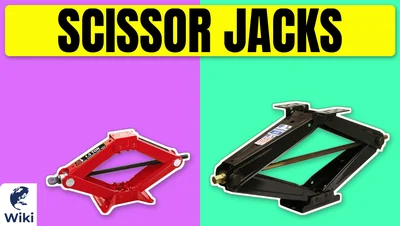
The jack lifts and the stands hold. Every maker's instructions say to lower the car onto a pair of rated jack stands right after lifting, and never to reach or crawl under a car held only by a jack. Car and Driver gives the same advice and adds that factory scissor jacks are meant only for roadside tire changes (Car and Driver).
Work on flat, hard ground. Concrete is best; asphalt can soften on a hot day and let a jack or stand sink. Chock the wheels that stay on the ground, put the transmission in park or in gear, and set the parking brake. Lift only at the points shown in your owner's manual, usually the pinch welds or reinforced frame spots near each wheel, or a center point on the front crossmember or rear differential.
Most reputable jacks are built to the ASME PASE standard, the American Society of Mechanical Engineers' safety rules for portable automotive lifting equipment, which covers design, marking, use and inspection (ASME). It's a good sign on a spec sheet, but it doesn't replace stands. Store a jack with the saddle fully down to protect the ram, and retire one that leaks oil or slowly sinks under load.
How we researched this
We compared 22 floor jacks, read the makers' specs, safety instructions and warranty terms for the 10 picks, used Car and Driver's measured lift tests and The Drive's buying advice where they covered our picks, analyzed owner feedback for patterns of leaks and failures, and checked every brand against the U.S. Consumer Product Safety Commission's recall database. We found no floor-jack recalls.
Frequently asked questions
Should I get a 3-ton or a 4-ton floor jack?
A 3-ton jack handles most cars, SUVs and half-ton pickups. Go to 4 tons for heavy-duty trucks or large vans, or if you want extra margin. A bigger rating usually means a heavier jack.
Will a floor jack fit under my car?
Measure the gap between the ground and your car's lift point, usually the pinch weld behind each front wheel. Sports cars and lowered cars often need a jack that starts under 4 inches. Standard jacks start around 5 to 6 inches.
Is a steel or aluminum floor jack better?
Steel is cheaper and tougher for a jack that stays in the garage. Aluminum is lighter and easier to carry, but costs more for the same capacity.
How long can a car sit on a floor jack?
It shouldn't. A jack is for lifting only. Lower the car onto rated jack stands right away, before you put any part of your body under it.
Can I use a floor jack on a driveway?
Yes, if the surface is flat and hard. Concrete is best. Avoid gravel, grass and slopes, and be careful with asphalt on hot days, since a jack or stand can sink into it.
What's the difference between a floor jack and a bottle jack?
A floor jack rolls on wheels and reaches under the car on a long arm, so it's quick to position. A bottle jack is compact and lifts a lot for its size, but it's taller when collapsed and less stable, so it suits trucks more than cars.