The 9 Best Floating Bookshelves
Updated by · How we research

Hidden book plates, concealed-bar wood boards and slim bracket shelves, compared by load rating, depth and mounting. The Storage Maniac Invisible leads. When users buy our independently chosen editorial choices, we may earn commissions to help fund the Wiki.
A foot of hardcover books weighs about 20 pounds, so a floating shelf is only as strong as what it's screwed into. Hidden plates hold a short stack that seems to hang in midair, while boards on concealed bars or slim brackets carry a full row. These picks suit readers short on floor space and parents building a reading corner.


Editor's Notes
November 2, 2026, by Ezvid Wiki Editors:
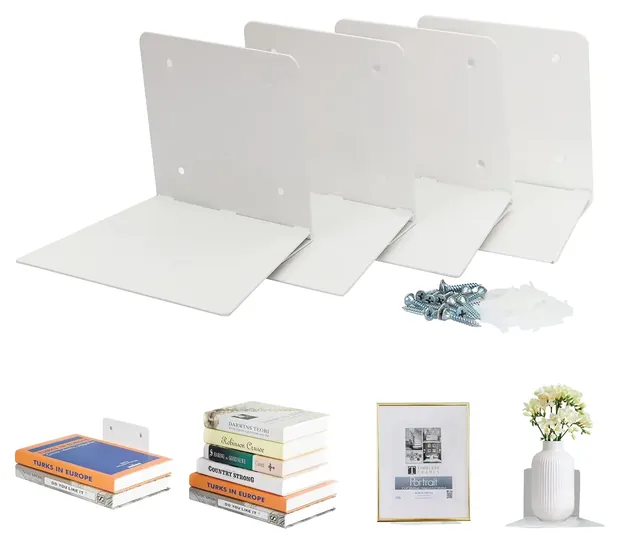
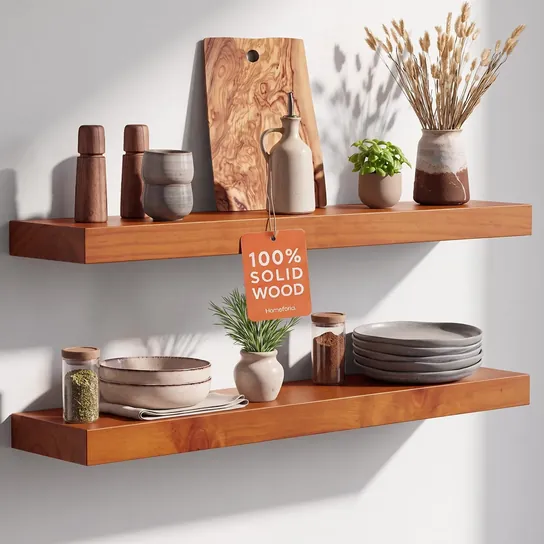
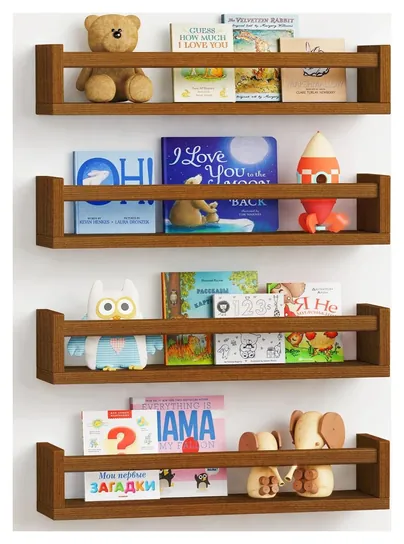
The Storage Maniac Invisible tops this list because its plate has a wider seat than the usual hidden bracket and tilts back slightly, which matters when the books themselves have to hide the support. This page covers two kinds of floating bookshelf: hidden plates that vanish under a stack, and wall shelves that carry a full row, from the Homeforia Solid Pine to budget sets for small rooms and a nursery.
Every weight limit here is the seller's own, and the wall matters more than the shelf. We checked those ratings against book-weight tables and drywall-anchor guides, which is why the long shelves come with a note about studs. We left out the Wondershelf, rated for fewer than 8 pounds, and the Nathan James Benji, whose capacity figures disagree from page to page. Some sets that look alike were cut too, so each pick here does a different job.
Hidden Plate, Hidden Bar Or Visible Bracket
A steel bar screws to the wall and slides into holes drilled in the back of the board, so nothing shows underneath.
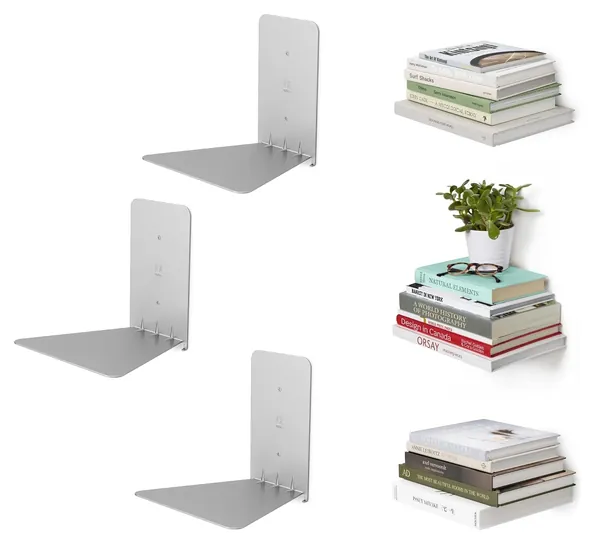
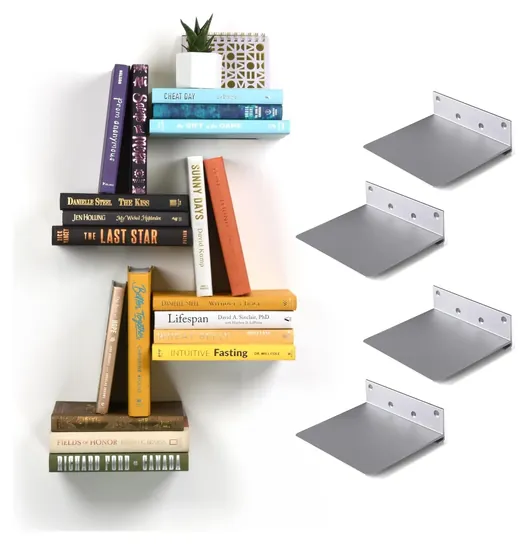
Three different things are sold as floating bookshelves. The first is a hidden plate: a small L-shaped piece of steel or aluminum that screws to the wall. The bottom book sits on the plate and covers it, so the books above seem to hang with no support. Umbra's Conceal is the best-known version; its standard size takes books up to 8 inches deep and its large size up to 10 inches. Plates like these hold about 15 to 20 pounds, which is a stack of six to eight books, not a row.
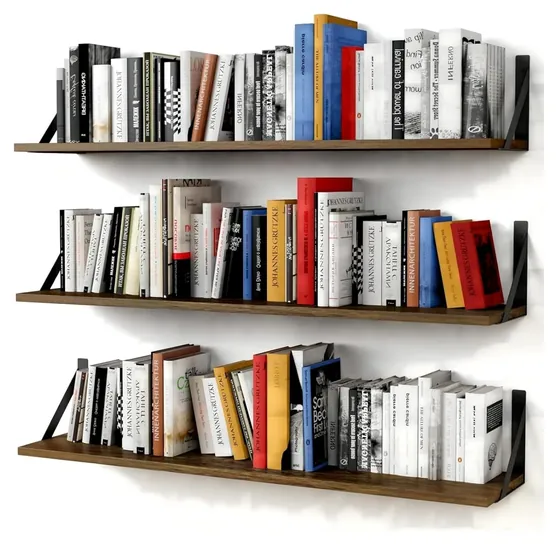
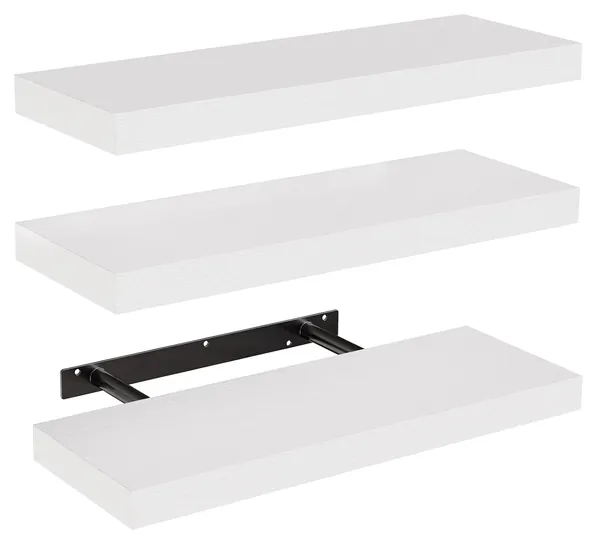
The second is a board on a hidden bar. A steel bar screws to the wall and slides into holes drilled in the back of the board, so nothing shows underneath. This is the true floating shelf, and it's the type to choose for a row of books with a clean look. Thicker boards resist bowing over long spans.
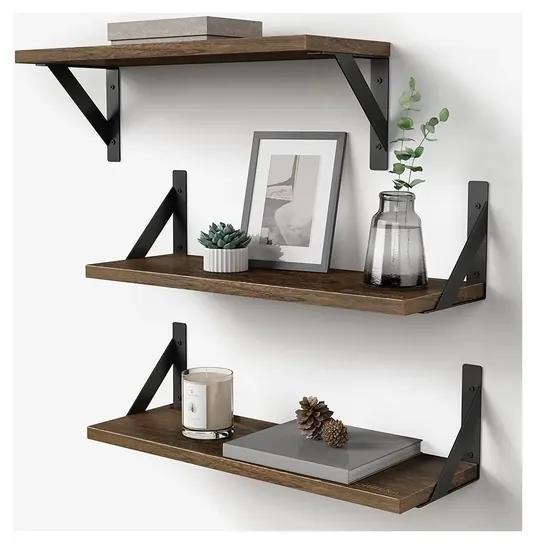
The third is a board on slim visible brackets. Many sets sold as floating shelves use them. They aren't hidden, but they often carry more weight for the money. For books, depth matters as much as length: hardcovers usually need a shelf about 7 to 8 inches deep, according to Nest Alpha's shelf guide, and a deeper shelf puts more leverage on the screws.
How Much Books Weigh, And What Your Wall Can Hold
Books are heavier than they look. A linear foot of hardcovers weighs roughly 18 to 22 pounds, paperbacks 8 to 12 pounds and oversized art books 15 to 25 pounds, according to a bookcase buying guide from Thomas Acres. Furniture makers often plan library shelves for 35 pounds per foot. A 30-inch shelf of hardcovers can top 50 pounds.
The weight a shelf can hold depends mostly on the wall behind it. Small plastic expansion anchors, the kind most shelf kits include, are rated for roughly 10 to 20 pounds each, and winged plastic anchors a bit more. Toggle bolts that open behind the drywall hold far more, as Angi's guide to drywall anchors explains, and BuildToolHQ's anchor chart gives similar ranges. Sources disagree on exact numbers, so treat them as rough. A wood screw driven into a stud is the strongest choice for a loaded bookshelf.
Shelf ratings are the sellers' own figures, and they usually assume ideal mounting. One retailer guide notes a shelf rated for 40 pounds into studs may hold only 10 to 15 pounds on drywall anchors alone.
Hanging It So It Stays Up
Find the studs first. In most U.S. homes they sit 16 inches apart, measured center to center, and a stud finder or a small test hole will locate them. Put at least one screw of every bracket or bar into a stud when the shelf will carry a row of hardcovers. Where no stud lines up, use toggle bolts instead of the plastic plugs in the box.
For hidden plates, put the thickest, deepest hardcover on the bottom so it covers the metal, then stack smaller books on top. Keep plants and anything wet off these stacks, since the bottom books carry the load. If a long wooden shelf starts to tip forward, the screws are usually pulling out of the drywall.
Wall shelves don't tip over the way freestanding bookcases can, which is the hazard behind most bookcase recalls listed by the U.S. Consumer Product Safety Commission. They can fall if the fixing fails, though, so keep loaded shelves away from the space over a bed or crib.
How we researched this
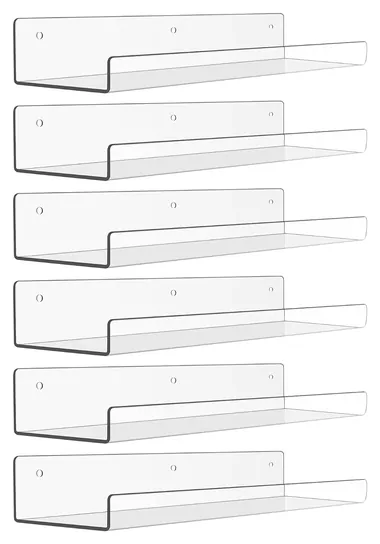
We compared 16 floating and invisible bookshelves, including hidden plates, hidden-bar boards, bracket shelves, kids' ledges and clear acrylic ledges. We read makers' and sellers' specs and dimension charts, book-weight tables, drywall-anchor guides and a magazine summary of owner feedback on the Umbra Conceal, and we checked every brand for recalls with the U.S. Consumer Product Safety Commission. Load ratings are the sellers' own; we found no independent load tests of these shelves.
Frequently asked questions
Can floating shelves hold heavy books?
Some can. Boards on hidden bars or brackets are often rated for 20 to 50 pounds each, enough for a row of hardcovers, but only when the screws go into studs. Hidden plates hold a stack of about six to eight books.
Do floating bookshelves need studs?
For a loaded book row, yes, or toggle bolts at least. The plastic plugs in most kits hold far less than the shelf's rating, and books are heavy, at roughly 20 pounds per foot of hardcovers.
How do invisible bookshelves work?
A small metal plate screws to the wall. The bottom book rests on it and hides it, so the books stacked on top seem to float. Use a thick hardcover that is as deep as the plate for the base.
How deep should a shelf for books be?
About 7 to 8 inches suits most hardcovers. Shallower shelves fit paperbacks, and picture books on a kids' ledge sit face-out on a narrow rail.
Will a long wooden floating shelf sag?
It can, when the board is thin or the bar's rods are short. A thick solid board on a steel bar fixed into studs is the best guard against sagging.