The 10 Best Crash Pads For Kids
Updated by · How we research

Kids fling themselves onto foam crash pads, and folding gym mats handle cartwheels; we compare 10 by size, foam, cover and safety. The Milliard 5x5 leads. When users buy our independently chosen editorial choices, we may earn commissions to help fund the Wiki.
No kids' crash pad we found lists a tested fall height, so none should be treated as protection under a loft bed or climbing wall. Most are big foam-filled cushions that children jump, flop and roll onto at home, in classrooms or in therapy rooms; others are folding gym mats for cartwheels and short drops. Keep them in open floor space, away from walls.
At a Glance


Editor's Notes
October 18, 2026, by Ezvid Wiki Admin:
This list needed a rethink. It mixed kids' gear with climbing pads, and the Metolius Session II and Petzl Alto are bouldering pads for adults, so they're gone. So are the Matladin Wedge, which is a skill wedge rather than a place to land, and the Tumbl Trak Pit Pillow, which is meant to sit on top of a foam pit.
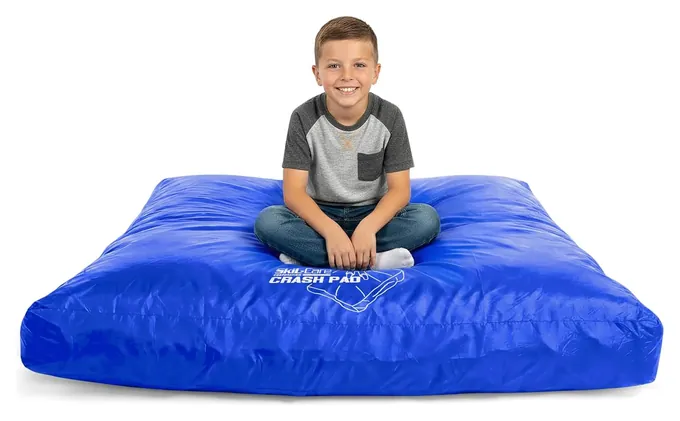
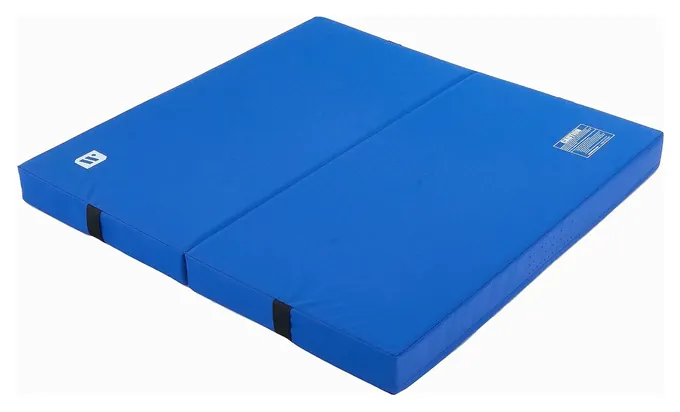
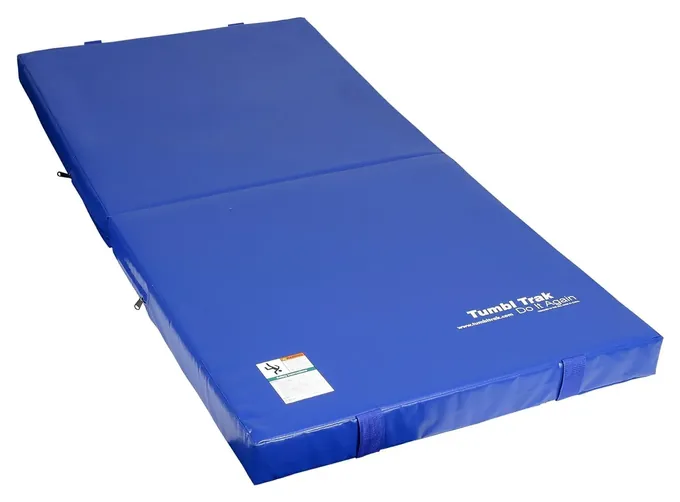
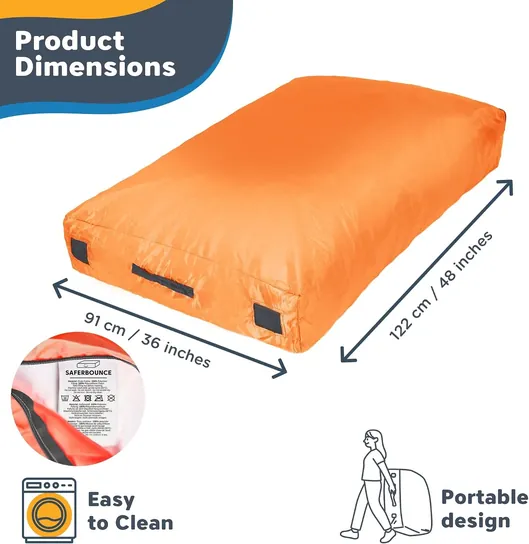
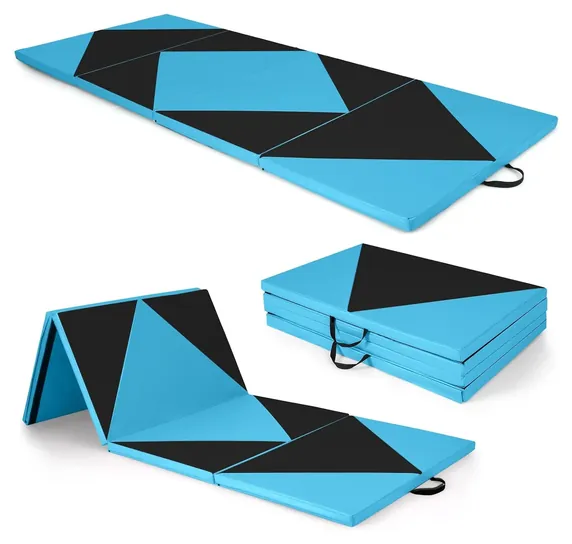
Most people looking for a crash pad want the big foam-filled cushion kids fling themselves onto, so the list now leads with those. The Milliard Crash Pad stays on top, and the Skil-Care Crash Pad stays in its 5-by-5 size, since the jumbo version we listed before has disappeared. New pads from Cheer Collection, Homewell, WOUDY and SaferBounce cover small rooms, two-kid families and tighter budgets. For flips and cartwheels, the Z Athletic Landing Mat, the Tumbl Trak Junior Practice Mat and the Giantex Folding Gym Mat stay, and the We Sell Mats Bi-Fold Mat moves to a 4-by-4 size that makes more sense in a house.
One thing surprised us. No kids' crash pad we found publishes a tested fall height, so none of them should be treated as protection under a loft bed or climbing wall. Nor could we find lab tests of these pads. What's here comes from makers' foam and cover specs, CPSC guidance, owner reports on zippers and sliding, and recall checks.
July 06, 2020:
When I was a kid, I used to love jumping on trampolines. I would imagine myself an astronaut walking around on the moon or some other planet with very little gravity. I distinctly remember visiting Lake Tahoe with my family one summer and renting a cabin that had a giant trampoline on the property. If I recall, this one happened to be anchored to a pretty big rock wall as well. Despite its large diameter, I shutter to think about what may have happened had I lost control over my body in mid-air because I jumped too high and missed the platform on the way down. I definitely could have used some extra crash pads around the base of the trampoline to break my fall. Thankfully, I came away from that situation unharmed.
While our list of crash pads is designed to provide kids with a cushioned landing platform for a variety of fitness activities, it's important to properly supervise them when they exercise.
The Milliard Sensory is testament to the fact that an ordinary crash pad doesn't have to be boring. This one is filled with foam blocks and it can even be used as a therapeutic tool for kids (and adults) who are recovering from surgery or other trauma. Of course, it's dependable as a regular crash pad for little athletes too.
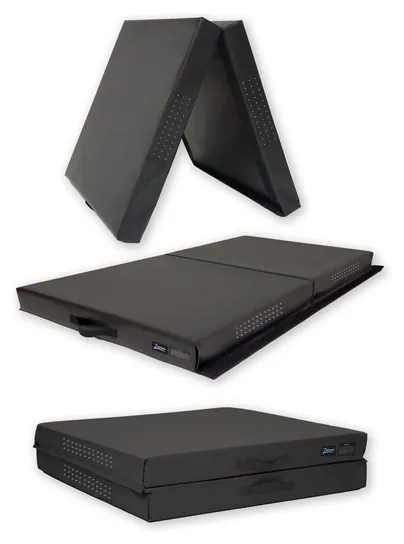
We've included the Z Athletic Open Cell for its thick design and puncture-resistant vinyl exterior.
Both the Giantex Gymnastics Mat and Tumbl Trak Junior are equipped with Velcro for connecting multiple pads together, the latter of which can be used for gymnastic bridges and rollovers when folded into its block shape.
The incline of the Matladin Wedge makes it a great option for tumbling and stretching exercises and it can be folded into a cube to assist with jump training and the strengthening of a kid's core leg muscles.
We've also added the Tumbl Trak Pit Pillow for its hook-and-loop fasteners, which makes it easy to stack multiple mats vertically or connect them side by side.
Finally, the outer nylon fabric on the Metolius Session II is ideal for withstanding harsh outdoor environments and breaking falls from bouldering, while its carpeted logo can be used to wipe the bottom of your child's shoes clean. It also has a convenient flap closure system for gear storage.
Special Honors
Lakeshore Learning Giant Washable Crash Pad Lakeshore Learning, a long-time preschool and classroom supplier, sells its Giant Washable Crash Pad directly. It measures 60 by 60 by 10 inches, uses a foam fill under a microsuede cover that comes off for the washer, and Lakeshore recommends it for ages 3 to 8. It costs more than most home pads, but it's built for classrooms and sensory corners. lakeshorelearning.com
Nugget The Nugget is a foam play couch sold mainly through its maker's own site. Its separate foam pieces can be rearranged into a couch, a fort, a ramp or a low landing spot, which is why parents often shop for it alongside crash pads. It's a play couch first, so it suits climbing and building more than running jumps. nuggetcomfort.com
Sensory Pad Or Gym Mat: Two Different Jobs
A gymnastics landing mat is flat, usually 4 inches thick, covered in vinyl and built to fold.
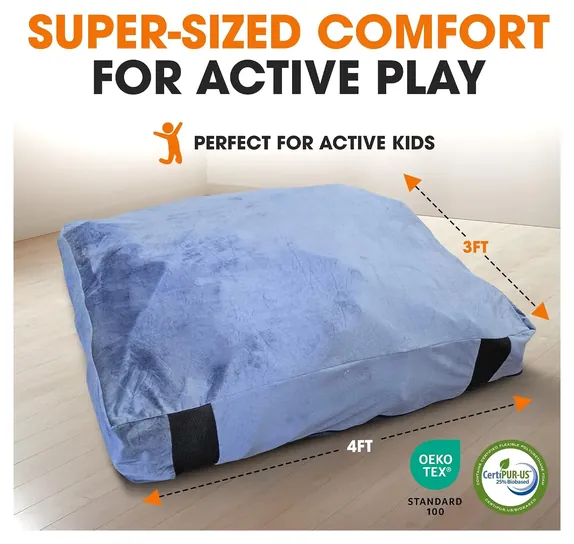
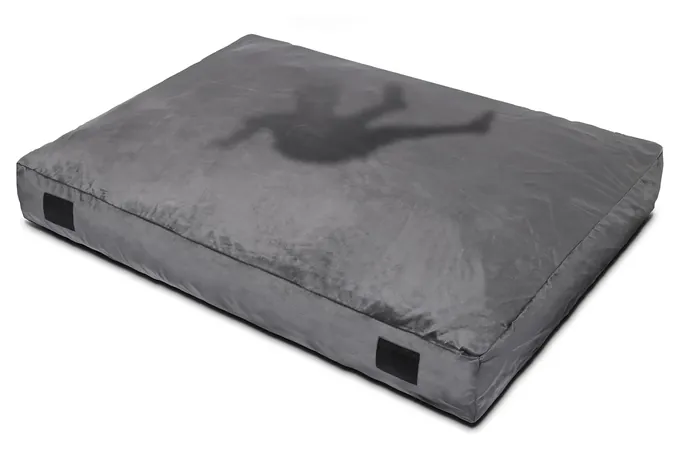
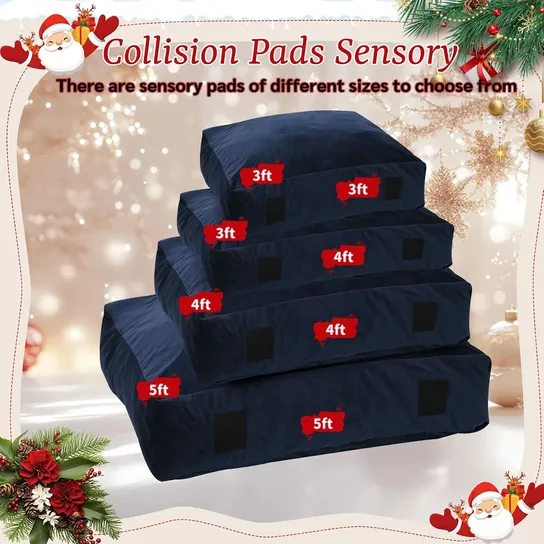
Two quite different products share the name. A sensory crash pad is a big square or rectangular pillow, 3 to 8 feet across and roughly 10 inches tall, filled with loose foam pieces inside a zippered liner. Kids run, jump and flop onto it, and many occupational therapists and teachers use pads like these for children who seek strong body input. Greatmats describes them as landing spots for jumping and crashing at home, in schools and in therapy rooms.
A gymnastics landing mat is flat, usually 4 inches thick, covered in vinyl and built to fold. It gives a firm, even surface for cartwheels, handstands and short drops from a beam or bar, and it won't swallow a foot the way a pillow pad can. American Gymnast explains how landing mats are sized for different skills. Thin 2-inch panel mats are a third option: good for rolls and stretching, but not for landings.
Pick by what your child actually does. A kid who flops and crashes for fun wants a pillow pad. A kid in a tumbling class who practices at home wants a landing mat. Some families end up with one of each.
Thickness, Foam And Fall Height
Thicker isn't always better. Greatmats' guidance is that a 4-inch mat suits basic tumbling and preschool play, 8 inches suits more complex tumbling, and 12-inch mats are for advanced skills and back or stomach landings. A very thick, soft surface can roll an ankle on a feet-first landing.
Foam type matters too. Closed-cell foam, such as the crosslinked polyethylene in many folding mats, springs back fast and doesn't absorb sweat. Open-cell foam is softer and takes a landing more gently but soaks up moisture if the cover is torn. Many mats layer the two (Wikipedia: gymnastics mat). Pillow pads rarely state foam density, so judge them by weight, cover and maker.
The most important limit is fall height. The CPSC's Public Playground Safety Handbook says protective surfacing should be rated under the ASTM F1292 test to at least the height a child could fall, and that mats count only if they've been tested that way. None of the kids' crash pads we looked at publishes such a rating. Treat a crash pad as a soft spot for jumping from couch height, not as fall protection under a loft bed, climbing structure or bunk.
Size, Covers, Weight And Safe Setup
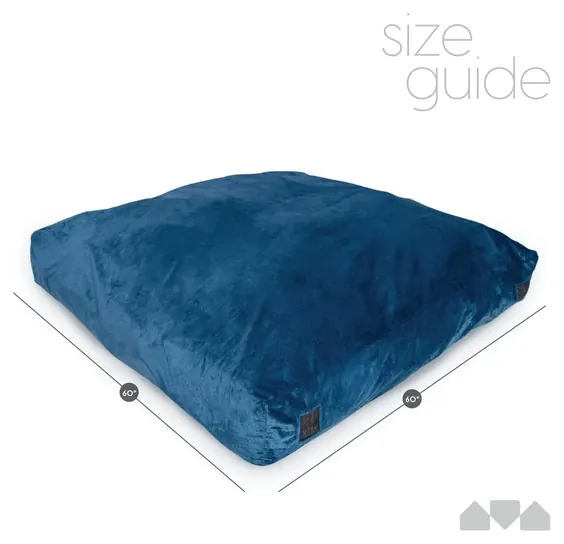
Size the pad to the children using it. Skil-Care rates a 3-by-4-foot pad for one child and a 5-by-5 for one or two. Leave several feet of open floor around it, away from walls, furniture and sharp corners, and have an adult nearby for active play. Pads aren't beds, and sellers warn against letting children sleep on them.
Look at the zipper before anything else. Loose foam pieces should sit in an inner liner with a concealed or locking zipper, so a curious child can't pull foam out and put it in their mouth. Mesh vents let air escape on a landing; keep them uncovered. A removable outer cover that goes in the washer is worth having, while the foam itself should never be laundered. Vinyl gym mats just wipe clean.
Expect weight. Full-size pillow pads run about 30 to 47 pounds, and they can slide on hardwood unless they sit on a rug or a non-slip pad. Foam claims such as CertiPUR-US cover the foam's content and emissions, not how well it cushions (CertiPUR-US).
How we researched this
We compared 16 crash pads and gym mats from 14 brands, read makers' product pages, listing documents and retailer spec sheets, gymnastics-mat buying guides and the CPSC's playground surfacing guidance, analyzed owner feedback, and checked every brand we could against the U.S. Consumer Product Safety Commission's recall database. We found no independent lab tests of kids' crash pads. The 3D models are built from published dimensions.
Sources (10)
- Milliard: Crash Pad Sensory Pad with Foam Blocks
- Tumbl Trak: Junior Practice Mat
- CPSC: Public Playground Safety Handbook
- CPSC: Outdoor Home Playground Safety Handbook
- CPSC: Recalls
- Greatmats: Sensory crash pad options
- American Gymnast: Selecting the right gymnastics landing mats
- Wikipedia: Mat (gymnastics)
- CertiPUR-US
- Lakeshore Learning: Giant Washable Crash Pad
Frequently asked questions
What is a sensory crash pad?
It's a large, soft cushion filled with foam pieces that kids jump, flop and roll onto. Therapists and teachers use them for children who seek strong body input, and many families use them simply as a safe spot for rough play.
What size crash pad should I get?
A 3-by-4-foot pad suits one child in a bedroom. A 5-by-5-foot pad fits one or two kids and needs a playroom or living room. Leave open floor around it, away from walls and furniture.
Can I put a crash pad under a loft bed or climbing wall?
Not as your only protection. No kids' crash pad we found publishes a tested critical fall height under ASTM F1292, the standard the CPSC uses for protective surfacing. Use it for couch-height jumps.
Is a crash pad good for a child with autism?
It may help. Many occupational therapists use crash pads for children who seek deep pressure and movement, and a pad gives that a safe outlet. Ask your child's therapist how to use it.
How do you clean a crash pad?
Most pillow pads have a removable outer cover that goes in the washer and an inner liner you wipe down. Never wash the foam. Vinyl gym mats wipe clean with mild soap and water.
Why are crash pads so heavy?
The foam fill is dense, so full-size pads weigh about 30 to 47 pounds. That helps them stay put, but they can still slide on hardwood, so a rug or non-slip pad underneath helps.