The 9 Best Corded Impact Wrenches
Updated by · How we research

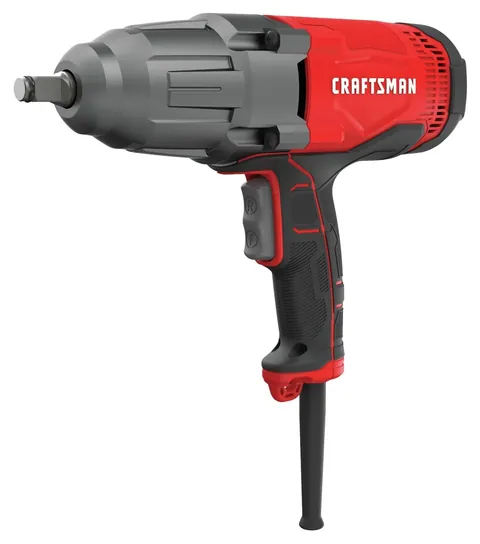
Drive size comes first: nine 1/2-, 3/4- and 1-inch corded impact wrenches compared by torque, weight, anvil, cord and warranty. The Craftsman CMEF901 leads. When users buy our independently chosen editorial choices, we may earn commissions to help fund the Wiki.
Makers measure torque in different ways, and the cheapest wrenches tend to claim the most. A corded impact wrench plugs into a wall outlet and hammers a square drive to spin nuts and bolts that a hand ratchet can't budge. Drivers use them for lug nuts, and mechanics for suspension, trailer and equipment work.


From the manual
- Three-year limited warranty plus a 90-day full refund with a receipt; normal wear and tool abuse aren't covered. p. 6
- Brush inspection and replacement, like cord repairs, go to a Craftsman service center, not the owner. p. 6
- Wall hanging needs a Versatrack peg hook, sold separately; the manual says never to hang the tool overhead. pp. 5-6
- A generator or long extension cord lowers voltage and fastening torque; check the cord-gauge table before buying a cord. pp. 4-5
Why the Craftsman CMEF901 is our top pick
For lug nuts and trailer work at home, our pick pairs a three-year warranty2 with more than twice the motor current of our runner-up, the Makita TW0350: 7.5 amps against 3.5.1,4 It's rated at 450 foot-pounds maximum,1 where the runner-up is rated at 258,3 though Makita claims more power and torque than rival 7.5-amp models.4 The two figures aren't taken the same way. Makita quotes the torque reached three seconds into a run,6 while Craftsman doesn't say how its maximum is measured, so read the gap as a direction, not a ratio.
Socket swaps can be quicker on our pick. Its hog-ring anvil lets a socket push on and pull off by hand,2 while the TW0350's detent pin snaps into the socket and, on the firm-fit version, has to be pressed in before the socket comes off.3
The runner-up wins elsewhere. It weighs 6.6 pounds, light for a corded wrench, and comes with a case,4 and its brushes come out under screwdriver caps,3 where our pick's manual leaves brush inspection and replacement to a service center.2 Its warranty runs one year.5 For occasional garage jobs, the longer warranty and bigger motor make the CMEF901 the safer buy; for cramped wheel wells and long days, the TW0350 is the better fit.
| Craftsman CMEF901 | Makita TW0350 | |
|---|---|---|
| Warranty | 3 years | 1 year |
| Rated torque | 450 ft-lb max | 258 ft-lb at 3 seconds |
| Motor current | 7.5 A | 3.5 A |
| Socket retention | Hog ring, push on and pull off | Detent pin |
| Brush service | Service center | Owner, screwdriver caps |
Sources
- Craftsman CMEF901 1Product page 2Instruction manual, CMEF900 text (PDF), pp. 4, 6
- Makita TW0350 3Instruction manual (PDF), pp. 2, 4, 6 4Specifications (Canada)
- Makita 5Limited warranty (USA catalog) 6TW1000 data sheet, torque definition (PDF), p. 2
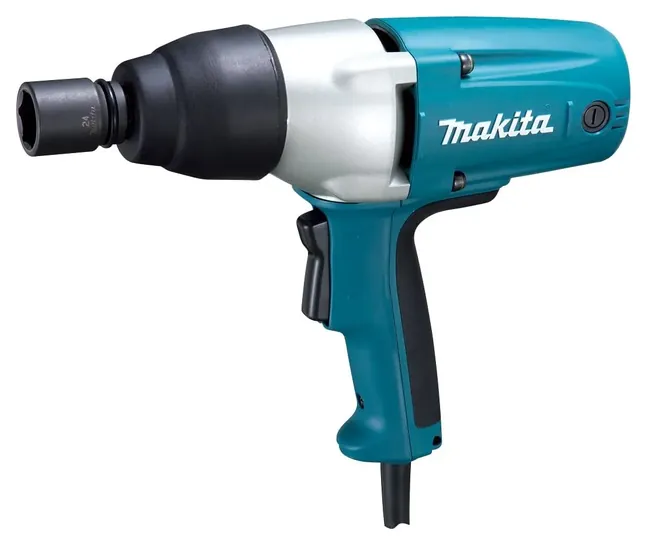
From the manual
- Sockets lock onto a detent pin. On the firm-fit version, press the pin through the socket's hole to pull it off. p. 4
- On bolts of 1/2 inch or smaller, ease off the trigger so the fastener isn't damaged, and run a test fastening first. p. 5
- Both carbon brushes come out under screwdriver caps and should be replaced together with identical brushes. p. 6
- Warranty terms are on a separate sheet; Makita USA covers its tools for one year, with a 30-day return. warranty, USA catalog
Compare the specs
Swipe the table sideways to see every column.
| Product | Drive (in) | Rated torque (ft-lb) | Motor current (A) | Weight (lb) | Socket retention | Warranty |
|---|---|---|---|---|---|---|
| 1. Craftsman CMEF901 | 1/2 | 450 max | 7.5 | — | Hog ring | 3 years |
| 2. Makita TW0350 | 1/2 | 258 | 3.5 | 6.6 | Detent pin | 1 year |
| 3. Bauer 64120 | 1/2 | 300 (1,050 breakaway) | 8.5 | 8.2 | Hog ring | 90 days |
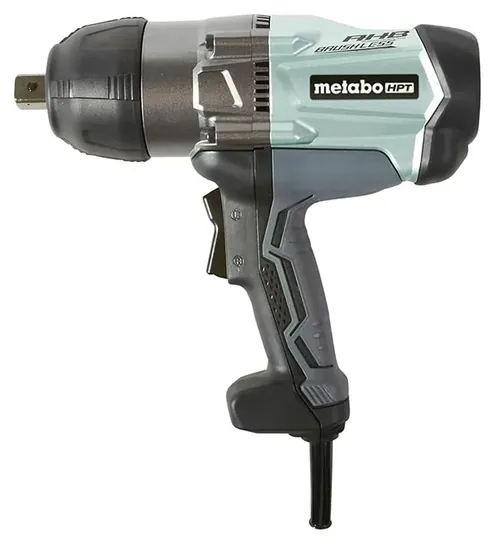
| 4. Metabo HPT WR22SE | 3/4 | 460 | 8.3 | 10.1 | Plunger | 5 years |
| 5. Makita TW1000 | 1 | 738 | 12 | 19.0 | Friction ring | 1 year |
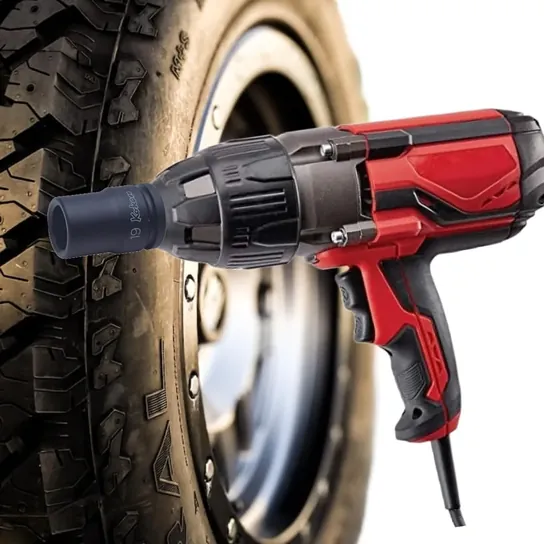
| 6. OEMTOOLS 24666 | 1/2 | 400 max, 320 tightening | 8.5 | 8.3 | Hog ring | 1 year |
| 7. Makita 6906 | 3/4 | 433 | 9.0 | 12.3 | Friction ring | 1 year |
| 8. WEN 48108 | 1/2 | 450 max | 7.5 | 5.5 | Hog ring | 2 years |
| 9. Eastvolt 800W | — | — | — | — | — | — |
Makers rate torque differently: Makita quotes the torque reached three seconds into a run, Harbor Freight and OEMTOOLS list a lower fastening or tightening figure beside a bigger one, Metabo HPT gives tightening torque, and Craftsman and WEN give a maximum, so compare torque within a drive size. We found no maker figure for the Craftsman's weight. Eastvolt has no maker site or manual, so its seller's claims aren't listed.
Sources
- Craftsman CMEF901 Product page Instruction manual, CMEF900 text (PDF)
- Makita TW0350 specifications (Canada) TW0350 instruction manual (PDF) TW1000 specifications (Canada) TW1000 product page (USA) 6906 specifications (Canada) 6906 product page (USA) Limited warranty (USA catalog)
- Harbor Freight Bauer 64120 Product page
- Metabo HPT WR22SE Product page Instruction manual (PDF)
- OEMTOOLS 24666 Operating instructions (ManualsLib copy)
- WEN 48108 Product page Instruction manual (ManualsLib copy)
From the manual
- An overload shuts it down; unplug and replug the cord to reset. After overheating, let it cool 10 to 15 minutes. pp. 11-12
- Sockets mount on a spring plunger: line it up with the socket's hole, press it in and check it fully engages. p. 9
- Switch off and wait for a full stop before reversing; switching while the motor turns can burn it out. p. 9
- Torque stops rising after a few seconds of hammering, so check the first bolts with a hand torque wrench. p. 10
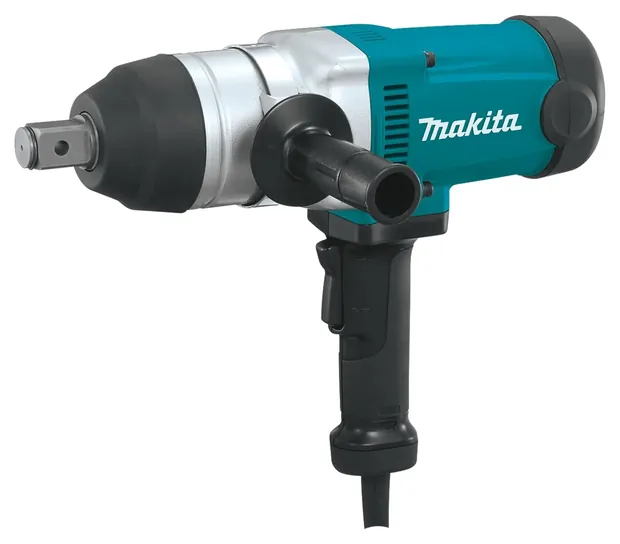
From the manual
- The side grip fits either of two grooves on the hammer case, so you can set the hand position for the job. p. 4
- Sockets push onto the anvil, or lock with an O-ring and a pin through the socket and anvil. pp. 4-5
- Brush changes start by removing a protector, then the screwdriver caps; replace both brushes together. p. 6
- Run a test fastening to set the time for each bolt; too much torque can damage the bolt, nut or socket. p. 5
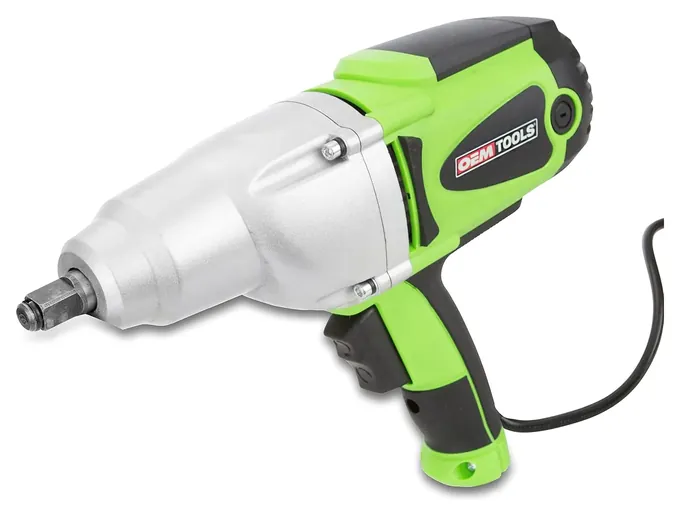
From the manual
- Plug it into its own circuit of 14-gauge or heavier wire on a 15-amp breaker or time-delay fuse; low voltage damages the motor. p. 4
- The one-year warranty means returning it to the store, or shipping it prepaid with proof of purchase to OEMTOOLS in Memphis. p. 8
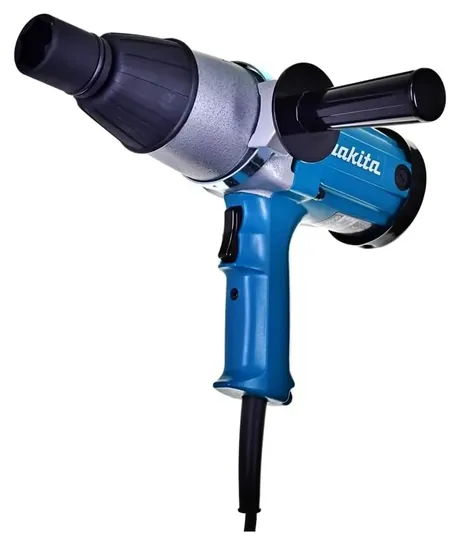
From the manual
- Sockets push onto the anvil and pull off, or lock with an O-ring and a pin through the socket and anvil. p. 5
- Torque climbs with run time and is lower at 90 percent of rated voltage, so test-fasten first and check with a torque wrench. p. 6
- Both carbon brushes come out under screwdriver caps; replace them together with identical Makita brushes. p. 7
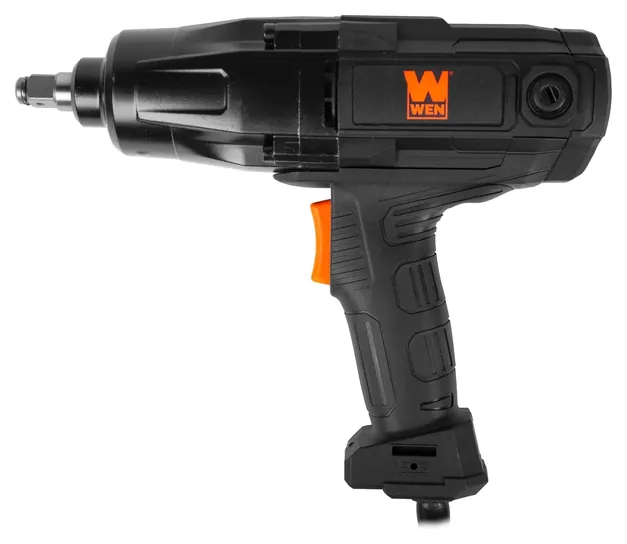
From the manual
- The two-year warranty covers personal use, and wear parts such as carbon brushes aren't covered. pp. 12, 15
- Worn brushes are a listed cause of a motor that won't start; WEN sells replacements as part 48108-032. p. 12
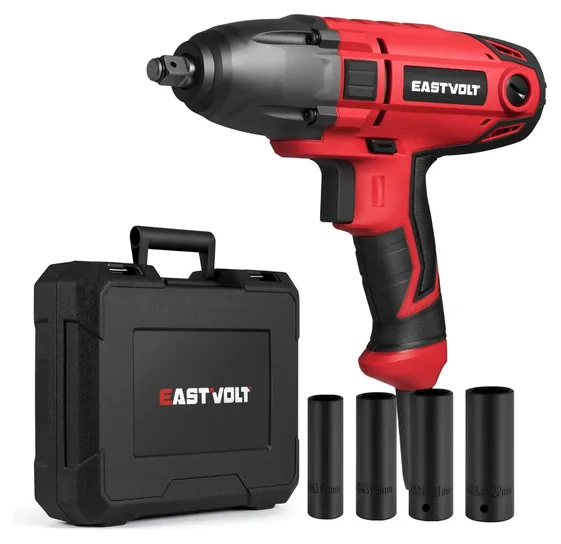
Editor's Notes
November 4, 2026, by Ezvid Wiki Editors:
We read the makers' manuals for seven of the nine wrenches, added a spec table and a section on why the Craftsman leads, and listed each manual's setup and service details under its pick. We also removed an extended nose the Bauer 64120 entry had borrowed from a different Harbor Freight model, added its 90-day warranty, and corrected the guide's weight range and an unsupported torque-test figure.
October 16, 2026, by Ezvid Wiki Editors:
Craftsman replaced the CMEF900 with the Craftsman CMEF901, and the new model is our top pick: a sensible home-garage wrench with a three-year limited warranty, longer than most tools at its price. Most of the other 2021 picks had quietly disappeared from stores. The Metabo HPT WR25SE, the Metabo SSW 650 and the Porter-Cable PCE211 are currently unavailable, and Milwaukee now lists the 9070-20 as no longer available. We dropped the Hammerhead HDIW075 because cheaper wrenches out-muscle it, and the Keyhao Portable because it runs off a car's 12-volt socket, not a wall outlet.
The Makita TW1000 stays for readers who want the most torque a cord can deliver. The Metabo HPT WR25SE isn't gone for good, so it moved to Special Honors.
New are the Makita TW0350, a light 1/2-inch gun, the Bauer 64120 and the OEMTOOLS 24666 for tight budgets, the brushless Metabo HPT WR22SE and the Makita 6906 for 3/4-inch work, plus the WEN 48108 and the Eastvolt 800W.
A note on torque numbers: makers measure them in different ways, and the cheapest tools tend to print the biggest figures. The buyer's guide explains how to read them.
We found no independent lab tests of the corded wrenches on this list. Torque Test Channel has run older corded guns against cordless ones on its test rig, but not these models. So this list leans on makers' torque ratings and manuals, owner reports on lug nuts and rusted bolts, mechanics' forum threads and recall checks.
Earlier notes
April 27, 2021, by Chris Gillespie:
Designed to deliver a high torque output, impact wrenches are most commonly pneumatically powered by compressed air. Recent iterations, however, can be electrically or hydraulicallye powered, with cordless electric devices becoming increasingly popular. They are commonly used in the automotive industry for loosening wheel lugs, but are also widely used in many industries, such as heavy equipment maintenance, product assembly, and major construction projects.
In this update, we replaced several options with the most up-to-date models and removed some that are no longer available. The previous offering from Dewalt has been discontinued as it was a relatively large model with mediocre build quality. Their new models are now battery-powered, since recent advances in battery technology allow for more versatility without loss of performance. We chose to include the Keyhao Portable as a budget-friendly option that is ideal for keeping in a vehicle. It isn't powerful enough for big jobs but should be sufficient for changing a flat at the side of the road, and is powered via the 12-volt battery, either through the cigarette lighter or using the included terminal clamps. Choosing between a heavy-duty model, such as the Metabo HPT WR25SE, and an affordably priced one like the Craftsman CMEF900 or the Porter-Cable PCE211 will boil down to how often you intend to use the tool and the amount of torque needed. Daily use will undoubtedly cause the cheaper models to wear out fairly quickly, as will repeated removal of rusted or stuck fasteners.
November 25, 2020, by Will Rhoda:
Without any exciting new developments in the category over the past year, it was a fairly straightforward round of updates, but we found a few places to brush up on things nonetheless:
Firstly, we decided to remove the Kobalt 694 from our list. This consumer-level tool was currently only available refurbished, and while we will include refurbished items in our rankings from time to time – typically in cases where options for the category are sparse, or situations where we judge that the refurbished option presents a better choice than the brand-new alternatives – this time seemed like a questionable call. As it was, this option was already fairly close to the bottom on a list full of often-superior alternatives, so we reasoned that it wouldn’t be missed.
Secondly, we replace the Metabo HPT WR16SE with the Metabo SSW 650. Before you go looking them up to compare them side by side, note that the “HPT” in our former selection's name is actually part of the brand name, and not the model number. In 2018, Hitachi rebranded its full line of tools to be Metabo HPT tools, but the Metabo brand still operates independently, sometimes producing tools that compete with its sister company. In this case, the SSW 650 – which sports a 16-foot power cord and a maximum no-load speed that bests the WR16SE by more than 30% – appeared to be the more appealing option, so a swap was due.
Lastly, we added the Makita TW1000 to our list — a heavy-duty model that puts out 738 foot pounds of torque. Notably, it’s also the second model we listed that has a one-inch anvil, with the first being the Metabo HPT WR25SE. While I definitely agree with the last editor for this page – who focused it on tools with 1/2-inch anvils, which are much more common – a second one-inch option to add a bit of balance seemed like an appropriate addition.
If you find a tool you like on this list, but the anvil size doesn’t jive with your needs, don’t be afraid to dig around a bit to see if the company in question offers an alternative that’s right for you. DeWalt, for example, offers corded impact wrenches with 1/2-, 3/4- and one-inch anvils, not to mention your choice of hog-ring or detent-pin configurations. [2026 update: DeWalt's service parts listings now mark its corded DW292, DW293 and DW294 impact wrenches as discontinued.]
If corded power isn’t an absolute must for you, you might also be interested in checking out our generalized page for Best Impact Wrenches, which includes several cordless options.
June 12, 2019, by Brett Dvoretz:
Corded impact wrenches are a relatively new tool in a market that has long been dominated by pneumatic options. For a long time electric impact wrenches couldn't match their air-powered brethren in the power department, but that is beginning to change. No tool better shows that then the Metabo HPT WR25SE. With 740 ft-lbs of torque, the chances of encountering a nut it can't crack are slim. It is ideal for professional mechanics that expect to subject their impact wrench to a lot of use and require a lot of force. Other professional-quality options on our list are the Metabo HPT WR16SE, DeWalt DW293, and Milwaukee 9070-20. Of these four, the Metabo HPT WR25SE is the most compact and best for precision work, since it features four selectable impact ranges. [2026 update: Metabo HPT's current WR25SE manual lists a single speed and impact rate and only a forward/reverse switch, with no selectable impact ranges.]
As one might expect though, commercial-quality tools are generally costly. While we recommend that if you are going to buy a tool, it is always best to buy a durable and dependable model that will last for years, we do understand that the average consumer who may only use their impact wrench every few months for rotating their tires or the odd job around the house may not want to buy a professional-level tool. For those users, we have included the Porter-Cable PCE211, Kobalt 6904, Hammerhead HDIW075, Craftsman CMEF900, and Capri Tools 32200. All of these should be able to handle the demands of most DIYers, but we feel the Porter-Cable PCE211 performs best on stubborn bolts, and the Capri Tools 32200 represents the best value. If you aren't very experienced using impact wrenches, you may be best served by the Kobalt 6904, due to its rubber boot that can minimize the chances of you damaging something.
Special Honors
Metabo HPT WR25SE Metabo HPT's 1-inch WR25SE uses the same AC brushless design as the WR22SE, with a rating of 740 foot-pounds, a side handle and a five-year warranty. Metabo HPT still lists it, though we couldn't find a U.S. seller with stock. It's worth watching for anyone who needs 1-inch power without brushes to replace. metabo-hpt.com
Ingersoll Rand Shops that already run a compressor often skip electric tools and use air impact wrenches instead, and Ingersoll Rand has made them for decades. Air guns are lighter for their power than corded ones, but they need a compressor and hose that can supply enough air volume to keep them hitting hard. ingersollrand.com
Drive Size, Torque And Weight
On a corded impact wrench, start with the drive size, the square on the front that holds the socket.
On a corded impact wrench, start with the drive size, the square on the front that holds the socket. A 1/2-inch drive is the standard for cars, light trucks, mowers and trailers, and nearly every budget corded wrench uses it. The 3/4-inch and 1-inch sizes are for big trucks, farm equipment and structural bolts; those tools weigh about 10 to 19 pounds (Metabo HPT, Makita) and cost several times more. Most readers need 1/2 inch.
Read torque claims with care. A maximum or breakaway figure is measured differently from the working torque a tool sustains, there's no single standard, and some makers are believed to inflate their numbers (Wikipedia). Makita, for one, quotes the torque its tools reach three seconds into a run (Makita), while Harbor Freight rates the Bauer 64120 at 1,050 foot-pounds of breakaway torque but 300 of fastening torque (Harbor Freight). That's why a 7.5-amp budget gun can claim 450 foot-pounds while Makita rates its 3.5-amp TW0350 at 260 (Makita). Amp draw is a useful sanity check.
Weight matters more than it looks. The 1/2-inch guns here run from about 5.5 to 8.5 pounds, heavier than compact cordless tools, and owners on the Garage Journal forum call corded models heavy and bulky, one of them awkward in a wheel well (Garage Journal). In exchange, a corded wrench never runs out of battery and costs less for its power.
Anvils, Motors And Impact Drivers
The anvil decides how sockets stay on. A hog ring, a spring ring around the square, lets you push sockets on and pull them off by hand, which is quick for lug nuts. A detent pin snaps into a hole in the socket and holds it more firmly, but needs a press to release. The 3/4-inch and 1-inch Makitas here use a friction-ring anvil (Makita), and on tools of 3/4 inch and up a socket can also be locked on with a pin pushed through the socket and anvil (Wikipedia).
Most corded wrenches use brushed motors. Their carbon brushes wear down and need replacing, so look for brushes you can reach from outside, as on Makita's tools (Makita). Metabo HPT's brushless AC models skip brushes altogether and add a soft start and a brake, and the maker says their electronics help them run on generators (Metabo HPT).
Many people searching for a corded impact driver actually want a wrench, or the reverse. An impact driver takes 1/4-inch hex bits and drives screws and lag bolts; it's smaller and makes less torque. An impact wrench has a square drive for sockets, for nuts and bolts (Wikipedia).
Sockets, Cords And Lug Nuts
Use impact-rated sockets, usually black with thick walls. Chrome hand-tool sockets are more brittle and can shatter under an impact gun's blows (OnAllCylinders), and each extension or universal joint soaks up some of the hammer's force (Wikipedia). Wear eye protection, because a failed socket throws fragments, and hearing protection, because impact wrenches are loud (NIOSH).
Cord gauge matters for motors that draw up to 12 amps. A tool guide recommends at least 14-gauge wire for a 50-foot extension cord and 12-gauge to be safe (Tools In Action). A thin cord starves the motor and heats up.
For wheels, let the impact wrench do the removal. When the wheel goes back on, Tire Rack advises starting the nuts by hand, snugging them manually and setting the final torque with a click or beam torque wrench, since an impact gun's torque varies widely (Tire Rack). Most passenger cars call for about 80 to 100 foot-pounds on lug nuts, but your owner's manual has the real figure (Power Tools Insider). Over-tightened lug nuts can stretch studs, warp brake rotors or crack alloy wheels. Tighten in a star pattern and recheck after a short drive.
How we researched this
We screened 19 corded, cordless and air impact wrenches and compared 13 corded models in depth before settling on these nine. We read Craftsman's CMEF900/CMEF901 manual, Makita's TW0350, TW1000 and 6906 manuals and TW1000 data sheet, Metabo HPT's WR22SE/WR25SE manual, ManualsLib copies of the OEMTOOLS 24666 and WEN 48108 manuals and Harbor Freight's 64120 spec page; Eastvolt publishes no documents. Tire Rack's wheel-installation advice and Wikipedia's notes on how torque is rated shaped the buyer's guide. Neither the CPSC nor Health Canada lists a recall for any of the nine; the only corded impact-wrench recalls we found cover a 2001 batch of Milwaukee 9070-series wrenches, which this list dropped, and a 2012 Mastercraft model sold in Canada.
Sources (29)
- Wikipedia: Impact wrench
- Craftsman: CMEF901 product page
- Craftsman: CMEF900/CMEF901 instruction manual (PDF)
- Makita: TW0350 instruction manual (PDF)
- Makita USA: TW0350
- Makita: TW1000 instruction manual (PDF)
- Makita Canada: TW1000 specifications
- Makita: 6906 instruction manual (PDF)
- Makita USA: 6906
- Metabo HPT: WR22SE / WR25SE instruction manual (PDF)
- Harbor Freight: Bauer 64120
- OEMTOOLS: 24666 operating instructions (ManualsLib)
- WEN: 48108
- WEN: 48108 instruction manual (ManualsLib)
- OnAllCylinders: impact vs chrome sockets
- Tire Rack: how to torque lug nuts
- Hagerty: Torque Test Channel's corded impact wrench test
- CPSC: 2001 Milwaukee electric wrench recall
- Health Canada: Mastercraft MX impact wrench recall
- Makita: TW0350 product page
- Makita: TW1000 data sheet
- Metabo HPT: WR22SE
- Metabo HPT: WR25SE
- Milwaukee Tool: 9070-20
- Garage Journal: good brand for a corded electric impact wrench
- Tools In Action: extension cord ratings
- Power Tools Insider: lug nut torque chart
- NIOSH / CDC: power tools noise
- CPSC recalls
Frequently asked questions
Are corded impact wrenches any good?
Yes, for work near an outlet. They never run out of battery and cost less for their power. They're heavier than compact cordless tools, need a cord, and the strongest battery models now claim more torque.
Is 250 or 300 foot-pounds enough to remove lug nuts?
For most cars, yes. Lug nuts are usually tightened to about 80 to 100 foot-pounds. A rusted or over-tightened nut can need much more, so a tool rated around 250 may stall on those.
What's the difference between an impact wrench and an impact driver?
An impact wrench has a square drive for sockets and loosens nuts and bolts. An impact driver takes 1/4-inch hex bits, drives screws and makes less torque.
What size impact wrench do I need?
A 1/2-inch drive covers cars, light trucks, trailers and lawn equipment. Choose 3/4 inch or 1 inch only for big trucks, farm machinery or structural bolts.
Can I use regular chrome sockets on an impact wrench?
No. Chrome sockets are brittle and can crack under impacts. Use impact-rated sockets, and keep extensions and universal joints to a minimum.
What extension cord should I use with a corded impact wrench?
Use at least 14-gauge wire for a 50-foot cord, and 12-gauge for longer runs or the strongest tools. Outdoors, plug into a GFCI outlet.