The 9 Best Circuit Breaker Locators
Updated by · How we research

Plug-in breaker finders and pro circuit tracers compared by voltage, dead-circuit tracing and outlet testing. The Klein Tools ET310 leads for home panels. When users buy our independently chosen editorial selections, we may earn commissions to help fund the Wiki.
Most breaker finders work only on a live circuit: the transmitter plugs into a powered outlet and sends a signal the receiver picks up at the panel, so the breaker has to stay on. Homeowners labeling a panel need only a plug-in kit, while electricians tracing dead or 240-volt circuits need a tracer that sends its own signal.


Editor's Notes
October 26, 2026, by Ezvid Wiki Admin:
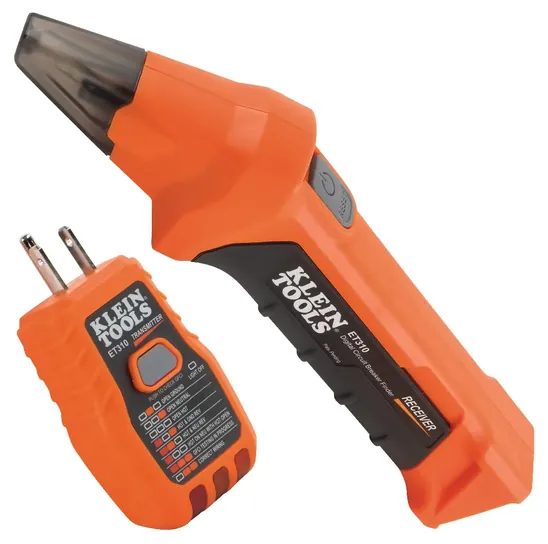
The Klein Tools ET310 is the pick for most homes now. It answers the question most readers have, which breaker feeds this outlet, with a cheap two-piece kit that trade guides keep recommending. Seven of the ten earlier picks are gone. The Fluke 2042 is no longer sold and was really a cable locator. The Ideal SureTrace 61-959 gives way to the newer Ideal SureTrace Plus at a fraction of the price. The Southwire 41210S and Triplett Sniff-It 9650 can't be bought new, and the Zircon Breaker ID Pro, Mastech MS6818 and Sperry CS61200P no longer turn up for sale. The Greenlee CS-8000 and Extech CB10 stay.
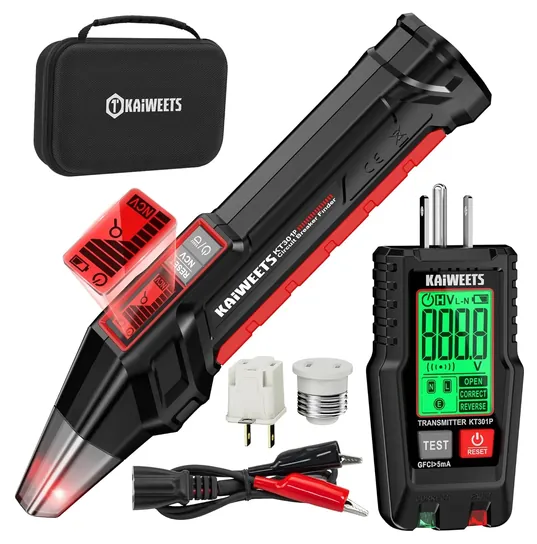
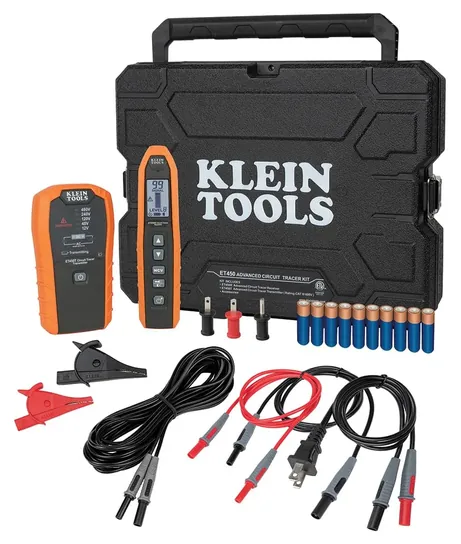
The page now covers two kinds of tool: plug-in finders for home panels, and tracers like the Klein Tools ET450 for dead circuits, 240-volt lines and commercial work. An electrician's side-by-side of nine finders and tracers at Pro Tool Reviews and a reviewer's write-up of using the KAIWEETS KT301P carried the most weight, alongside the makers' published specs and federal recall records, which show no breaker-finder recall for any brand here.
November 23, 2020:
It ended up being quite a busy round of updates, omitting some of our previous consumer-level picks to make room for new professional-grade options, and replacing some of our previous professional-grade choices with better options or kits offered by the same company.
Recognizing that the Triplett Sniff-It 9650, Klein Tools ET300 and Hi-Tech HTP-6 appeared to essentially be rebranded versions of the same gadget, we decided to let the Sniff-It 9650 maintain its position, while we replaced the ET300 with the Klein Tools ET310 and eliminated the HTP-6.
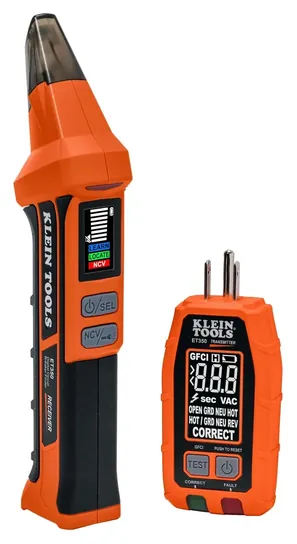
The ET310 separates itself from the ET300 with improved ergonomics for its receiver, a built-in GFCI outlet tester for its transmitter and a convenient docking design that makes it easy to attach the two components for storage. All of these are nice touches for a reasonably priced device, but it should be noted that the ET310 is still a 120-volt, CAT II instrument that is not designed for heavy industrial use. So, for the casual user, by all means, buy it, use it and enjoy it. But for serious electricians, don’t let the Klein name fool you into assuming that this is a heavy-duty unit. It’s not.
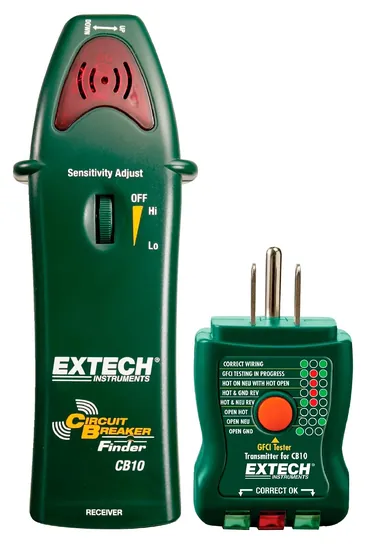
We eliminated the Extech 40180 – a tone generator and amplifier that I thought wasn’t quite the right fit for this list – but decided to continue ranking the Extech CB10 — a basic model that sets itself apart from comparably priced devices with a helpful sensitivity-adjustment wheel. We are, however, now listing the Extech CB10-Kit, which, in addition to the CB10, includes a non-contact voltage detector, continuity tester and zippered storage case.
There is a considerable jump in price between the bare tool and the kit, so you might still be interested in rolling with the former if you’re shopping on a budget, but I’m personally loathed to order a test instrument without a storage case, and it seems likely that the additional devices included might come in handy for a user who’s just beginning to build up a collection of testing and metering equipment, so why not make sure that our list includes the best version of the offering that’s available?
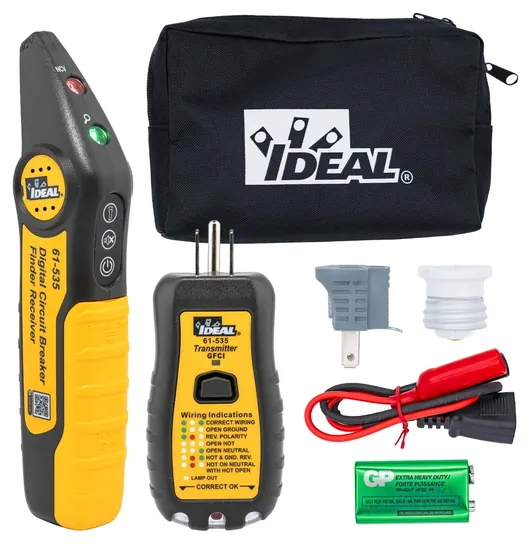
We also replaced the Ideal Industries 61-534 with the Ideal Industries SureTrace 61-959 — an expensive kit that shot right to the top of our list, thanks to a laundry list of impressive features that include a 600-volt rating and a numerical readout for signal strength that takes much of the guesswork out of operating the device.
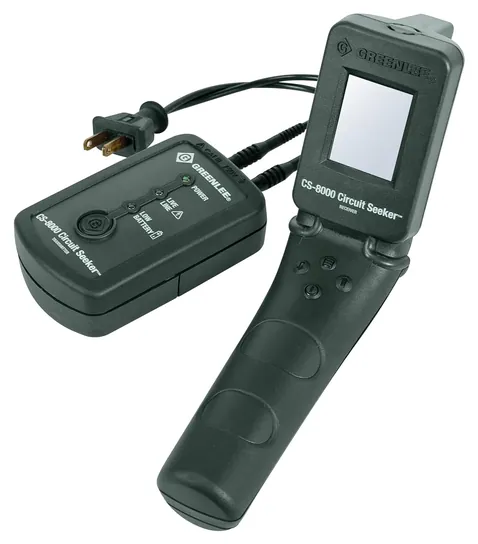
Our other new additions this time around are the Sperry Instruments CS61200P — a good consumer-level choice with magnetic backing that makes it easy to temporarily mount it to an electrical cabinet; and the Greenlee CS-8000 — which sports a limited lifetime warranty, four-mile transmitter range and a color LCD. Following the sale of Greenlee Communications to Tempo Communications in 2019, it’s unclear whether this offering will be rebranded as a Tempo tool sometime in the future, but for now it seems to still be available.
August 28, 2019:
Sensitivity is a key factors to look at when choosing a circuit breaker locator. The type of job you're doing and how accurately you need to pinpoint a breaker will largely determine which device to buy. Those who are dealing with multiple circuit panels and really just want to narrow down the field to a few breakers can get by with a locator on the cheaper end, such as the Southwire Tools & Equipment 41210S.
However, those who can't risk flipping the wrong breaker and cutting off power to a vital part of a building should opt for something more accurate. A good choice in that situation would be the Ideal 61-534, which is used by many electricians but is also attainable for DIYers because of its mid-range price point.
While the Ideal is a great bang for your buck, it was overtaken by the Extech CB10 in our last update. On top of having superb accuracy, the Extech also has adjustable sensitivity, a nice feature for anyone working in both residential and industrial environments, where voltages might vary.
Plug-In Finder Or Circuit Tracer?
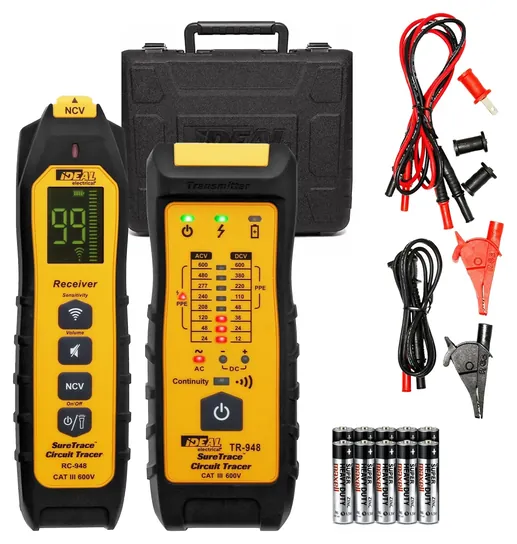
The Klein ET450 covers up to 480 volts and the Ideal SureTrace Plus up to 600.
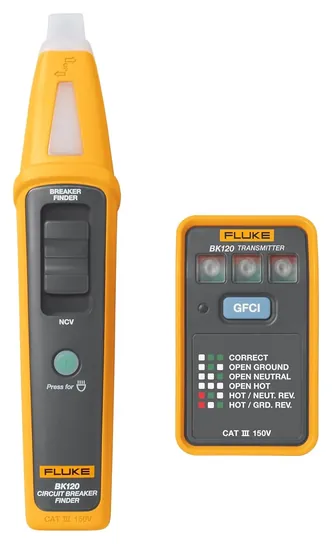
A plug-in breaker finder is two parts. The transmitter goes into a live outlet and puts a signal on that circuit. You then run the receiver along the breakers, and it beeps or lights at the one carrying the signal. These kits run on standard 120-volt household circuits, cost little, and nearly all of them double as an outlet tester that flags open grounds, open neutrals and reversed wires. The insurance broker Wexford's buyer's guide names the Klein ET310 its best overall pick for that reason: it does the common job simply.
A circuit tracer is a different class. Its transmitter connects to the wire itself with leads and clips, so it works with the power off, on 240-volt and three-phase lines, and on runs hidden in walls, floors or conduit. The Klein ET450 covers up to 480 volts and the Ideal SureTrace Plus up to 600. In Pro Tool Reviews' side-by-side, the electrician who ran it found the Greenlee CS-8000 and Ideal SureTrace kits the strongest for live and open circuits. If you only want to label a home panel, a tracer is more tool than you need.
How To Find The Right Breaker
Leave the breaker on: a plug-in finder needs a powered circuit. Plug the transmitter into the outlet, or use a light-socket adapter for a ceiling fixture and a clip lead for hard-wired gear. Start at the panel with the receiver's sensitivity turned low.
Digital models use two passes. Sweep every breaker once so the receiver learns the panel, then sweep again and it marks the strongest match. In a review of the KAIWEETS KT301P, HighTechDad found the right breaker in a crowded panel in under a minute, but noted slight pickup from neighboring breakers. Analog models with a dial work the same way by hand: turn the sensitivity down until only one breaker sets it off.
Always confirm. Switch the breaker off and check that the outlet or light is dead before you label it. Breakers that share a cable, busy panels and some GFCI or AFCI breakers can all weaken or spread the signal.
A Finder Is Not A Safety Test
A breaker finder tells you which breaker to switch. It does not prove a circuit is safe to touch, and neither does a pen-style voltage sniffer, which can miss shielded or low-voltage wiring. Before working on wires, switch off the breaker, check your meter on a known live outlet, then test the circuit you plan to touch. Pros follow OSHA's lockout and tagout rules and the NFPA 70E workplace electrical safety standard for the same reason.
Most plug-in finders are used from outside the panel cover, which is the safer way to work. Removing the cover exposes live parts, and some places require a licensed electrician for panel work. We checked every brand on this list against federal recall records: several have recalls on other testers or meters, but none on a breaker finder.
How we researched this
We compared 17 breaker finders and circuit tracers, read the makers' published specs for the nine on this list, weighed an electrician's side-by-side of nine finders and tracers and a reviewer's account of using one current model, looked at patterns in owner feedback, and checked every brand against federal recall records. Updated October 26, 2026 by Ezvid Wiki Admin.
Sources (9)
- Pro Tool Reviews: Best Circuit Breaker Finders and Tracers Tested
- HighTechDad: KAIWEETS circuit breaker finder review
- Wexford Insurance: best circuit breaker finders for electricians
- OSHA: control of hazardous energy (lockout/tagout)
- NFPA 70E: standard for electrical safety in the workplace
- SaferProducts.gov recall search
- Klein Tools
- Ideal Industries
- Extech
Frequently asked questions
Do circuit breaker finders really work?
Yes, on a live circuit. They point to the right breaker most of the time, but busy panels and shared cables can confuse them, so switch the breaker off and check that the outlet is dead to confirm.
Will a breaker finder work without power?
A plug-in finder won't, because it needs the circuit live to carry its signal. To find a breaker or wire with the power off, you need a tracer such as the Klein Tools ET450 or Ideal SureTrace Plus.
Can a breaker finder find a 240-volt breaker?
Standard plug-in finders are made for 120-volt outlets. Dryer, range and air conditioner circuits need a tracer rated for higher voltage.
How do I find the breaker for a light or switch?
Use a kit with a light-socket adapter: screw it into the fixture, turn the switch on, and scan the panel as usual. For hard-wired gear, a clip lead connects the transmitter to the wires.
Can I use a breaker finder to check that a circuit is dead?
No. Use a rated voltage tester or meter, check it on a known live source first, then test the circuit before touching any wires.