The 8 Best Concrete Sprayers
Updated by · How we research

Seal material decides which sealers a pump sprayer can handle. Eight sprayers for sealer, curing compound and form oil, led by the Chapin 19494. When users buy our independently chosen editorial choices, we may earn commissions to help fund the Wiki.
Xylene eats the wrong rubber fast, so a concrete sprayer's seals have to match your sealer. Acetone is a special case where makers disagree, so read your sealer's label first. These pump-up sprayers put down sealer, curing compound, form oil or cleaner on driveways, patios and fresh slabs for homeowners and contractors.


From the manual
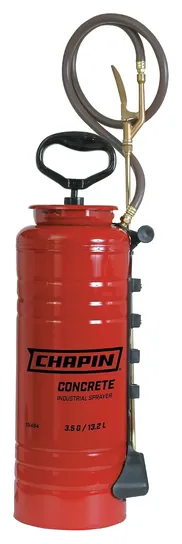
- This sheet is for the 1949; the 19494 is the same sprayer sold with an extra brass cone nozzle. p. 1; retailer listing
- Before the first job, run a water-only test of 10 to 20 pump strokes and check the hose nut and pump for leaks. p. 1
- The sheet shows no relief valve: to vent, turn the locked handle counterclockwise until air hisses, and stay clear until it stops. p. 1
- Store the tank upside down with the pump out, and now and then put 10 to 12 drops of light oil down the pump rod. p. 1
Why the Chapin 19494 is our top pick
Our pick carries twice the warranty of our runner-up, the Marshalltown 308S, and its maker spells out what comes in the box. Chapin covers the 1949, the base model the 19494 adds a cone nozzle to, for two years.1 The 308S manual gives one year and voids it if the sprayer isn't maintained the way the manual says.3
Our pick ships with 0.5 and 1.0 gpm brass fan nozzles plus a brass adjustable cone.5 Marshalltown doesn't say which nozzles come with the 308S; its manual lists fan, high-flow fan and adjustable fan nozzles as replacement parts.3 Both handle thick material, up to 30 to 35% solids for the 1949 and 35% for the 308S, and neither is meant for acetone.1,4 Venting is simpler, too: on our pick you turn the locked handle until air escapes,2 while the 308S has you flip the tank over and squeeze the trigger until the air is out.3
The runner-up wins one point that matters. Marshalltown names its seals as Viton types A and B,4 a rubber seal charts rate highly for xylene,6 while our pick's maker says only that its seals are chemical-resistant.1 If your sealer's label asks for Viton, the 308S is the safer buy.
| Chapin 19494 | Marshalltown 308S | |
|---|---|---|
| Warranty | 2 years | 1 year |
| Nozzles in the box | Two brass fans, brass cone | Not stated |
| Seal rubber | Not named | Viton A and B |
| Solids rating | Up to 30-35% | Up to 35% |
| Releasing pressure | Turn the handle | Invert, spray out air |
Sources
- Chapin 1949 1Product page 2Instruction sheet (PDF), p. 1
- Marshalltown 308S 3Manual (PDF), pp. 2, 3 4Product page
- 5Concrete Tools and More: Chapin 19494 listing
- 6Harkesh Rubber: xylol chemical compatibility
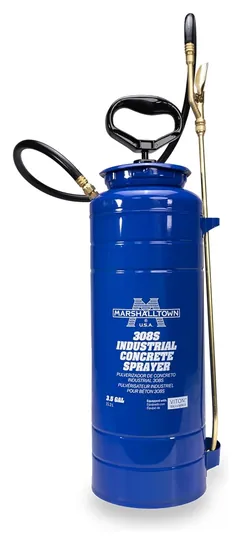
From the manual
- Confirm your chemical suits Viton type A and B seals before use, and inspect the seals before each fill. p. 2
- The warning bans flammable solutions, though the product page sells the 308S as solvent-resistant; ask Marshalltown about flammable solvent sealers. p. 2
- To vent it, lock the handle, turn the tank upside down and squeeze the trigger until only air comes out. p. 3
- Each time you open the lid, turn the handle fully counterclockwise first; overtightening can crush the lid seal. p. 3
Compare the specs
Swipe the table sideways to see every column.
| Product | Tank (gal) | Tank material | Seals named by maker | Acetone | Warranty (years) |
|---|---|---|---|---|---|
| 1. Chapin 19494 | 3.5 | Tri-Poxy coated steel | Not named | No | 2 |
| 2. Marshalltown 308S | 3.5 | Epoxy-lined steel | Viton A and B | No | 1 |
| 3. Smith S103EX | 3.5 | 304 stainless steel | Viton Extreme | Yes, trained pros only | 1 |
| 4. Solo 378 | 3 | HDPE plastic | Viton throughout | Not stated | 1 |
| 5. Foundation Armor FA2GALSPR | 2 | Stainless steel | EPDM, plus a Viton O-ring | Yes, with EPDM O-ring | None stated |
| 6. Chapin 22170XP | — | — | Not named | Not stated | — |
| 7. Solo 430-2G | 2 | HDPE plastic | Viton in key spots | Not stated | 2 (1 for commercial use) |
| 8. DeWalt DCCS1100B | 4 | — | Not named | Not on approved list | 3 |
The 19494 is Chapin's 1949 with an extra cone nozzle, so its row comes from the 1949's page. A dash means no maker page or manual we found gives the value; Chapin publishes no spec page for the 22170XP. DeWalt's tank size comes from its European DCCS1100 manual, which lists 15 liters.
Sources
- Chapin 1949 industrial concrete sprayer page 22170XP instruction sheet (PDF)
- Marshalltown 308S product page 308S manual (PDF)
- Smith Performance S103EX product page S103EX use and care manual (PDF)
- Solo 378 product page 378 and 388 operator's manual (PDF) 430-2G product page 430 series operator's manual (PDF)
- Foundation Armor 2-gallon sprayer instructions (PDF)
- DeWalt DCCS1100 instruction manual, North America (PDF) DCCS1100 instruction manual, Slovak (PDF)
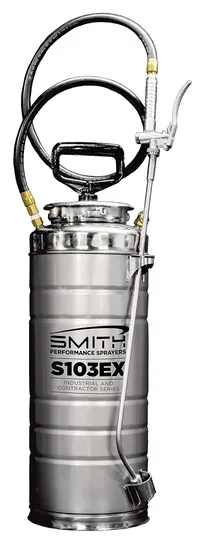
From the manual
- Smith says acetone use is for trained professionals only, not the retail trade, and the same page warns against flammable materials. p. 2
- Pump it by hand only: the manual warns that an air compressor can push it to a dangerous pressure. p. 2
- Skipping cleaning and maintenance voids the warranty; there are separate flush routines for water-based and acetone products. pp. 2, 5
- Wrap the tank fitting with PTFE tape and hold it with a second 16 mm wrench when you attach the hose. p. 3
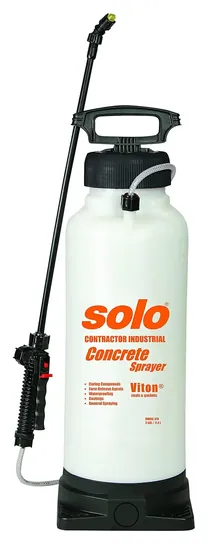
From the manual
- Pump to 45 psi at most; the relief valve vents above that, and Solo says to check it works before every use. pp. 1-2
- Never inflate the tank through the air valve when it's empty, and don't spray liquids hotter than 120 F. p. 1
- The pressure gauge is an extra: the manual shows where it mounts and lists it as an accessory. pp. 1, 3
- The one-year warranty is the same for home and commercial use, and it requires proof of purchase. p. 3
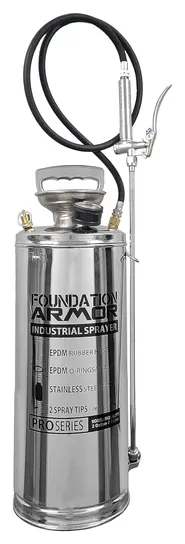
From the manual
- The fitted EPDM pump O-ring is for acetone sealers; swap in the supplied Viton O-ring for naphtha-based ones. p. 1
- Leak-test with air only first: hold 20 psi for two to three minutes and make sure the gauge reads true. p. 1
- Fill to 2 gallons at most, and never clean the tank with xylene or MEK; soap and water or acetone are fine. p. 1
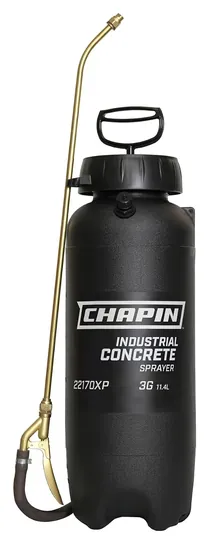
From the manual
- To vent it, lift and hold the relief valve cap, or turn it slowly counterclockwise, until all the air is out. p. 1
- When fitting the hose, push the white outlet tube onto its adapter, line the adapter's tab up with the tank's notches, then tighten the nut. p. 1
- The sheet names no seal rubber and rules out flammable solutions; the seal kit, part 6-4601, is sold separately. p. 1
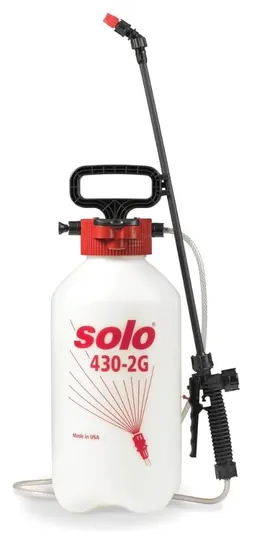
From the manual
- The two-year warranty drops to one year if you use the sprayer commercially. p. 1
- Solo bans flammable materials and says to test solvents first; it describes the Viton seals for farm and household chemicals. p. 1
- After every use, loosen the tank cap and pump before storing it, and keep it out of direct sun. p. 1
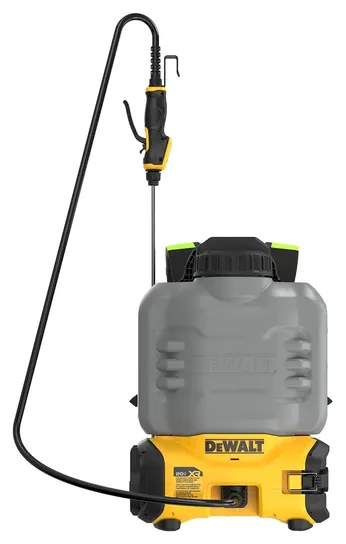
From the manual
- The safety rules say never to use sealant; the approved list covers only curing compounds, form releases, retarders and cleaners. pp. 6, 13-14
- An explosion warning limits it to fluids with a flash point above 140 F. p. 13
- DeWalt's 150 psi top figure comes from the brass cone nozzle at full dial; the large fan nozzle peaks near 19 psi. p. 12
- Running the high dial settings often can damage the pump or nozzle and void the three-year warranty. p. 12
Editor's Notes
November 4, 2026, by Ezvid Wiki Editors:
We read the makers' manuals and instruction sheets for all eight sprayers, using Chapin's 1949 sheet for the 19494, and added a spec table, a section on why the Chapin 19494 leads, and notes from each manual. We corrected the Smith S103EX's wand, which is stainless rather than brass, the Marshalltown 308S warranty line, the Chapin 22170XP's seal and wand details, the DeWalt's use with sealers and the recall summary, and we reworded a forum citation that overstated what an owner said.
October 17, 2026, by Ezvid Wiki Editors:
The new leader is the Chapin 19494, a well-equipped coated steel sprayer at a fair price, and nothing from the 2020 list survived. The Chapin Open Head 19069 Xtreme, Chapin Xtreme 19249, Chapin 1449 Industrial and ToolCrete are no longer available [2026 update: Chapin still sells the 19069, now under the name 1949XS, a stainless sprayer it rates for acetone-based sealers], the Hudson 13854 Never Pump seems to be gone, and the Milwaukee 2820-21CS was discontinued. We also cut three texture guns, the ToolCrete, Benron Scoop N Shoot and Joywayus, because they spray stucco, not sealer. The Longray SP6A and DB Smith Contractor 190216 are garden and herbicide sprayers with no rating for concrete products.
The Smith S103EX is here for anyone using acetone or harsh solvents, and the Solo 378, which used to sit in the special honors, moved into the ranking because it's still sold and offers Viton seals at a low price.
The big lesson from owners: match the seals to your sealer. Xylene eats the wrong rubber fast, and acetone is a special case where makers disagree, so read the sealer's label first.
We found no independent tests of concrete sprayers. The evidence was makers' specs and manuals, which don't always name the seal rubber, plus two contractor forum threads, owner feedback patterns and recall checks.
Earlier notes
October 13, 2020, by Brett Dvoretz:
The term concrete sprayer is somewhat vague, as it may pertain to tanks you use to contain and spray sealant onto already laid concrete, or it may apply to tools that help you apply the actual concrete itself. With that in mind, we thought it prudent to include both kinds on this list.
For those looking to create a textured look over a substrate using stucco, concrete, plaster, or any other similar material, we have the ToolCrete 3HPS100, Benron Equipment & Supply Scoop N Shoot, and Joywayus Air Texture Sprayer. All three of these must be connected to an air compressor to function, and feature a large, top-loading hopper that you pour the material into. The ToolCrete 3HPS100 and Benron Equipment & Supply Scoop N Shoot are notably more expensive than the Joywayus Air Texture Sprayer, but they are made in America, so if this is important to you, it may be worth the extra cost. Also, we are not of the belief that a higher price tag automatically means an item is of better quality, but there is no doubt the ToolCrete 3HPS100 and Benron Equipment & Supply Scoop N Shoot are a better class of tool than the Joywayus and, with proper care, should last through years of use. They are both suitable for commercial use, as well.
All of the rest of the items on our list are for spraying sealant onto cured concrete. Generally speaking, models with steel tanks, such as the Chapin Open Head 19069 Xtreme, Longray SP6A, Chapin 1449 Industrial, and Chapin Xtreme 19249 are going to be more durable than ones with plastic tanks. Since the Chapin Open Head 19069 Xtreme and Longray SP6A are comprised of stainless steel, they are going to be highly resistant to corrosion. The Chapin 1449 Industrial and Chapin Xtreme 19249 utilize a tri-poxy lining for corrosion resistance, which is effective, but if the lining is chipped or damaged in any way, it could leave them susceptible to it.
The Milwaukee 2820-21CS and Hudson 13854 Never Pump are going to require the least amount of effort of the models on our list, as they are both battery powered. The Milwaukee 2820-21CS boasts the added benefit of being part of a system with swappable tanks, though they have to be purchased separately, that can greatly reduce the chances of cross contamination between chemicals.
August 28, 2019, by Daniel Imperiale:
We were hesitant at first to continue to include relatively inexpensive plastic options on this list, especially thinner models with less opacity. The odds of a casual user or contractor leaving a half-filled tank in the sun long enough for sealer to set are a bit too high for our liking, but at the end of the day that's no fault of the sprayers themselves, and as long as you practice proper tool maintenance, you should be fine.
One of the most exciting new additions to our list is the ToolCrete Plaster Sprayer at number three. It combines an effective hopper with a sturdy wand that attaches to any air compressor and creates a fast and reliable means for applying concrete and other materials to a given substrate. It's not the cheapest thing out there, and it's a little out-of-category in that it literally sprays out concrete, instead of concrete sealer, but it's an important tool that could help you repair a damaged wall or driveway before you go about sealing it.
We also added a new model from Chapin, which features incredibly durable Viton seals and gaskets to increase the variety of chemicals it can handle, as well as a stainless steel model by Smith Performance that has smartly designed features like a pressure release valve and quick-change pump seals.
Match The Sprayer To Your Sealer
Seal guides rate EPDM well with acetone and Viton poorly, the reverse of xylene, and makers disagree.
Most sprayer trouble comes down to the seals, not the tank. Read the sealer's label or data sheet first, because it names the solvent and often the kind of sprayer to use.
Water-based acrylic and silane-siloxane sealers, curing compounds and cleaners are gentle, and almost any pump sprayer with decent seals handles them. Solvent-based sealers thinned with xylene (also sold as xylol), mineral spirits or naphtha are much harder on rubber. Chemical compatibility charts rate Viton, a fluoroelastomer also called FKM, as a good match for xylene, and rate EPDM and nitrile poorly (Harkesh Rubber). In a Fine Homebuilding forum thread, one owner who cleaned his sprayer with xylene said he still had to rebuild its pump every three or four uses, while another said the Viton seals in his Chapin concrete sprayer hold up to xylene (Fine Homebuilding).
Acetone-based sealers are the tricky case. Seal guides rate EPDM well with acetone and Viton poorly, the reverse of xylene, and makers disagree. Chapin and Marshalltown say their coated steel sprayers aren't for acetone, while Smith lists acetone for its stainless S103EX and Foundation Armor fits EPDM O-rings for it. Follow the sealer maker's advice. If you use both water-based and solvent products, keep a separate, labeled sprayer for each.
Tank, Size, Pressure And Nozzles
Coated steel tanks, such as Chapin's Tri-Poxy and Marshalltown's epoxy-lined models, stand up to knocks on a job site but can rust where the coating chips. Stainless steel needs no coating and suits the harshest solvents, at a higher price. Plastic tanks are light and rust-proof, which makes them a good match for water-based products. Solo gave its 378 concrete sprayer a wider base to make it more stable than the model it replaced (Solo).
Size is a tradeoff between refills and weight. Water weighs about 8.3 pounds a gallon, so a full 3.5-gallon steel sprayer comes to roughly 40 pounds. A 2-gallon tank is fine for steps, a patio or touch-ups, while a 3- to 3.5-gallon tank cuts trips on a driveway. For curing compound or form release on large slabs and commercial pours, a battery backpack such as the DeWalt DCCS1100B holds 4 gallons and does the pumping for you, though DeWalt rules out sealant in it.
Sealers go on best in thin, even coats. A flat fan nozzle lays down a band with soft edges that you can overlap, while a cone tip suits spot work and edges. In a 2016 Concrete Decor piece, Chris Sullivan, a chemistry graduate who then co-owned the sealer maker ChemSystems, called the right tip critical: a good sprayer with the wrong one over- or under-applies, and too much sealer can lead to adhesion problems (Concrete Decor). Chapin rates the 1949, which is the 19494 without its bonus cone nozzle, at 40 to 60 psi and 0.5 to 1 gallon per minute (Chapin). Thick, high-solids products need a sprayer rated for them: Marshalltown rates the 308S for materials with up to 35% solids (Marshalltown), and Chapin gives the 1949 nearly the same rating. A pressure gauge, or simply topping up the pressure every few minutes, keeps the coat even as the tank empties.
Safe Use, Cleanup And Care
Solvent sealers are flammable and give off strong vapors. Work outdoors with good airflow, keep sparks and pilot lights away, and wear the respirator, gloves and eye protection that the product's safety data sheet calls for. Some states restrict high-VOC sealers, so check what's allowed where you live.
Always release the pressure before you open the tank or unscrew the pump. Foundation Armor's instructions add that you shouldn't leave liquid in the tank, and that a sprayer left in hot sun can build pressure on its own (Foundation Armor instructions). Empty and rinse the sprayer right after each job with whatever the sealer maker specifies, water for water-based products or a solvent for solvent-based ones, and run some through the wand and nozzle so sealer doesn't harden inside. Check the seals before each fill; replacement seal kits cost far less than a new sprayer. Never use a sprayer that once held weed killer or pesticide for sealer.
Read the sprayer's warning box as well as the sealer's label. The Chapin, Marshalltown, Foundation Armor and Solo 430 instructions all forbid spraying flammable liquids, even where the maker's own page pitches the sprayer for solvent sealers, and DeWalt allows only fluids with a flash point above 140 F. If your sealer is labeled flammable, ask the sprayer's maker before you fill it.
We searched the U.S. Consumer Product Safety Commission's recall database for every brand here. None of these eight models has been recalled; the only sprayer recall under these names is from 1980, when D.B. Smith, the company behind today's Smith sprayers, recalled home and garden sprayers (CPSC).
How we researched this
We compared about 20 concrete, garden and powered sprayers, including every pick from the 2020 version of this list, and screened 10 in depth. For the eight here we read Chapin's 1949 and 22170XP instruction sheets, the Marshalltown 308S manual, Smith's S103EX use and care manual, Solo's 378 and 430 operator's manuals, Foundation Armor's 2-gallon sprayer instructions and DeWalt's DCCS1100 manual, plus Harkesh Rubber's seal compatibility charts and a Fine Homebuilding forum thread. The CPSC recall database lists no recall of any of these models; the only sprayer recall under these brand names is a 1980 one of D.B. Smith garden sprayers, and a search of Health Canada's recall notices found none.
Sources (19)
- Chapin: 1949 3.5-gallon industrial concrete sprayer
- Marshalltown: 308S industrial concrete sprayer
- Foundation Armor: FA2GALSPR stainless sprayer
- Solo: 378 concrete sprayer replaces the 407-CI
- Solo: 430-2G handheld sprayer
- DeWalt: DCCS1100B 20V MAX XR concrete chemical sprayer
- Harkesh Rubber: xylol chemical compatibility
- Fine Homebuilding forum: concrete sealer sprayer
- Chapin: 1949 and 1979 instruction sheet (PDF)
- Chapin: 22180XP, 22170XP and 22790XP instruction sheet (PDF)
- Marshalltown: 308S manual (PDF)
- Smith Performance: S103EX stainless concrete sprayer
- Smith Performance: S103EX use and care manual (PDF)
- Solo: 378 and 388 operator's manual (PDF)
- Solo: 430 series operator's manual (PDF)
- Foundation Armor: 2-gallon sprayer instructions (PDF)
- DeWalt: DCCS1100 instruction manual (PDF)
- Concrete Decor: Picking the Right Sprayer (Chris Sullivan, 2016)
- CPSC: 1980 D.B. Smith chemical sprayer recall
Frequently asked questions
What is the best sprayer for concrete sealer?
For most sealers that aren't acetone-based, a coated steel sprayer such as the Chapin 19494 or the Viton-sealed Marshalltown 308S. For acetone or harsh solvents, a stainless sprayer with Viton Extreme seals, such as the Smith S103EX, though Smith's manual reserves acetone use for trained professionals. Always check the sealer maker's instructions.
Can I use a garden sprayer for concrete sealer?
Only for water-based sealers, and only if its seals suit the product. Solvent sealers made with xylene or mineral spirits attack ordinary garden-sprayer seals, which then swell, leak or stop pumping.
What seals do I need for a solvent-based sealer?
Viton, also called FKM, for sealers thinned with xylene, mineral spirits or naphtha. Acetone is different: seal charts rate EPDM better than Viton for it, so follow the sealer maker's advice.
Why does my sprayer stop working after spraying sealer?
Usually the solvent has swollen or dried out the seals, or sealer has hardened in the wand and nozzle. Rinse right after each use with the cleaner the sealer maker names, and replace worn seals.
Is a concrete sprayer the same as a stucco or texture sprayer?
No. A texture sprayer, or hopper gun, runs on an air compressor and throws thick plaster or cement mixes onto walls. A concrete sprayer is a pump-up tank for thin liquids such as sealer, curing compound and form oil.
Is a battery-powered concrete sprayer worth it?
For curing compound, form release or cleaner on large slabs or daily work, yes, because it holds steady pressure without pumping. Not for sealer, though: DeWalt's manual for the DCCS1100B says never to use sealant in it. For a driveway or patio once a year, a hand-pump sprayer costs far less.