The 10 Best Catalytic Converters
Updated by · How we research

Universal, direct-fit and California-grade catalytic converters compared by emissions grade and fit. The MagnaFlow 99206HM leads for most cars built since 1996. When users buy our independently chosen editorial picks, we may earn commissions to help fund the Wiki.
A new catalytic converter only lasts if the problem that killed the old one is fixed first: misfires, burning oil or leaking coolant will melt or poison the next one too. This guide is for drivers replacing a failed or stolen cat, and it sorts weld-in universal units from bolt-in parts made for specific cars and from California-grade models.


Editor's Notes
November 1, 2026, by Ezvid Wiki Editors:
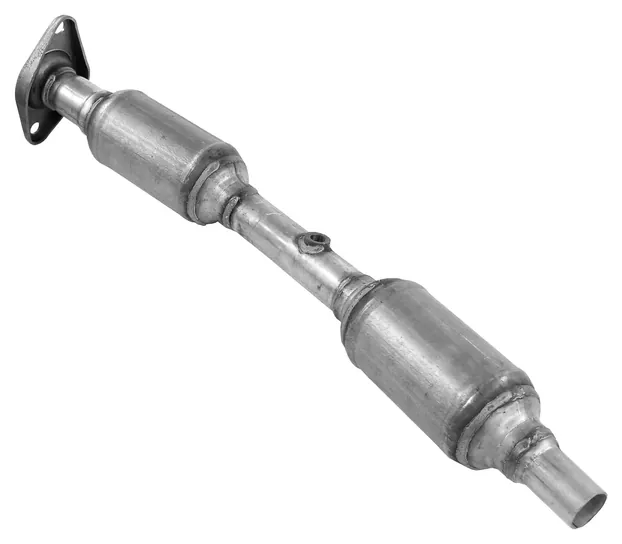
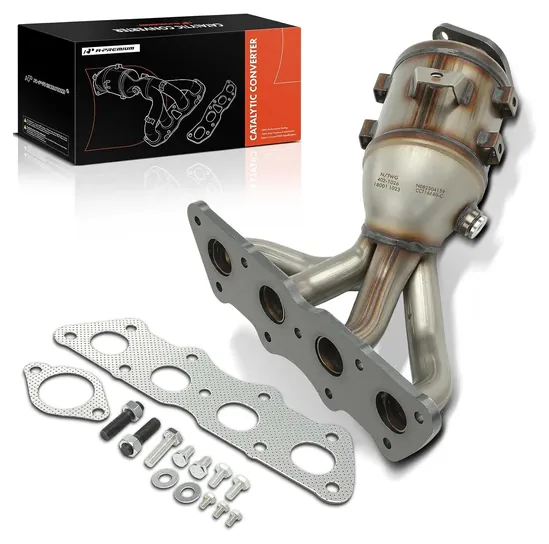
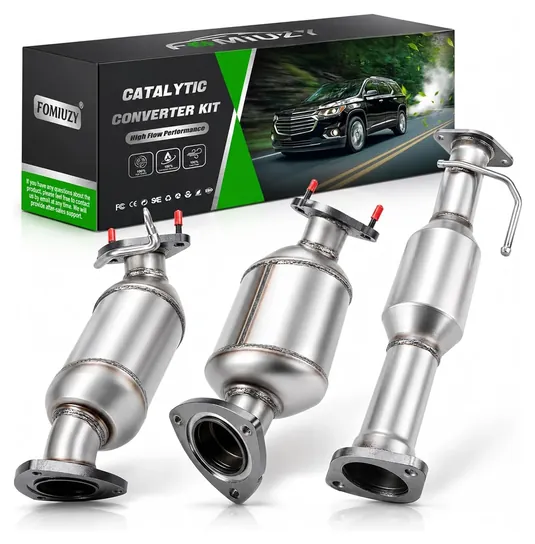
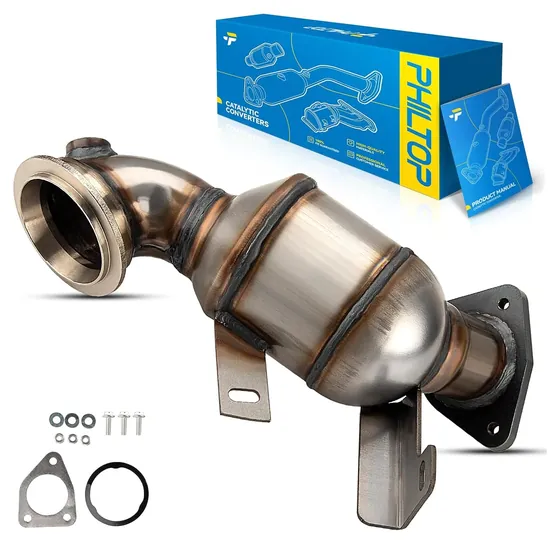
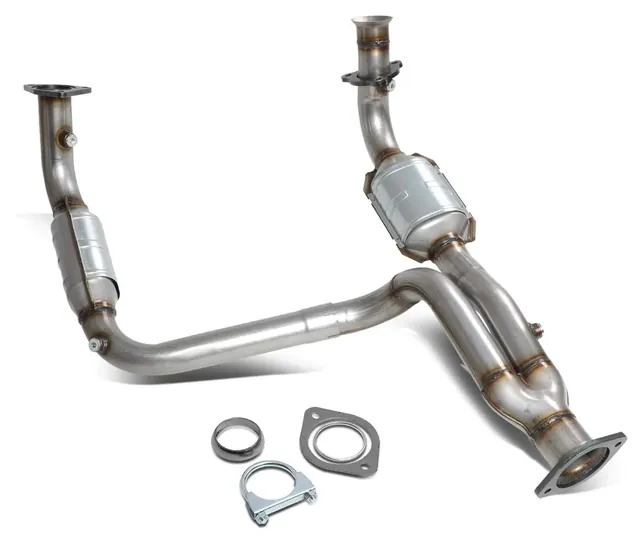
The MagnaFlow 99206HM now leads because it suits the widest range of 1996-and-newer cars outside the states that follow California rules, and it carries a five-year warranty. The bigger change is the shape of the list. A cat is a part for one car, so we added bolt-in units for popular models, from the Prius to GM's full-size trucks.
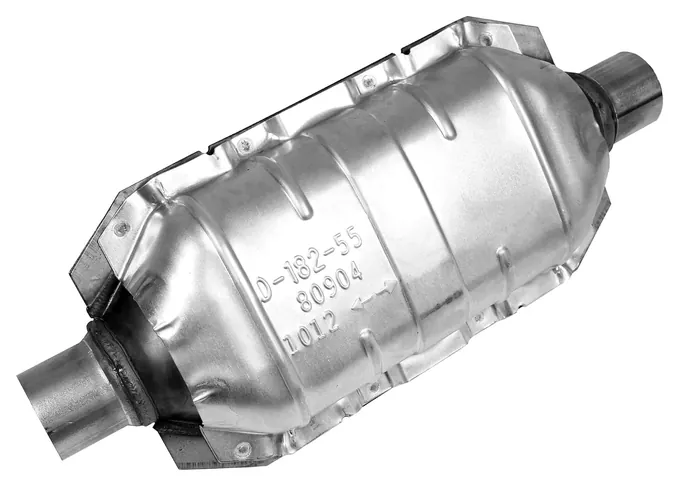
The MagnaFlow 91005, MagnaFlow 447206 and Walker CalCat 80904 stay. The Walker 93251 and both AutoSaver88 units can't be bought now, and the Flowmaster universal is no longer sold, so they're gone.
Most of the evidence here is paperwork: makers' grade and warranty terms, California's database of approved aftermarket parts, the EPA's rules on when a factory cat may be swapped for an aftermarket one, and mechanics' and owners' accounts of how failed units broke down.
Earlier notes
February 19, 2021, by Christopher Thomas:
As long as you don't live in one of the three states that currently have increased emissions requirements as compared to the federal level, the most important part of choosing a catalytic converter is whether it actually fits on your exhaust system, but there are some idiosyncrasies that make some models more effective than others. The MagnaFlow Heavy Metal and MagnaFlow CARB Compliant, for example, promise to remove more pollutants than most others, and although they're not compatible with vehicles that demand a catalytic O2 sensor, with modifications, they can be. Alternatively, the
AutoSaver88 410250 does have a sensor port, and claims to allow above-average airflow, ideal for cars with turbochargers or old and restrictive exhaust manifolds and piping. The AutoSaver88 High Flow offers even better volume, and its compact length and relatively sleek appearance make it suitable even for show cars.
Outside of specialized applications, the MagnaFlow 91005, Walker 93251, and FlowMaster Universal are all good choices for everyday cars in most states. In particular, the Walker has the compact size, sensor port, and heat shield needed to safely and effectively fit in most underbodies and provide environmental protection.
May 16, 2019, by Christopher Thomas:
First of all, we can't recommend any universal models in particular to most residents of California, New York, or Maine. All three of these states adhere to the relatively stringent CARB regulations (developed in CA) which surpass those set by the EPA. The only exception is the CARB-compliant universal pre-OBDII unit from Walker. It should work with most vehicles from before 1995. Walker also makes a fantastic 47-state option, but again, it's not legal in those three more demanding states.
With that in mind, there's nothing stopping vehicle owners in other states from using a California-certified unit like MagnaFlow's CARB-compliant converter. It costs a lot, but it's likely to last longer and reduce emissions more than the average universal model. Their 91005 is one of the most popular aftermarket choices, and their Heavy Metal version claims to do an even better job extracting harmful chemicals from exhaust. If you're looking for performance, look no further than FlowMaster, as they're very well-known among street modders and track-car builders for all of their high-flow exhaust parts. Finally, AutoSaver88 is a brand that few people may have heard of, but their product is pretty expansive, and most users seem quite satisfied with them. Most of their offerings are available with or without oxygen sensor ports.
Before you finalize your purchase, make absolutely certain that your choice is compatible with your vehicle. Also be aware that a universal-fit model will almost always require some cutting and welding, and sometimes some pipe bending. These may be tasks you're comfortable with, but it's likely that most people will want to pay a professional to install one of these. Don't worry, though; including the cost of labor, you'll still have saved money by purchasing an aftermarket catalytic converter in the first place.
Special Honors
CARB Aftermarket Catalytic Converter Database California's Air Resources Board keeps a searchable list of every aftermarket converter approved for sale in California, by vehicle or by approval number, along with withdrawn approvals. Drivers in Colorado, New York and Maine who need a California-grade part can use it too, and it's the quickest way to check a universal unit before a shop welds it in. ww2.arb.ca.gov
Universal, Direct-Fit Or Built Into The Manifold
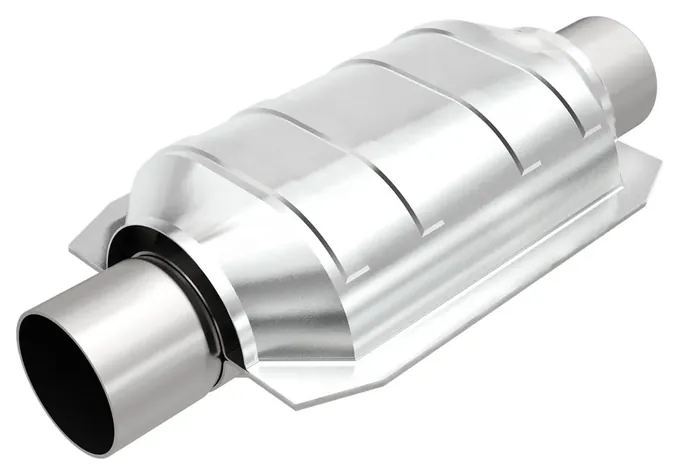
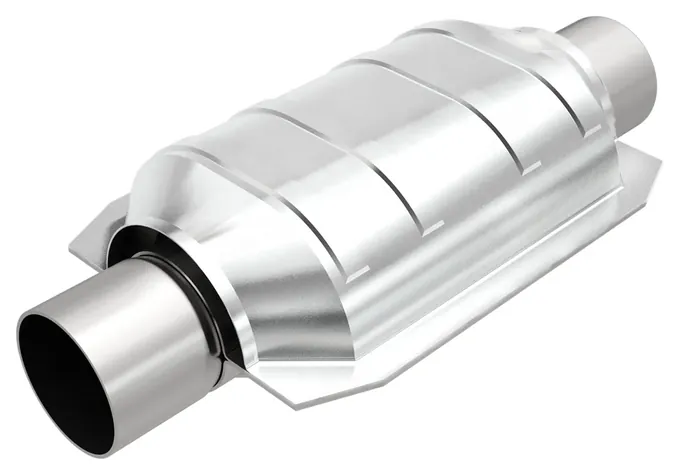
A universal unit is just the can with short pipe stubs, so a shop cuts out the old one and welds it in.
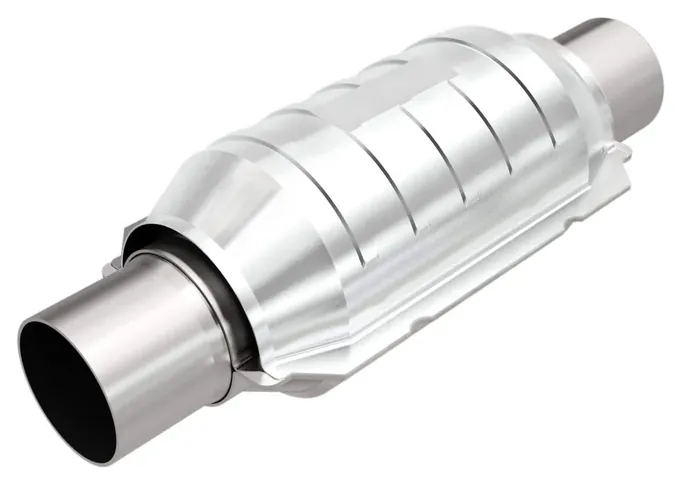
A catalytic converter is a steel can in the exhaust between the engine and the muffler. Inside is a ceramic or metal honeycomb coated with platinum, palladium and rhodium, which turn carbon monoxide, unburned fuel and nitrogen oxides into carbon dioxide, water and nitrogen (Wikipedia). Those metals are why the part costs so much and why thieves want it.
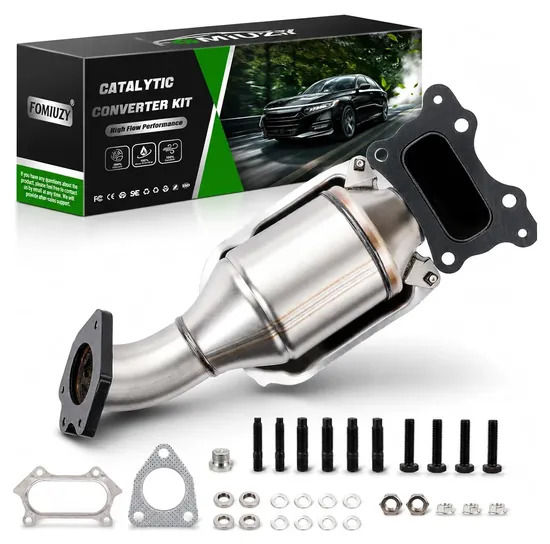
Replacements come in two shapes. A direct-fit unit copies the factory part, with the same flanges, hangers and heat shields, and bolts in without cutting. A universal unit is just the can with short pipe stubs, so a shop cuts out the old one and welds it in. MagnaFlow says both work equally well once installed. On many small engines the first cat is built into the exhaust manifold, so the replacement includes the manifold too.
Universal units also come in grades. MagnaFlow's standard grade carries enough catalyst for a well-tuned older engine, while its heavier grades add metal for cars built since 1996, whose engine computers watch the converter through a second oxygen sensor and turn on the check-engine light when it slips.
Federal Or California Grade: Read The Sticker First
Every car has an emissions label under the hood that says whether it was certified to federal or California rules. Federal (EPA) aftermarket converters can't be sold or installed in California or Colorado, and in New York and Maine they're limited by that label. Those states require a unit California's Air Resources Board has approved for your exact engine, which you can look up by vehicle or by approval number in the CARB Aftermarket Catalytic Converter Database. The engine family number on the sticker is the key MagnaFlow and Walker use to match parts.
Federal rules matter everywhere else. An EPA fact sheet on aftermarket converters says one may replace the original only when it's actually needed, such as a plugged converter or an exhaust leak that can't be fixed, and not while the original works or is still under warranty or recall (EPA). Hollow cans, delete pipes and test pipes are tampering, and they fail inspection in states that test.
Before ordering, check year, engine and trim against the maker's fitment tool. A cheap universal with an unknown catalyst load can pass a sniff test and still trip the dashboard light on a newer car (Hott Exhaust).
Fix The Cause, Then Protect The New One
Converters rarely wear out on their own. Unburned fuel from a misfire or a rich mixture overheats the honeycomb until it melts, and burning oil or coolant coats it with compounds that stop it working (Wikipedia). A P0420 or P0430 code, a rattle, a rotten-egg smell or a loss of power are the usual signs. Have a shop find and fix the cause first, or the new unit can fail just as fast.
Theft is the other reason people shop for one. Insurance claims for stolen converters peaked in 2022 and fell by roughly three quarters by 2024 as metal prices dropped and states tightened scrap rules, but hybrids and tall trucks are still easy targets (Kelley Blue Book). A bolt-in replacement comes off as easily as it went on, so a steel shield or cable cage, parking in a garage or a lit spot, and etching the VIN on the shell all help. File a police report if yours is taken; most insurers ask for one.
Keep the receipt and the shop's diagnosis. Warranty claims on aftermarket converters usually need both, and MagnaFlow says its claims require the invoice and diagnostic results.
How we researched this
We compared 25 universal and direct-fit converters, read the makers' grade, fitment and warranty terms for the 10 finalists, checked California's database of approved parts and the EPA's guidance on aftermarket replacements, and looked at patterns in owner and mechanic feedback. No independent lab tests aftermarket converters side by side, so the order rests on emissions grade, how many cars each fits, warranty and the maker's record. Updated November 1, 2026 by Ezvid Wiki Editors.
Sources (6)
- MagnaFlow: catalytic converters (grades, direct-fit vs universal, warranty claims)
- California Air Resources Board: Aftermarket Catalytic Converter Database
- U.S. EPA: aftermarket catalytic converter fact sheet
- Wikipedia: Catalytic converter
- Kelley Blue Book: catalytic converter theft
- Hott Exhaust: OEM vs aftermarket catalytic converters
Frequently asked questions
Do aftermarket catalytic converters work?
Yes, if the grade matches the car and the cause of the old one's failure is fixed. A unit with too little catalyst for a 1996-or-newer car can trip the check-engine light, so match the grade to your engine.
Is it legal to remove a catalytic converter or install a test pipe?
No. Federal law bars removing emissions equipment except to replace it, and hollow cans or test pipes fail inspection in states that test.
What's the difference between EPA and CARB converters?
EPA, or federal, units are sold for cars certified to federal rules. CARB units are approved by California's Air Resources Board for specific engines and are required in California, Colorado, New York and Maine for cars with a California emissions label.
What does a catalytic converter look like, and what's inside?
It's an oval or round steel can, usually stainless, in the exhaust under the car between the engine and the muffler. Inside is a ceramic or metal honeycomb coated with platinum, palladium and rhodium.
Can I put a catalytic converter on a diesel truck?
Diesels use a different part, a diesel oxidation catalyst, usually paired with a particulate filter and matched to the engine. The gasoline units on this page aren't made for them.
How long does a catalytic converter last?
Often the life of the car, if the engine runs cleanly. Aftermarket warranties range from one year to five years or 50,000 miles, and some sellers promise lifetime replacement.