The 10 Best 24 Volt Battery Chargers
Updated by · How we research

For truck, boat, RV and equipment banks: ten 24-volt chargers compared by real amps, sealing, lithium support and warranty. The Victron Blue Smart 24V 8A leads. When users buy our independently chosen editorial choices, we may earn commissions to help fund the Wiki.
On many 12/24-volt chargers, the current at 24 volts is only half the 12-volt figure, so read the 24-volt rating. A 24-volt charger refills a bank of two 12-volt batteries wired in series, or a true 24-volt pack. Truck and bus fleets, boat owners, RV and off-grid users, and anyone running forklifts or floor scrubbers need one.


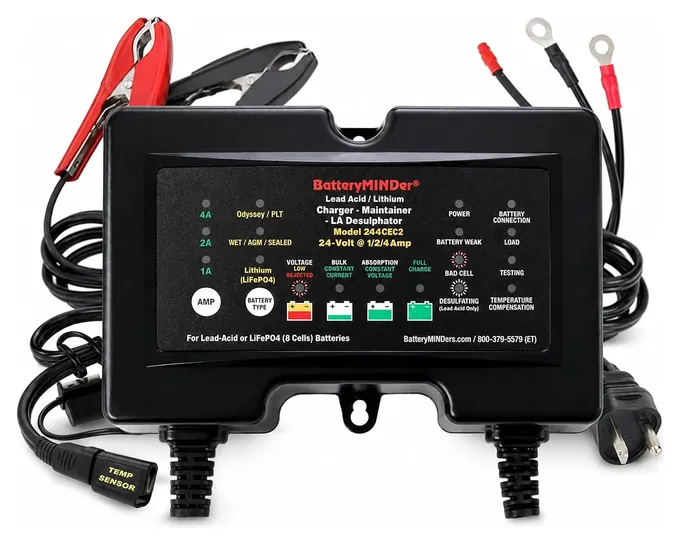
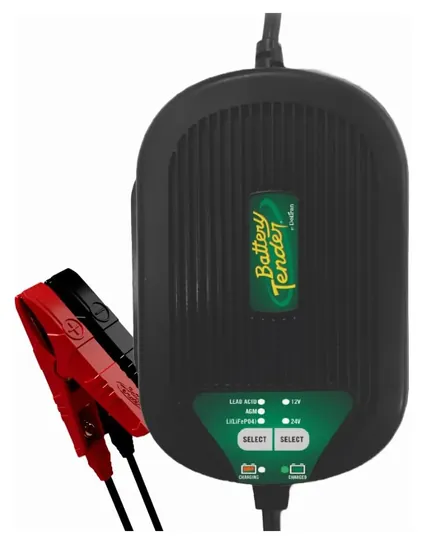
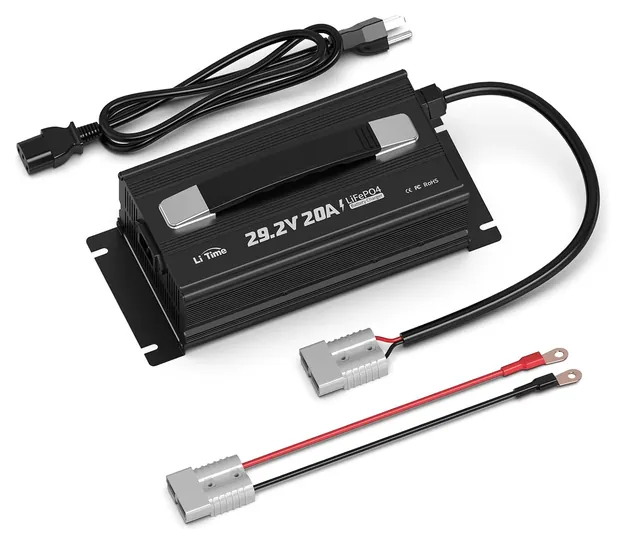
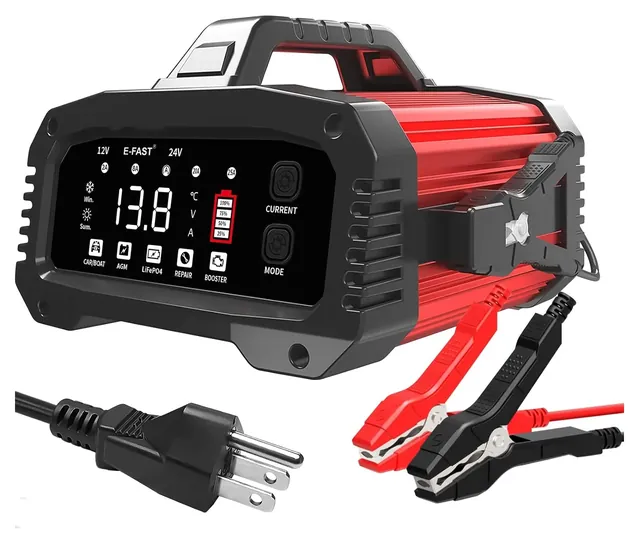
Editor's Notes
October 19, 2026, by Ezvid Wiki Admin:
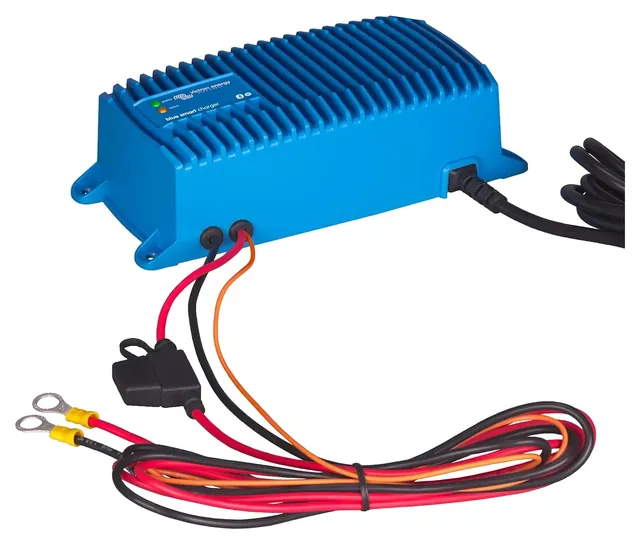
The Victron Blue Smart 24V 8A heads a list that needed a full rebuild: it's sealed, it starts on a dead flat battery, and Victron publishes real numbers for it. Five of the old picks, including the Stark and Beleeb chargers, are no longer available, and two more we couldn't find for sale at all. The ProMariner we listed turned out to be a three-bank 12-volt charger, which is the wrong tool for a 24-volt system.
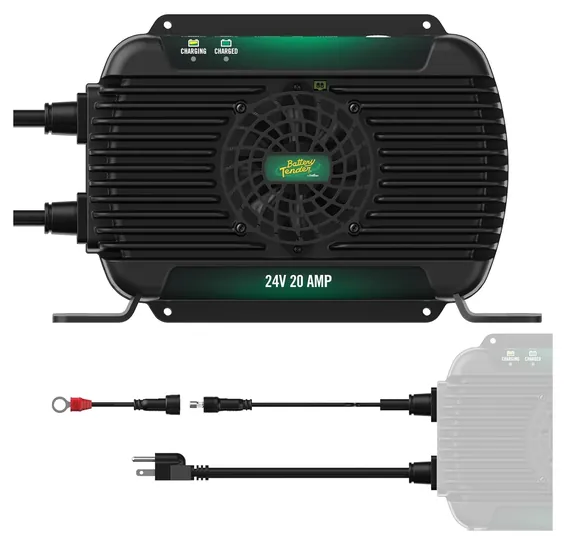
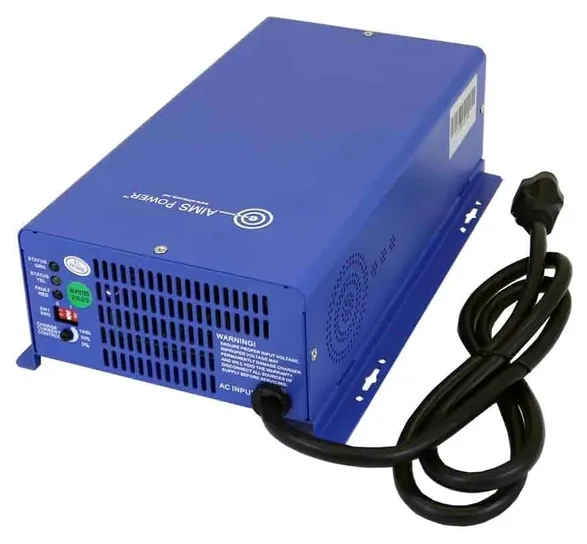
The Battery Tender PowerPlus 24V is the pick when you need a full 20 amps. The AIMS Power CON120AC1224DC stays for RV and off-grid banks, though we now point out that its 75-amp rating can't hold at 24 volts on a household outlet.
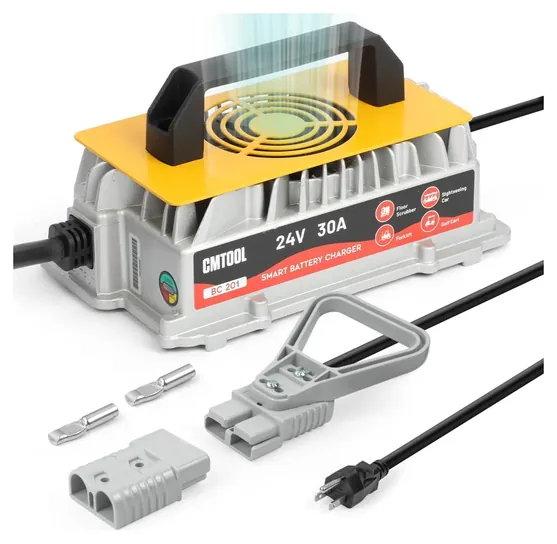
The old note warned that many 12/24-volt chargers give only half their amps at 24 volts. That's still true, so every entry lists the current at 24 volts. Lithium owners now get a dedicated charger, the LiTime 24V 20A, and equipment owners get the CMTOOL 24V 30A.
One honest limit: we found no independent lab tests of 24-volt chargers. We relied on makers' datasheets, owner reports, safety references and recall checks.
March 17, 2021:
For the most part, it was a relatively straightforward round of updates, with most of our selections proving to still be good choices, but we still found a few places to brush up on things. We decided to eliminate the HoneyCare 24V Sealed, noticing that it wasn’t available at the time of this writing and not feeling overly impressed by its low maximum output, and also swapped a couple of options out for upgraded picks.
The Beleeb BLB-C40 and ProMariner 44021 lost their respective spots to their logical successors, the Beleeb C25 and ProMariner 44021 Plus. In the case of both these options, the major draw to the replacements was their improved displays. In this respect, the C25 – which boasts a practical digital display in lieu of the vintage analog aesthetic of the BLB-C40 – is much more capable than the 44021 Plus, which has no screen. However, this version of the 44021 at least has a simple five-LED charge indicator to help keep you advised of a battery’s progress. It’s hardly exact, but it’s still a strong step up from the single flashing diode on the original model.
For further 24-volt-hardware support, feel free to check out our list of 24-volt jump starters.
February 28, 2020:
We've covered a large variety of general purpose chargers that will work with many different 24 volt systems, but when selecting a charger it's important to make sure that it has enough amps to be practical for your system's capacity. Many of the selections on our list sport 12 volt functionality as well, and often have access to only half the listed maximum amperage when charging 24 volt batteries. Despite this, the AIMS Power Smart Charger, Stark Monster Charger, and Beleeb Battery Charger still pack plenty of power for batteries with 100 ampere hours or more. More current means more danger though, and given that the latter two items lack automatic controls, these choices should only be considered by those with a lot of experience with electronics.
For people who find that those items go beyond their price range and the scope of their needs, the Foxsur Automatic Smart Battery Charger/Maintainer, TPE Automatic Battery Charger Maintainer, and Topac Smart Car Battery Charger are examples of simpler models that are perfectly adequate for charging lower-capacity electronics overnight, such as eBikes or mobility scooters.
We think the ProMariner ProSport 20 Plus offers great all-around functionality for a variety of situations, but it's also the only option on our list purpose built for the electrical systems found on boats. If you're looking for more information on chargers designed expressly for this application, as well as units targeted at golf carts or cars, check out our articles that dive deeper into those specific categories.
Special Honors
Victron Blue Smart IP65 24/13 Victron's current portable 24-volt model puts out 13 amps and keeps the Bluetooth app, the lithium setting and the five-year warranty. Victron lists it under UL 1236, the U.S. safety standard for battery chargers. It's a good choice when you want more current than the 8-amp model and don't need a fully waterproof case. victronenergy.com
Delta-Q Technologies Delta-Q makes the onboard chargers that many equipment makers build into electric machines such as lifts, floor scrubbers and utility carts, with its IC Series running from 650 watts to 1.2 kilowatts. If your machine shipped with one, a matching Delta-Q unit with the right charge algorithm is often the cleanest replacement. delta-q.com
Match The Voltage, The Chemistry And The Real Amps
Two 12-volt batteries in series make 24 volts, and so does a true 24-volt pack.
Start with the bank. Two 12-volt batteries in series make 24 volts, and so does a true 24-volt pack. The charger has to be rated for 24 volts and for the battery's chemistry. Lead-acid comes in flooded, AGM and gel types, and each wants slightly different voltages; Victron's datasheet lists 28.8 volts absorption for normal lead-acid at 24 volts and 28.4 volts for lithium. A 24-volt lithium iron phosphate pack has eight cells and charges to 29.2 volts (LiTime, LithiumHub), so a lead-acid-only charger is the wrong tool for it.
Next, check the current at 24 volts, not the headline number. Most dual 12/24-volt chargers give about half their 12-volt amps at 24 volts. The Battery Tender 5-amp selectable gives 2.5 amps at 24 volts, and budget chargers sold as 15 or 20 amps often give 8 or 10.
Size the charger to the battery. Battery University puts typical lead-acid charge rates at 0.1 to 0.3 times the amp-hour rating, so a 200-amp-hour bank is happiest with 20 to 60 amps. Smaller chargers still work; they just take longer. Divide the amp-hours you need to replace by the charger's amps and add a few hours for the slow final stage.
Onboard, Portable, Fixed Or Equipment Chargers
Where the charger lives matters as much as its output. A boat or truck charger that stays mounted should be sealed against water: IP65 shrugs off splashes, while IP67 and IP68 handle brief or longer immersion. In a gas boat's engine space, look for ignition protection, which the Battery Tender PowerPlus 24V and Victron's Blue Smart chargers both carry.
Portable maintainers with clamps suit vehicles and equipment in storage. Some 12/24-volt chargers detect the voltage on their own, and a deeply drained 24-volt pair can read as a 12-volt battery. A charger with a manual voltage switch, or a fixed 24-volt model that starts at 0 volts, avoids the problem.
Fixed chargers for RVs and off-grid banks bolt down and wire in with heavy cable and a fuse; they're a job for someone comfortable with DC wiring. Forklifts, scrubbers, scissor lifts and golf carts need a charger with the machine's plug, often an Anderson connector, and the charge profile its maker calls for. Many of these machines leave the factory with an onboard charger from a maker such as Delta-Q, so check what yours came with first.
Charge Safely And Keep A Series Pair Healthy
Lead-acid batteries give off hydrogen while charging. Battery University advises charging in a ventilated space, away from sparks and flames, never charging a frozen battery, and not charging above about 120 degrees Fahrenheit. Connect and disconnect with the charger unplugged. For forklifts and other powered industrial trucks, OSHA's rule 1910.178 calls for a designated charging area with ventilation and fire protection, no smoking or open flames, and battery covers open so heat can escape.
A 24-volt charger on two 12-volt batteries in series treats them as one battery and can't balance them. If one battery runs a 12-volt load, like a fridge or a radio, the pair drifts apart and the weaker one wears out first. Owners on a 24-volt truck forum recommend spreading 12-volt loads across both batteries and checking each one's voltage now and then. Replace the pair together.
Only leave a charger connected for weeks if it has a float or maintenance mode. Battery University suggests disconnecting a charger without float after about 48 hours. Temperature compensation helps in hot and cold garages, since lead-acid needs a slightly higher voltage in the cold and a lower one in the heat.
How we researched this
We compared 26 chargers, including the nine from the old list, and screened 12 in depth. We read makers' product pages and datasheets where they loaded (Victron, Battery Tender, BatteryMINDer, LiTime), used seller listings for the rest and say so in each entry, studied Battery University and OSHA guidance on charging, read owner discussions, and checked every brand for recalls with the U.S. Consumer Product Safety Commission. We found no independent lab tests of 24-volt chargers.
Sources (12)
- Victron Energy: Blue Smart IP65 charger
- Victron Energy: Blue Smart IP65 charger datasheet (120 V)
- Battery Tender: PowerPlus 24V
- Battery Tender: 5 amp selectable 12V/24V charger
- BatteryMINDer: model 244CEC2
- LiTime: 24V 20A lithium battery charger
- Delta-Q Technologies
- Battery University: BU-403 Charging lead acid
- LithiumHub: 24V battery charger
- OSHA 1910.178 Powered industrial trucks
- IH8MUD forum: best battery charger for 24V dual battery systems
- CPSC: HTRC and Haisito T400 battery chargers recalled
Frequently asked questions
Can a 12-volt charger charge a 24-volt battery?
Not a 24-volt pair as a unit. A 12-volt charger can't push two batteries in series to full. Either use a 24-volt charger, or disconnect the link between the batteries and charge each 12-volt battery on its own.
What is the best industrial 24-volt battery charger?
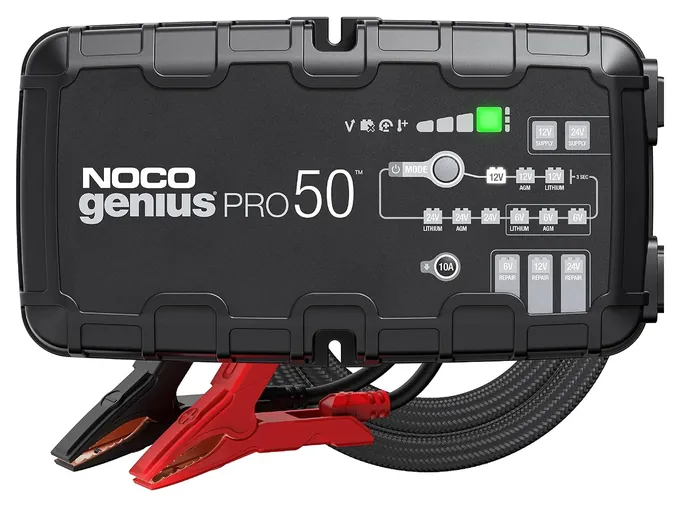
For forklifts, scrubbers and golf carts, use a fixed 24-volt charger with your machine's plug and the charge profile its maker specifies, such as the CMTOOL 24V 30A for lead-acid. For truck fleets and shops, the NOCO GENIUSPRO50 gives 25 amps at 24 volts.
Why does my 12/24-volt charger charge slower at 24 volts?
Most dual-voltage chargers deliver about half their 12-volt current at 24 volts, because the same power is spread over twice the voltage. A charger sold as 15 amps often gives about 8 amps at 24 volts.
How long does it take to charge a 24-volt battery?
Divide the amp-hours you need to replace by the charger's amps, then add a few hours for the final slow stage. A 10-amp charger refills 100 amp-hours in roughly 10 to 14 hours.
Can I leave a 24-volt charger connected all the time?
Only if it has a float or maintenance mode. Smart maintainers drop to a low holding voltage when the battery is full. Battery University suggests disconnecting chargers without a float mode after about 48 hours.
Do lithium 24-volt batteries need a special charger?
Yes. A 24-volt LiFePO4 pack charges to 29.2 volts, and a pack whose protection circuit has shut it off may need a charger that can wake it from 0 volts. Use a charger with a LiFePO4 profile.