The 9 Best Tub Transfer Benches
Updated by · How we research

Fixed, sliding, swivel and heavy-duty tub transfer benches compared on weight limits, height range and tub fit. The Drive Medical 12011KD-1 leads for value. When users buy our independently chosen editorial recommendations, we may earn commissions to help fund the Wiki.
A tub transfer bench straddles the tub wall, with two legs inside and two on the bathroom floor, so you sit down outside the tub and slide across instead of stepping over the rim. It's meant for older adults, people healing from surgery and their caregivers. A shower chair can't do this job, since you still step in first.


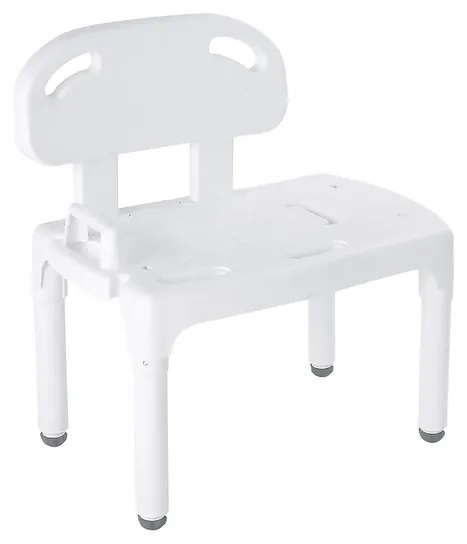
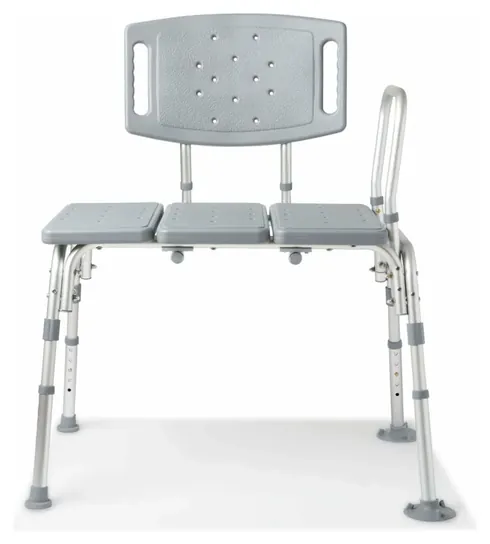
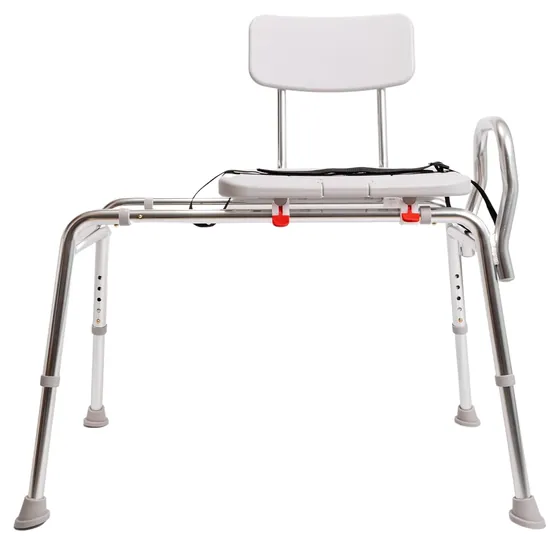
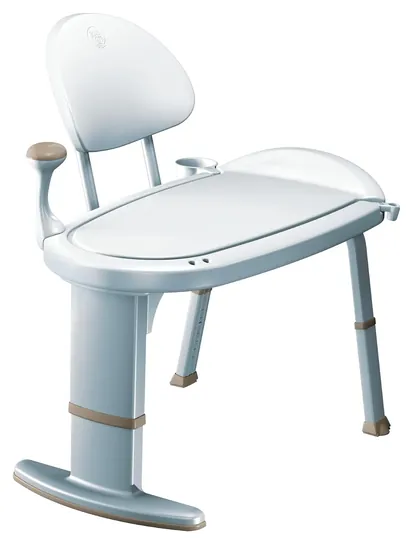
Editor's Notes
October 19, 2026, by Ezvid Wiki Admin:
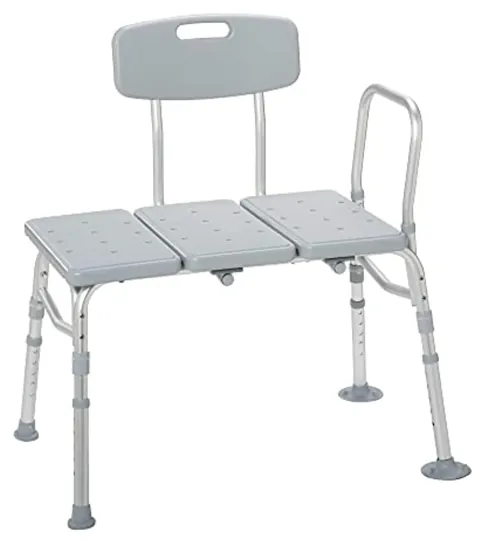
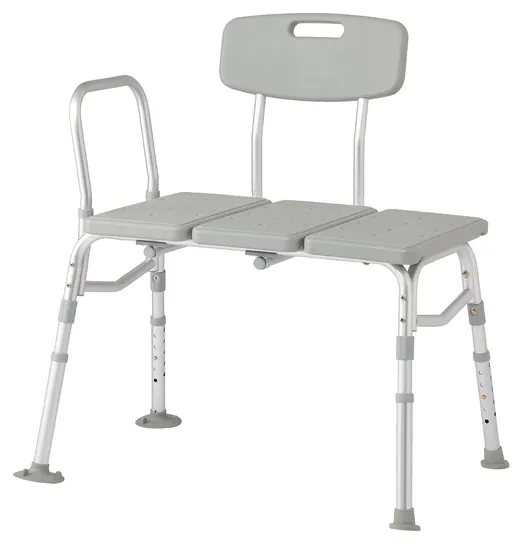
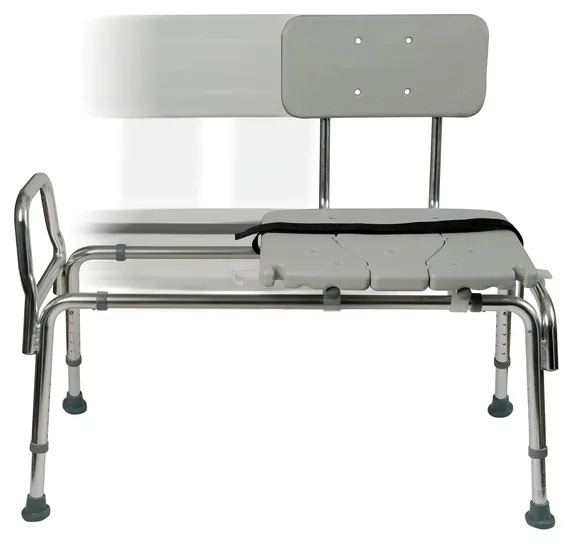
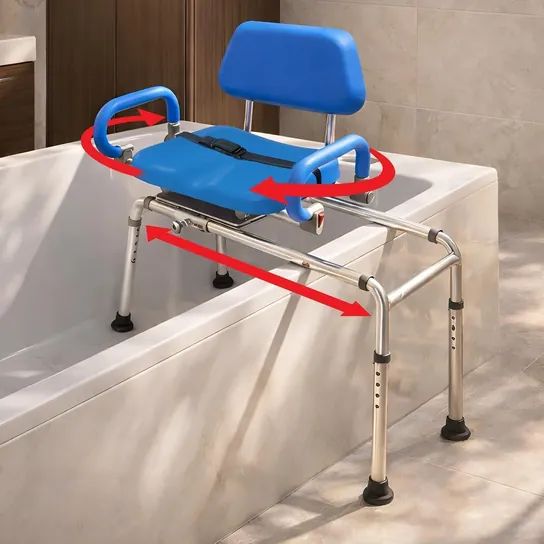
The Drive Medical 12011KD-1 leads this new list because it does the core job well for very little: a drained seat that sits steady over the tub wall, with a back and arm that switch sides. The Medline G3-100KBX1 is its close match from the other big hospital supplier. Sliding and swivel benches come next for people who can't scoot, led by the DMI 522-1734-1900 and the padded Platinum Health Carousel.
We read spec sheets and seller data for 16 benches, used an occupational-care checklist from Trualta to judge fit and floor space, and searched U.S. and Canadian recall records. That turned up one recalled folding bench in Canada, which isn't on this list. The Vive Health Transfer Bench is left out because it copies the Medline design at a much higher price, and Medline's padded bench was unavailable.
Measure The Tub Before You Buy
Measure from the bathroom floor to the top of the tub wall.
Start at the tub, not the bench. Measure from the bathroom floor to the top of the tub wall. The seat has to sit higher than the rim, and the legs need room to spare once they're set. Most fixed benches adjust from about 17.5 to 22.5 inches, sliding models run a little higher, and the Eagle Health Pro-Slide clears a wall of 18.5 inches at most.
Next, check the tub floor. The two inside legs need a flat spot that doesn't cover the drain, and the outside legs need level floor. A bench that stands on two different levels can rock. Leave room beside the tub for a helper and a walker or wheelchair, too. Sliding and swivel benches are longer and need more of that space.
For seat size, the caregiver training service Trualta suggests a seat depth equal to the distance from the back of the knee to the hip, plus an inch or two, and a seat width about six inches wider than the hips. Check which side the faucet is on, and make sure the backrest and arm can be moved to the other side.
Fixed, Sliding Or Swivel
A transfer bench comes in a few basic types. A fixed bench is the simplest and cheapest. You sit on the outside half, scoot across, then swing your legs over the wall. It works for anyone with enough strength and balance to shift sideways a few times.
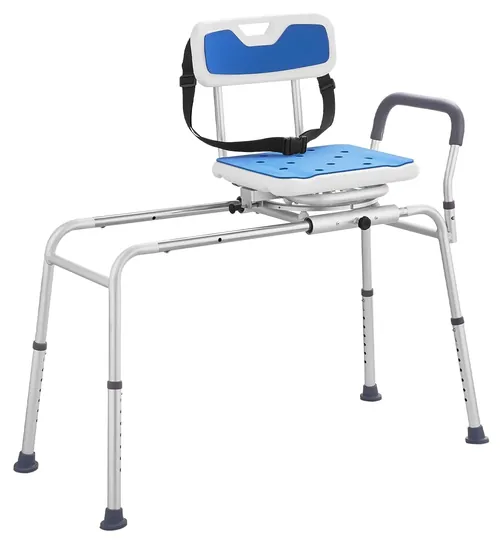
A sliding bench puts the seat on a rail. You sit once, and the seat carries you over the wall, which helps people who tire fast or can't push with their arms. A swivel seat adds a turn, so you can face out, rotate and slide in one motion. Trualta notes that sliders still call for some balance, and they cost more.
Seats come in plastic panels with drain holes, one-piece molded plastic, or padded foam. Drained plastic dries fastest and resists mold. Padding is warmer and kinder to thin skin, but it dries slower unless it's closed-cell foam. A cutout in the seat makes washing easier for someone who stays seated. Bariatric benches carry up to 500 pounds. If the goal is toileting help during recovery rather than bathing, see our list of bed pans.
Setting It Up Safely
Treat the weight rating as a ceiling, not a target. A caregiver leaning on the frame adds force, so pick a bench rated well above the user's weight. Sellers sometimes list different limits for the same model, so read the label on the bench itself.
After assembly, push every leg pin until it clicks through its hole, and check all four legs before each use. A loose pin is how benches fail: Health Canada recalled a folding bench in 2024 because its leg buttons didn't lock and one leg collapsed. That model isn't on this list. Press the suction feet down firmly in a clean, dry tub.
A bench alone doesn't make a bath safe. The CDC's fall prevention advice includes grab bars inside and outside the tub, and a handheld shower and a non-slip mat help too. The shower curtain can't close fully around a bench, so expect some water on the floor. Ask a physical or occupational therapist to check the fit and teach the transfer before the first bath.
How we researched this
We compared 16 tub transfer benches, read makers' spec sheets and seller data for the 10 finalists, used a caregiver checklist from Trualta to judge fit and floor space, looked for patterns in owner feedback, and searched the U.S. Consumer Product Safety Commission and Health Canada recall databases. We found no independent lab tests of tub transfer benches. The 3D models are built from published dimensions.
Frequently asked questions
Are tub transfer benches safe?
They are when the bench fits the tub and is set up right. Lock every leg pin, keep the user's weight well under the rating, add grab bars, and have a therapist check the transfer.
How much does a tub transfer bench cost?
Basic fixed benches cost about $50 to $65. Sliding models run about $90 to $125, and padded swivel benches cost around $200.
Does Medicare pay for a tub transfer bench?
Usually not. Original Medicare covers durable medical equipment, but bath safety aids are generally not included. Some Medicare Advantage plans help, and many benches qualify for FSA or HSA funds. Ask your plan first.
What is the maximum weight a tub transfer bench holds?
Most standard benches are rated for 300 to 400 pounds. Bariatric models such as the Medline G3-200KBX1 hold up to 500 pounds.
Can I use a shower chair instead?
Only if the person can safely step over the tub wall. A shower chair sits fully inside the tub, so it doesn't remove that step.
Will a bench work for a tub with the faucet on the left?
Most do. The backrest and arm move to either side on nearly every model, and sliding benches can be set up for either direction.