The 10 Best Travel Alarm Clocks
Updated by · How we research

Ten travel alarm clocks compared on size, silence, volume and power. The Travelwey Digital wins for simple setup, with analog, folding and vibrating picks too. When users buy our independently chosen editorial selections, we may earn commissions to help fund the Wiki.
Travelers on packing forums tell the same story: a phone that never switched to the new time zone, and a missed flight home. A small battery clock is the cheap backup. It suits light packers, earplug sleepers and anyone wary of hotel clocks, and a good one stays quiet in a bag until the morning you need it.


Editor's Notes
October 26, 2026, by Ezvid Wiki Editors:
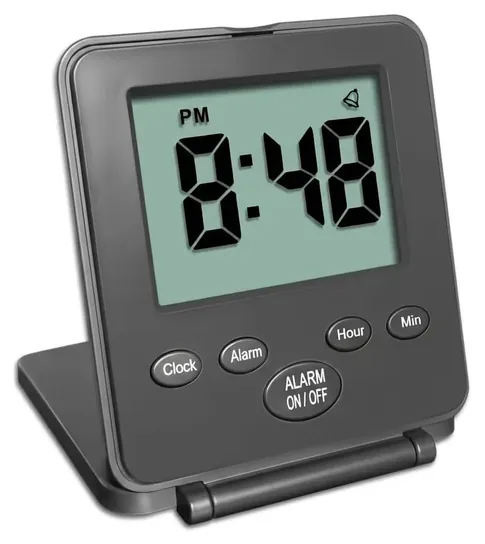
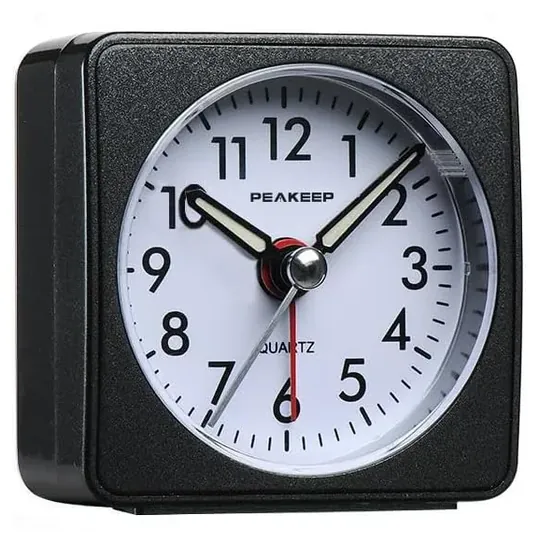
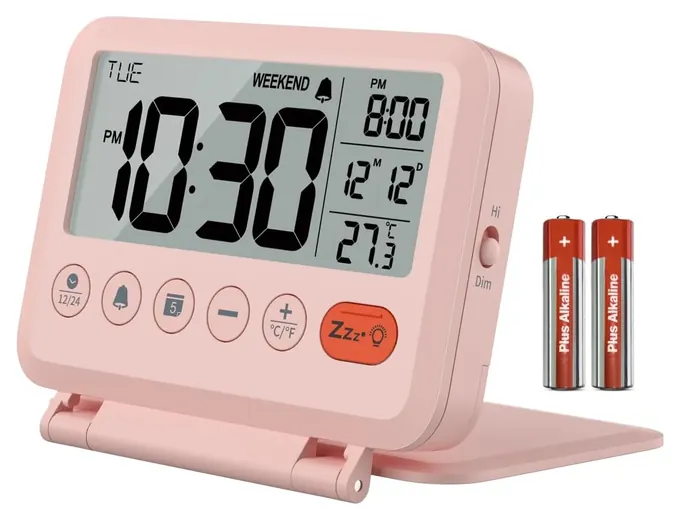
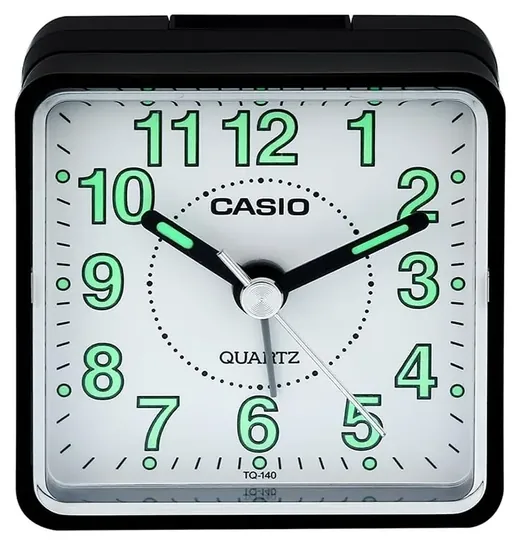
The Travelwey Digital now leads, since it does one job well: it shows the time, rings once and switches its screen off for packing. The Peakeep Ultra Small stays as the pocket-size silent analog pick.
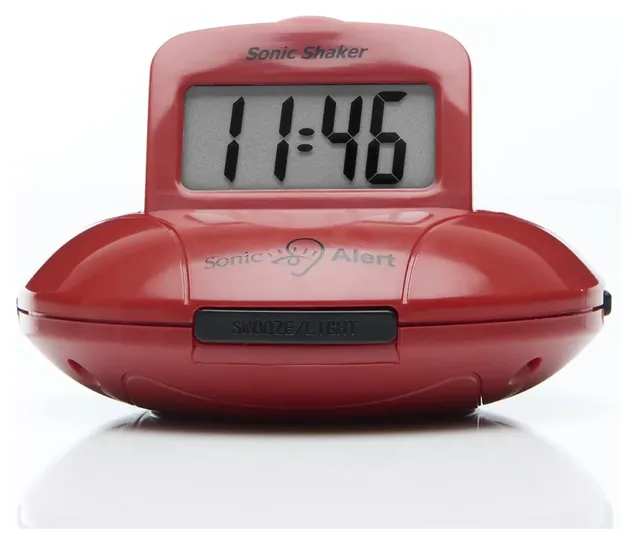
The Marathon Silver, Homtime Multi-Function and TimeVision ShakeAwake can't be bought right now, and the Plumeet Handheld and Peakeep Non-Ticking turned up nowhere for sale. The Kwanwa Small and DreamSky Compact are really nightstand clocks, and the eSeasongear VB80 is a vibrating watch, so they're gone too. The Sonic Alert SBP now covers deep sleepers and people with hearing loss.
Almost nobody lab-tests travel clocks, so we leaned on one magazine's alarm clock guide, long travel-forum threads about missed alarms and loose battery doors, makers' feature lists and warranty terms, and recall searches.
Earlier notes
March 29, 2021, by Sheila O'Neill:
New to the list, the Kwanwa Small looks like a classic clock radio at a glance but it's much smaller, runs on batteries, and displays the temperature when flipped over. At less than 5 inches long, it can easily fit in even the tiniest of carry-on bags.
The eSeasongear VB80 is unique from most other options in that it's a wristwatch. This can be helpful if you want to use it on a long train trip or if you need to set various reminders throughout the day.
We removed the Ambient Weather Compact and Hito Atomic in this update due to availability concerns.
When choosing an alarm, think carefully about what features will be useful for you. Those who frequently travel internationally and are thrown off by extreme time differences may want to consider a model that shows the date, like the Marathon Silver or Plumeet Handheld. Those who are hearing impaired will likely prefer a model that features vibration, like the eSeasongear VB80 or TimeVision ShakeAwake.
Finally keep the power source in mind. Many options run on batteries alone, but the Homtime Multi-Function and DreamSky Compact need to be plugged in in order to function and only use backup batteries to save the settings in case of a power outage. If you're just looking for something to use instead of a hotel clock (either because you need features like a USB port or larger display or because you want to be able to set your alarm before you leave) these might be a good choice, but if you need an option that can be used while camping or on-the-go, the lack of portable power source might be a dealbreaker.
January 24, 2020, by Melissa Harr:
We've kept a range of models from simple to complex at this time, although we have removed the Get Up and Glow due to availability issues. On the simpler side of the spectrum, there's the Travelwey Digital and the Peakeep Analog. These do not have all the bells and whistles; instead, they're designed only to show you the time and help you wake up. Those who want more information at their fingertips can consider the Marathon Silver or the Homtime Multi-Function. The latter is especially useful thanks to the two integrated USB ports for charging your devices. Its alarm must be set in military time, however, which can be annoying for those who don't often use the 24-hour format. For those with vision impairments, we added the DreamSky Compact. It has big, bright numbers, but if they are too bright, you can dim them. Finally, we have kept the TimeVision ShakeAwake as a good choice for a travel vibrating alarm clock. You can also set it to beep, but it won't both beep and vibrate — it's one or the other.
Analog Or Digital: Quiet Nights Versus Easy Setting
An analog alarm is set with a wheel on the back, there's no 24-hour display, and alarm timing is only as precise as the wheel.
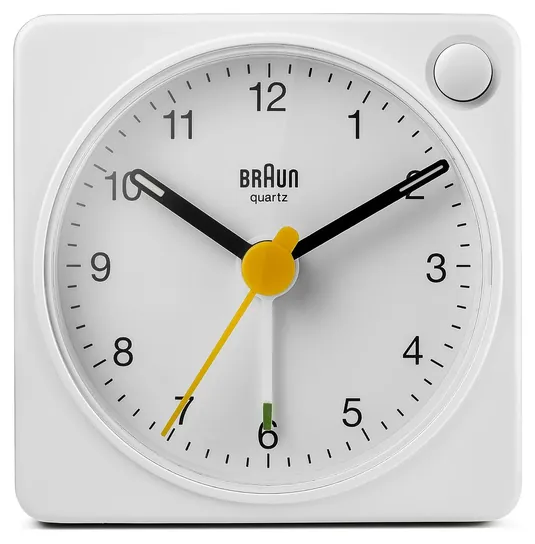
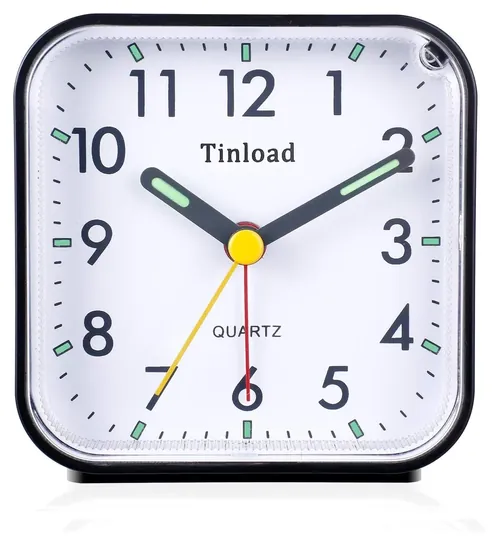
Small analog cubes are the classic travel clock. The ones worth buying use a sweep movement, where the second hand glides instead of stepping, so they make no ticking sound. That matters in a quiet hotel room: one traveler on the Rick Steves packing forum warned that some small clocks tick loudly enough to keep a light sleeper awake. The trade-off is setting. An analog alarm is set with a wheel on the back, there's no 24-hour display, and alarm timing is only as precise as the wheel.
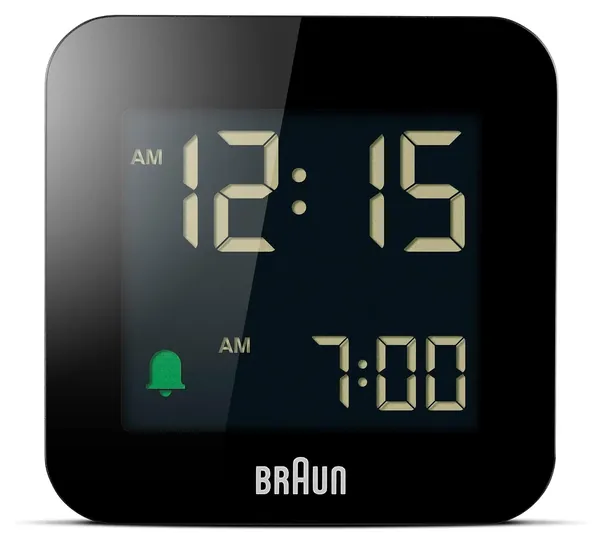
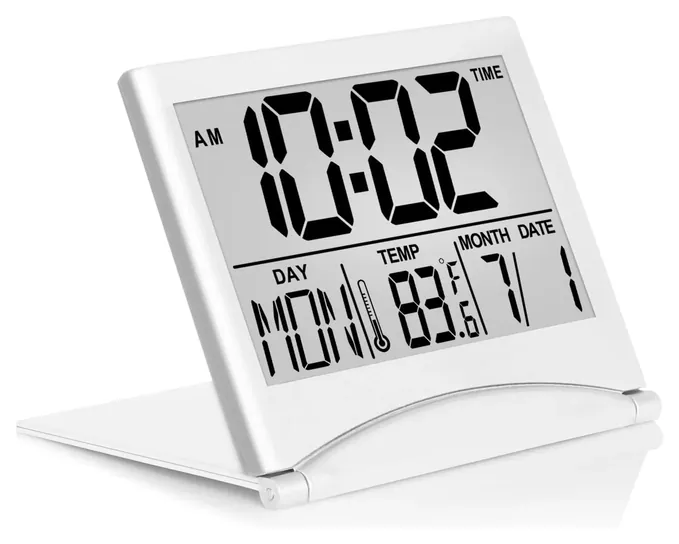
Digital clocks are easier to set to the minute and to change across time zones. Folding models close like a compact, which protects the screen and buttons in a bag, and many add the date and room temperature. Watch for clocks that need dozens of presses to move the hour: a fan quoted by Bustle hated tapping a tiny button again and again at each time change. A backlight you can trigger by touch helps in a dark room, and a light button that isn't covered when the clock is folded can switch on in a packed bag.
Loud Enough To Wake You
Most small travel clocks beep at a moderate level, and a few let you pick between two volumes. That's fine for most people, but not through earplugs. A poster on the Rick Steves Europe forum whose clock couldn't wake her through earplugs switched to a louder model, and others in the thread praised alarms that start soft and grow louder, sometimes called crescendo alarms. They're gentler at first and harder to sleep through.
If you're deaf, hard of hearing or a very deep sleeper, sound isn't the answer. A bed shaker is a small motor that goes under the pillow and vibrates when the alarm fires. Sonic Alert has built alerting devices for deaf and hard-of-hearing customers for decades and sells both travel clocks with built-in shakers and plug-in models for home. Vibrating wristbands exist too, but some makers warn they may not wake the deepest sleepers. Popular Science covers louder home alarm clocks if volume is the main need.
Batteries, Packing And Time Zones
Many analog travel clocks ship without a battery, so buy the AA or AAA before you leave, and pack a spare. A single AA can run a basic analog clock for many months. Forum travelers report two common problems on the road: battery doors that pop open and reset the clock, and alarms that go off inside a suitcase. Turn the alarm switch off or take the battery out when you pack, and tape a loose battery door.
Skip radio-controlled, or atomic, clocks for overseas trips. They set themselves from a time signal like the U.S. NIST WWVB station or Germany's equivalent, and they can't sync outside its range; one forum poster couldn't set one in Turkey. A plain quartz clock just needs you to move the hour. Set it to local time when you land, and keep your phone alarm as a second, not the only, wake-up.
How we researched this
We compared 21 travel alarm clocks and looked closely at 10 finalists, using makers' feature lists and warranty terms, one magazine's alarm clock guide, long travel-forum threads about what goes wrong on the road, and patterns in owner feedback. We checked every brand against U.S. Consumer Product Safety Commission recalls and found none for these clocks.
Frequently asked questions
Do I need a travel alarm clock if I have a phone?
Not always, but it's a cheap backup. Travelers report phones that didn't switch to the new time zone and phones that died overnight. A battery clock set to local time covers both.
Can you take a battery alarm clock on a plane?
A small clock that runs on ordinary AA or AAA alkaline batteries is a routine carry-on item. Pack it with the alarm switched off so it doesn't ring in the bin, and check your airline's rules for any spare lithium batteries.
What is a silent, non-ticking alarm clock?
It's an analog clock with a sweep movement, where the second hand glides around the dial instead of stepping each second. That removes the tick, which light sleepers notice in a quiet room.
What's the best travel alarm clock for heavy sleepers or hearing loss?
A clock with a bed shaker, such as the Sonic Alert SBP, vibrates under the pillow when the alarm sounds. Clocks whose beep grows louder also help, but sound alone often fails through earplugs.
Do atomic clocks work abroad?
Usually not. Radio-controlled clocks set themselves from a regional time signal, and outside its range they can't sync. A plain quartz clock is simpler for overseas trips.
How long do the batteries last?
A basic analog clock can run many months on one AA. Digital clocks with backlights and extra features use power faster, so carry a spare and replace the battery before a long trip.