The 8 Best Stunt Kites
Updated by · How we research

Foil or framed? Eight dual-line and quad-line stunt kites compared by frame, size, wind range, lines and crash tolerance. The Prism Hypnotist leads. When users buy our independently chosen editorial picks, we may earn commissions to help fund the Wiki.
A frameless foil has no spars to snap, so a crash usually costs nothing but a relaunch, while a framed delta turns sharper and tracks straighter. A stunt kite, or sport kite, is steered with two or four lines, one set in each hand, so it can loop, dive, stall and land on command. Adults and older kids fly them on beaches and open fields.


Editor's Notes
October 19, 2026, by Ezvid Wiki Admin:
Adult-size kites that can do tricks are what most readers here want, so the Prism Hypnotist now leads. Six of the ten kites on the old list can't be bought new anymore: the Prism Quantum, Prism Nexus, Prism Snapshot, Flexifoil Big Buzz, PaleonEarth Monarch and HQ Kites Bebop. The Quantum was a favorite, so if you spot a new one at a kite shop, it's still a fine choice.
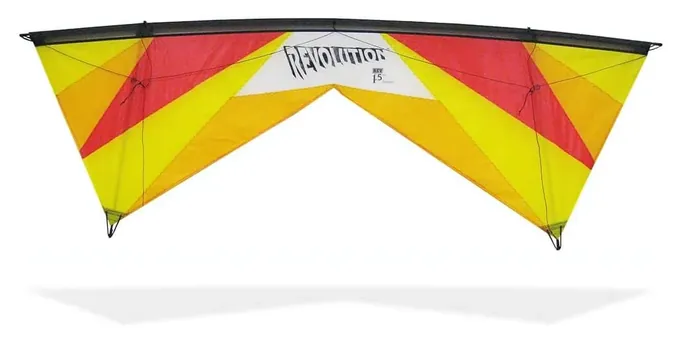
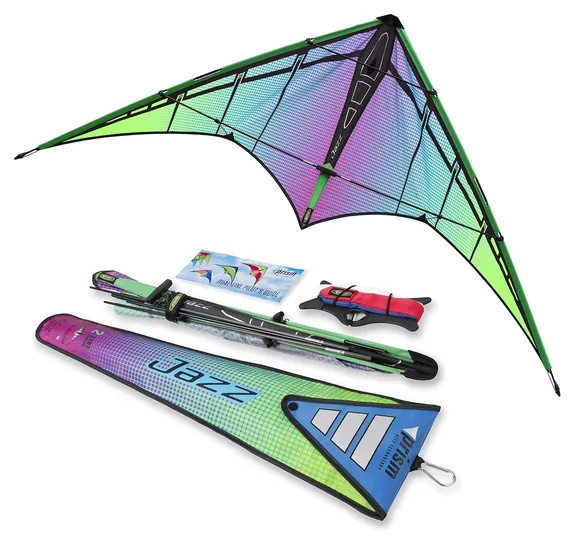
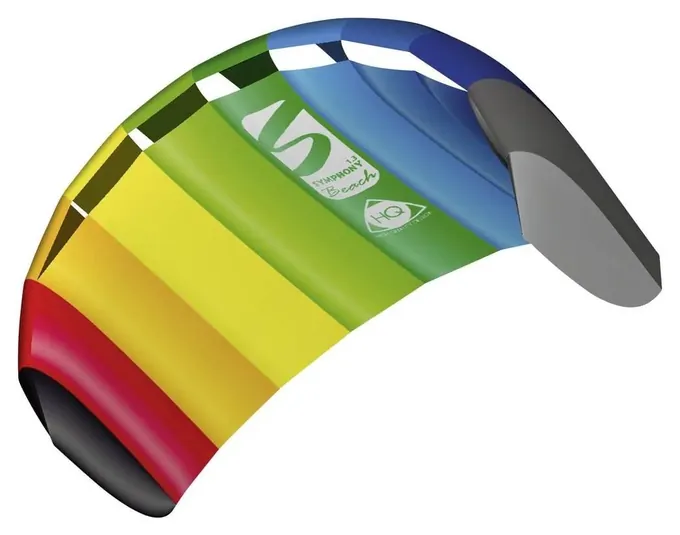
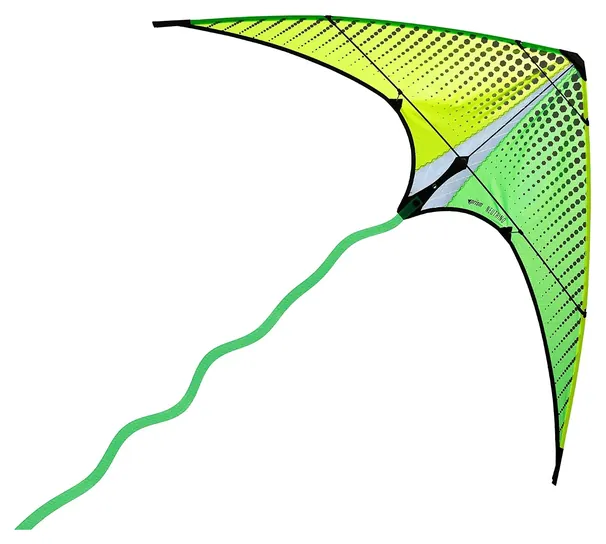
Four stay: the Prism Synapse 140, the Revolution EXP, the HQ Symphony Beach III and the In the Breeze Tie Dye. The Prism Jazz 2.0 joins as a cheaper framed starter, the Prism Neutrino for fast mini flying and the In the Breeze Colorwave for a tight budget.
We found no lab tests of stunt kites, so we went by wind ranges and line ratings from makers and from shops such as Kittyhawk Kites and REI, owner reports on kite forums, a Recreation Insider roundup and recall checks. The guide now also explains how stunt kites differ from power kites, which some readers were looking for.
October 20, 2020:
Removed the Backyard Stunt 68-Inch due to quality concerns and the Moon Glow Sports Airfoil and HQ Kites Symphony Pro due to availability issues. Added the PaleonEarth Monarch, which has a unique butterfly design. Also added the Revolution EXP, a quad-line model that beginners can use to learn tricks like flying in reverse that can't be done with just two lines. The In The Breeze Tie Dye is an affordable option that's ideal for parents who don't want to break the bank.
Flying a kite can be a great way to spend time outside, learn new skills, and put on an aerial show for friends and strangers. However, there are safety precautions that should be taken seriously. Always stay away from overhead power lines and if you find that your kite has flown into a line, do not try to retrieve it yourself (instead, contact the utility company). You should also make sure that you don't fly in so much wind that you can't control your kite, especially while you're still learning the basics. When flying a stunt kite at high speeds, be aware that the line can be dangerous to passersby. Keep your flying range clear and tell onlookers to watch from behind you.
November 25, 2018:
Stunt kites generally come in two main designs — framed and frameless. We made sure to include a good variety of both styles in a range of prices. We also poured over user reviews to identify responsive models that can perform advanced level tricks to keep the experienced pilots engaged, as well as some more stable options that are easy for beginners to learn on.
Special Honors
American Kitefliers Association The American Kitefliers Association is a nonprofit group for kite fliers in the U.S. Its site lists affiliated clubs and kite events, including sport kite competitions, and its safety code is worth reading before a first flight. A local club is the quickest way to meet experienced pilots who can help with setup, line care and first tricks. kite.org
Framed Delta, Foil Or Quad-Line
Air fills its cells and holds the shape, so there's nothing to break.
A stunt kite, also called a sport kite, is steered with two or four lines instead of one (Wikipedia). Pull the left line and it turns left; pull the right and it turns right. There are three main kinds, and the choice shapes everything else.
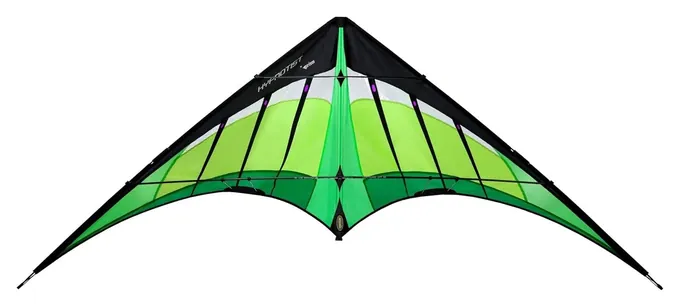
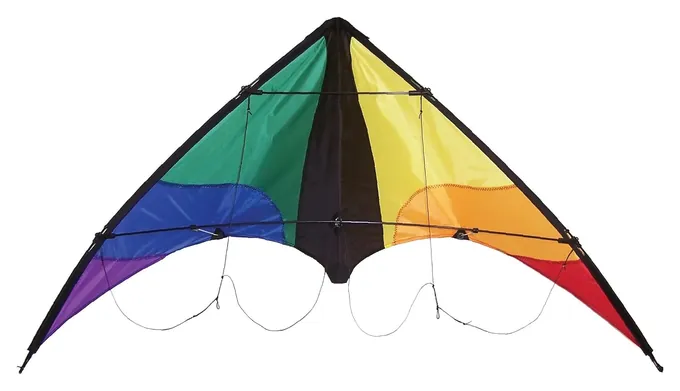
A framed delta has a carbon or fiberglass spine and wing spars under a ripstop sail. It's the fastest and most precise type, and it's what trick fliers use, but a hard crash can snap a spar. Carbon is lighter and stiffer; fiberglass costs less and flexes more. Kitty Hawk Kites, a North Carolina kite retailer, suggests a delta or a foil as a first kite (Kittyhawk).
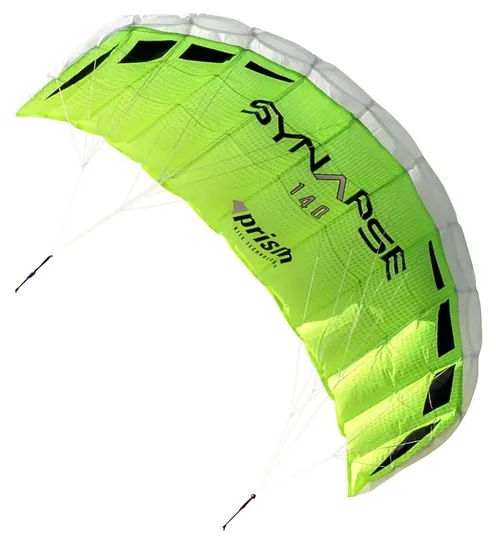
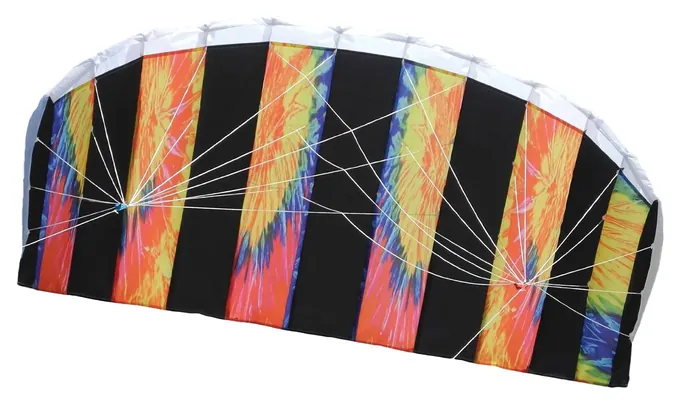
A foil, or parafoil, has no frame at all. Air fills its cells and holds the shape, so there's nothing to break. Foils are forgiving and pack small, but they turn less crisply and pull harder as the wind builds.
A quad-line kite flies on four lines held on two handles. Tilting the handles lets it hover, back up and land, which a dual-line kite can't do. Kite Guys, a Canadian kite shop, says most new quad pilots can hover and reverse within an hour (Kite Guys). The skill doesn't carry over from dual-line flying, though, and old habits get in the way.
Wind Range, Size And Power Kites
Most stunt kites fly best in about 8 to 15 miles per hour of wind, and the usable range runs roughly 6 to 20 (Kittyhawk). Below that, a kite struggles to launch and stay up. Above about 20, control gets hard and a framed kite can break. Match the kite to your usual spot: a beach with steady sea breezes suits a foil rated for high wind, while a park with light air suits a light framed delta with a low starting number.
Size matters too. Kitty Hawk Kites suggests a wingspan of about 5 to 7 feet for a first kite, big enough to fly smoothly and small enough to handle. Minis turn so quickly that they work better as a second kite. Bigger kites pull harder, so wear gloves when the wind picks up.
A stunt kite isn't a power kite. Power, or traction, kites are large foils, often flown on a control bar, built to pull a rider on a board or a buggy (Wikipedia). Their pull is far stronger. If you searched for a beginner power kite, a stunt foil is a gentler way to learn how wind and lines behave.
Lines, Setup And Safety
Before each flight, lay the kite face down, unwind both lines to equal length, and attach them with a lark's head knot to matching points on the bridle, left line to the left side (Kittyhawk). Make sure the lines aren't twisted or crossed. Uneven lines make a kite pull to one side.
Starter kits often come with weak lines. Owners of several budget and mid-price kites report thin lines that tangle, and many upgrade to a braided Dyneema or Spectra set, which stretches less and lasts longer (Outdoorithm).
The American Kitefliers Association's safety code covers the real risks (AKA). Lines conduct electricity, so never fly near power lines or in wet or stormy weather. If a kite snags on a power line, leave it and call the utility. Stay well away from airports and roads, fly in open space, and keep lines away from people, since a moving line can cut or burn skin. Wear gloves with large kites, and never use wire or metal line.
How we researched this
We compared 16 stunt kites from Prism, HQ Kites, Revolution, In the Breeze, Flexifoil, WindNSun and others, read makers' specs and kite shop product data for the 8 picks, read kite forums, a buying roundup and owner feedback, and checked every brand for recalls with the U.S. Consumer Product Safety Commission. We found no independent lab tests of stunt kites.
Sources (11)
- Wikipedia: Sport kite
- Wikipedia: Power kite
- Kitty Hawk Kites: What is a stunt kite?
- Kite Guys: Intro to stunt kites
- American Kitefliers Association: Kite safety
- KiteLife forum: Prism Hypnotist
- Revolution Kites: Reflex EXP
- KiteLife forum: Quad for a noob
- Outdoorithm: Prism Synapse 140
- Recreation Insider: Best stunt kites
- U.S. Consumer Product Safety Commission: Recalls
Frequently asked questions
What is the best stunt kite for adults?
For trick flying, a full-size framed delta such as the Prism Hypnotist, about 94 inches across with strong Dyneema lines. Adults who want a kite that shrugs off crashes can choose a foil such as the Prism Synapse 140.
What is the best stunt kite for beginners?
A foil or a mid-size framed delta. Foils such as the Prism Synapse 140 have nothing to break, while a starter delta such as the Prism Jazz 2.0 teaches sharper control. Kitty Hawk Kites suggests a wingspan of about 5 to 7 feet.
Should I get a dual-line or a quad-line kite?
Most fliers start with two lines, which are simpler and fly fast across the wind. Quad-line kites such as the Revolution EXP can hover, reverse and land, but they take a different skill.
How much wind does a stunt kite need?
Most fly in about 6 to 20 miles per hour and do best around 8 to 15. Light framed kites start at about 4 or 5 mph, and strong-wind foils such as the HQ Symphony Beach III are rated past 30 mph.
Is a stunt kite the same as a power kite?
No. Power kites are larger traction kites, often flown on a bar, made to pull a rider on a board or buggy. Stunt kites are smaller and built for steering and tricks, though big foils can still pull hard.
Are stunt kites safe for kids?
With supervision. HQ rates the Symphony Beach III 1.3 from age 8, and Prism rates the Neutrino for ages 14 and up. Keep kids away from power lines, roads and other people, and don't fly in storms.