
The 10 Best Stage Monitors
Updated by · How we research

Ten floor wedges and dual-use speakers compared on wedge angle, power, feedback control and warranty. The Electro-Voice PXM-12MP leads for clear vocals. When users buy our independently chosen editorial recommendations, we may earn commissions to help fund the Wiki.
Many speakers sold as stage monitors are upright PA cabinets that can lie on their side. That works, but a true wedge sits lower and aims more steeply at the performer's face. This list covers both kinds, along with passive wedges and small personal monitors, for bands, worship teams and solo acts who need to hear themselves over the room.


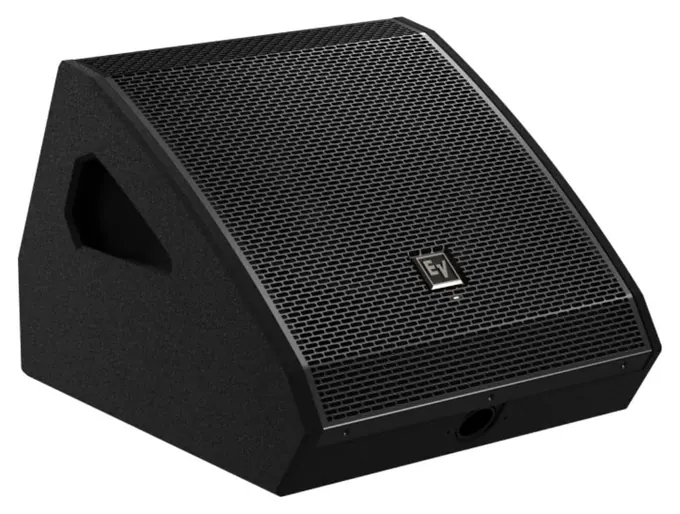
From the manual
- Phantom power is 15 volts, not the usual 48. EV says that suits most condenser mics, but check yours. p. 18
- On the floor, pick MONITOR 1, MONITOR 2 or GUITARCAB; switch to TRIPOD when it goes on a pole or stand. pp. 11-12
- The THRU jack copies input 1 before any processing, so a linked wedge gets none of this one's EQ or notch. p. 14
- EV rates it for 32 to 95 F; in direct sun its amplifier protection can shut it off, so shade it outdoors. p. 6
Why the Electro-Voice PXM-12MP is our top pick
Our pick wins because it's a true wedge: a coaxial driver behind a 55-degree monitor angle, in a cabinet just over 13 inches tall.1 Our runner-up, the QSC K10.2, is a main speaker that lies on an angled back for floor duty and stands 20.4 inches tall upright.3,3
For a singer, our pick also has a narrow notch filter you tune to the ringing tone, and its own troubleshooting table points to it when a mic howls.1 The QSC has no tunable feedback filter, just a hand-mic preset meant to reduce feedback and a four-band EQ that only cuts, by up to 6 dB a band.3 It sends 15-volt phantom power to both mic inputs, enough for most condenser mics per EV; the K10.2's mic input sends none.1,3
The runner-up wins on two counts. It's rigged for main-speaker duty too, with a pole socket that tilts 7.5 degrees and suspension points,3 and QSC backs it for six years if you register it within 30 days,4 against up to five years for our pick with registration.2 Loudness is a wash: 129 vs 130 dB maximum.1,3 Craig Leerman, a pro-audio veteran of more than 30 years who owned a regional production company, wrote in a 2020 ProSoundWeb road test of our pick that coaxial monitors are "the only type we carry in my company's inventory."5 EV supplied his review units.
| Electro-Voice PXM-12MP | QSC K10.2 | |
|---|---|---|
| Shape on the floor | Wedge, 55° angle | PA box on its angled back |
| Feedback control | Tunable notch filter | Hand-mic preset, cut-only EQ |
| Phantom power | 15 V on both inputs | None |
| Mounting | Floor or pole | Floor, pole, tilt pole, rigging |
| Warranty | Up to 5 years if registered | 6 years if registered |
Sources
- Electro-Voice PXM-12MP 1Installation manual, 2022 (PDF), pp. 18, 24, 18, 25 2Extended warranty registration
- QSC K10.2 3K.2 Series user manual (PDF), pp. 5, 7, 11, 15–16, 22 4Product page
- 5ProSoundWeb: Road test, Electro-Voice PXM-12MP, by Craig Leerman
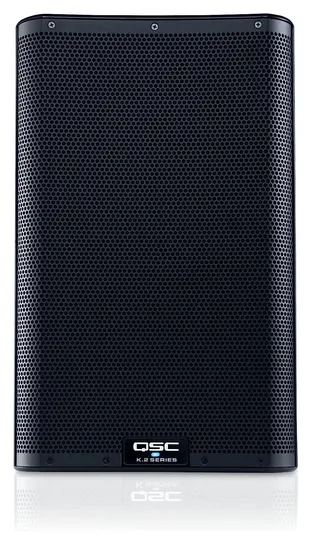
From the manual
- Input A's mic setting supplies no phantom power, so a condenser mic needs an outboard supply. p. 11
- STAGE MONITOR 1 tames bass build-up on the floor; STAGE MONITOR 2 keeps more low end for players who want it. p. 15
- Leave at least 6 inches behind the cabinet for cooling, and keep the back out of direct sun. p. 9
- Firmware 2.1 adds CLUB, VOX BOOST and SMOOTH presets and doubles the room delay to 200 ms. firmware 2.1 addendum, p. 1
Compare the specs
Swipe the table sideways to see every column.
| Product | Design | Max SPL (dB) | Weight (kg) | Inputs | Warranty (years) |
|---|---|---|---|---|---|
| 1. Electro-Voice PXM-12MP | Powered coaxial wedge | 129 | 13.5 | 2 combo + stereo RCA | Up to 5 if registered |
| 2. QSC K10.2 | Powered dual-use | 130 | 14.5 | 2 combo + 3.5 mm stereo | 6 if registered |
| 3. Samson RSXM12A | Powered coaxial wedge | 126 | 14.4 | 1 combo | 2 (US) |
| 4. Behringer Eurolive F1220D | Powered wedge | — | 10.7 | Mic XLR + line XLR | — |
| 5. Peavey PV 12M | Passive wedge | 127 | 16.8 | None (passive) | 3 + 2 |
| 6. Yamaha DXR10 MKII | Powered dual-use | 132 | 13.9 | XLR + 1/4 in pair + RCA pair | 7 (US, Canada) |
| 7. Yamaha DBR12 | Powered dual-use | 131 | 15.8 | 2 combo + RCA pair | 7 (US, Canada) |
| 8. Alto TX412 | Powered dual-use | 120 | 13.3 | 1 combo + Bluetooth | — |
| 9. Behringer Eurolive B205D | Powered personal | 113 | 3.2 | 2 combo + RCA pair | — |
| 10. Galaxy Audio HS7 Hot Spot | Passive personal | 126 at 0.5 m | 2.4 | None (passive) | 3 |
Maximum SPL is each maker's own rating (Galaxy's is at half a meter), and makers measure it differently, so only big gaps mean much. Warranty is the maker's US term; a dash means we found no maker statement.
Sources
- Electro-Voice PXM-12MP installation manual (PDF) Extended warranty registration
- QSC K.2 Series user manual (PDF) K10.2 product page
- Samson RSX Active owner's manual (PDF) Warranty information
- Behringer F1220D quick start guide (PDF) B205D product page
- Peavey PV 12M spec sheet (PDF)
- Yamaha DXR mkII owner's manual (PDF) DBR series specifications (PDF) US and Canada pro audio warranty (PDF)
- Alto Professional TX4 Series user guide (PDF)
- Galaxy Audio HS7 cut sheet (PDF) Warranty
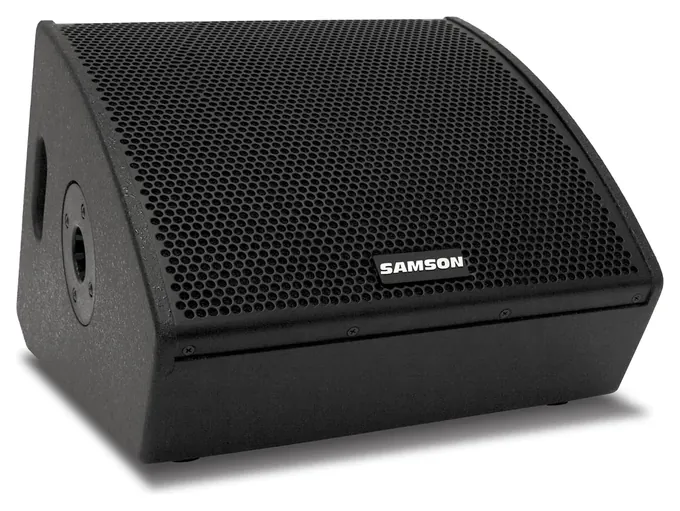
From the manual
- Set the MONITOR/FOH switch to MONITOR on the floor. For stand use the manual says FOH on one page and MONITOR on the next. pp. 9, 13-14
- When linking a second speaker, switch the RSXM on first and off last. p. 12
- Repairs need a return authorization number from Samson first; a unit shipped without one is refused. p. 6
- Samson's US warranty runs two years, needs the sales receipt and isn't transferable. Samson warranty page
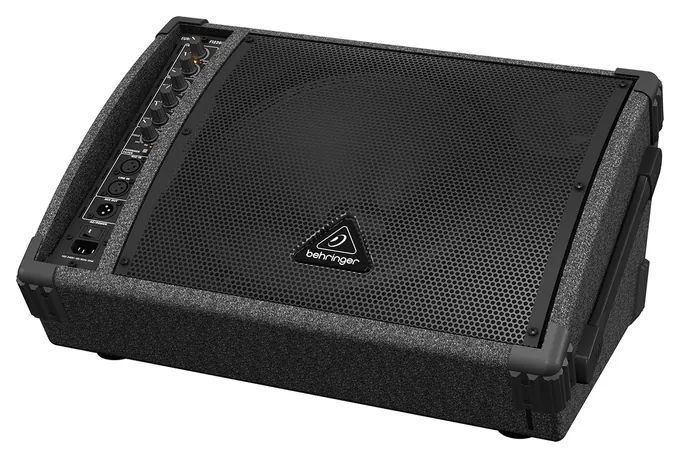
From the manual
- Both inputs are XLR only, one for a mic and one for line level; instruments need a DI box. p. 9
- MIX OUT passes the raw input, so a second wedge gets none of this one's EQ or feedback filter. p. 9
- The feedback filter tunes from 350 Hz to 6 kHz and cuts one narrow band by 15 dB. p. 12
- Plug the wedges and the mixer into the same power circuit to avoid ground-loop hum. p. 9
From the manual
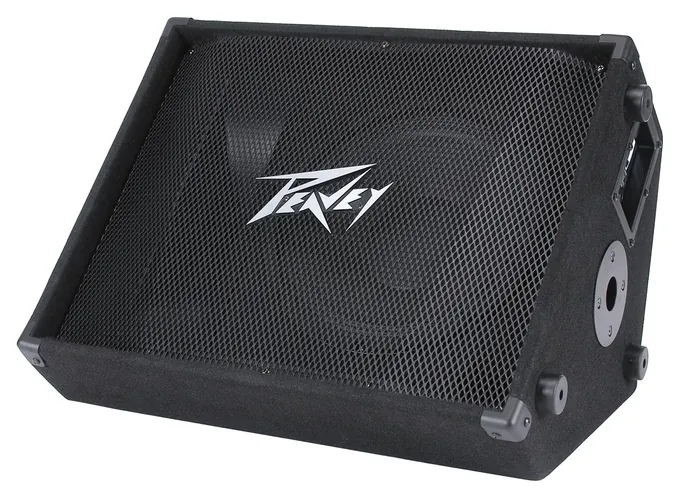
- Its two 1/4-inch jacks are wired in parallel, so a second wedge can chain off it; two 8-ohm wedges load the amp at 4 ohms. p. 1
- Peavey lists a 3 + 2 year limited warranty, with the terms in a separate warranty statement. p. 2
- Sound Guard IV protects the compression driver from long and medium-term overload. p. 1
From the manual
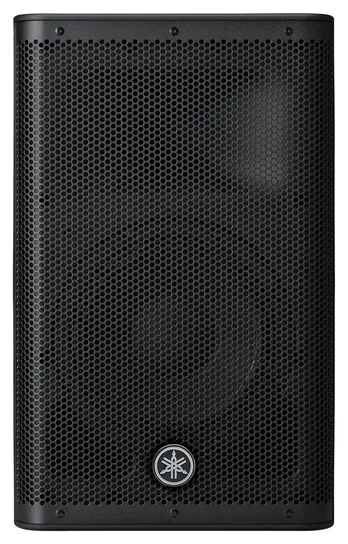
- Used without a subwoofer, leave the HPF switch OFF; set 100 or 120 Hz only when a sub handles the lows. p. 8
- With a single speaker, set LINK MODE to MONO, or the right channel of inputs 2 and 3 goes missing. p. 8
- After switching it off, wait about five seconds before switching it back on. p. 8
- Up to four speakers can be chained in parallel for a monitor line. p. 11
From the manual
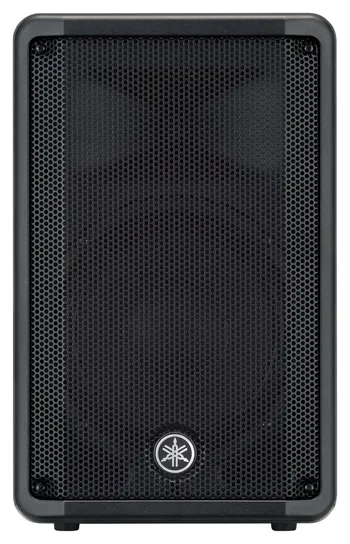
- Channel 2's combo jack and RCA inputs are mixed to mono at a fixed balance, so they can't be leveled separately. p. 1
- The output switch sends channel 1 only, or both channels mixed, to a linked monitor; up to four more can be added. p. 1
- Leave about a foot of space above, beside and behind it so its cooling fan can breathe. p. 2
- Yamaha's US and Canada warranty covers DBR speakers for seven years when bought from an authorized dealer. Yamaha US warranty, p. 1
From the manual
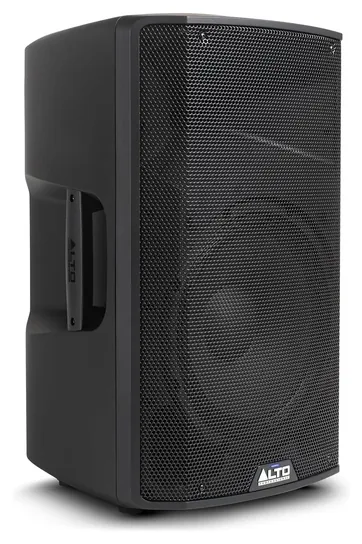
- Alto says not to hang a TX4 speaker; it's made for the floor, a stand or a pole. p. 4
- The Contour button adds 3 dB of lows and highs; Alto suggests leaving it off for live sound or full output. p. 9
- Bluetooth pairing mode ends after 90 seconds, and the code, if asked, is 0000. p. 10
- Wireless stereo linking needs both speakers within 75 feet and can take up to a minute. p. 10
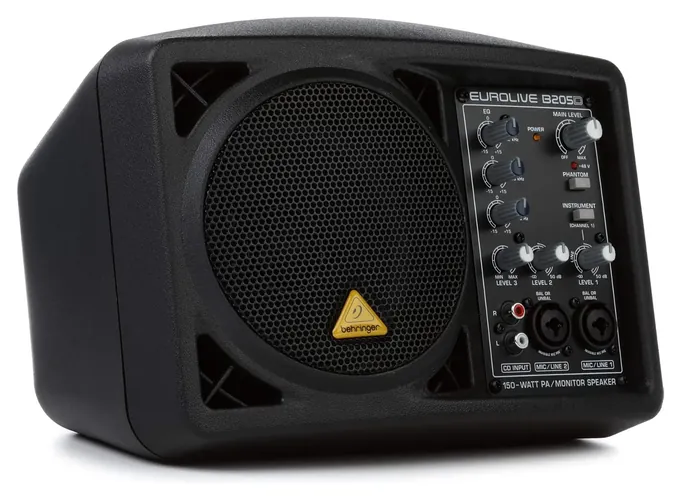
From the manual
- Mic stand mounting needs a mic stand adapter and a 5/8-inch thread adapter, both sold separately. Behringer product page
- Phantom power is a full 48 volts, switched on for both combo inputs at once. p. 9
- THRU taps the signal before the master level and EQ, so a linked speaker gets it unprocessed. p. 11
- The amplifier's heat sink is on the back, so leave room behind the speaker. p. 11
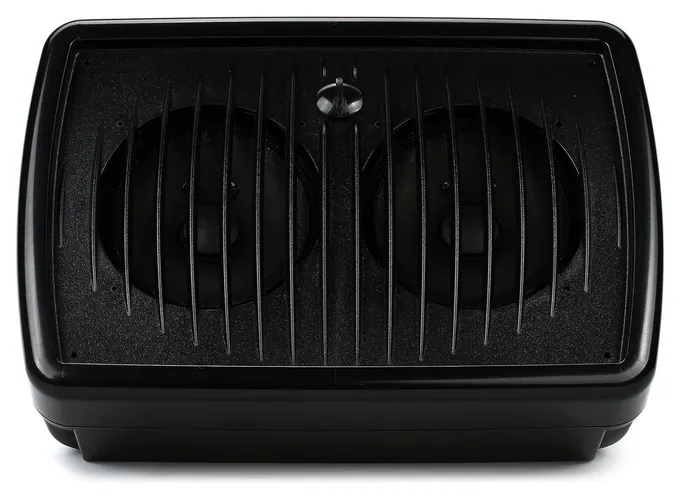
From the manual
- The volume knob also sets the load: 16 ohms at full, rising to 130 ohms at its lowest step. p. 7
- There's no off position; fully down is an 18 dB cut. p. 7
- Don't plug or unplug it while the amp is running; Galaxy warns that can damage the amplifier. p. 2
- If it distorts, cut the bass in its mix: low notes eat amp power, Galaxy notes, and its small drivers barely play them. p. 5
Editor's Notes
November 5, 2026, by Ezvid Wiki Editors:
We read the makers' manuals and spec sheets for all ten picks, added a spec table, a section on why the PXM-12MP leads, and setup notes from each manual. We corrected the DXR10 mkII's description, since the mirror-image cabinet belongs to the DBR12, removed an unsupported claim that the PXM-12MP is weak on bass, and fixed a wrong power figure in the guide. Yamaha has since released a mk3 version of the DXR10.
October 23, 2026, by Ezvid Wiki Editors:
The Electro-Voice PXM-12MP now leads this list. It's a low, coaxial wedge that keeps a singer's voice even across the stage, and it packs a feedback notch and a small mixer into a cabinet that one person can carry. Its main drawback is a menu-driven control panel that takes some learning.
The biggest change is honesty about shape. Several old picks, like the Electro-Voice ELX200-12P, JBL JRX212 and RCF NX 10-A II, were PA speakers rather than monitors, so we replaced most of them with true wedges: the Samson RSXM12A stays, and the Behringer Eurolive F1220D and Peavey PV 12M join. We kept the QSC K10.2 and Yamaha DXR10 MKII because their makers design them to work on the floor too, and readers keep asking which brand holds up on tour. The Turbosound Flashline, Rockville RSM12A and Alto TX210 were dropped because of price, a newer version or availability concerns.
The research behind this list was mostly paperwork: spec sheets from EV, QSC, Yamaha and Peavey, dealer data sheets, one trade-magazine road test, and threads where sound engineers compare which wedges survive years of gigs.
Earlier notes
November 7, 2020, by Luke Mitchell:
Far from simply being an extension of an output channel, as was the case in times gone by, the modern foldback monitor can include a variety of features for use in both practice and live performance applications. Nowadays, active monitors can incorporate auxiliary inputs, with dedicated level controls through which you can feed backing tracks or your backline mix; digital signal processing, to control dynamics or add effects; and even mobile apps, for sonic manipulation on the fly.
This latest revision of our ranking introduces the Samson RSXM12A early on in our list, as it is an affordable and basic, yet very well-made example, with high-quality components and impressive output for this price point. We then upgraded the RCF NX12-SMA to the newer RCF NX 10-A II, which retains many of the previous model's best features, including its low-vibration rugged birchwood construction, but utilizes state-of-the-art components and sound designing technology to achieve professional-quality sound reproduction, albeit at a high price.
Next, we replaced the Behringer Eurolive B210D with the Behringer Eurolive B205D, as this is ideal for close monitoring of vocals and line-level instruments, thanks to its front-facing control panel, and is the perfect accompaniment to a digital drum kit or keyboard setup. We then upgraded the Yamaha DBR Series to the newer, DSP-equipped Yamaha DXR10MKII. [2026 update: the DBR series has onboard DSP too, and the DBR12 is back on this list; Yamaha released a mk3 successor to the DXR10 mkII in 2026.]
Finally, we upgraded the Electro-Voice ZLX-12 to the more recent Electro-Voice ELX200-12P. This has the distinction of having a backlit display for its digital signal processing functions, with a single rotary knob to control them all, making it quick and intuitive to get the desired results.
June 27, 2019, by Christopher Thomas:
As you may be aware, there are two kinds of speakers: passive and active. Monitors come in both varieties. Passive monitors consist of a cabinet with a woofer and a tweeter mounted inside, but no amplifier. If you know your way around sound system design, the JBL JRX212 is probably the one for you. It's inexpensive and rock-solid, and in more than one way: you can coax a ton of sound out of it without damage, and it won't give way if a guitarist uses it as a stepping stool in the middle of an intense solo. But if you don't want to go through setting up an external amplifier, you'll want to go with an active monitor.
If you just need extra volume for one or two singers, get the Powerwerks PW4P, which is especially convenient because you can affix it right to the top of a traditional mic stand. It's not for big shows or low instruments like kick drums or bass guitars, but it works well for many singers. The Alto TX210 is a step up and is great for small bands just starting to gig, and the Behringer Eurolive B210D is an even bigger advancement. Neither is incredibly loud, but they are accurate and reliable and have great sound quality. If you need to make plenty of noise on a budget, the Rockville is hard to beat, but it's very heavy and pretty large, as well. Plus, some users find it to distort when it's really cranked.
If you're willing to make a somewhat sizable investment, Turbosound and RCF make really great equipment. Not everybody wants to spend over a grand on a monitor, of course, and if that includes you, check out QSC's K10.2, which is nearly on a par with those two but costs hundreds less. In the middle of the price range, boasting excellent bang for the buck, are the Yamaha DBR10 and Electro-Voice ZLX-12P. The first is quite loud and the second even louder, and they both sound fantastic, especially in light of their affordable price tag. [2026 update: by the makers' own ratings, the DBR10, at 129 dB, is louder than the ZLX-12P, at 126 dB.]
Special Honors
d&b audiotechnik Monitors The German maker's coaxial wedges are a fixture on large tours and festival stages. They're passive and run from d&b's own amplifiers, which load matching presets for each cabinet, so they're bought as a system through dealers and rental companies rather than one at a time. A band that rents a big-stage rig will often find them on the floor. dbaudio.com
Meyer Sound MJF Stage Monitors Meyer Sound builds its stage monitors self-powered, with the amplifier and processing inside each cabinet. The MJF line includes low-profile models meant for theaters and touring stages, and Meyer publishes full specs for each. They're sold through pro-audio dealers and mostly rented at this level, but they show how far the wedge can go. meyersound.com
A True Wedge Or A Speaker On Its Side
On the floor they stand taller, and some aim at a shallower angle.
A floor wedge is built to sit at the performer's feet and tilt its sound up toward the head. The Electro-Voice PXM-12MP uses a 55-degree monitor angle, according to a ProSoundWeb road test, and the Peavey PV 12M offers a choice of 30 or 45 degrees. A low wedge stays out of the audience's sightline and puts the speaker closer to the ears, so it needs less volume.
Many speakers sold for this job are upright PA cabinets with one angled side. The Yamaha DBR line is shaped to lie at a 50-degree wedge angle, and QSC pitches the K.2 series for both main and monitor use. These make sense when one set of speakers must work as mains in a small room one night and monitors the next. On the floor they stand taller, and some aim at a shallower angle.
Coaxial wedges put the tweeter in the center of the woofer, so all the sound comes from one point. Sound engineers like them because the tone stays the same as a singer moves side to side, and the cabinets are smaller for their output. The PXM-12MP and the Samson RSXM12A are both built this way; the FOH Online write-up of the PXM-12MP focuses on its low profile.
Powered Or Passive, And What The Watts Mean
A powered wedge has its amplifier inside. It needs a wall outlet and a line from the mixer, nothing more, and most small bands now work this way. A passive wedge needs a separate power amp matched to its impedance. The Peavey PV 12M is an 8-ohm speaker rated for 500 watts of program power, per Peavey's spec sheet, so pick an amp rated for 8-ohm loads with power in the same range. Passive wedges make sense if you already own amps or a powered mixer, and they have fewer parts that can fail on the road.
Watt figures are hard to compare. Peak ratings are the biggest number a maker can print: QSC sells the K10.2 as a 2,000-watt speaker, while its user manual lists the amplifier at 1,800 watts peak for the woofer and 225 for the tweeter. Maximum loudness in decibels is a fairer guide, and QSC's own page rates the K10.2 at 130 dB peak and 124 dB continuous. The EV, QSC and Yamaha cabinets on this list are rated between 129 and 132 dB at maximum output, though each maker measures a little differently.
Personal monitors are a third option. The Galaxy Audio HS7 is passive and rated at 16 ohms, so two can share one 8-ohm amp channel in parallel. Turning its stepped volume knob down raises its impedance, per Galaxy's user guide, which only makes the amp's job easier. The Behringer Eurolive B205D is powered and has its own small mixer, so a solo act can run a mic straight into it.
Feedback, Placement And Your Hearing
Feedback usually starts at the wedge. A cardioid vocal mic rejects sound from directly behind it, so the classic setup puts the wedge in front of the singer, aimed at the back of the mic, as Shure's SM58 user guide advises. Supercardioid mics reject best at an angle off the back, not straight behind, per Shure's Beta 58A guide, so a pair of wedges set slightly to each side suits them. A feedback filter, like the narrow notch on the PXM-12MP or the adjustable filter on the Behringer Eurolive F1220D, can cut one ringing tone, but mic placement matters more.
Each wedge, or each chain of linked wedges, plays one mix. If the singer and the drummer want different things, they need separate monitor sends from the mixer. Many powered wedges have a through or link jack, so one send can feed a pair across the front of the stage.
Loud stages damage hearing. The National Institute for Occupational Safety and Health sets its recommended limit at 85 dBA averaged over eight hours, and the safe time halves for every 3 dB above that. A small personal monitor close to the ears, or in-ear monitors, lets the whole stage turn down. Use grounded power cables, tape down cable runs, and hang a speaker only from the maker's rigging points.
How we researched this
We compared 18 stage monitors and dual-use speakers and read the documents behind the 10 picks: Electro-Voice's PXM-12MP installation manual, QSC's K.2 Series user manual and firmware 2.1 addendum, Samson's RSX Active owner's manual, Behringer's F1220D and B205D quick start guides, Peavey's PV 12M spec sheet, Yamaha's DXR mkII and DBR owner's manuals, Alto's TX4 Series user guide and Galaxy Audio's Hot Spot user guide. Road tests of the PXM-12MP by ProSoundWeb and FOH magazine and the makers' US warranty statements filled in the rest. A search of CPSC recall records on November 5, 2026 found no recall of any model here; the closest were a 1988 Electro-Voice speaker-component recall and a 2006 Yamaha in-wall speaker recall.
Sources (27)
- ProSoundWeb: Road test, Electro-Voice PXM-12MP
- FOH Online: Electro-Voice PXM-12MP
- Electro-Voice: PXM-12MP
- Electro-Voice: extended warranty registration
- QSC: K.2 Series
- Peavey: PV 12M spec sheet
- Yamaha: DXR mkII series
- Yamaha: DBR series
- Alto Professional: TX412
- The Gear Page: powered floor monitor suggestions
- Electro-Voice: PXM-12MP installation manual (PDF)
- QSC: K.2 Series user manual (PDF)
- QSC: K10.2
- Samson: RSX Active owner's manual (PDF)
- Behringer: F1220D quick start guide (PDF)
- Behringer: B205D
- Yamaha: DXR mkII owner's manual (PDF)
- Yamaha: DBR series features
- Yamaha: US and Canada pro audio warranty (PDF)
- Yamaha: DXR mk3 launch, 2026
- Alto Professional: TX4 Series user guide (PDF)
- Galaxy Audio: HS7 Hot Spot
- Galaxy Audio: Hot Spot user guide (PDF)
- Shure: SM58 user guide
- Shure: Beta 58A user guide
- NIOSH: understanding noise exposure limits
- CPSC: recalls
Frequently asked questions
Which stage monitor brand holds up best for heavy touring?
At the touring level, makers such as d&b audiotechnik and Meyer Sound build wedges meant to run as part of a full system, sold through pro-audio dealers and rental companies. Among speakers a band can buy, warranty length is a useful sign of a maker's confidence: QSC gives six years on the K10.2 if you register within 30 days, and Yamaha's US warranty covers the DBR12 for seven years when it's bought from an authorized dealer. Terms vary by country, so check before you buy.
What's the best kind of stage monitor for vocals?
A coaxial wedge, with the tweeter inside the woofer, keeps a voice consistent as the singer moves. The Electro-Voice PXM-12MP and Samson RSXM12A are built this way. Point the back of a cardioid mic at the wedge to cut feedback.
Should I buy a powered or a passive stage monitor?
Powered wedges need only a wall outlet and a cable from the mixer, so they suit most small bands. Passive wedges, like the Peavey PV 12M, need a separate amp matched to their impedance, but they make sense if you already own amps.
Can a regular PA speaker work as a floor monitor?
Yes, if the maker designed it for that. The QSC K10.2, Yamaha DBR12, Yamaha DXR10 MKII and Alto TX412 all have a monitor position. They stand taller than a true wedge, so they're more visible from the audience.
Are in-ear monitors better than wedges?
In-ear monitors let each player hear a personal mix at lower volume and cut stage noise, which protects hearing. Wedges cost less, need no fitting, and let the band hear the room. Many bands use wedges for some players and in-ears for others.
How many watts does a stage monitor need?
Look at continuous (RMS) power and maximum SPL rather than peak watts. The EV, QSC and Yamaha cabinets on this list are rated between 129 and 132 dB at maximum output, which is enough for a club stage; the Alto TX412 is rated at 120 dB and the little Behringer B205D at 113 dB.