The 9 Best Sea Scooters
Updated by · How we research

Batteries under 100 watt-hours usually fly carry-on. Nine sea scooters compared on thrust, speed, run time, depth and kids' safety; the Waydoo Subnado leads. When users buy our independently chosen editorial choices, we may earn commissions to help fund the Wiki.
Headline run times often assume stop-and-go use; at top speed, one scooter here lasts 18 minutes and another holds turbo for eight, so look for the continuous-running figure. A sea scooter, also called an underwater scooter or diver propulsion vehicle, is a battery-powered thruster that pulls you through the water without kicking. Snorkelers, scuba divers and families use them to cover more distance.


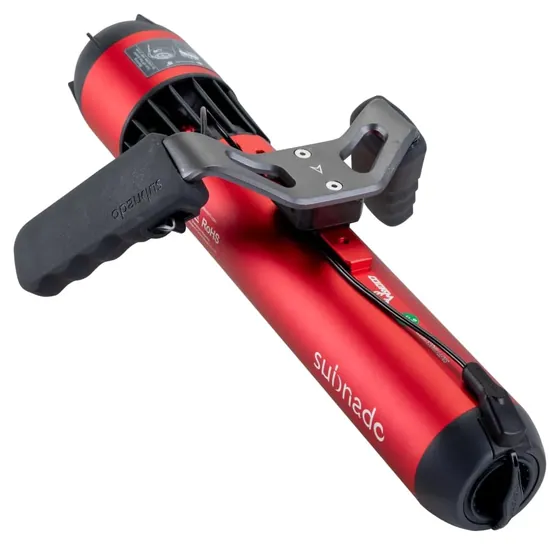
From the manual
- It sinks if you let go underwater, so keep the wrist strap on. pp. 5, 17
- Grease the cover over the USB-C port before use; a dry or badly seated cover lets water into the port. p. 9
- Charge time depends on your charger: about 1.2 hours at 100 watts, about 10 hours on a 10-watt charger. p. 9
- Below 37.5 percent charge it leaves Super gear, and below 25 percent it drops from high to low gear on its own. p. 6
Why the Waydoo Subnado is our top pick
The Subnado wins on travel and depth. Its 98-watt-hour battery sits under the 100-watt-hour line for carry-on bags,1,4 while our runner-up, the Sublue Mix Pro, carries a 122-watt-hour pack that its maker says needs airline approval.3 Our pick weighs about 3 pounds against nearly 8 for the runner-up with its float,1,3 and it's rated to about 200 feet, where the Mix Pro stops at 131.1,3
The tube is also simple to live with. A 100-watt USB-C charger fills it in about 1.2 hours, though a 10-watt charger takes about 10, and it can charge a phone in return.1 After 15 seconds of steady running, cruise mode lets you release the trigger and keep going.1 The same 98-watt-hour body comes in Lite and Standard versions, so either one you get flies the same way.2
The Mix Pro is still the better choice for a nervous swimmer. With its float fitted it rises to the surface if you let go, though the float is meant only for the top 16 feet, and its battery swaps out for a spare.3 The Subnado sinks when released, so use the wrist strap its manual recommends, and its battery is sealed inside.1
| Waydoo Subnado | Sublue Mix Pro | |
|---|---|---|
| Battery and flying | 98 Wh, carry-on | 122 Wh, needs airline OK |
| Weight | About 3 lb | About 7.8 lb with float |
| Depth rating | 197 ft | 131 ft |
| If you let go | Sinks | Floats, float fitted |
| Battery | Built in | Swappable |
Sources
- Waydoo Subnado 1User manual, Polish edition (PDF), pp. 3, 3, 5, 17, 7, 9, 7, 24 2Lineup and specs
- Sublue Mix Pro 3Product page and FAQ
- 4FAA PackSafe: lithium batteries
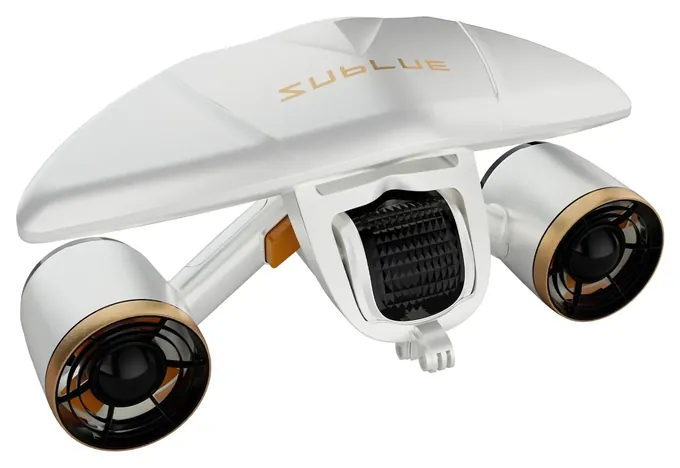
Compare the specs
Swipe the table sideways to see every column.
| Product | Battery (Wh) | Weight (lb) | Depth rating (ft) | Top speed (mph) | Best-case run time (min) | Battery swaps out |
|---|---|---|---|---|---|---|
| 1. Waydoo Subnado | 98 | 3.1 | 197 | 3.1 | 56 | No, built in |
| 2. Sublue Mix Pro | 122 | 7.8 with float | 131 | 4.0 | 60 | Yes |
| 3. LEFEET P1 Lite | 100 | 4.0 | 197 | 3.6 | 60 | No, built in |
| 4. Waydoo Subnado Plus | 144 | 4.0 | 197 | 3.8 | 60 | No, built in |
| 5. Sublue Navbow | 158 | 9.9 | 131 | 4.5 | 60 (Turbo: 8) | Yes |
| 6. LEFEET P1 XR | 160 | 7.1 | 197 | 5.1 | 40-90 | Yes |
| 7. Sublue Vapor | 385 | 19 | 131 | 6.2 | 60 (top gear: 18) | Yes |
| 8. LEFEET C1 | 97.2 | 6.6 | 98 | 3.6 | 30-60 | Yes |
| 9. Nautica Skipper | Lead-acid, 12 V 7.5 Ah | 11 | 15 | 2.0 | 90 (nonstop: 30) | Yes |
Makers' figures, converted from metric where they publish metric. Weights include the battery; the P1 Lite's is without its handle bracket. Run times are best case, usually stop-and-go or the slowest gear; the figure in parentheses is the maker's own number for full speed or continuous use.
Sources
- Waydoo Subnado user manual, Polish edition (PDF) Subnado lineup and specs
- Sublue MixPro product page and FAQ Navbow product page WhiteShark Navbow+ user manual (PDF) Vapor manual, FCC filing (PDF)
- LEFEET P1 Lite user manual (PDF) P1 Lite page, lineup spec table P1 / P1 XR user manual (PDF) P1 and P1 XR page C1 user manual (PDF) Seagull C1 page
- Nautica Marlin, Skipper and Navigator user manual (PDF)
- DIVEIN: Waydoo Subnado Plus review
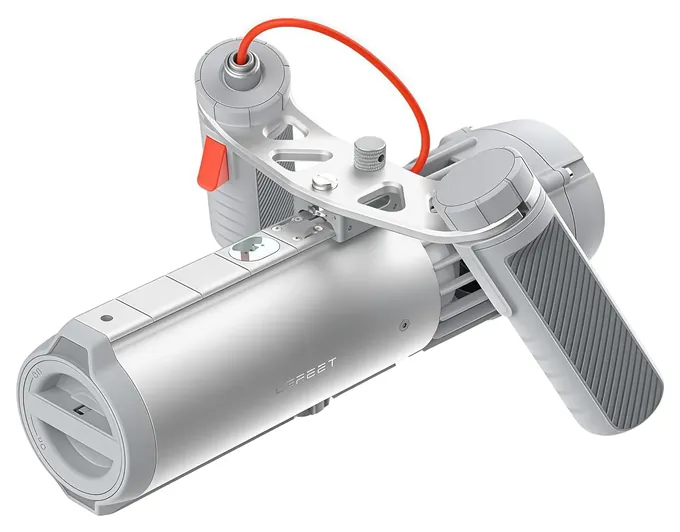
From the manual
- The box has a USB-C cable but no charger; use a 100-watt or stronger USB-C charger for full charging speed. pp. 2, 6
- The trigger works like a throttle, and a light on the controller blinks faster the harder you press. p. 8
- After each use, soak it in fresh water for about 30 minutes and run it slowly underwater for a minute, two or three times. p. 12
- Warranty is 12 months on the main unit but six months on the built-in battery. p. 10
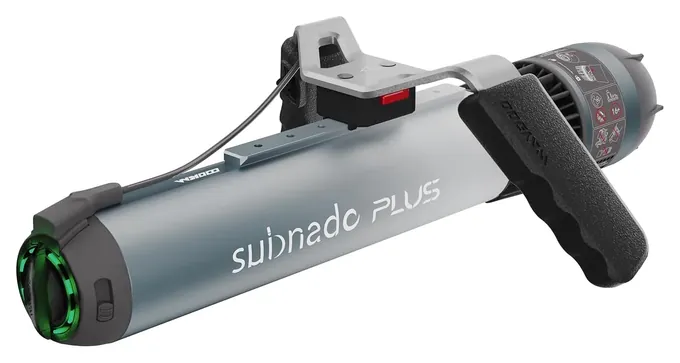
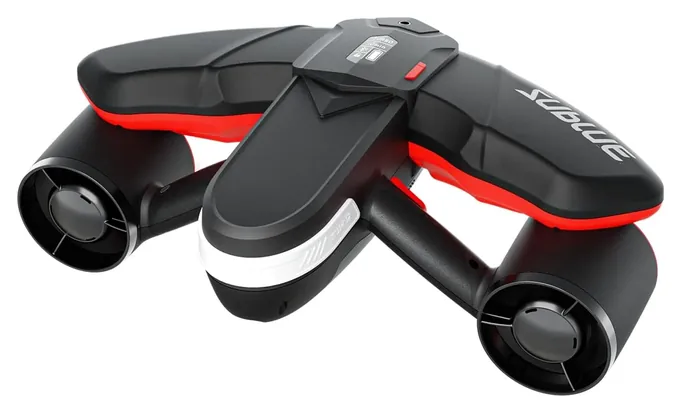
From the manual
- It floats up when released only in salt water with nothing heavy attached; a camera or light can make it sink. p. 84
- Turbo won't engage below half charge, and after about 8 minutes it steps down to Sport on its own. pp. 87, 98
- It switches itself off after 20 minutes without use. p. 87
- Store the battery outside the scooter at 30 to 60 percent and check it at least every six months. p. 90
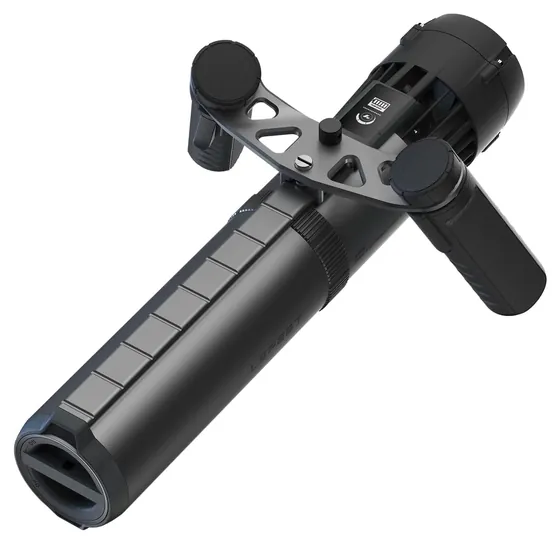
From the manual
- Below 20 percent charge, only the lowest speed works. p. 1
- Turn the battery's own switch off before fitting or removing it. p. 1
- With its switch on and the supplied adapter, the removable battery charges a phone or other device. p. 1
- Warranty is 12 months on the body and six on the battery; without a receipt it starts 90 days after production. p. 1
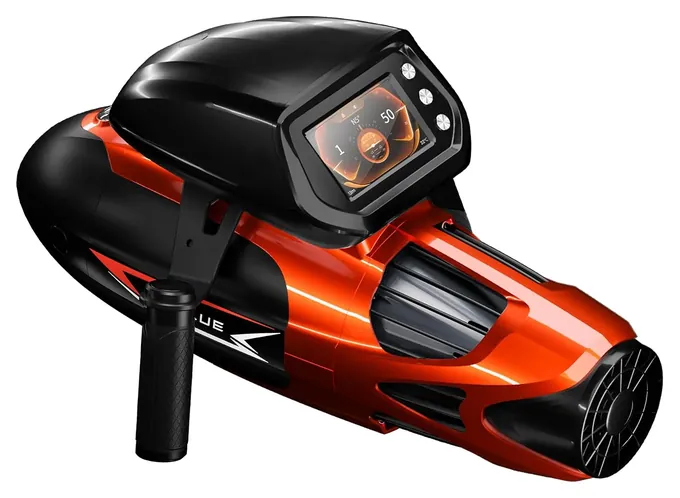
From the manual
- You can set a depth limit; at that depth the motor stops until you rise back above it. p. 7
- A separate limit on how fast your depth changes can also stop the motor, to guard against too-fast depth changes. p. 8
- Change the battery only on dry land, with dry hands and a dry scooter. p. 4
- Warranty is 24 months on the body; the motor gets 24 months or 200 hours of use, the battery and charger six months. p. 11
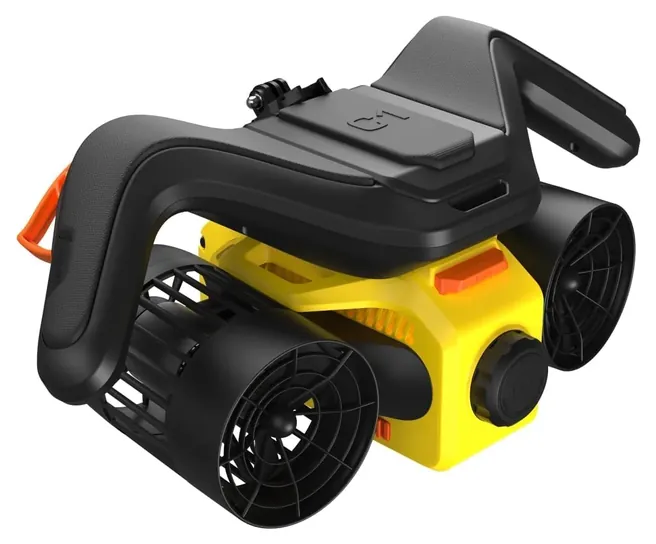
From the manual
- Both orange triggers must be held to run; letting go of either one stops it. p. 4
- Never put it in the water without the battery installed. p. 2
- On a low battery it drops to low speed and can't be switched back to high. p. 3
- Warranty is 12 months on the main unit and six months on the battery. p. 6
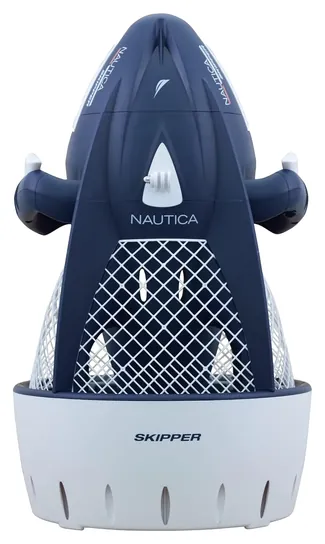
From the manual
- It's balanced for salt water; in a pool, lake or other fresh water it floats less and may sink. p. 3
- Pull both triggers to run, and set the safety lock to off whenever it's out of the water. p. 9
- Recharge the lead-acid battery within 24 hours of every use, and every three months in storage, outside the scooter. p. 10
- The six-month U.S. warranty counts only after online registration, and closeout or secondhand units aren't covered. p. 1
Nautica Skipper user manual, Seascooter Marlin, Skipper and Navigator (PDF)
Editor's Notes
November 4, 2026, by Ezvid Wiki Editors:
We read the user manuals for seven of the nine picks, added a spec table, a section on why the Waydoo Subnado leads, and notes from each manual under its pick. We corrected the P1 XR's run time and dropped the claim that it floats, removed unsourced run-time figures from the Mix Pro entry and an unsourced five-second battery swap from the C1, and added the Mix Pro and Navbow to the list of batteries that need airline approval.
October 16, 2026, by Ezvid Wiki Editors:
The Waydoo Subnado is the new No. 1 because it's light, its battery is small enough for carry-on bags, and it suits snorkelers and divers alike. The sea scooter market has turned over almost completely since the 2021 ranking. The Yamaha Seal, Yamaha Explorer, Yamaha RDS250, Yamaha 275L and Yamaha 500Li are no longer available, and the Hoverstar Underwater is unavailable. We couldn't confirm the Aquarobotman MagicJet is still made, and the Geneinno Trident now costs far more than lighter scooters with better owner feedback. The Sublue Whiteshark became Sublue's Mix line, and the Tusa SAV-7 moves to special honors as a professional tool.
The Sublue Mix Pro is the friendlier pick for surface swimmers because it floats, and the Sublue Vapor is the one for speed.
Plenty of readers ask about scooters for children. The Nautica Skipper is the only kids' model we'd point to, and it's for ages 8 and up, with an adult watching.
A word on evidence: we found few independent tests, and several maker sites wouldn't load for us. We relied on makers' thrust, speed and battery specs, the dive site DIVEIN's published pool tests, owner reports and a recall check, and we say in each entry where a fact comes from the maker alone.
Earlier notes
October 21, 2020, by Edmund Dawson:
Before purchasing the right sea scooter, you need to consider all manner of factors to ensure you get the right one for your needs. For example, if you're interested in a fun water toy to give your kids some excitement on your next holiday, you don't need a top-of-the-range powerhouse that goes to depths of 150 feet. You'd be better off with either the Yamaha Seal or the Yamaha Explorer, the former being more suited to pools. These models come with good safety features too, such as dual trigger controls and automatic shut-off, so they can't operate the vehicle without using both hands and should they try, it would stop working. They often have positive buoyancy too, so if they let go, it will float to the surface and not sink to the bottom.
Older kids and travelers may opt for models like the Hoverstar Underwater or the Geneinno Trident as their compact size and relatively light weight means they can be stored in backpacks and taken on airplanes along with your mask and fins. The former is better for snorkeling as it only has a depth range of up to 16 feet, while the latter is a good scuba choice as it will last the duration of most fun dives and even has a camera mount for documenting your trips underwater.
We included the sturdy Yamaha 275L, as it's a go-to choice for a dive schools. It can take a few knocks, and is designed for frequent use like everyday classes doing back-to-back dives. It's speed and depth are also suited to the kind of dives you're likely to go on while taking certification courses. The Yamaha 500Li has a lithium-ion battery so will let you go on longer dives to a similar depth, while the Yamaha RDS250 is probably the best all-rounder, balancing a leisurely top speed and 100 feet range with a more affordable price than the other two.
Finally, we included the Tusa SAV-7 for very experienced (and rich) divers who need the ability to ride hands-free, with the option of towing up to two other divers, and with a long battery life that will still function in very deep waters.
Safety is paramount when it comes to using these vehicles. If you're using them while scuba diving, it is best to attend a course first to learn exactly how to manage this kind of machine safely. You will ascend or descend far too quickly if you point them directly up or down, which can cause serious equalisation problems such as a broken eardrum at best, and decompression sickness (DCS) or even an arterial gas embolism (AGE) at worst. Never put weights on your sea scooter to balance your trim, for if you accidentally let your vehicle go, you will no longer have neutral buoyancy and may ascend too quickly. Always plan your trips carefully by applying the rule that one third of your battery should get you to where you want to go, one third will get you back, and the last third is for emergencies. Sea scooters with an LED display showing battery life are best for planning this way.
Special Honors
TUSA SAV-7 EVO TUSA's SAV-7, now in its EVO3 generation, is a professional scooter that a diver straddles and steers hands-free from a saddle, with fold-out wings that let a buddy tag along. TUSA lists a range of nearly 6 miles and a working depth of about 230 feet, which suits long training and exploration dives. tusa.com
Seabob German maker Cayago builds the Seabob, a luxury jet-powered water sled that pulls riders on the surface and underwater at speeds well beyond handheld scooters. It costs many times more than the scooters here and is sold through dealers, but it's the benchmark many buyers compare against. seabob.com
Pick The Type That Fits How You Swim
They pack small and suit divers and travelers, but they float only a little or not at all, so a wrist strap or tether matters.
Sea scooters, also called diver propulsion vehicles or DPVs, come in a few distinct shapes (Wikipedia). Slim handheld tubes, such as the Waydoo Subnado and LEFEET P1 Lite, weigh roughly 3 to 5 pounds, use one motor and are controlled with a thumb button or a remote. They pack small and suit divers and travelers, but they float only a little or not at all, so a wrist strap or tether matters.
Twin-motor scooters with two side-by-side thrusters, such as the Sublue Mix Pro and LEFEET C1, weigh about 6 to 10 pounds and are held with both hands. Some, like the Mix Pro with its float fitted, rise to the surface when released, which makes them friendly for snorkelers and beginners.
At the top end, pump-jet scooters like the Sublue Vapor push harder and carry screens, but they weigh close to 20 pounds. Professional hands-free scooters and luxury water sleds cost far more and sit outside this list.
Kids' seascooters, such as the Nautica Skipper, run at about 1 to 2 mph, are rated for shallow water and need both triggers held to run. Nautica's Guppy is sold for ages 5 and up and runs at 1.2 mph for about 30 minutes, but owner feedback on it is weak. A roundup from Snorkel Around the World gives a good sense of how the older Yamaha and Tusa models fit into these groups.
Speed, Run Time And Battery Size
Treat makers' figures as best-case. Most consumer scooters list top speeds of about 3 to 4.5 mph, and the fastest here reaches about 6 mph. When the dive site DIVEIN ran scooters in a pool, they generally came in somewhat under their claimed speeds, and some top gears only last a minute or so before stepping down. Thrust is quoted in kilograms or pounds of force, sometimes per motor and sometimes in total, so compare carefully.
Run time claims are usually for stop-and-go use or the slowest gear. At full speed, many scooters here run 8 to 20 minutes before the battery is flat. If you want long sessions, look for a swappable battery and budget for a spare.
Battery size also decides whether you can fly with a scooter. U.S. rules allow lithium-ion batteries up to 100 watt-hours in carry-on bags, while batteries from 101 to 160 watt-hours need the airline's approval, and anything larger is barred from passenger planes (FAA PackSafe; Wetpixel). Spare batteries must never go in checked bags. The Waydoo Subnado and LEFEET C1 are under 100 watt-hours, and the LEFEET P1 Lite is rated at exactly 100. The Sublue Mix Pro, Waydoo Subnado Plus, Sublue Navbow and LEFEET P1 XR need approval, and the Sublue Vapor stays home. Check your airline's rules before you book.
Safety, Training And Care
A scooter can move you up or down faster than you'd swim, so on scuba you have to manage depth and buoyancy while you drive it. Annie Crawley, who teaches DPV courses and wrote Scuba Diving magazine's 2022 guide to them, says a diving scooter needs to be neutrally buoyant at depth and clipped on with a quick-release you practice before the dive (Scuba Diving). If you dive with one, take a DPV course first; PADI's takes two dives and covers ascending or descending too fast (PADI). Watch your depth gauge and never go deeper than your training allows. Keep hair, straps and fishing line away from propellers, and let go to stop.
For children, choose a model made for their age, with a grille over the propeller and a trigger that stops the motor on release, and stay within reach. Adult scooters pull with roughly 14 to 46 pounds of force, too much for young kids.
Check recalls, especially on a used scooter. In March 2025, Sublue recalled about 40,000 black lithium-ion batteries sold for the Sublue Mix and WhiteShark Mix, which can overheat and catch fire; owners can get a free gray replacement (CPSC). Sublue says the Mix Pro takes the same battery as the Mix, so check the color of any spare that comes with a used one (Sublue). We found no recalls for the other brands here.
After salt water, rinse the scooter in fresh water, dry the contacts before charging and keep battery covers and O-rings clean. Buoyancy changes between salt and fresh water, so a scooter that floats in the sea may sink slowly in a lake.
How we researched this
We screened 27 current and discontinued sea scooters and compared makers' published specs for 10 finalists. We read the manuals for seven of the nine picks: Waydoo's Subnado manual (Polish edition), LEFEET's P1 Lite, P1/P1 XR and C1 manuals, Sublue's Vapor and Navbow+ manuals, and Sport Dimension's manual covering the Nautica Skipper; the Mix Pro and Subnado Plus have no manual online, so their figures come from Sublue's and Waydoo's spec pages. DIVEIN's pool tests, the FAA's lithium battery rules and PADI's DPV course outline mattered most beyond those. CPSC and Health Canada searches found one recall touching this list, the March 2025 recall of black batteries for the older Sublue Mix, and none for Waydoo, LEFEET, Nautica or the other Sublue models.
Sources (25)
- CPSC: Sublue recalls lithium-ion batteries sold for Sublue Mix scooters
- CPSC recalls
- FAA PackSafe: lithium batteries
- Wetpixel: FAA rules on lithium battery carriage
- DIVEIN: best underwater scooters
- DIVEIN: Waydoo Subnado review
- Snorkel Around the World: sea scooters for diving and snorkeling
- Scuba Diving: how to use diver propulsion vehicles
- Wikipedia: diver propulsion vehicle
- License Global: Nautica seascooters by Sport Dimension
- Watercraft Journal: Yamaha's underwater sea scooter
- PADI: Diver Propulsion Vehicle course
- Sublue: Mix battery recall
- Waydoo Subnado user manual, Polish edition (PDF)
- Waydoo: Subnado lineup and specs
- Sublue: MixPro product page and FAQ
- Sublue: Navbow product page
- Sublue WhiteShark Navbow+ user manual (PDF)
- Sublue Vapor instruction and safety manual, FCC filing (PDF)
- LEFEET P1 Lite user manual (PDF)
- LEFEET P1 / P1 XR user manual (PDF)
- LEFEET C1 user manual (PDF)
- Seascooter Marlin, Skipper and Navigator user manual (PDF)
- TUSA: SAV-7 EVO3
- Yamaha Seascooter RDS250 manual, French edition (PDF)
Frequently asked questions
What is the best sea scooter for kids ages 5 to 12?
For ages 8 and up, a model built for kids, such as the Nautica Skipper, with a grille over the propeller, dual triggers that stop it on release and a top speed of about 2 mph. For younger children, Nautica's Guppy is sold for ages 5 and up, but owner feedback is weak. Always supervise closely.
What is the fastest sea scooter?
Among consumer scooters, the Sublue Vapor lists the highest top speed here, about 6.2 mph. Luxury water sleds such as the Seabob go faster but cost many times more.
Can I take a sea scooter on a plane?
It depends on the battery. Under 100 watt-hours is generally allowed in carry-on bags, 101 to 160 watt-hours needs airline approval, and larger batteries can't fly on passenger planes. Spare batteries never go in checked bags.
What happened to Yamaha sea scooters?
Yamaha-branded seascooters, including the RDS250, Explorer and 500Li, are no longer sold new by the retailers we checked. Sport Dimension, which built Yamaha's seascooters under license, now makes Nautica-branded ones such as the Skipper.
How long does a sea scooter battery last?
Makers quote about 45 to 90 minutes, but that usually assumes stop-and-go use or the slowest speed. Running continuously at top speed, many scooters last 8 to 20 minutes.
Do I need training to use a sea scooter?
Not for snorkeling at the surface, though basic swimming skills matter. For scuba, a DPV specialty course is a good idea, because a scooter can change your depth quickly.