The 8 Best Rack Mount Amplifiers
Updated by · How we research

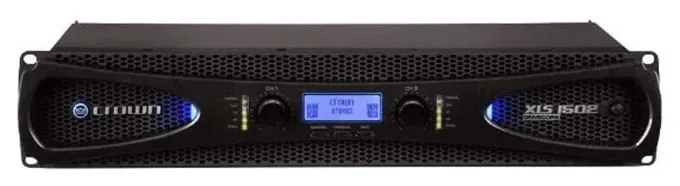
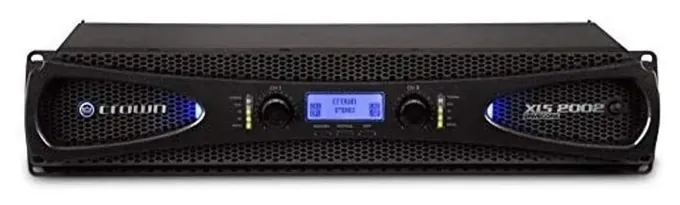
Rated watts per channel at 4 ohms, not the big number on the box, is how we compared eight Class D and Class AB rack mount amps. The Crown XLS 1502 leads. When users buy our independently chosen editorial picks, we may earn commissions to help fund the Wiki.
A Class D amp can deliver more than 500 watts per channel at under 9 pounds, while a 750-watt-per-channel Class AB amp can weigh nearly 30. A rack mount amplifier bolts into a standard 19-inch equipment rack and drives passive speakers from a mixer or processor's line-level signal. It serves PA rigs, clubs, churches, studios and home theaters.


Editor's Notes
October 18, 2026, by Ezvid Wiki Admin:
Every amp here is compared by its rated watts per channel at 4 ohms, not the big peak numbers on the box, and that rule reshaped the list. The 2019 version had mostly gone stale. The QSC PLD4.5, the Behringer iNuke NU12000 and the QSC ISA 500Ti are no longer available, and the Crown XTI6002 1200 Watt now costs several times what most buyers spend. We also cut amps whose ratings rest on peak watts, like the Musysic SYS-2000 2-Channel and the Pyle PT8050CH, and the Crown XLS1002, since the Crown XLS 1502 costs a little more for a lot more power in the same chassis.
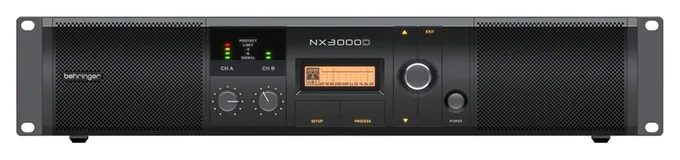
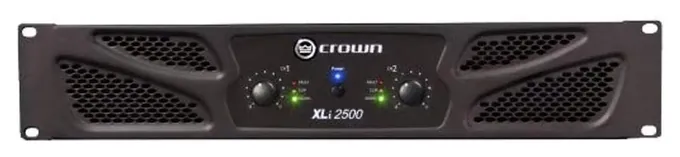
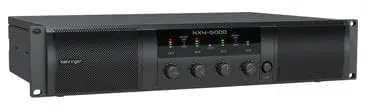
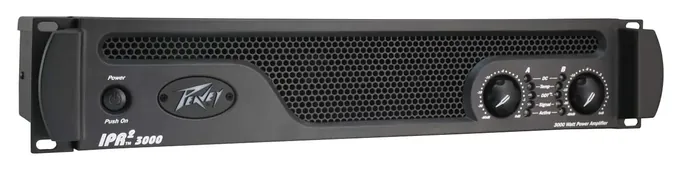
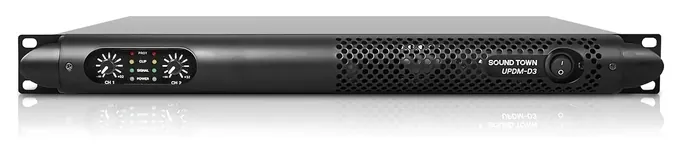
The Peavey IPR2 3000 stays. New picks cover what readers search for: light Class D amps with processing, like the Behringer NX3000D, a no-menu linear amp in the Crown XLi 2500, a fanless studio amp, a four-channel model and a 1U amp for tight racks.
One correction to an older note here: the rack standard is 19 inches wide, not 18. We found no outside lab tests of these amps, so the ratings come from makers' spec sheets, some only as reproduced by dealers, with owner reports on fan noise and delivered power, plus recall databases, filling in the rest.
December 04, 2020:
The 18-inch rack standard has been in use for decades, and is still the preferred means of transporting, storing, and displaying equipment for pro-audio specialists and sound engineers the world over. Not only does rack mounting keep gear safe from knocks and falls, but it also allows easy connectivity of several outboard units, while providing quick access to the front and back panels. In this ranking, we have included a comprehensive mix of models that are suitable for a wide variety of applications, from home theater setups, to live audio use, to DJ performance, to powering studio monitors.
For example, those looking for a versatile solution for use in homes and small venues might consider the Pyle PT8050CH. With eight individual channels, each with an output of 500 watts, this unit will provide enough headroom for the most ambitious private event or screening at a highly competitive price.
On the other hand, those looking to power a professional in-house PA system or large event might consider the Seismic Audio Magnitude 3600, EMB Professional EB6500PRO, QSC PLD4.5 Multi-Channel System, Crown XTI6002 1200 Watt, or the incredibly powerful Behringer iNuke NU12000. All of these feature balanced XLR and TRS connectivity, and enough potential to get the job done without experiencing distortion at high SPLs.
If you are a gigging musician or DJ, then the Musysic SYS-2000 2-Channel, Crown XLS1002, and the Peavey IPR2 3000 Watt are all highly recommended models. Although they are pretty basic when it comes to features, all are robust enough to handle the technical demands and knocks associated with touring. Use one of these in conjunction with a rack mount DSP reverb unit and limiter, and this could be all you need to power the backline in a small to medium-sized venue.
February 28, 2019:
The QSC PLD 4.5 climbed up a few spots toward the top of our list mainly due to its forward-thinking inclusion of a screen that's capable of displaying a litany of useful information. Further down the list, both the Behringer iNuke and the other QSC model were upgraded with more powerful options than we'd previously included, each of which is just as feature-rich — if not more so — than our old selection.
Special Honors
Jan-Al Custom Rack Cases If you are daisy-chaining several amplifiers in series or using additional outboard rack gear in your live performance, studio, or home theater setup, then a tailor-made custom rack case will protect your system, assist with portability, and can be made to perfectly accommodate your equipment without excess bulk. This Los Angeles-based firm makes rack cases with 18- to 22-inch rail-to-rail widths and with any depth you require, with and without lids and casters, and with all hardware included. janalcase.com
QSC Power Amplifiers QSC, a California pro-audio maker, sells its touring and installed amplifiers, including the four-channel PLD line that used to appear on this list, through pro-audio dealers and installers. It's worth a look for venues that want network control or a match with QSC speakers. qsc.com
Fryette Amplification Readers looking for a rack power amp for guitar want something different from a PA amp. Fryette, a California amp builder, makes tube power amps for guitar rigs, including rack-mount models that pair with preamps and modelers. They're sold through music dealers and the maker. fryette.com
Rated Watts, Ohms And Headroom
Check each cabinet's impedance and continuous power rating, then pick an amp that delivers somewhat more than that at the same impedance.
Ignore the biggest number on the box. Useful ratings give watts per channel at a stated load, such as 525 watts into 4 ohms, measured as continuous (RMS) power. Peak, bridged and 2-ohm figures run much higher and can't be compared with a 4-ohm rating. The audio power amplifier article explains the classes and how output is specified.
Match the amp to your speakers. Check each cabinet's impedance and continuous power rating, then pick an amp that delivers somewhat more than that at the same impedance. Two 8-ohm speakers wired in parallel on one channel present 4 ohms, and four make 2 ohms, which many amps can't handle. A guide from Mars RF makes the same point about impedance matching.
Headroom matters more than raw volume. An underpowered amp pushed into clipping sends harsh, squared-off peaks to the speakers, and that's what usually kills tweeters. Doubling an amp's power only adds about 3 decibels, so the jump from 500 to 1,000 watts is noticeable but not dramatic.
Class D Or Class AB, And Do You Need DSP
Most new PA amps are Class D. They switch their output transistors on and off at high speed, which wastes little energy as heat, so a 500-watt-per-channel amp can weigh under 10 pounds. Class AB amps are linear designs with big transformers and heat sinks. They're heavier, often 25 to 30 pounds, but simple and well understood. The Crown XLS DriveCore 2 datasheet shows how much processing now fits in a light Class D amp.
DSP means a built-in speaker processor: crossovers to split highs and lows between tops and subs, EQ, delay and limiters. If you run a subwoofer, it saves buying a separate crossover. If you already own a processor or a digital mixer with matrix outputs, a plain amp with level knobs is enough.
Guitarists searching for a rack power amp usually want tube or guitar-voiced amps, which this list doesn't cover. Owners on the Fractal Audio forum discuss those trade-offs. Ceiling speakers in stores and offices often run on 70-volt or 100-volt lines, which need a constant-voltage amp or transformers, not a standard 4- or 8-ohm amp.
Fitting It In A Rack: Size, Airflow And Power
Rack gear is 19 inches wide, and height comes in rack units of 1.75 inches, called U. Most amps here take 2U, and a 1U amp saves space in a small case. The 19-inch rack standard sets the width and hole spacing, but not depth, so measure your rack or case before buying. Amps on this list range from 7.7 to 12.4 inches deep, and shallow road cases can be tight.
Heavy amps need support at the back as well as the front ears, especially in a case that gets moved. Keep fan intakes and exhausts clear, and leave a blank or vented panel between hot amps when you can. A fanless amp needs open air around it.
Power amps draw large bursts of current at high volume. Give them a dedicated circuit where possible rather than a chain of power strips, and never defeat the safety ground. Turn amps on last and off first, after the mixer, to avoid loud thumps through the speakers.
How we researched this
We compared 18 rack mount amplifiers, read maker datasheets or dealer spec sheets for the eight picks where they were published, analyzed owner feedback patterns, and checked every brand against the CPSC recall database. The 3D models are built from published dimensions. Updated October 18, 2026 by Ezvid Wiki Admin.
Frequently asked questions
What is a rack mount amplifier?
It's a power amplifier in a 19-inch-wide metal chassis with ears that screw into an equipment rack. It takes a line-level signal from a mixer, preamp or processor and drives passive speakers. It has no speakers of its own.
How many watts do I need?
Check your speakers' impedance and continuous power rating, then choose an amp that delivers somewhat more than that per channel at the same impedance. Compare RMS watts per channel at 4 or 8 ohms, not peak or bridged totals.
Is a 2,000-watt amp twice as loud as a 1,000-watt amp?
No. Doubling power adds about 3 decibels, a modest step. Sounding twice as loud takes roughly 10 times the power, which is why speaker efficiency matters as much as amp size.
Can I use a rack amplifier for home theater or stereo?
Yes, if its impedance rating matches your speakers. Fan noise is the usual problem at home, so a fanless or quiet model suits a living room better than a PA amp built for clubs.
What is the difference between a power amp and a receiver?
A receiver combines input switching, volume control, often a tuner and surround decoding with built-in amplification. A power amp only amplifies, so it needs a mixer, preamp or processor in front of it.