The 8 Best Price Computing Scales
Updated by · How we research

Eight legal-for-trade price computing scales for markets and delis, compared on approval, capacity and battery life. The Torrey LPC-40L is our pick. When users buy our independently chosen editorial selections, we may earn commissions to help fund the Wiki.
Charging customers by the pound takes a scale approved for trade, one that a state or county inspector can check and seal, and many cheap counter scales sold online are marked not for trade. This list is for farmers' market sellers, delis, butcher counters, candy shops and bakeries. Every pick below is sold as legal for trade in the U.S.


Editor's Notes
October 26, 2026, by Ezvid Wiki Admin:
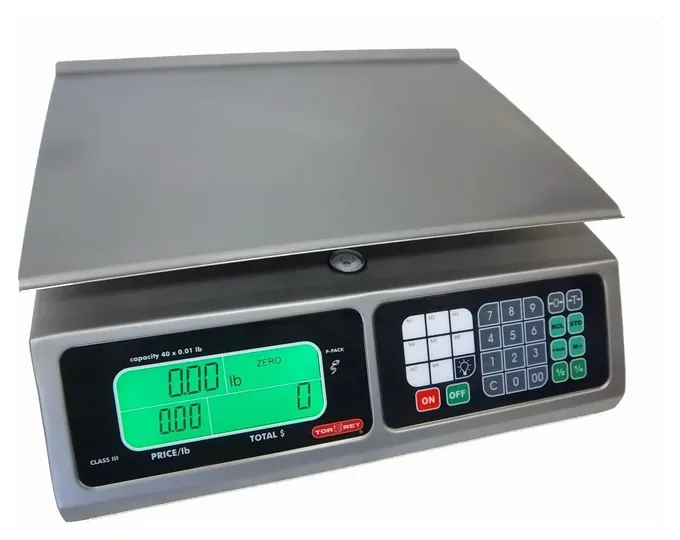
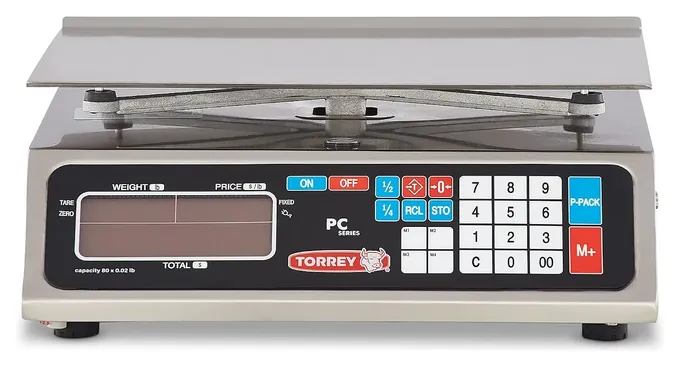
The Torrey LPC-40L now leads this list. It's a plain, trade-approved counter scale with a battery that outlasts a long market weekend, and its design has sold steadily for years. Every pick is sold as legal for trade, because a scale that isn't can fail a weights-and-measures inspection the first time you charge by the pound.
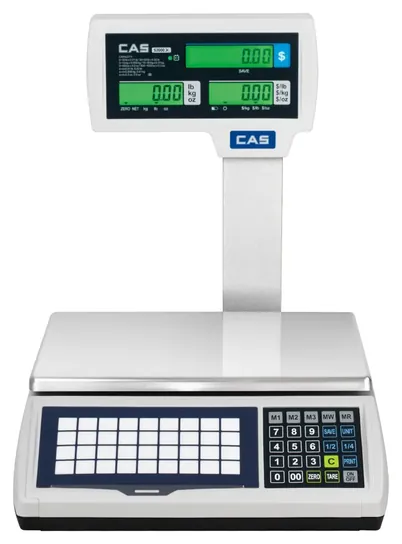
Three scales stay: the Torrey PC, now sold as the Torrey PC-80L, the CAS S2000 Jr, now with a pole display, and the battery-powered Aclas PS1B. We dropped the Giantex EP24065, a floor scale without trade approval, the VisionTechShop portion scale, which isn't built for pricing, and the CAS LP1000, Camry and Easigo models, which are no longer offered.
For this one, we gathered the approval certificate numbers makers and sellers publish, read Brecknell's spec sheet and the weights-and-measures rules for selling by weight, and compared dealer prices to see why approved scales sell for so much less online.
January 20, 2021:
Used primarily for food, these scales not only weigh the items, but can calculate the price, too. Depending on the products they will be used for there are several features that will determine the best choice for you: For wet items such as fish, meat, or seafood, a waterproof model, such as the Camry Waterproof, the VisionTechShop Dual Display, or the Torrey PC, is a good choice as it can be thoroughly washed down after use. For fruit and vegetables or other dry foods, a decent-sized platter adds convenience, while some like the CAS LP1000 and the Aclas No Plug have memory functions, allowing more than one customer to be served at once.
Larger options are ideal for weighing in bulk or for boxed items. The Giantex EP24065 is a floor standing option with a 660-pound capacity and a rechargeable battery that lasts for 72 hours. The Easigo Electronic also has a battery that can maintain power for 20 hours of continual service, which should get you through local power outages, whereas the Aclas No Plug has a power-saving design that is claimed can function for two years on a single set of batteries.
November 05, 2018:
Choosing the best price computing scales, we prioritized accuracy over everything else, since if it isn't accurate then the other features don't really matter. After that, we tried to include a range of different styles and prices to fit a variety of needs. We also included both NTEP-certified and non-certified models since we realize users have very different needs from these items.
Special Honors
Prime USA US-PC60 The Pricer Prime USA sells this 60-pound price computing scale from its own site rather than through big marketplaces. It's approved for trade, with a stainless platter and room for a large number of stored prices, which suits shops with long product lists. primeusascales.com
Legal For Trade: What It Means And How To Check
In the U.S., any scale used to charge by weight has to be approved for that job.
In the U.S., any scale used to charge by weight has to be approved for that job. The approval comes from the National Type Evaluation Program, run by the National Conference on Weights and Measures, which checks a scale design against the rules in NIST Handbook 44. An approved model gets a Certificate of Conformance, and its number usually sits on the scale's label. Counter scales for shops and markets are Class III.
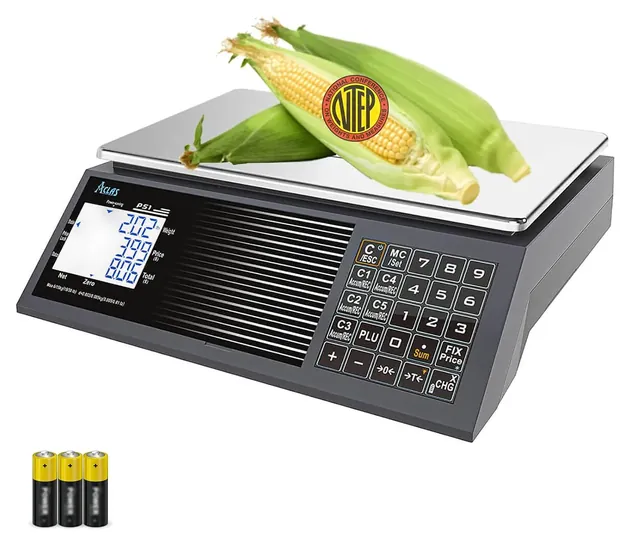
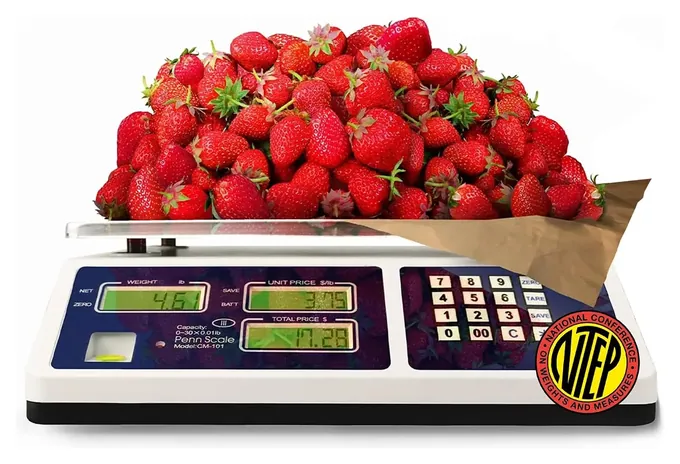
Before you buy, find that number and look it up in the certificate database on the NCWM site. The Aclas PS1B (19-141A2), Penn Scale CM-101 (04-101A1) and VisionTechShop TVP-30P (19-038) have theirs published. Torrey and CAS describe their scales as approved without printing the number, so check the label when the scale arrives.
Approval is only the first step. Your state or county weights-and-measures office inspects and seals scales in use, and some places also want the scale registered. Rules vary, so call that office before your first market. Many cheap scales with a price button say "not for trade" in small print; they're fine for pricing at home but not for charging customers. In Canada, the matching approval comes from Measurement Canada.
Capacity And Steps: 30 Pounds, 60 Pounds Or Both
An approved Class III scale can show a set number of steps, often 3,000. On a 30-pound scale that works out to 0.01-pound steps, which suits produce, candy and deli meats sold in small amounts. A 60-pound scale usually reads in 0.02-pound steps, better for bulk meat, potatoes or flats of fruit.
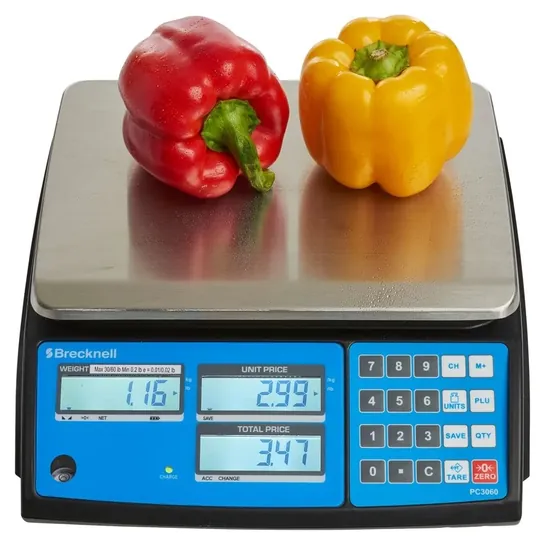
A dual-range scale gives you both. The Brecknell PC3060 reads in 0.01-pound steps up to 30 pounds and 0.02-pound steps up to 60, with a stainless platter of about 8 by 10 inches. Prime USA's US-PC60 is a single-range 60 by 0.02-pound model with an 11 by 8-inch platter.
Check the platter as well as the capacity. A small platter can hold the weight but not a wide tray of pastries. If you weigh animals rather than goods, see our guides to pet scales and livestock scales.
Power, Displays And Price Keys
Outdoor sellers need a battery. Most price computing scales use a sealed rechargeable pack: Brecknell rates the PC3060 for up to 40 hours, and CAS rates the S2000 Jr for up to 200. The Aclas PS1B takes AA cells instead, so there's nothing to charge. Bring the adapter anyway for long days at a counter.
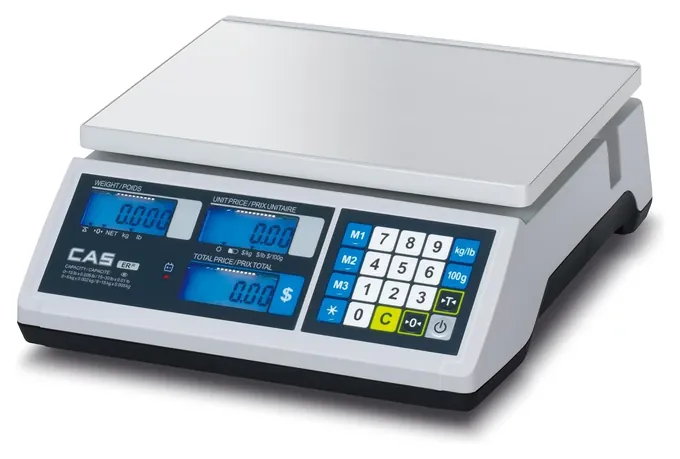
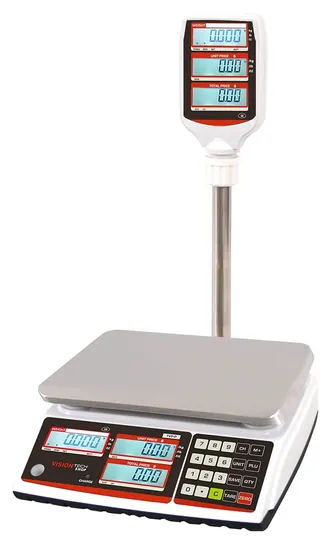
The customer has to see the price. Base models put a second screen on the back of the scale; pole models raise it to eye level, which helps at a high deli counter. Look for backlit screens if you sell under a tent or after dark.
Price keys, also called PLUs, store the unit price of your regular items so you don't retype it for every sale. Direct keys take one press; indirect ones need a short code. If you need printed labels, that's a different class of scale: label-printing models from CAS and others run well over a thousand dollars at dealers such as Scales Plus, while CAS lists its counter models in its price computing range.
How we researched this
We compared 22 price computing scales, read Brecknell's published spec sheet and the National Conference on Weights and Measures' guidance on trade approval, collected the approval certificate numbers that makers and sellers publish, compared dealer prices, and checked every brand against U.S. Consumer Product Safety Commission recall records. We found no independent lab tests of these scales, and no recalls.
Frequently asked questions
Does a farmers' market scale have to be legal for trade?
In the U.S., yes, if you charge by weight. The scale needs an NTEP certificate, Class III for most counter scales, and your local weights-and-measures office may inspect, seal or register it. Ask that office what it requires.
How do I find my scale's NTEP certificate number?
Look on the scale's data label or in its manual for a Certificate of Conformance number, then search it in the certificate database on the NCWM website.
Can I use a kitchen scale with a price button to sell by weight?
No. Those scales aren't approved for trade, and many say so in small print. Use them for home pricing only.
What capacity do I need?
A 30-pound scale with 0.01-pound steps suits produce, candy and deli items. Pick 60 pounds or a dual-range scale for meat, bulk goods and full flats of fruit.
How long do the batteries last?
Rechargeable models are rated from about 40 to 200 hours a charge. AA-powered scales such as the Aclas PS1B skip charging but need fresh cells now and then.
How much does a legal-for-trade scale cost?
Approved counter scales on this list run from about 150 to 450 dollars. Scales that print labels cost well over a thousand.