The 10 Best Organic Chemistry Textbooks
Updated by · How we research

Ten organic chemistry textbooks and study guides compared by depth, clarity, edition and cost; Clayden Organic Chemistry is best overall, and OpenStax is free. When users buy our independently chosen editorial choices, we may earn commissions to help fund the Wiki.
Most organic chemistry courses run two semesters, and the instructor usually picks the textbook, often along with an online homework system, so check the syllabus and the edition before buying anything. This list is for students choosing a main text or a study aid, and for self-learners free to pick, including one book that costs nothing to read online.
At a Glance
-
1
 Clayden Organic Chemistry
$86
-
2
 Klein Organic Chemistry
$151
-
3
 Organic Chemistry as a Second Language
$72
-
4
 OpenStax Organic Chemistry
$70
-
5
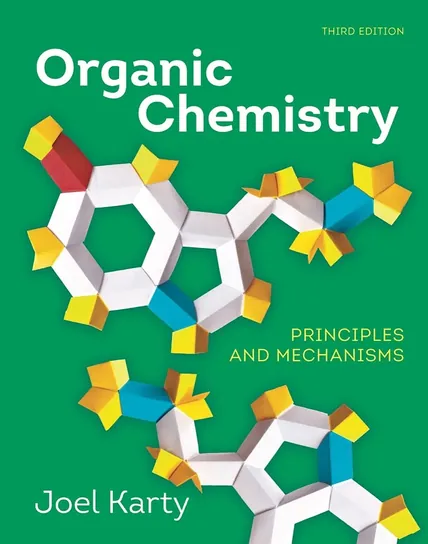
 Karty Organic Chemistry
$144
-
6
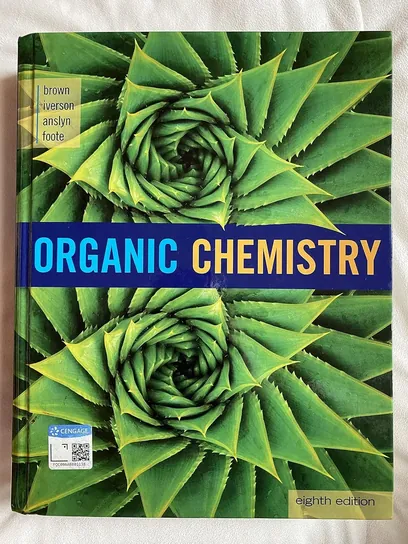
 Brown and Iverson Organic Chemistry
$43
-
7
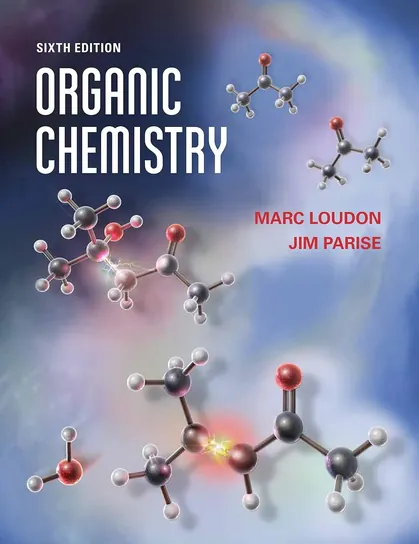
 Loudon Organic Chemistry
$65
-
8
 Organic Chemistry I For Dummies
$11
-
9
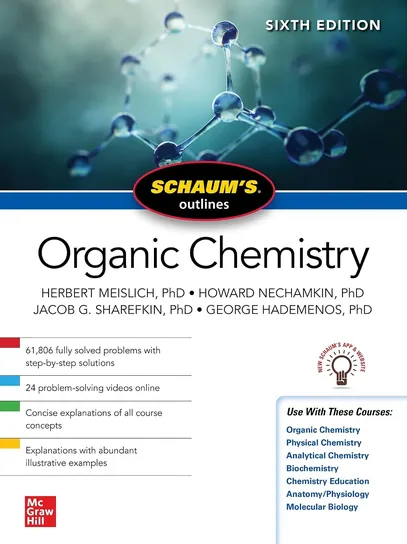
 Schaum's Outline of Organic Chemistry
$23
-
10
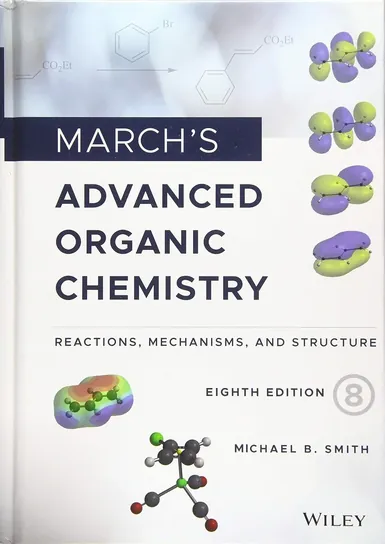
 March's Advanced Organic Chemistry
$98
Editor's Notes
November 1, 2026, by Ezvid Wiki Editors:
Clayden Organic Chemistry now leads the list. It's the book chemists most often name when someone asks which text really explains the subject, and the paperback costs less than most course texts. For a first course, Klein Organic Chemistry is the friendlier start, and OpenStax Organic Chemistry is free to read online.
We chose the ten from each book's edition, publisher and format details, faculty reviews of the open McMurry text, years of student discussion about which books helped, and what each one includes, such as worked solutions or an online homework tie-in. Where an author's book is still going, we moved to the current edition: Klein to its fifth and Clayden to its second.
The Wade text is gone because the copy on offer is a bundle with a single-use online access card, and Bruice went for the same reason plus its age. Modern Physical Organic Chemistry, Advanced Organic Chemistry: Part B and Introduction to Strategies for Organic Synthesis are graduate texts, and March's Advanced Organic Chemistry now covers that shelf on its own. General, Organic, & Biological Chemistry belongs to a different course.
Earlier notes
November 11, 2020, by Gia Vescovi-Chiordi:
It is an understatement to say that there is a lot to learn when it comes to organic chemistry, which is why we made it a priority to maintain the balance this list had between fundamental texts meant to give beginners a grounding and tomes aimed at students at the higher level. We decided to remove Arrow-Pushing in Organic Chemistry during this update, although it's still helpful for those who appreciate its unconventional approach.
We felt that its place would be better served with Organic Chemistry, 8th Edition, an option meant for mixed-major students looking at biochemistry and medicine in addition to organic chemistry. This one looks for unifying concepts and principles that are applicable in a range of contexts to get readers into a problem-solving mindset that can help them reason through myriad situations. Outside of bringing this new text on, you'll also find that Organic Chemistry as a Second Language is now in its newest fifth edition. The author, David Klein, is also responsible for Organic Chemistry, 2nd Edition, and both of these volumes stand out for beginners thanks to Klein's knack for separating crucial information from filler and using straightforward and accessible writing.
As far as advanced texts go, Introduction to Strategies for Organic Synthesis caters to a very specific stage in a student's schooling when they make the leap from sophomore to senior material. It works to bridge the gap between organic chemistry fundamentals and advanced synthesis problems by way of lots of review and a gentle introduction to more rigorous coursework.
March 15, 2019, by Gia Vescovi-Chiordi:
We included a wide array of books on this list so that users could have choices that represent the full spectrum of the field. For example, titles like Organic Chemistry, 9th Edition, Organic Chemistry, 2nd Edition, and Oxford Organic Chemistry are ideal for those who need a comprehensive debriefing, while Advanced Organic Chemistry: Part B is for the graduate student. We also thought it would be handy to have tomes that catered to beginners, such as Organic Chemistry I For Dummies, in addition to volumes tailored to long-term pupils, like Introduction to Strategies for Organic Synthesis, which serves as a stepping stone to higher-level courses, and Organic Chemistry as a Second Language, which is pared down to help supplement other textbooks and classes. For good measure, we added the wide-ranging General, Organic, & Biological Chemistry and Arrow-Pushing in Organic Chemistry for learners who want to take an unorthodox approach.
Special Honors
Khan Academy Organic Chemistry Khan Academy, a nonprofit, runs a free organic chemistry course of short video lessons and practice questions, from bonding and naming through reactions and spectroscopy. It works well as a second explanation when a chapter doesn't click. khanacademy.org
Master Organic Chemistry Chemist James Ashenhurst's site has hundreds of plain-language explainers on reactions and mechanisms, chapter quizzes, and paid summary sheets and a reaction guide for exam review. masterorganicchemistry.com
Start With The Syllabus, Then The Edition
A used or older copy can teach you the same chemistry, but it won't unlock that homework, so ask before you buy.
In most colleges, organic chemistry is a two-semester sequence, and the instructor picks the book. Many courses also assign graded homework on the publisher's website, and the access code for it is usually single-use. A used or older copy can teach you the same chemistry, but it won't unlock that homework, so ask before you buy.
New editions rarely change the core reactions. What moves is the problem numbering, the chapter order and the online tie-in. If your course only lists readings, an edition or two back is usually fine and much cheaper. If it lists numbered homework from the book, match the edition exactly.
Watch for international student editions. They're printed for sale outside the U.S., often in paperback, and have been cheaper; a 2013 Supreme Court ruling made it legal to resell them here (Wikipedia). The text is usually close to the U.S. version, but problem sets and page numbers can differ, which matters when homework is assigned by number.
Two Kinds Of Main Textbook
Main textbooks fall into two camps. Survey texts such as Klein, McMurry, Brown and Wade walk through one family of compounds at a time, with lots of short drills; they suit pre-med students and anyone meeting the subject for the first time. The other camp, led by Clayden, Greeves and Warren's book for Oxford University Press (Wikipedia), spends more time on why reactions go, which rewards a reader who already knows the basics.
Whichever you pick, the skill that carries the course is arrow pushing: drawing curved arrows to show where electrons move as bonds form and break (Wikipedia). Books that drill it early, and that group reactions by mechanism, make the second semester less about memorizing. Joel Karty's text for Norton (W. W. Norton) is built around that idea.
Most main texts include answers to only some problems. Full worked solutions come in a separate study guide or solutions manual, which can cost close to what the textbook does, so check what your book includes.
Free And Cheap Ways To Study
The cheapest full textbook is free: OpenStax publishes John McMurry's tenth edition online and as a PDF under a Creative Commons license (OpenStax). Faculty reviews on the Open Textbook Library praise its coverage and layout, and one reviewer found several mechanisms drawn with wrong or missing arrows, so compare tricky mechanisms with another source.
For drills, outline books such as Schaum's pack in solved problems for little money (Wikipedia). Free video courses and reaction explainers, listed below, fill gaps between lectures. Skip pirated PDFs: besides the copyright problem, they're often old editions with missing pages.
How we researched this
We compared 20 current organic chemistry textbooks, study guides and references, checked each book's edition, publisher, format and what it includes, read faculty reviews of the open McMurry text, and weighed years of student discussion about which books helped. Printed books carry no product recalls, so there were none to check. Updated November 1, 2026 by Ezvid Wiki Editors.
Sources (9)
Frequently asked questions
What is the best organic chemistry textbook?
For depth and clear reasoning, Clayden, Greeves and Warren's Organic Chemistry is the book chemists name most. For a first course, Klein's text is easier to follow. If your course assigns a book, use that one.
What is the best organic chemistry book for self-study?
Pair one readable main text, such as Klein or the free OpenStax McMurry, with a workbook that has full solutions, such as Organic Chemistry as a Second Language. Working problems, not rereading, is what builds the skill.
Is there a free organic chemistry textbook?
Yes. OpenStax publishes John McMurry's Organic Chemistry, tenth edition, free online and as a PDF under a Creative Commons license. A printed hardcover is sold separately for readers who want paper.
Do I need the current edition?
Only if homework is assigned by problem number or through the publisher's website. The chemistry changes little between editions, so an older copy works for reading and self-study.
Do I need the solutions manual?
Most main textbooks answer only some problems in the back. If you study alone, a solutions manual or a workbook with worked answers saves hours of guessing.