The 10 Best Nail Guns For Concrete
Updated by · How we research

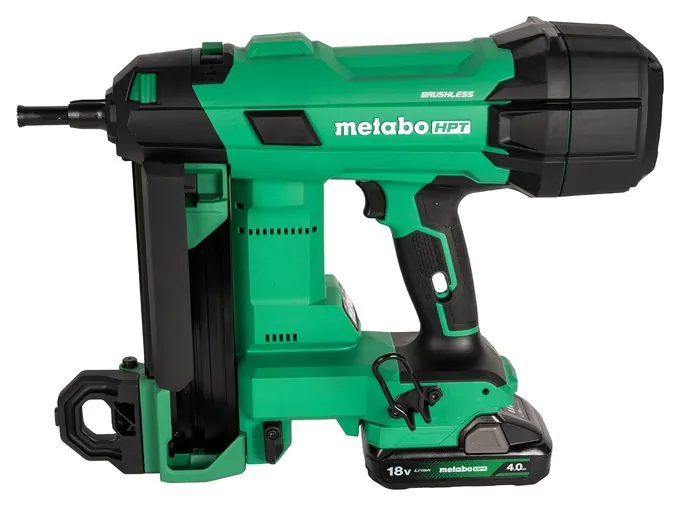
Battery nailers with air springs now fire concrete pins too. Ten cordless, gas, powder and air tools compared, with the Metabo HPT NC1840DA on top. When users buy our independently chosen editorial recommendations, we may earn commissions to help fund the Wiki.
OSHA requires workers to be trained on the specific powder-actuated tool they use, while gas and air nailers need no certification. All of these tools drive hardened pins or nails into concrete, block or steel to hold furring strips, sill plates, metal track and conduit straps. Contractors, remodelers and DIYers all rely on them.


Editor's Notes
October 17, 2026, by Ezvid Wiki Admin:
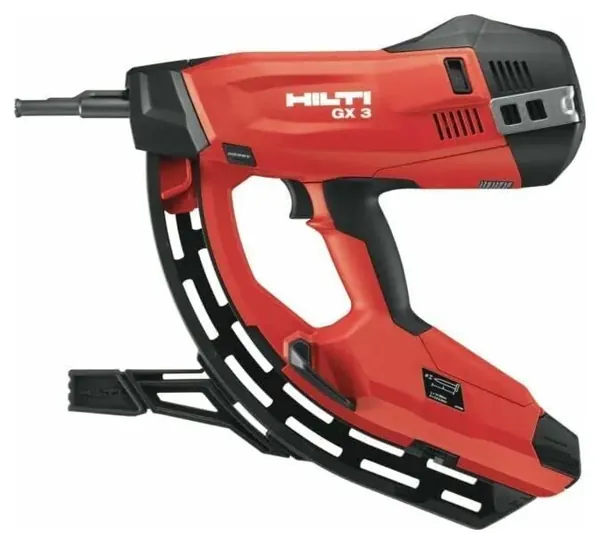
A battery nailer, the Metabo HPT NC1840DA, now tops this page, and only three of the 2020 tools remain in the ranking. The Senco SCP40XP, Bostitch MIII812CNCT and Apach LHT-64 are unavailable, we couldn't confirm the Freeman PCTN64 is still sold new, and the Freeman PCN65 is a siding nailer that never really belonged here. The DeWalt DCN890P2 had no price or stock when we checked, so it moves to special honors, and the Hilti GX 3 takes over from the older Hilti GX120.
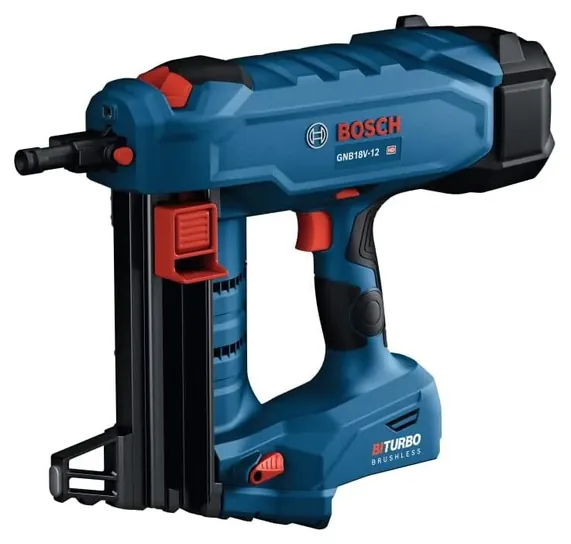
The big change is cordless. Battery nailers with air springs now fire concrete pins without gas or powder. The Metabo HPT NC1840DA arrived in 2026 with more rated energy than its battery rivals, and the Bosch GNB18V-12N joins as the pick for anyone who wants to shop around for pins.
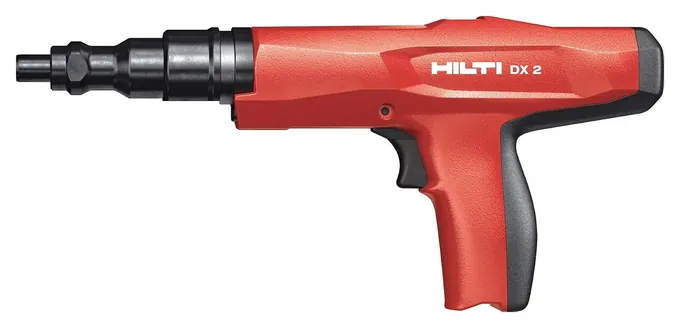
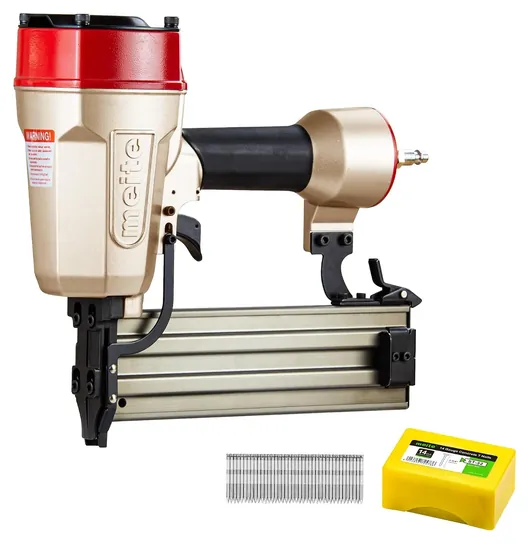
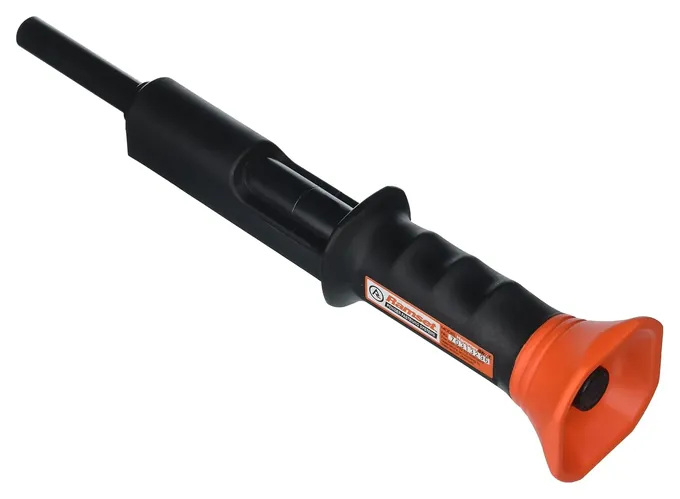
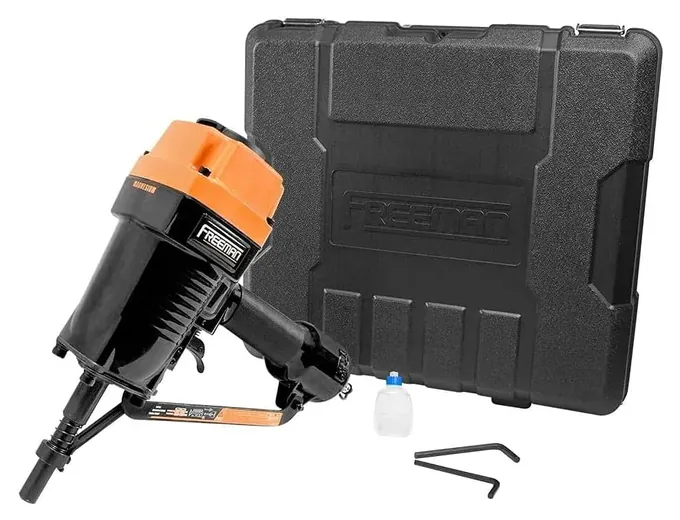
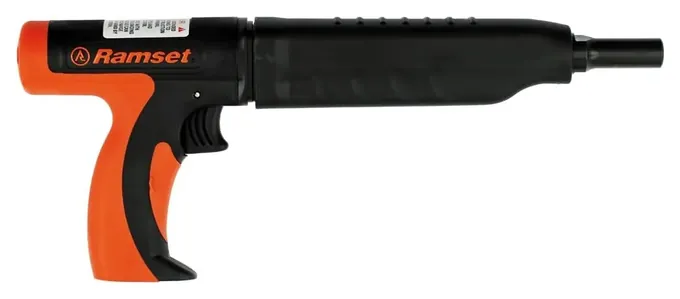
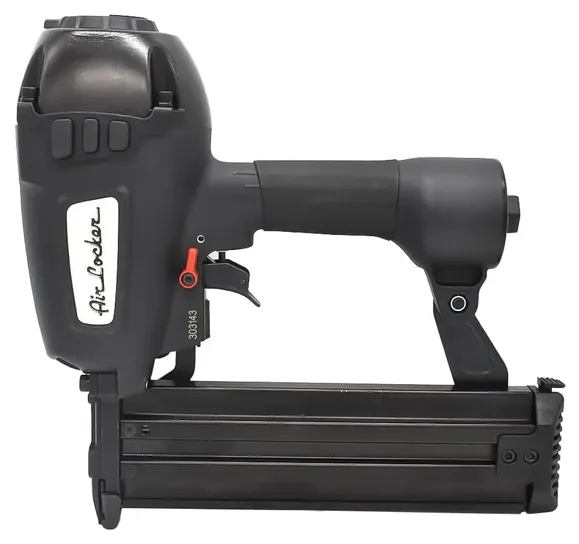
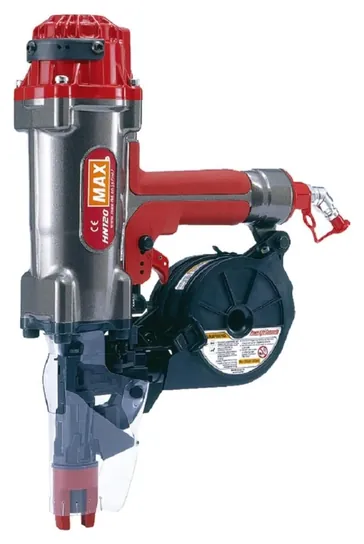
We also added real powder tools, because that's what many people mean by a concrete nail gun: the Hilti DX 2 for regular work, plus the Ramset HammerShot and ITW 40088 for a few pins at a time. The Freeman PSSCP, Air Locker CN64A3 and Max HN120 stay, and the meite ST64E is the new low-cost T-nailer.
One honest caveat: we found almost no independent tests of these tools. The ranking rests on makers' energy ratings and pin ranges, OSHA's training rules, owner feedback and recall checks, and each entry says where a fact comes from the seller alone.
December 07, 2020:
Without much evolution in the category since the last time we visited it, this was a relatively uneventful round of updates. The only option we ended up removing was the Hitachi NC40G, which has been discontinued.
My original suspicion was that this discontinuation was simply due to the company’s 2018 rebrand, which left a new line of virtually identical, like-model-numbered Metabo HPT tools available for former fans of Hitachi. However, this doesn’t seem to be the case. Not only was Metabo HPT not offering a replacement for the NC40G at the time of this update, but it also appears to be offering no replacement for the CM75EBP — another nail gun rated for concrete that Hitachi used to offer. A conversation with a representative from the company didn’t provide us with any insight as to why these tools have been discontinued, or if and when a replacement will be offered.
This is purely speculative, but I can’t imagine that it’s easy to engineer a tool up to this task, and I wonder if an inordinate amount of warranty claims on these units led the company to remove them from their lineup, if they felt the current design wasn’t living up to their brand’s standard of quality. Notably, the Makita GN01 – a cordless option that could fire fasteners as long as 1-9/16 inch – has also been discontinued without an apparent replacement.
If you need a nailer like this regularly at work, then there’s no doubt that they can save you hours, compared to most powder-actuated alternatives, but pneumatic models also require you to show up to the job site with an air compressor, an air hose and maybe even an air hose reel — which can be quite a pain. Of course, battery-powered models – like our new addition: the DeWalt DCN890P2 – provide an easy workaround for this, but if you’re looking at these tools simply to fire a few fasteners for a small home renovation, perhaps you’ll be interested in checking out our list of powder-actuated tools, which can be more affordable at the lower end (though just as expensive at the top of the category).
You’ll also want to be careful that the nailer in question is capable of accommodating the right length of fasteners for whatever job you’re hoping to take on. Some models in this category can only fire nails as long as an inch, while others – like the Freeman PSSCP – can handle hardware up to three inches long. We noticed that the Senco SCP40XP presented conflicting information, claiming to have a 1-1/2-inch magazine, yet purportedly only being able to accommodate 1-1/4-inch hardware. As the company didn’t get back to us with a comment in time for the publication of this update, we played it safe and went with 1-1/4 inches for the purpose of our description.
January 22, 2019:
We realize people have different needs when it comes to buying a concrete nailer. Contractors will require a much more powerful and durable model than a consumer doing a one-off job on their home for whom price will be a major factor in their buying decision. Because of this, we strived to include a variety of tools that are well-suited to each of these needs. We also made sure to include both gas- and air-powered options.
Special Honors
DeWalt DCN890 DeWalt's 20-volt cordless concrete nailer helped move crews from gas tools to batteries. DeWalt lists it for pins from 1/2 to 2-1/4 inches in concrete and steel, with single-shot and rapid modes, adjustable power, tool-free jam clearing and a driver blade that can be replaced on site. The kit comes with two 5.0Ah batteries and a charger. It's sold mainly through tool dealers, and some now list it as discontinued, so check stock first. dewalt.com
Hilti DX 5 For crews that set thousands of pins, Hilti's fully automatic powder tool feeds fasteners from a collated strip instead of one at a time, using .27 caliber cartridge strips. It's built for high-volume work such as decking and track, and its price puts it beyond most buyers. Hilti sells it with fastener and cartridge systems matched to each job. hilti.com
Four Ways To Drive A Pin Into Concrete
Cordless concrete nailers use a battery motor to compress an air spring, then release it to fire the pin.
An ordinary framing, finish or brad nailer can't fasten into concrete. The nails bend, and the tool can be damaged. Concrete takes hardened pins driven with much more energy, and four kinds of tools supply it.
Cordless concrete nailers use a battery motor to compress an air spring, then release it to fire the pin. There are no fuel cells, powder or hoses. They're heavy, at 9 to 12 pounds, and costly, and most take pins no longer than about 1-1/2 inches, though DeWalt lists its model for pins up to 2-1/4 inches (DeWalt).
Gas tools burn a small fuel can to fire collated nails. They're quieter than powder tools and kick less, and Simpson Strong-Tie notes that they need no operator certification, though gas delivers less energy than powder (Simpson Strong-Tie). The Hilti GX 3 is a typical example, sized for metal track and hangers.
Powder-actuated tools, often called by the brand name Ramset, fire a .22 or .27 caliber load that pushes a piston against the pin. They're the most powerful and the cheapest to buy: Hilti rates its compact DX 2 at up to 245 joules, more than twice a strong battery nailer. The trade-offs are noise, recoil and training rules.
Pneumatic tools run on compressed air. Cheap T-nailers fire 14-gauge T-nails for furring strips on block and newer concrete, single-pin air nailers fire the same washered pins as powder tools, and pro high-pressure pinners need a special compressor.
Match The Tool To The Concrete And The Job
Concrete varies more than buyers expect. Fresh, or green, concrete is soft enough for air tools, and Freeman says its pneumatic pin nailers work best in concrete poured within the last 25 days. Old, cured slabs, hard aggregate and rebar call for more energy, which means powder or a strong cordless tool. Hollow block can crack or let pins punch through, so aim for the solid webs.
Pick a pin long enough to hold but not so long that it breaks the slab. Simpson Strong-Tie uses an example of 3/4-inch embedment and says the concrete should be about three times as thick as the embedment (Simpson Strong-Tie). Add the thickness of the board or track you're fastening, and check the maker's tables for edge distances and load ratings. For powder tools, loads are color coded from brown, the weakest, up to purple. Start low on a test spot and step up.
Think about volume and running costs. A few sill-plate pins don't justify an expensive cordless nailer; a hammer-fired powder tool or concrete screws will do. Owners in a Fine Homebuilding thread note that powder pins go in faster and need no pilot hole, while screws such as Tapcons need a hammer drill and a clean hole but are easier to control (Fine Homebuilding). Green Building Advisor's rundown of concrete fasteners covers sleeve anchors and other options for heavier loads (Green Building Advisor). For daily use, check pin prices: open systems from Bosch and Metabo HPT take other brands' pins, while some tools need the maker's own.
Safety, Training And The Rules
Every tool here fires a hardened fastener with enough force to injure. Wear safety glasses, hearing protection and gloves, keep your free hand away from the nose, and never point a tool at anyone. Disconnect the battery or air line before clearing a jam.
Powder tools carry extra rules. Under OSHA's construction standard (OSHA 1926.302), only employees trained on the specific tool may use one. The tool must be tested each day before loading, loaded only just before firing and never left loaded and unattended. OSHA also bans firing into brittle or very hard materials such as cast iron, glazed tile, glass block and surface-hardened steel, into easily penetrated material without backing, and into spalled areas. Simpson Strong-Tie adds that powder tools often need operator certification, and that powder loads can be restricted on some sites, such as schools, airports and federal projects. Some states and employers set their own certification rules, so check before you buy one for work.
Gas, cordless and pneumatic tools need no operator certification, which is a big reason crews choose them for repetitive work. Treat them with the same care anyway. Stay away from slab edges and cracks, where concrete can break off and fly, and test fasteners on a scrap or out-of-sight area before you commit to a pattern.
How we researched this
We screened about 30 concrete nailers and powder, gas and air tools and looked closely at 21. We read makers' spec pages where they loaded (Metabo HPT, Hilti, DeWalt), current listings for the rest, OSHA's powder-actuated tool rules and Simpson Strong-Tie's guide to choosing between powder and gas, one trade-magazine review and a powder-tool roundup, owner discussions and patterns in owner feedback, and we checked every brand for recalls with the U.S. Consumer Product Safety Commission. We found no independent lab tests of current models.
Sources (12)
- Metabo HPT: NC1840DA concrete pin nailer
- Hilti: DX 2 powder-actuated tool
- Hilti: GX 3 gas-actuated tool
- DeWalt: DCN890P2 cordless concrete nailer kit
- Simpson Strong-Tie: PAF, GAF or pass? Selecting a power-actuated fastening solution
- OSHA 29 CFR 1926.302: power-operated hand tools
- ProBuilder: DeWalt DCN890 review
- Journal of Light Construction: semi-automatic powder-actuated tools
- Fine Homebuilding forum: Tapcons vs. Ramset
- Green Building Advisor: fasteners for concrete and brick
- Milwaukee Tool: M18 FUEL Duplex Nailer press release
- CPSC recalls (saferproducts.gov)
Frequently asked questions
Can a regular nail gun shoot into concrete?
No. Framing, finish and brad nailers can't drive nails into concrete; the nails bend and the tool can be damaged. Use a concrete nailer, a powder-actuated tool or a gas tool, with hardened concrete pins or T-nails made for it.
Do I need a license to use a powder-actuated tool?
OSHA requires workers to be trained on the specific tool before using it, and many employers, states and job sites require operator certification. Powder loads are also restricted on some sites. Gas, cordless and pneumatic tools need no certification.
What concrete nail gun doesn't need a compressor?
Cordless battery nailers, gas tools and powder-actuated tools all work without a compressor. Battery tools need no fuel, gas tools use fuel cans, and powder tools use .22 or .27 caliber loads.
How long should a concrete pin be?
Long enough to embed in the concrete after passing through the material you're fastening. Simpson Strong-Tie uses 3/4 inch of embedment as an example and says the concrete should be about three times that thick. Follow the pin maker's tables.
Can a concrete nailer fasten into steel?
Many can. Hilti lists the DX 2 and GX 3 for steel, Metabo HPT lists its nailer for concrete and steel, and the Max HN120 pins into steel. Cheap pneumatic T-nailers are meant for concrete and block, and only light-gauge steel at most.
Does Milwaukee make a concrete nailer?
We didn't find one when we checked in October 2026. Milwaukee's M18 FUEL Duplex Nailer is often mistaken for one, but it nails lumber for concrete formwork rather than fastening into concrete (Milwaukee).