The 10 Best Mini Displayport To HDMI Cables and Adapter
Updated by · How we research

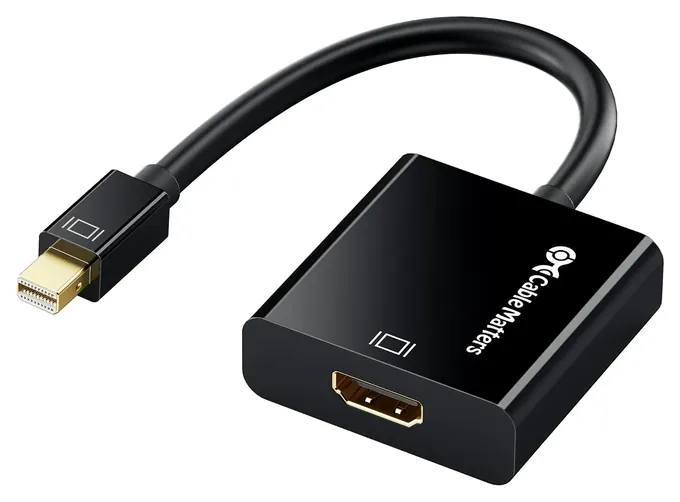
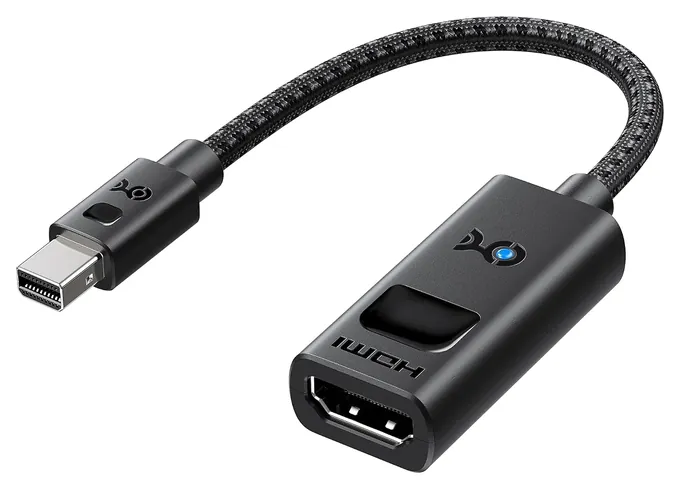
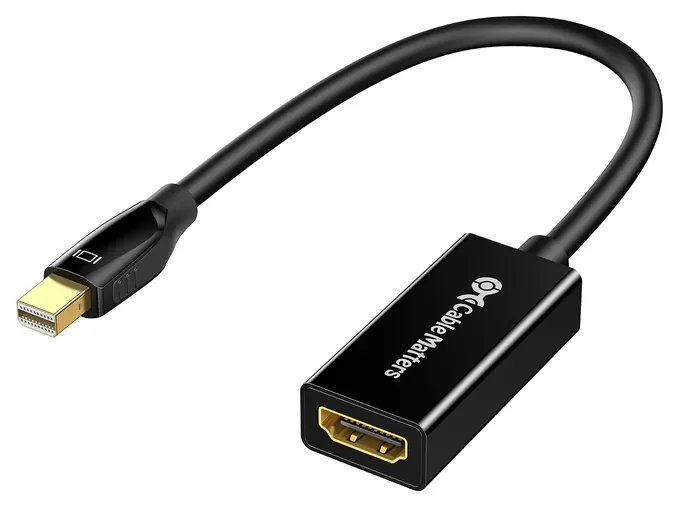
Want 4K at 60 Hz? It takes an active converter, like the Cable Matters 101021, our pick of 10 mini DisplayPort to HDMI adapters and cables. When users buy our independently chosen editorial choices, we may earn commissions to help fund the Wiki.
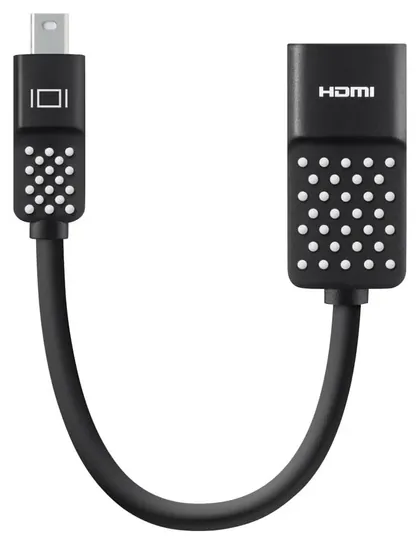
Passive adapters lean on the computer's dual-mode port to do the conversion, so they fail on docks such as the Surface Dock and top out at 4K at 30 Hz. Mini DisplayPort to HDMI adapters and cables let an older MacBook, Surface Pro, ThinkPad or workstation graphics card drive an HDMI TV, monitor or classroom projector.


Editor's Notes
October 19, 2026, by Ezvid Wiki Admin:
The Cable Matters 101021 is now on top because its maker still backs its 4K at 60 Hz rating. The rest of the old list had mostly aged out. The Plugable Active, our old favorite, is no longer available from the store we link to, and the UGreen 10439 is gone too. The ToPoint, Topoint, Rankie and QGeeM multi-port converters have dropped out of sight, so they're off.
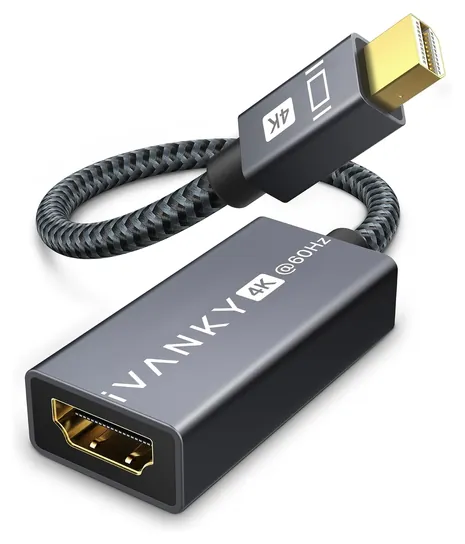
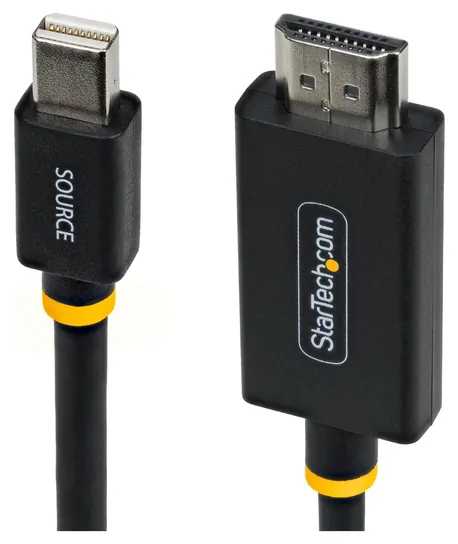
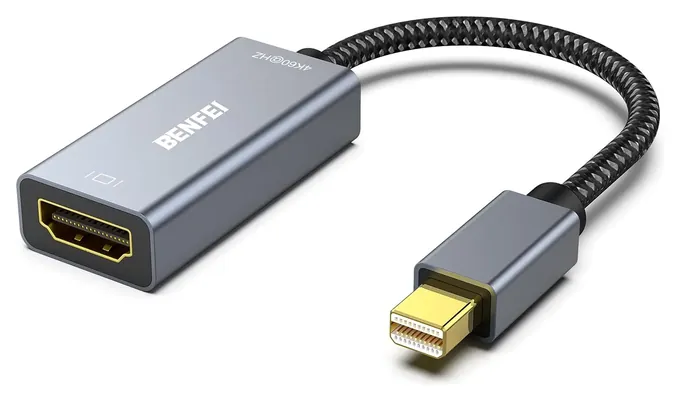
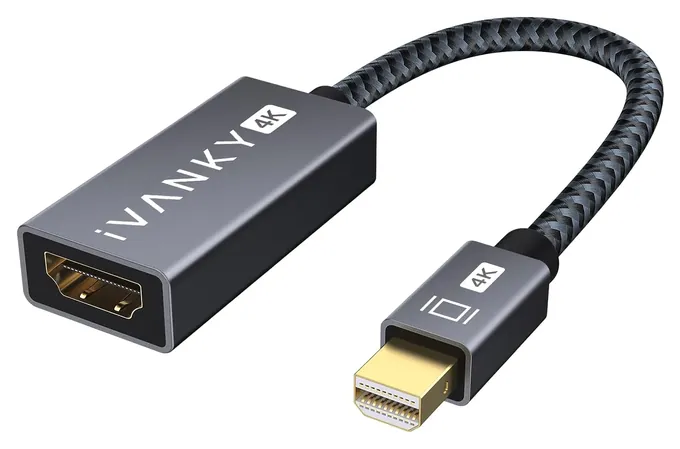
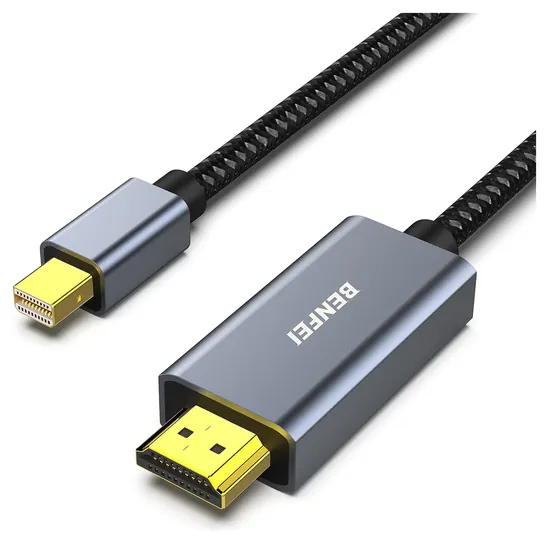
Three stay: the Cable Matters 101021, the Cable Matters 101001 for 1080p projectors, and the Ivanky 4K30, renamed from Ivanky Super Slim. New picks split the list by what people actually need: 4K at 60 Hz dongles like the Benfei 4K60, one-piece cables like the StarTech 6F-MDP-HDMI2-4K60, and the Cable Matters 101101 for 4K at 120 Hz.
We found no lab tests for any of these, so the refresh numbers are makers' figures. The buyer's guide explains why the computer, cable and screen matter as much as the adapter.
January 29, 2021:
Whether your older laptop has a dedicated mini DP port, or you're using a MacBook with Thunderbolt 2, there are plenty of adapters available for turning the video signal over to an HDMI connector. The Plugable Active is the top choice because of its active configuration, which ensures it works well with finicky devices like the Microsoft Surface Pro. If an active cable is okay and you want to spend less, get the Ivanky Super Slim. If you need legacy display options as well, the ToPoint 4 in 1 is the way to go, and the Rankie R1101 is a highly reliable choice that eliminates the need to buy a separate cable.
April 02, 2019:
If your older-model MacBook is still kicking or if you invested in a nice Ultrabook before the USB-C craze hit, one of these handy adapters and cables could really come in handy when it's time to share your display with a larger monitor or TV. Users of Wacom's popular drawing tablets may also find these immensely useful, especially if their desktop doesn't have a full-size DisplayPort. Owners of even the newest Microsoft Surface Pro and Laptop will also benefit from these, which is a bit of a disappointment to many, but hey, at least it's (a little bit) less confusing than the jungle of type C connector standards. For that matter, if you're one of those with a late-model Surface Pro or a relatively powerful MacBook, skip right to the top and check out the Plugable. It's one of the few around that outputs to HDMI 2.0, and a lot of users find it to work well right out of the box. If it doesn't work seamlessly -- and with the MacBook, we promise that it won't and you can thank Apple for that -- grab a freeware program called SwitchResX, which will let you set a custom resolution within the OS, and it should solve your problem.
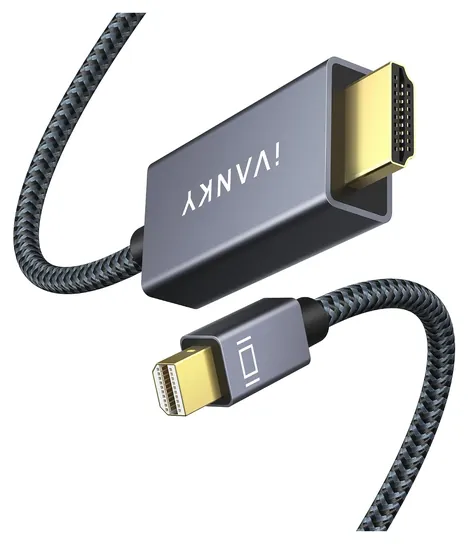
If you're not terribly worried about 4K at 60Hz or 1080p at 120Hz, there are plenty of other options. The active Cable Matters model can also support high refresh rates at 4K, though it doesn't appear to officially support the HDMI 2.0 protocol. The iVanky is cheap, durable, compact, and its relatively attractive appearance won't stick out like a sore thumb if you're using it to give an important presentation. The CableCreation is even more affordable, and while it will actually stand out (because it's bright blue), at least it'll be a little easier to fish out of your laptop bag (although we'd recommend picking up a small zippered bag if you've got more than a couple dongles to deal with). The QGeeM is an interesting choice as it's nearly the only one you'll find with a female miniDP connector. And check out the ToPoints or UGreen if you ever need to connect to older display devices like legacy monitors or projectors, as they have a wider range of output formats.
Special Honors
Plugable MDP-HDMI Plugable's active mini DisplayPort to HDMI 2.0 adapter is VESA certified and rated for 4K at 60 Hz, and the maker publishes unusually frank notes on what older Macs and HDR screens can and can't do with it. Plugable still lists it on its own site. plugable.com
Active Or Passive: The 4K At 60 Hz Question
Active adapters draw a little power from the port and can feel warm.
Most mini DisplayPort jacks are dual-mode, sometimes labeled DP++. A dual-mode port can send an HDMI-style signal itself, so a passive adapter only has to rewire the pins. That's why passive adapters cost so little. Their limit is speed: as display maker Barco explains, passive adapters generally top out at 1080p at 60 Hz or 4K at 30 Hz (Barco). Plugable gives the same 4K at 30 Hz ceiling for its passive model (Plugable).
An active adapter has its own converter chip. It's what you need for 4K at 60 Hz, and it also works from ports and docks that lack dual-mode output. Microsoft's Surface Dock is the common example: SurfaceTip notes that passive adapters won't work there (SurfaceTip). Active adapters draw a little power from the port and can feel warm.
At 4K, 30 Hz is fine for movies, but the pointer and scrolling look jerky. For a 4K desktop, get an active adapter. For a 1080p TV or projector, a passive one does the job.
Cable Or Dongle, And The Rest Of The Chain
A dongle is a few inches long and needs a separate HDMI cable. That's handy if you already own a good cable or need an unusual length. A one-piece cable has the converter built in, so there's one less plug to work loose, but a damaged end means replacing the whole thing.
4K at 60 Hz needs every link to cooperate. Dell's support guide lists the pieces: a source that outputs DisplayPort 1.2 or later, an adapter rated for HDMI 2.0, a high-speed HDMI cable and a display with an HDMI 2.0 input (Dell). If one link is older, the picture drops to 4K at 30 Hz. An old HDMI cable is the usual suspect when the screen flickers or blanks. The 8K adapters go further, with HDMI 2.1 output, but only a graphics card with DisplayPort 1.4 and a display with HDMI 2.1 can use those modes.
Audio rides along on all of these. Cable Matters, for example, rates its active adapter for up to 7.1-channel uncompressed audio (Cable Matters).
Check Your Port, Your Mac And The Direction
Mini DisplayPort is the small, flat jack with one slanted side on Macs from about 2008 to 2015, early Surface Pro tablets, many ThinkPad, Dell and HP laptops, and workstation graphics cards. Thunderbolt 1 and 2 use the same jack, so these adapters fit them. Thunderbolt 3, Thunderbolt 4 and USB-C are oval and need a USB-C adapter instead. Mini HDMI is a different plug again, found on cameras and some tablets.
Older Macs have limits of their own. Plugable notes that many pre-2013 Macs can't output 4K at 60 Hz at all, whatever the adapter, and that some Thunderbolt 2 Macs won't send audio over HDMI (Plugable). If your Mac has a full-size HDMI port, you don't need an adapter; Apple lists which models have one (Apple).
Finally, direction: every product here sends video from mini DisplayPort to HDMI only. Cable Matters states plainly that its adapter isn't bidirectional. Connecting an HDMI laptop or game console to a mini DisplayPort monitor takes a separate, powered converter.
How we researched this
We compared 15 current mini DisplayPort to HDMI adapters and cables, read the makers' product pages and listing specifications for the 10 picks, checked display makers' guides on active and passive conversion, analyzed owner feedback patterns, and checked every brand against the U.S. Consumer Product Safety Commission's recall database. We found no independent lab tests of these adapters, so resolution and refresh figures are makers' ratings.
Sources (9)
- Cable Matters: Active Mini DisplayPort to HDMI Adapter
- Plugable: MDP-HDMI active adapter
- Plugable: DPM-HDMIF passive adapter
- StarTech.com: MDP2HD4K60S active adapter
- Barco: Active or passive DisplayPort to HDMI adapter
- Dell: HDMI to DisplayPort conversion information
- SurfaceTip: Best active mini DisplayPort to HDMI adapters
- Apple: Macs with an HDMI port
- U.S. Consumer Product Safety Commission: recalls
Frequently asked questions
Can I use one of these to connect an HDMI device to a mini DisplayPort monitor?
No. These adapters and cables only send video from a mini DisplayPort output to an HDMI input. Going the other way takes a separate, powered HDMI to DisplayPort converter.
Do I need an active adapter?
Only for 4K at 60 Hz or higher, or when the port or dock lacks dual-mode output, as with Microsoft's Surface Dock. For 1080p screens, a passive adapter is enough.
Will it work with a USB-C or Thunderbolt 3 MacBook?
No. Macs from 2016 on use oval USB-C or Thunderbolt 3 ports, which need a USB-C to HDMI adapter. Mini DisplayPort adapters fit Thunderbolt 1 and 2 ports only.
Does a mini DisplayPort to HDMI adapter carry sound?
Yes. HDMI carries audio, and these adapters pass it through, most of them up to 7.1 channels. Some older Macs with Thunderbolt 2 can't send audio this way, according to Plugable.
Is mini DisplayPort the same as mini HDMI?
No. Mini DisplayPort is a flat jack with one slanted side, used on computers. Mini HDMI is a smaller version of the HDMI plug, found on cameras and some tablets. They need different adapters.
Why does my 4K screen run at only 30 Hz?
One link is holding it back: a passive adapter, an older HDMI cable, a display input below HDMI 2.0 or a computer that can't output 4K at 60 Hz. Check each piece.