The 10 Best Martial Arts Chest Protectors
Updated by · How we research

Taekwondo hogus, coach shields, sparring vests and karate guards compared by coverage, padding and approval. The Adidas WT Reversible Hogu leads for taekwondo. When users buy our independently chosen editorial picks, we may earn commissions to help fund the Wiki.
A chest protector is two different tools depending on who wears it: a fighter's vest for sparring, or a thick shield a coach straps on to take body shots during pad work. Taekwondo adds a third kind, the reversible hogu that Olympic-style tournaments require. Below are picks for each, plus guards made for women, kids and karate.


Editor's Notes
October 26, 2026, by Ezvid Wiki Editors:
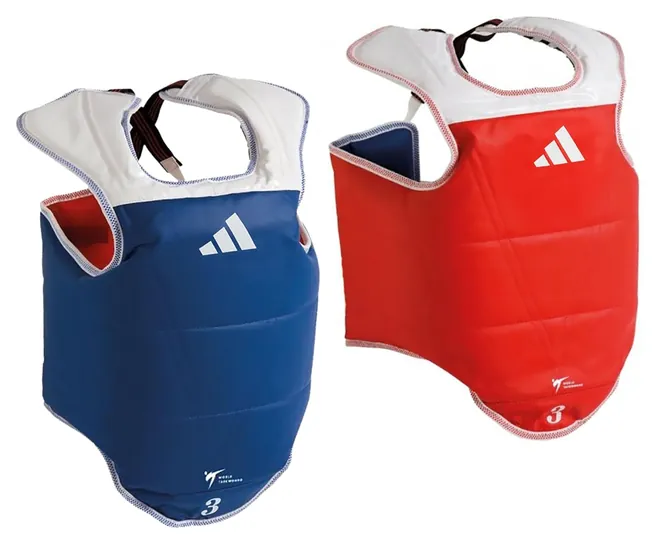
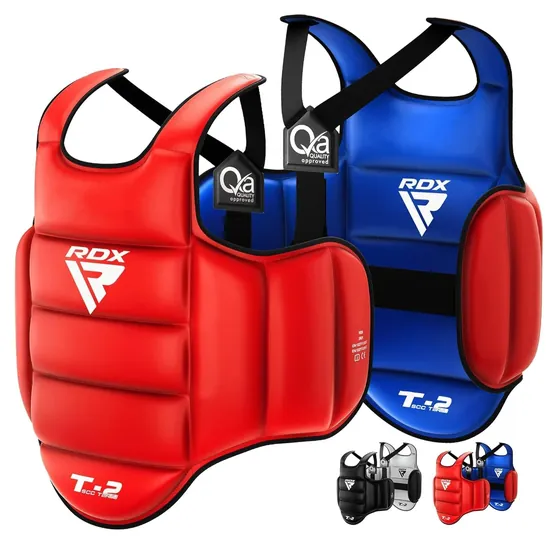
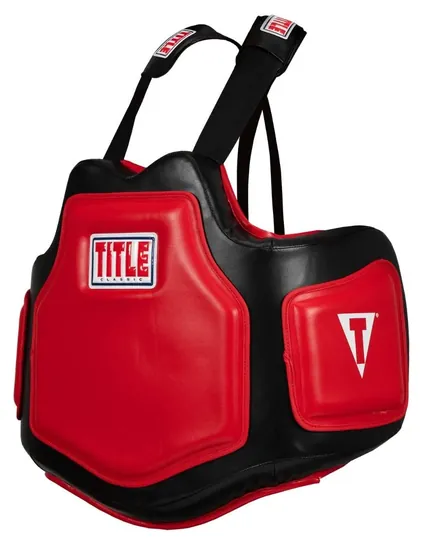
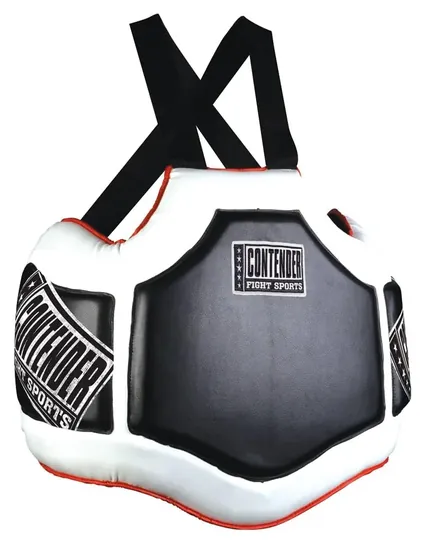
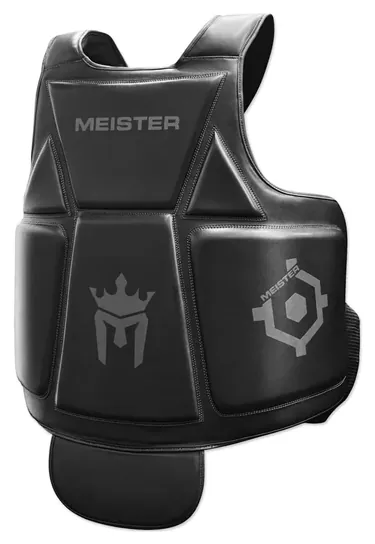
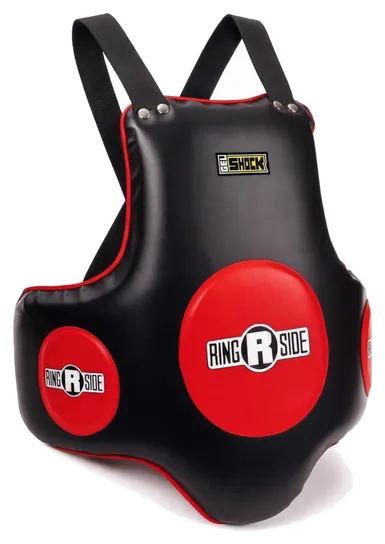
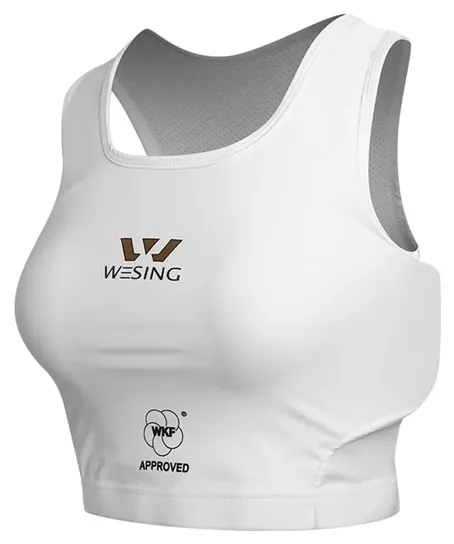
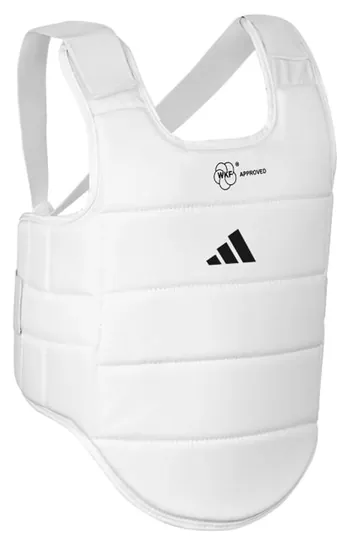
The Adidas WT Reversible Hogu now leads, because taekwondo is what most readers of this page practice, and this is a red-and-blue guard Adidas says World Taekwondo approves. The Title Boxing Command 2.0 stays for coaches. New picks fill the gaps the old list left: the RDX T2 Reversible for Muay Thai and MMA sparring, the Meister Body Armor with its groin flap, the Contender Heavy Hitter and Ringside Gel Shock for trainers, and separate guards for kids, women and karate.
Eight earlier picks are gone. The RDX Rib Shield, Title Boxing Influence, Macho Competition Hogu, Pine Tree Sang Moo Sa and Wesing Wushu are no longer available. We also dropped the Combat Sports Thai Style and ProForce Lightning for thin track records, and the Farabi Ladies in favor of a better-supported women's guard.
No lab tests these guards. We leaned on the federations' approval rules, the makers' notes on foam and sizing, and trainers' gear sites that compare body protectors after months of pad work.
Earlier notes
July 9, 2020, by Will Rhoda:
During this round of updates, while the majority of our previous selections managed to maintain their positions, we did decide to do away with the Title Gel, Ringside Gel and Contender Fight Sports Heavy Hitter, all due to availability issues. Noting that these disqualifications were all heavy options intended for trainers – as opposed to light models like the Wesing Wushu and Pine Tree Sang Moo Sa, which are better suited to sparring martial artists – we endeavored to replace them with similar selections, and wound up settling on two options from Title Boxing: the Title Boxing Command 2.0 and Title Boxing Influence — which both offer excellent kidney and rib protection, and the Combat Sports Thai Style — which may not be as fancy as our contoured Title Boxing picks, but still offers ample padding. Our last new inclusion was the Farabi Ladies — an option designed specifically to protect women’s breast region during training.
A few things to think about for this category:
Sparring vs. Training: We’ve already touched on this during the introduction to this editor’s note, but it’s an important distinction to make, so we’ll go over it again quickly just to be clear. This category is essentially comprised of two kinds of offerings:
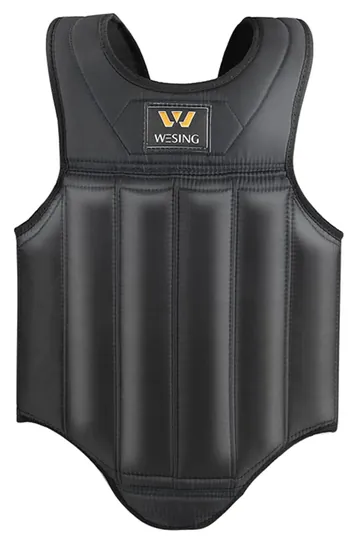
The first kind is intended for use by martial artists, typically, though not exclusively, during sparring. Models like the Wesing Wushu and ProForce Lightning are light enough that they don’t drastically restrict movement, but still tough enough to offer protection across the torso region, sometimes – as in the case of the Macho Competition Hogu and Pine Tree Sang Moo Sa – extending across the shoulders. The Macho Competition Hogu, like the Adidas WTF Taekwondo, is an example of a reversible chest protector, which will sometimes be required for Tae Kwon Do tournaments, as well as other martial arts.
The second kind of chest protector is intended for trainers. While heavy options like the Combat Sports Thai Style and Title Boxing Influence could be worn during sparring, where they really shine is when worn by trainers who essentially sacrifice themselves as a moving target, for the greater good of their fighters. Enthusiastic coaches who like to keep their students guessing will often wear a chest protector during pad work – using the gear in combination with thai pads, strike shields and focus pads – which usually winds up being much more engaging and beneficial than training sessions spent strictly on heavy bags, speed bags and double end bags.
Protection: Indicators like unit weight and the type of material used as padding can give us an idea of how solid these protectors are, but it would be nearly impossible to credibly compare the toughness of these guards without doing extensive lab-controlled testing. What is readily apparent to us, however, is the extent of the coverage offered by each guard.
The Title Boxing Influence and Title Boxing Command 2.0 both offer exemplary protection to the diaphragm and mid riff region, but there's a chink in those suits of armor around the collar bone area, which is left exposed and vulnerable to overhand punches and axe kicks — a weakness that isn’t shared by the Combat Sports Thai Style, which features padding right up to the user’s neck line.
As previously mentioned, the Macho Competition Hogu and Pine Tree Sang Moo Sa provide better protection to the shoulder region than many similar models. And, the Farabi Ladies stands out in this category, as it’s the only model we ranked that exclusively protects the chest region, without offering any padding to the rest of the torso. However, we still thought it was worth listing, since it does a good job of addressing a specific issue that affects many female martial artists.
Size: While the Farabi Ladies offers only two sizes, other models like the Wesing Wushu and Pine Tree Sang Moo Sa come in five. Many savvy online retailers are thoughtful enough to include sizing charts along with listings for their equipment; we suggest you take advantage of these resources whenever possible, as there appears to be no universally accepted standard for sizing in this category. Be wary of options – like the ProForce Lightning – that regularly run small, but also realize that the lace-up and hook-and-loop designs of most these offerings allow quite a bit of wiggle room in terms of fit. So, if you’re looking at a chest protector for trainers and regularly working with a training partner of a slightly different size, there’s a good chance that you can get by with just one.
Special Honors
Fairtex Body Protectors The Thai maker Fairtex sells Muay Thai body protectors that trainers often name first among premium guards. They're worth a look if you want a coach shield from a long-established Muay Thai brand. fairtex.com
Daedo Taekwondo Protectors Daedo, a Spanish maker, supplies taekwondo hogus, including electronic scoring models used at sanctioned World Taekwondo events. Serious competitors should check which scoring system their events use. daedo.com
Four Kinds Of Chest Protector
Buy for the sport you train, since a coach shield is far too stiff to spar in and a hogu is too thin to hold for boxing pad work.
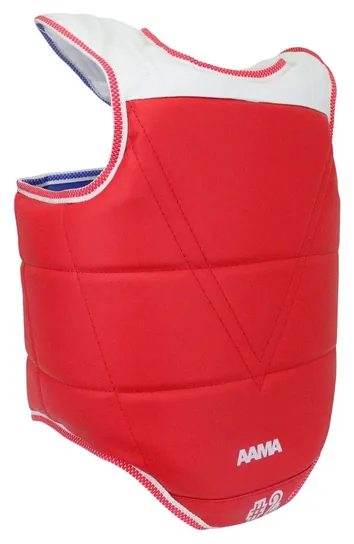
Start with who wears it and why. A taekwondo hogu is a sleeveless, reversible guard, red on one side and blue on the other, that ties at the back and protects the chest, ribs and back from kicks. Olympic-style World Taekwondo sparring requires one; ITF-style schools mostly spar without it. Hogus are light and thin because points come from clean kicks, not heavy punches.
A sparring vest for Muay Thai, kickboxing or MMA is thicker and covers the chest, ribs and upper belly. Some add a groin flap, like the Meister Body Armor. A coach's body shield is a different thing again: a heavy, curved pad a trainer wears so a fighter can throw real body shots and kicks during mitt work. Made4fighters separates these types and points out that a belly pad leaves the upper chest open, which matters if your partner throws knees.
Women in karate and other striking arts often add a cup-style chest guard under the uniform, and karate kumite uses its own thin white body protector. Buy for the sport you train, since a coach shield is far too stiff to spar in and a hogu is too thin to hold for boxing pad work.
Fit, Padding And Foam That Wears Out
Sizes vary a lot from brand to brand. Meister sizes by height, Adidas uses numbered sizes from 0 to 6, and Wesing's women's guard is sized by bust and waist. Ask Me Boxing advises going up a size when you fall between two, because a loose guard slides and a tight one leaves gaps at the ribs.
Padding decides how much a hard shot still hurts. Single-layer foam can bottom out under punches from a heavier partner, while layered foam or gel spreads the force. The same site found budget foam begins to flatten after about six to eight months of heavy use, while better guards last more than a year. Baristi Workout notes that chest-only guards leave the belly exposed, which matters in Muay Thai.
Care is simple but often skipped. Wipe the cover after each session, let the guard air out open rather than in a closed bag, and store it dry. Synthetic leather wipes clean more easily than cloth (Nak Muay Wholesale).
Competition Rules And Safety
If you plan to compete, check approval before you buy. World Taekwondo events require a hogu from an approved maker, and many events now use electronic scoring hogus that cost far more than a training guard. Adidas states WT approval for its reversible guard. In karate, the World Karate Federation sets its own gear rules. Approval lists change, so confirm the current list with your federation or tournament host rather than trusting a box or a seller's page.
A chest protector lowers the sting of body shots, but it doesn't replace headgear, a mouthguard or a groin cup, and a solid shot to the solar plexus or liver can still drop you. Padded gear can also make kids hit harder than they would without it, so youth sparring needs a coach watching.
We checked every brand here against the U.S. Consumer Product Safety Commission's recall database and found no recalls for these guards.
How we researched this
We compared more than 20 chest protectors and body shields for taekwondo, karate, Muay Thai, MMA and boxing, read the makers' material, sizing and approval details for the 10 picks, read gear-site comparisons from boxing and Muay Thai trainers, checked the taekwondo and karate approval rules, and searched the U.S. Consumer Product Safety Commission's recall database for every brand. Prices were checked October 26, 2026.
Sources (8)
- Wikipedia: Hogu
- Adidas Combat Sports: Olympic-style reversible chest guard
- Ask Me Boxing: best body protectors for sparring
- Baristi Workout: best MMA body protector for sparring
- Made4fighters: best Muay Thai body pads
- Nak Muay Wholesale: belly pad review
- World Karate Federation
- U.S. Consumer Product Safety Commission: SaferProducts.gov
Frequently asked questions
What is a hogu in taekwondo?
It's the sleeveless chest and back guard worn for Olympic-style taekwondo sparring. Most are reversible, red on one side and blue on the other, so one guard works for either corner.
Do I need a hogu for ITF taekwondo?
Usually not. ITF-style sparring is mostly done without a hogu. Olympic-style World Taekwondo sparring requires one, and tournaments require an approved model.
What's the difference between a coach's body shield and a sparring vest?
A coach's shield is thick, stiff and heavy, made for a trainer to absorb full body shots during pad work. A sparring vest is lighter and flexible so a fighter can move and strike while wearing it.
How long does a chest protector last?
With heavy use, budget foam can start to flatten in about six to eight months, and better guards often last more than a year. Replace one when the padding stays dented or hard shots start to sting through.
Is a used chest protector worth buying?
It's a gamble. Worn foam looks fine from outside but absorbs less, and budget guards cost little enough new that a used one rarely saves much. Press the padding: it should spring back, not stay dented.
Do women need a different chest protector?
Many women prefer a cup-style guard with hard molded cups, worn under the uniform. In karate it can be worn with the regular body protector; check your federation's rules first.