The 10 Best Magnetic Bracelets
Updated by · How we research

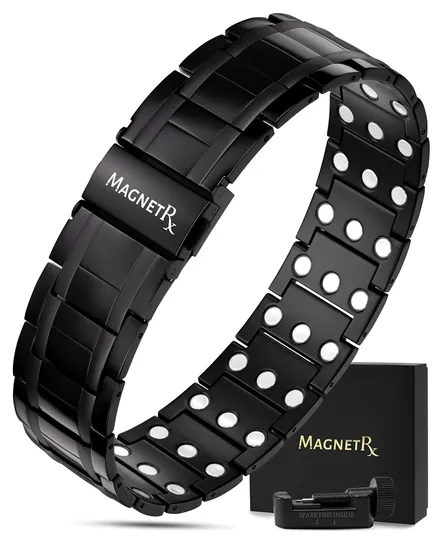
Copper can turn skin green; black-plated titanium won't. Among 10 magnetic bracelets, MagnetRX and Willis Judd included, the MagnetRX 3X Titanium leads. When users buy our independently chosen editorial picks, we may earn commissions to help fund the Wiki.
Gauss ratings on these bracelets have no common test method behind them, so read them as marketing. A magnetic bracelet is a band of metal links, copper or silicone with small permanent magnets set against the wrist. People wear them as wellness jewelry, though studies haven't shown they ease pain better than a placebo.
At a Glance


Editor's Notes
October 18, 2026, by Ezvid Wiki Admin:
The order here rests on build, clasp, sizing and price, not pain relief, because the research doesn't back that up. Five of the bracelets we used to rank are no longer sold, and the Willis Judd Adjustable is unavailable, so this is close to a fresh start. Two names carry over in updated form: the MagnetRX EllipseMAX Copper takes over from the Ultra Strength, and the Smarter LifeStyle Elegant is the same slim titanium design. People who find this page mostly want to know how MagnetRX stacks up against Willis Judd, so both brands are here, with the Willis Judd Copper standing in for the old titanium model. We dropped a 10-piece hematite fashion set and a golf-focused carbon band, and passed on a hematite bead bracelet because owners keep saying its cord wears out. The guide below says plainly what the studies found.
October 28, 2020:
While there is no scientific backing for any of the supposed health benefits of magnetic bracelets, nevertheless many wearers feel that they provide a spiritual and physical boost. You'll find more than ever to choose from in a wide range of prices.
For this update, we've added the inexpensive Hicarer Energy Healing, a 10-piece collection with multiple styles and colors - a fun choice when quantity is more important than quality. It replaces the Thunaraz Therapy, a smaller yet similar set that looks expensive in comparison.
The Believe London is another newcomer; while it also has an elastic cord and beadwork like the Hicarer Energy Healing, it's very well-made and comes with a 125 percent money-back guarantee. We've also included the Shaboo Prints Bangle for its sleek, streamlined look that both men and women can agree on. Although its copper design was cool and modern, the Earth Therapy Set has been removed for less-than-stellar reviews that just didn't stack up to the rest of the items on our list.
We've also updated the information for several items, including the Ebuty Silver & Black, the Smarter Lifestyle Elegant, and the Chaninely Blue Titanium.
November 06, 2019:
Magnetic therapy has been around for centuries, and many believe it provides relief from a host of ailments like anxiety, fatigue, and arthritis. Magnetic bracelets are a lightweight, often budget-friendly accessory for those who want to reap these purported benefits. And, some are even as attractive as regular bracelets, featuring vibrant gemstones and shiny metals.
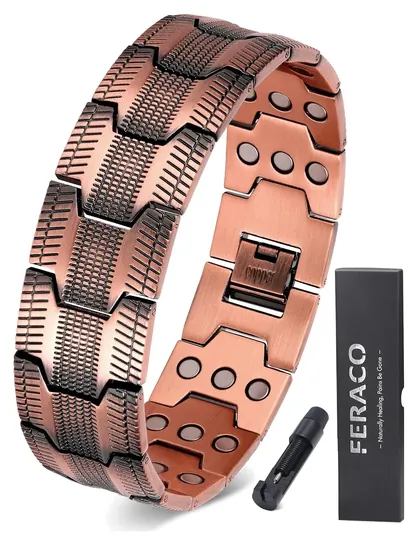
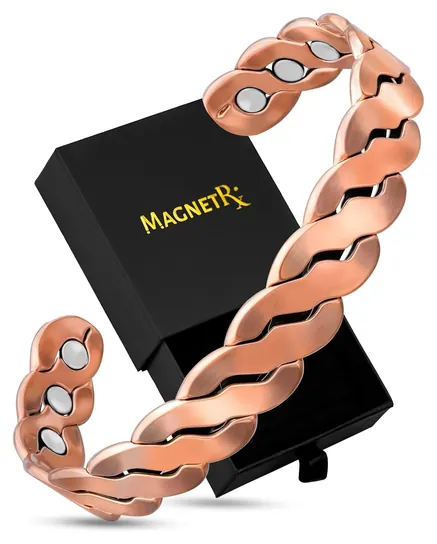
The newly added MagnetRX Ultra Strength is one such example, featuring a bright copper build that will catch anyone’s eye, and it's suitable to pair with either casual or dressy outfits. Each link features two magnets, for a total of 40 in all. If you need to make it smaller, that’s easy to do by removing links with the tool that comes with it. Extra links are easily accessible as well, when needed. It comes with a soft, velvet gift bag, making it a nice present for anyone who could use a little healing in their life and would appreciate an attractive piece of jewelry.
Also joining the list is the Thunaraz Therapy, which comes as a set of four magnetic hematite bracelets. Each is different, so you can stash them all in your own jewelry box or share some with loved ones who would appreciate and benefit from them. One incorporates fiery tiger’s eye stones, while the others feature colorful, iridescent, beads.
Leaving our selection in this update are the Aphaca Chakra Lava Stone and the Mind n Body Ladies, neither of which are available at this time.
Authorities caution against using a magnetic device if you use a pacemaker, a defibrillator, or an insulin pump, or if you are pregnant. For safety, always consult your doctor before starting this or any other alternative therapy.
Do Magnetic Bracelets Actually Work?
For pain that doesn't go away, see a doctor rather than waiting on a bracelet.
The short answer is that the research doesn't show they do. A 2007 systematic review in the Canadian Medical Association Journal gathered randomized trials of static magnets for pain and pooled the nine placebo-controlled ones that used the same pain scale. It found no significant difference in pain relief, and its authors concluded the evidence does not support static magnets for pain.
The one large trial of bracelets themselves, published in the BMJ in 2004, gave 194 adults with hip or knee arthritis a standard magnetic bracelet, a weak one or a dummy for 12 weeks. The standard group reported slightly less pain than the dummy group, but the authors couldn't tell whether that came from the magnets or from a placebo effect. Later trials of copper and magnetic wristbands found no real benefit, as the Arthritis Foundation sums up. It also points out that the iron in blood isn't drawn to a magnet, which undercuts the circulation claims in a lot of marketing.
The National Center for Complementary and Integrative Health calls the research on static magnets for pain extremely limited, with no conclusive evidence that they work. So buy one because you like how it looks and feels. For pain that doesn't go away, see a doctor rather than waiting on a bracelet.
Titanium, Copper Or Silicone, And What Gauss Means
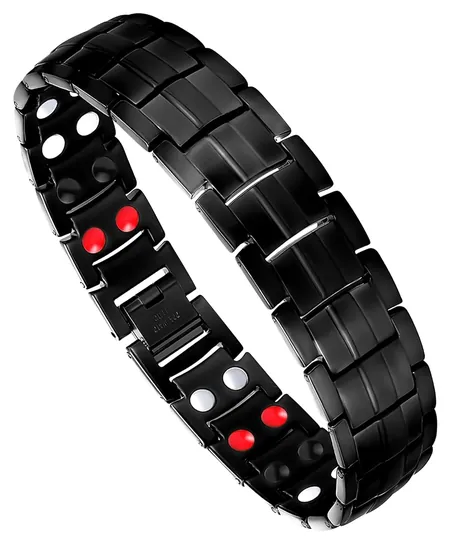
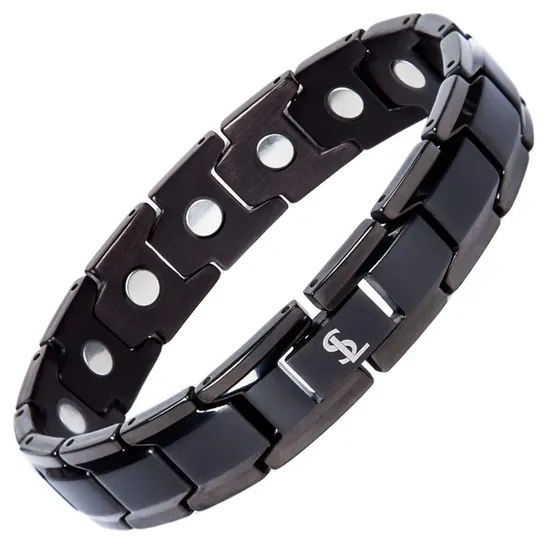
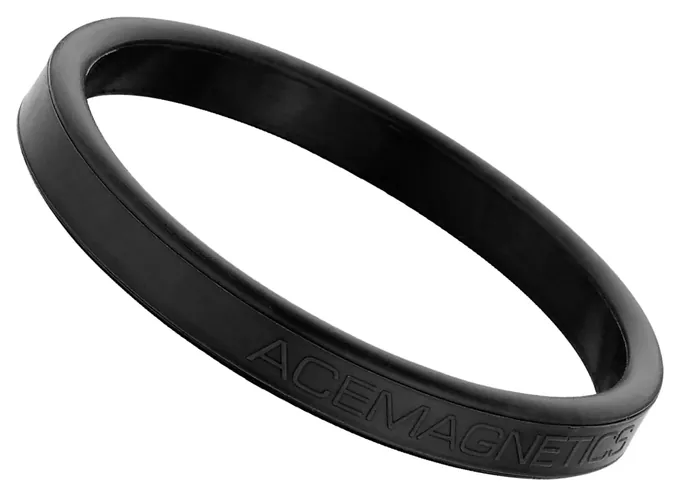
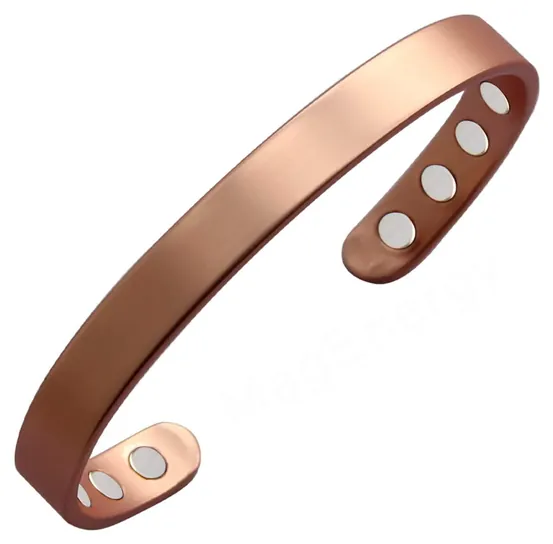
Material decides most of the day-to-day experience. Titanium and stainless-steel bracelets, usually plated black, don't tarnish and won't color the skin. Copper looks warmer, but it darkens with time, and many owners find it leaves a green line on the wrist; a lacquer coating slows that until it wears through. Silicone bands are the lightest and can go in the water, but they come in fixed sizes.
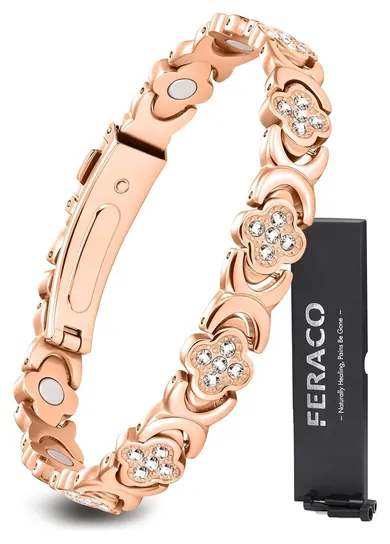
Width changes the look more than anything else. Women's link styles run about 9 millimeters, while men's bands range from about 12 millimeters to more than an inch. Link bracelets with a fold-over clasp stay put better than open cuffs, and a push-button lock adds a second catch. Open cuffs have no clasp at all; you bend them to fit.
Sellers lean on big gauss numbers, from 2,000 to 5,000 per magnet. They aren't comparable, because no seller says how or where the field was measured. For scale, the standard bracelet in the BMJ trial measured about 1,860 gauss (186 millitesla). There's no good evidence that a higher number does more for the wearer, so don't pay extra for it.
Sizing, Care And Safety
Measure your wrist with a soft tape or a strip of paper, then add about half an inch to an inch for a link bracelet so it can move a little. Most link bracelets ship between 8 and 9.5 inches long with a small tool for pushing out the pins. Taking links out evenly on both sides keeps the clasp centered. Cuffs bend to fit, and silicone bands are sold by size, so check the size chart before ordering one.
The NCCIH warns that some magnets can interfere with medical devices such as pacemakers and insulin pumps, and that magnetic jewelry should come off before an MRI. If you're pregnant or have a health condition, it suggests talking with a health care provider first. Children can swallow small magnets, which can be deadly, so keep spare links and loose magnets out of reach.
We checked every brand on this list with the U.S. Consumer Product Safety Commission and found no recalls.
How we researched this
We compared 17 magnetic bracelets and screened 10 in depth. These products don't come with manuals or datasheets, so the specs come from the sellers' own listings and, for the AceMagnetics band, the maker's site; magnet strength figures are the sellers' claims. We read the main clinical research on static magnets for pain, analyzed patterns in owner feedback, and checked every brand for recalls with the U.S. Consumer Product Safety Commission. We found no independent lab tests of magnetic bracelets.
Sources (10)
- Pittler, Brown and Ernst: Static magnets for reducing pain (CMAJ, 2007)
- Harlow et al.: Randomised controlled trial of magnetic bracelets for hip and knee osteoarthritis (BMJ, 2004)
- Arthritis Foundation: Magnets, copper don't ease arthritis pain
- NCCIH: Magnets for pain, what you need to know
- BestBETs: Magnetic bands and bracelets for pain relief in OA
- AceMagnetics: Rally Band 30
- MagnetRX
- Willis Judd
- U.S. Consumer Product Safety Commission: Recalls
- U.S. CPSC: Business guidance on magnets
Frequently asked questions
Do magnetic bracelets help with pain or arthritis?
Studies haven't shown that they do. A 2007 review of randomized trials found no significant difference from placebo, and a 2004 bracelet trial in people with arthritis couldn't separate a small effect from placebo.
MagnetRX or Willis Judd: which is better?
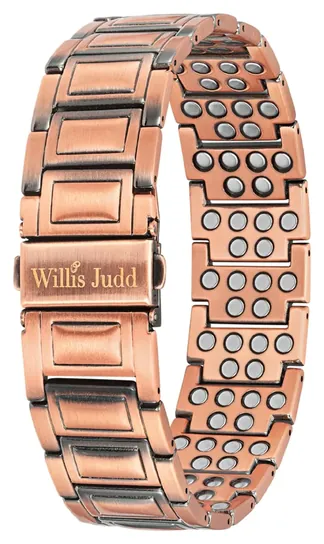
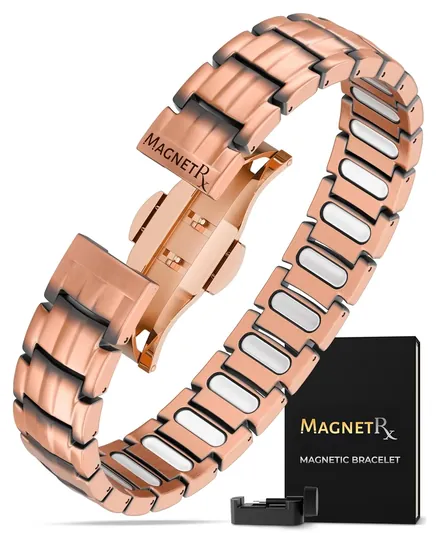
Both sell copper link bracelets with sizing tools. MagnetRX offers more styles, including a black titanium link with a push-button clasp and copper links in men's and women's widths. The current Willis Judd copper bracelet is wider and costs more, and its listing is recent, so there's less owner feedback.
Can I wear a magnetic bracelet with a pacemaker?
No. The NCCIH warns that magnets can interfere with pacemakers and insulin pumps, and AceMagnetics tells people with implanted electronic devices not to use its products. Take any magnetic jewelry off before an MRI.
Do magnetic bracelets lower blood pressure?
There's no good evidence that they do. The Arthritis Foundation notes that the iron in blood isn't attracted to magnets, so the circulation claims don't hold up. Keep taking any treatment your doctor prescribed.
Why does a copper bracelet turn my wrist green?
Copper reacts with sweat and air and forms a green film that rubs off on the skin. Lacquer coatings slow it down until they wear through. Titanium, steel and silicone bands don't do this.
Are stronger magnets better?
Not in any way research has shown. Gauss numbers aren't measured the same way from seller to seller, and trials haven't found that magnets of any strength beat a placebo for pain.