The 8 Best Kids Sewing Machines
Updated by · How we research

Eight kids' sewing machines, from guarded minis to full-size starters, compared on speed, threading and safety. The Brother XM2701 leads for most families. When users buy our independently chosen editorial selections, we may earn commissions to help fund the Wiki.
Many sewing teachers start children on a real machine around age 8, because toy machines often sew a loose stitch and wear out fast. A full-size beginner model lasts into adulthood, but it runs fast and needs a parent nearby at first. Small machines with finger guards suit younger kids and craft projects, as long as nobody expects them to last for years.


Editor's Notes
November 1, 2026, by Ezvid Wiki Editors:
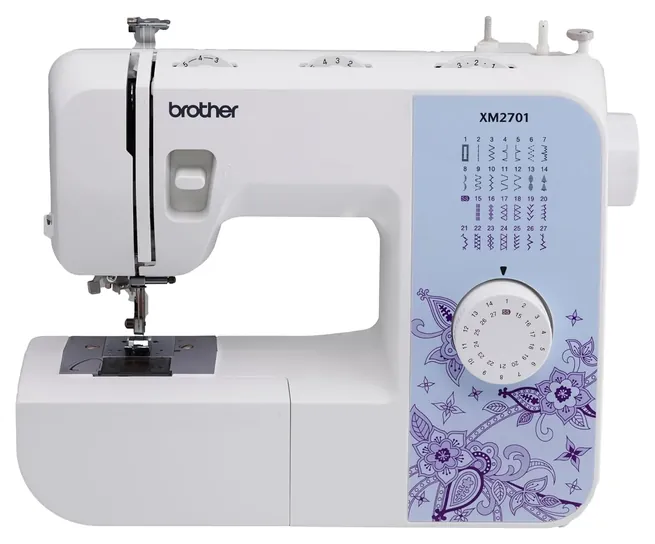
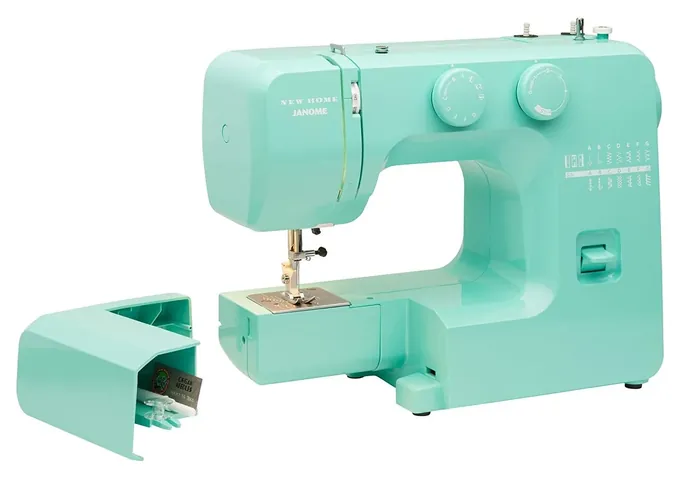
The Brother XM2701 stays on top. It's a real machine a child can learn on and keep for years, it threads its own needle, the bobbin drops in from the top, and Brother's free phone and chat support helps when a parent gets stuck. The Janome Arctic Crystal and Singer Heavy Duty 4411 stay too.
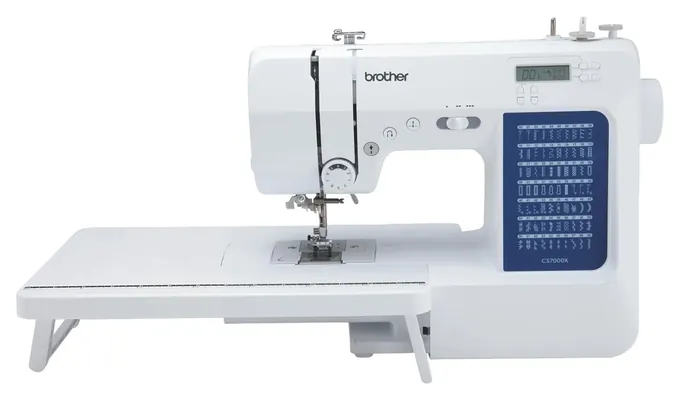
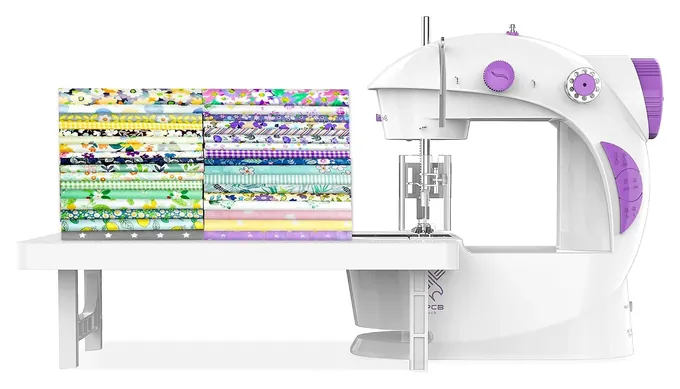
Four earlier picks are gone because they're unavailable: the Brother LX3817A, Singer Start 1304, Varmax Mini and Cool Maker Sew N' Style. New this time are the Brother CS7000X for teens and four small machines for younger kids, led by the KPCB Tech Mini with its finger guard and slow setting. Brother's XM3700 is nearly the same machine as the XM2701 with a few more stitches, so we listed one, not both.
No lab has put kids' sewing machines through a test, so we leaned on Brother, Janome and Singer specs and warranty terms, one review site's comparison of 38 models, a sewing teacher's age-by-age advice, recurring owner complaints about small machines that jam or quit, and federal recall records, which list no recalls of these machines.
Earlier notes
July 15, 2020, by Melissa Harr:
After some consideration, we have opted to remove the Nex Portable at this time, mainly because some of the features are just too frustrating to figure out, even for adults. But we have kept the Cool Maker Sew N' Style, even though it is not a full-fledged sewing machine for beginners. It allows young kids to get in on the fun, even if they are not quite coordinated enough yet for a machine with a fast-moving, sharp needle.
For those children who are ready to tackle a real sewing project — with appropriate supervision, of course — we still think the Brother XM2701 represents a good value. It offers 27 stitches and comes with plenty of accessories, including six feet; it's equally useful for creating new garments and performing repairs, and will grow with your young sewist from the beginner to the intermediate stage. This is also true of the robust Singer 4411, although some do find it a little hard to thread. Don't be surprised if you need to lend a helping hand to a young user.
And, finally, we've added the Brother LX3817A. An attractive aqua color, this full-size model doesn't have too many features that might intimidate newbies, but it still has everything required for successful garment making. This is unlike some similar models for young users, like the Varmax Mini, which doesn't have a reverse and so struggles to lock seams properly. Plus, this Brother model, unlike the relatively similar Singer 1304, has a drop-in bobbin, which many find easier to use than the latter's front-loading bobbin.
April 27, 2019, by Melissa Harr:
There are two schools of thought when it comes to sewing machines for kids: one says that it's better to start children on toylike units that are small and simple, while the other maintains that kids can learn on a regular beginner's machine. We've here decided to keep both types for all of the crafting and parenting styles out there. For the former, we still like the Varmax Mini and the Nex Portable. The Varmax is the less complicated of the two and also the one likely to be grown out of faster, as there's no reverse feature. But because it's inexpensive, it won't be too frustrating if your child decides that sewing is not for him or her. We also kept the Cool Maker Sew N' Style, which has safety features that make it appropriate for kids 6 years old and up. It doesn't allow for true sewing, though, so you'll have to find more felt and yarn once your child has used up the materials that come with it. As for child-appropriate beginner machines, we like the Janome Arctic Crystal, the Brother XM2701, and the Singer 4411. They're all tough enough to take some abuse and will grow with your young sewist into the intermediate stage. Do note that these are "real" sewing machines, so younger kids will need supervision.
Special Honors
4-H Sewing Projects 4-H clubs across the U.S. offer sewing and clothing projects for kids, with adult volunteers who teach the basics and county fairs where young sewers can show finished work. It's a good way to give a child a goal and help from someone other than a parent. Programs vary by county, so check with the local extension office. 4-h.org
Real Machine, Mini Or Toy: Match It To The Child
Toy and craft-kit machines run on batteries, come with finger guards and picture instructions, and carry an age label on the box.
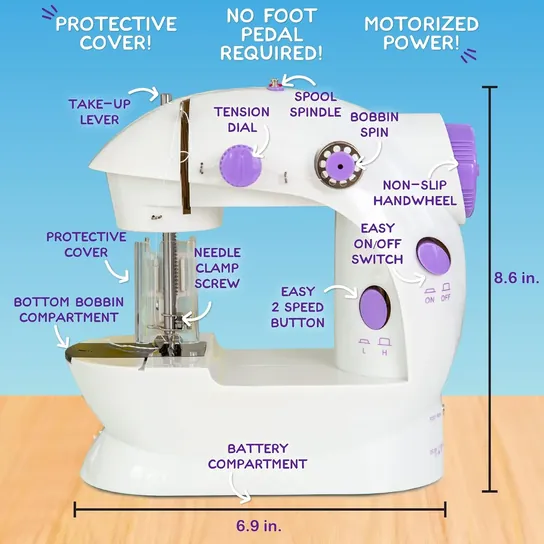
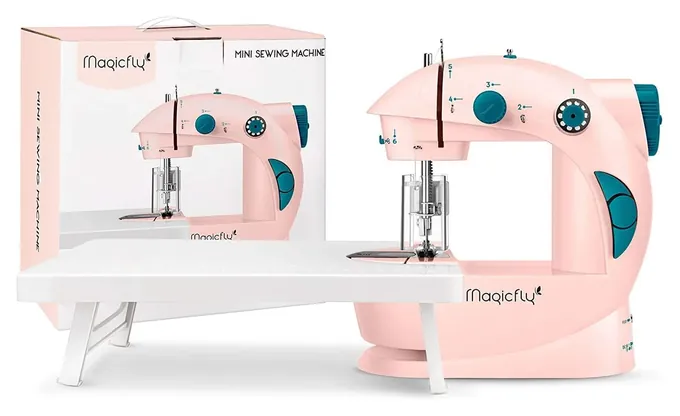
Three kinds of machines get sold for kids, and they aren't interchangeable. Toy and craft-kit machines run on batteries, come with finger guards and picture instructions, and carry an age label on the box. Some sew a single-thread chain stitch that pulls apart if one end comes loose, so they're best for testing whether a child likes the idea. Mini machines are small plastic two-thread machines, often with a guard in front of the needle and a slow button. They make one straight stitch and tend to wear out, but they don't intimidate a small child.
Full-size beginner machines from Brother, Janome and Singer weigh about 12 to 14 pounds, sit firmly on a table and sew real garments. A sewing teacher's guide at Peekaboo Pattern Shop suggests a simple full-size machine from around age 6 to 10 with an adult beside the child, and a mini or craft kit for ages 4 to 7. BestReviews, which compared 38 models, picked a computerized Brother as its top machine for kids. If a child is 8 or older and has shown real interest, a full-size machine is the better buy. It costs more, but it won't need replacing when the child outgrows it.
Features That Make Learning Easier
Threading is where most beginners give up. An automatic needle threader, a small lever that pushes the thread through the needle's eye, and a drop-in top bobbin remove the two fiddliest steps. The Brother XM2701 has both, and so does the CS7000X. The Janome Arctic Crystal makes up for its manual threading with few, clearly marked dials, snap-on presser feet and a bobbin diagram printed on the machine.
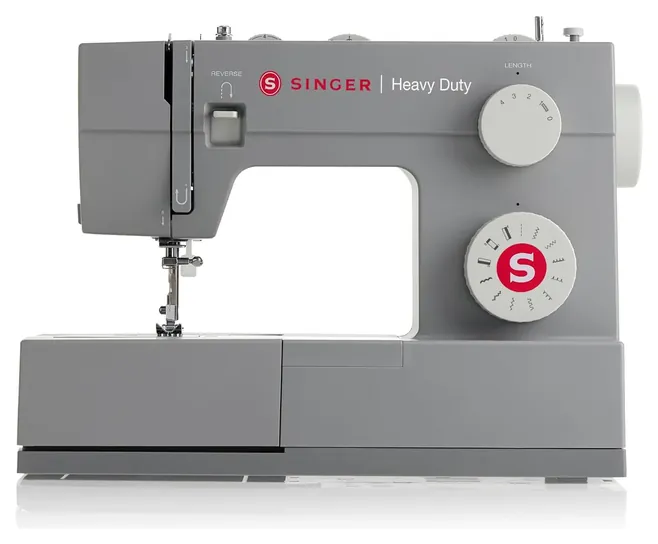
Speed matters more for kids than stitch count. Mechanical full-size machines top out around 800 stitches a minute, and the Singer Heavy Duty 4411 reaches 1,100. None of these three has a speed limiter, so the pedal does all the work, and a child has to learn a light touch. Minis and craft kits usually have a slow setting. A free arm, where the bed narrows so a sleeve can slip around it, helps with doll clothes and cuffs. Fifteen to 30 stitches is plenty; children mostly use straight and zigzag.
Safety And Care At The Sewing Table
The real hazard is the needle. Teach a child to keep fingers flat and well to the side of the presser foot, to guide fabric rather than push it, and never to sew over pins. Lower the presser foot before starting, and unplug the machine to thread it, change a needle or clear a jam. An adult should stay close for children under about 10. Keep needles, bobbins, pins and thread away from toddlers.
In the U.S., anything designed mainly for children 12 and under is a children's product and must meet federal limits on lead and other chemicals, with a certificate from the maker (CPSC). Full-size machines are sold for general use, not as toys. A search of CPSC recalls found no recall of any machine on this list. For care, swap the needle when it gets dull or bent or after a few projects, brush lint out of the bobbin area often, and keep the machine covered between sessions.
How we researched this
We compared 16 sewing machines for kids, from craft-kit toys to full-size models, read Brother, Janome and Singer specs and warranty terms, a sewing teacher's guide and one review site's comparison, analyzed recurring owner complaints, and checked every brand against U.S. Consumer Product Safety Commission recall records.
Frequently asked questions
What age can a child start using a sewing machine?
Many kids start around 7 or 8 on a real machine with an adult beside them. Younger children, about 4 to 7, do better with a mini or craft-kit machine that has a finger guard and a slow speed.
What is the best sewing machine for a 10-year-old?
A full-size beginner machine such as the Brother XM2701 or Janome Arctic Crystal. Both sew real fabric, last for years and are simple to learn. Brother's XM3700 is a close alternative to the XM2701.
Should I buy a toy sewing machine or a real one?
Buy a real one if the child is 8 or older and interested. Toy machines often sew a weak stitch and break early. A toy or mini makes sense to test interest in a younger child.
Are mini sewing machines safe for kids?
They're safer than full-size machines for small hands because many have a finger guard and a slow speed, but the needle can still prick. An adult should help with threading and stay nearby.
Do kids' sewing machines need a foot pedal?
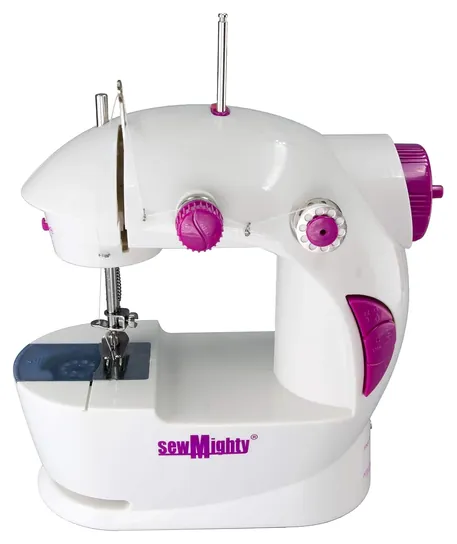
Full-size machines do. Many minis and craft kits start with a button instead, and some, like the Sew Mighty Mighty Mini, work either way.