The 10 Best Hernia Belts
Updated by · How we research

Many groin belts size by hip, not waist. Sizing, pads and straps are compared across 10 inguinal and umbilical hernia belts; Everyday Medical Inguinal leads. When users buy our independently chosen editorial recommendations, we may earn commissions to help fund the Wiki.
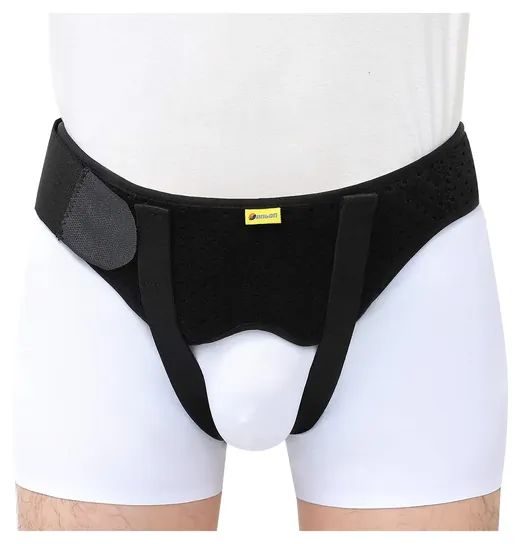
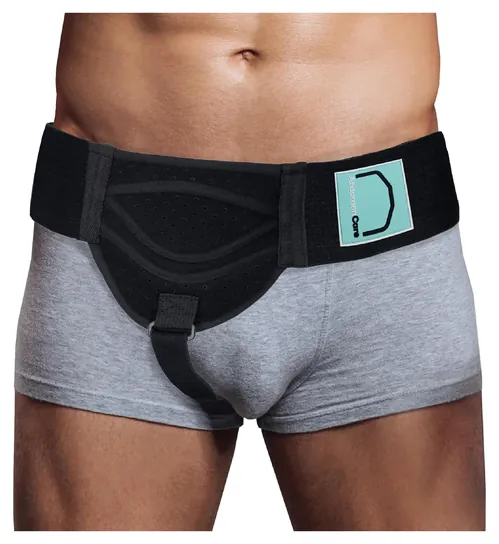
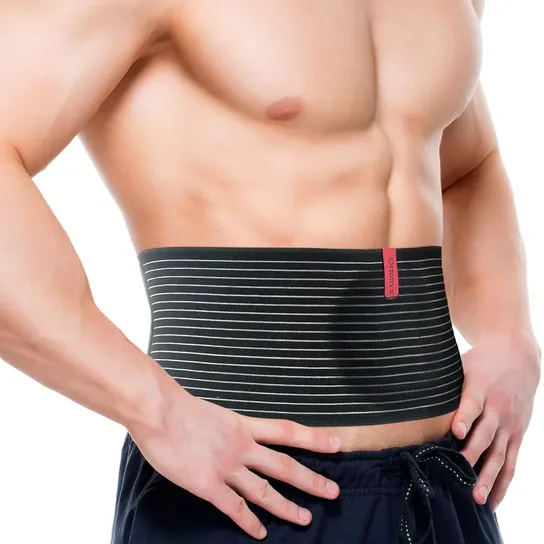
See a doctor before buying a hernia belt, which holds a hernia in only while worn and doesn't repair one. A truss is an elastic band with a pad that presses on the hernia from outside, easing the bulge and ache while you wait for surgery or recover from it. Groin belts fit inguinal hernias; umbilical belts are wide bands sized at the navel.


Editor's Notes
October 18, 2026, by Ezvid Wiki Admin:
We took off both baby belly bands, the Cabea Baby Belly Band and the Meditex Infant. Pediatric guidance says strapping doesn't make an infant's umbilical hernia go away, and most close on their own, so we'd rather not sell parents one. The FlexaMed 10-Inch is no longer available, and the Wonder Care Double Truss and Curad Lightweight were down to their last few units, with close alternatives in better supply. The Ortonyx Inguinal Double is gone too, because it contains latex and its owner feedback has slipped.
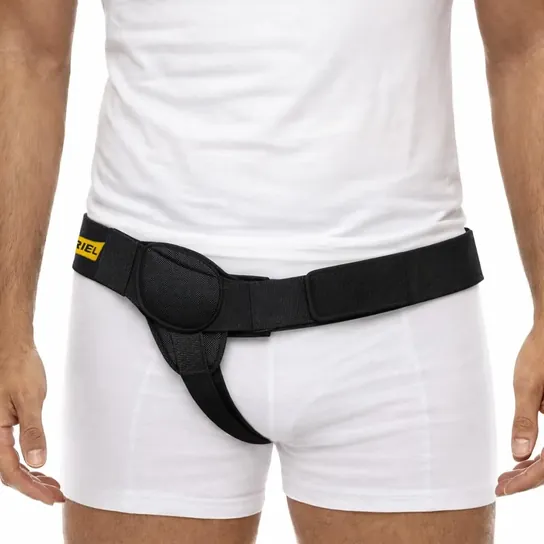
The Everyday Medical Inguinal is now first for its wide size range and long record. The Uriel Meditex Inguinal, the Underworks Brace 948 and the OTC 2955 Select Series stay. New picks cover double hernias, umbilical and plus-size belts, and swappable pads, including the Tenbon Bilateral and the Ortonyx Umbilical.
We found no independent tests of hernia belts. We used makers' size charts and listings, guidance from surgeons and hospitals, owner feedback and recall checks. A belt only holds a hernia in while you wear it. It doesn't repair one, so see a doctor first.
November 13, 2020:
There is no question about it. Hernias are uncomfortable, and often downright painful. So the last thing you need is a hernia belt that causes further discomfort due to a poor design. With that in mind, we looked for models that are padded enough to provide gentle compression, are breathable, and which allow you to go about your normal activities without feeling like your movement is overly restricted. Before picking any of the options on this list though, you should consult with a doctor to see if your issue is serious enough to require immediate medical assistance, and if the option you are considering is suitable for your needs.
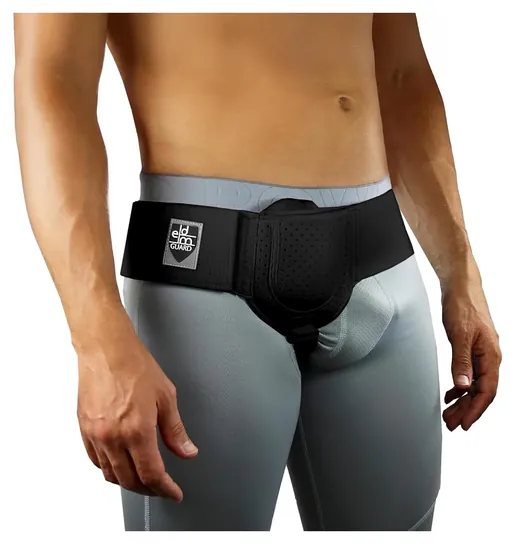
Ideally, a good hernia belt should provide the right amount of support with the least amount of material. Because of this, we are big fans of the Uriel Meditex Inguinal and Ortonyx Inguinal Double, both of which have very streamlined designs. Not only does this allow them to be imperceptible under most clothing, but it also means they won't make you feel warm or cause any excess sweating. However, if these don't provide enough support for you, or you are worried they may move around a bit during periods of intense activity, you may want to consider the Underworks Brace 948, Wonder Care Double Truss, and Everyday Medical Guard Inguinal Truss. All of these have a much wider waist strap, so the chances of them moving are slim, and big pads that are suitable for large hernias.
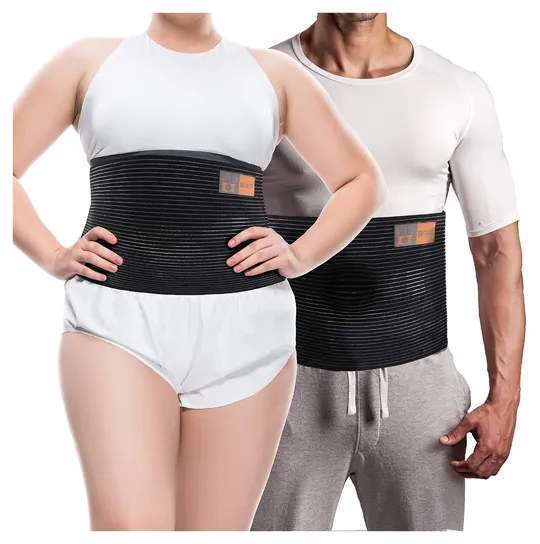
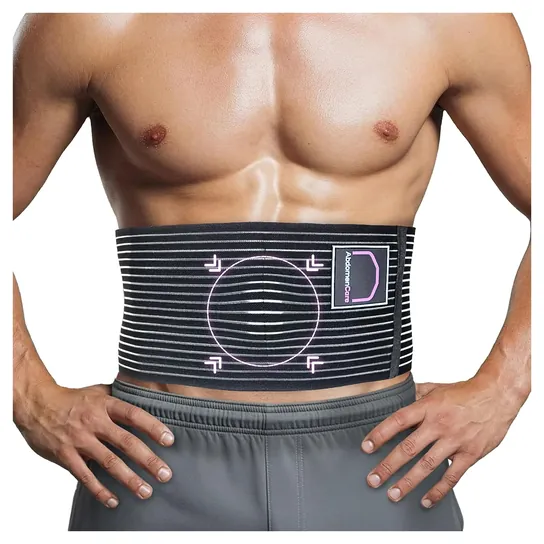
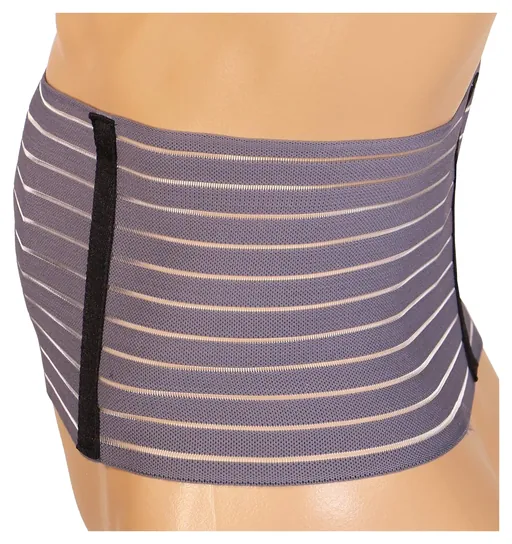
If you have an umbilical hernia, none of the above models will work. Instead, you need the OTC 2955 Select Series or FlexaMed 10-Inch, both of which wrap tightly around the mid-section. The former offers more freedom of movement but has a smaller pad, whereas the latter covers a larger area but can cause people to feel restricted in the activities they can perform.
Quite possibly the most versatile option on our list, the Cabea Baby Belly Band is useful for much more than just hernias. It can also help to relieve pain caused by vulvar varicosities of the vulva or perineum, pelvic floor discomforts, and aid in postpartum recovery.
You may think that if you already have a hernia, it may be too late to make lifestyle changes that could help, but this is untrue. Not only does exercising and maintaining a healthy weight go a long way towards preventing hernias in the first place, but they can also help stop them from getting worse. So, it may be time to consider getting a home treadmill or elliptical to shed those excess pounds.
August 16, 2019:
The most important thing when choosing a hernia belt is getting the right one for your specific type of hernia. If you are an adult with an umbilical hernia, you should look to the OTC 2955 Select Series or FlexaMed 10-Inch. The OTC 2955 Select Series stays in place better as you go about your daily activities and features a stiff bar that stops it from rolling up or down when you sit. Unfortunately, some may find the Velcro chafes their skin, so it is best worn over a shirt. On the other hand, the FlexaMed 10-Inch does tend to roll up when sitting and it may shift slightly if you move around a lot during the day, but most will find it causes no skin irritation. Plus, it has a larger compression pad, offering slightly more support. The Meditex Infant is another model designed for umbilical hernias, but it was specially engineered for babies and provides them with ideal mix of compression and comfort.
For those suffering from an inguinal hernia should consider the Uriel Meditex Inguinal, Ortonyx Inguinal, Underworks Support Brace, Wonder Care Double Truss, BeFit24 Adaptable, and Curad Lightweight. Of these, the Underworks Support Brace, Wonder Care Double Truss, BeFit24 Adaptable, and Curad Lightweight offer the most versatility. They have removable pads that allow you to provide yourself with unilateral or bilateral compression depending on your needs. While we like the Ortonyx Inguinal enough to give it our number two spot because of its streamlined designed that many users will find more comfortable throughout the day, its pads are not removable, meaning it will always provide bilateral compression. The Uriel Meditex Inguinal also claimed a high spot on our list because of its minimalistic construction, but it too doesn't feature removable pads. However, it is available in a left, right, or bilateral model, so you can simply purchase the one you need.
Though all of the items on this list can provide relief from hernia pain, the best option is to do everything to prevent experiencing one in the first place. This means maintaining a healthy body weight and exercising regularly either in your home gym or at your neighborhood fitness facility.
Special Honors
HPH Hernia Support Garments HPH Corporation, based in Cape Coral, Florida, sells hernia support underwear designed in Germany, for people who find belts bulky. The line includes men's briefs, a women's hernia brief, a mini-belt, an umbilical belt and a men's swim brief that the maker says resists salt water and chlorine. Each garment has inner pockets for the company's disc cushions, with one included, and the groin pieces can cover the left, right or both sides. They cost several times what a typical belt does. herniabrief.com
Inguinal Or Umbilical: Match The Belt To The Hernia
Start with a diagnosis, because the two main kinds of belt are built for different spots.
Start with a diagnosis, because the two main kinds of belt are built for different spots. An inguinal hernia bulges in the groin, and an inguinal belt, or truss, uses a waist band, one or two groin straps and a pad that sits over the bulge. An umbilical hernia bulges at or near the navel, and an umbilical belt is a wide elastic band with a round pad at the center. Incisional, epigastric and ventral hernias on the belly usually take the umbilical type. Femoral hernias, a less common groin type that sits below the inguinal canal and can be hard to see, need a doctor's check before any belt (Cleveland Clinic).
A truss only suits a reducible hernia, one that goes back in when you lie down or press gently. GP Notebook, a clinical reference for doctors, says a truss is safe only while the hernia stays reduced and free of symptoms. It adds that direct inguinal hernias tend to bulge around the pad over time, and that a truss should be fitted by an expert (GP Notebook).
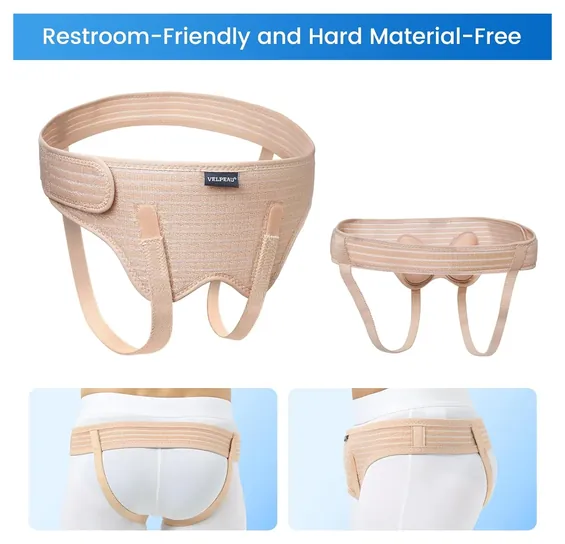
Measure the right place. Inguinal belts are sized by hip circumference, around the pelvic bones or the widest part of the hips, not your pants waist. Umbilical belts are sized around the abdomen at the belly button. Size ranges vary a lot: one popular groin belt stops at 47-inch hips, while some umbilical binders reach a 70-inch abdomen. If you fall between sizes, most makers say to go up.
Pads, Straps And Materials
The pad does the work. A single pad covers one side, and many single-side belts let you move it to the left or right. Others, like the Uriel line from Israel's Meditex, sell left, right and double versions separately. A double, or bilateral, belt has two pads and usually two groin straps, which adds bulk but covers both sides. Pads come in firm silicone, foam and softer memory foam. Firmer pads hold a bulge more surely, and softer ones are kinder over long hours. A few belts include both so you can switch.
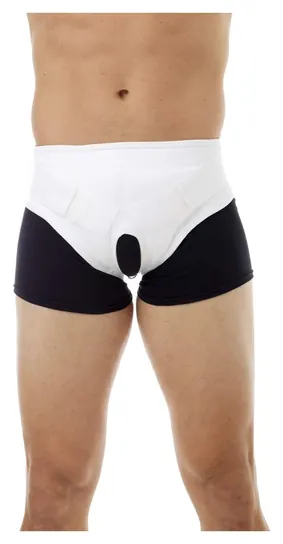
Groin straps keep the pad from riding up, and they're also where most rubbing happens. Brief-style supports, such as the Underworks designs, spread the pressure across a garment instead of a narrow strap. Hook-and-loop closures are on nearly every belt. They wear and collect lint over time, and an edge against bare skin can chafe, so a thin undershirt, or wearing the belt over underwear, helps.
If you're allergic to latex, read the label. Some inguinal belts use latex elastic, while the OTC 2955 Select Series and the Underworks Brace 948 are labeled latex free. Most makers say to hand wash in cool water, air dry and wash pads separately.
What A Belt Can't Do, And When To Get Help
A belt is a stopgap. It can ease the ache and keep a reducible bulge in while you wear it, but the hernia comes back when you take it off, and surgery is the only repair (WashU Surgery). The international HerniaSurge guidelines of 2018 say a painful groin hernia in an adult should be repaired, and that watchful waiting is an option mainly for men with few or no symptoms (HerniaSurge, Hernia journal). Many people wear a belt while they wait for surgery, and some wear one afterward when their surgeon advises it.
Know the emergency signs. A painful bulge that won't go back in, with severe pain that keeps getting worse, nausea or vomiting, or skin over it that turns red or dark, can mean strangulation, when the blood supply is cut off. Trapped intestine can begin to die in as little as four hours, so go to an emergency room (Cleveland Clinic). Never press a belt onto a bulge that won't reduce.
In the U.S., the FDA classes hernia supports as Class I devices, exempt from premarket notification (21 CFR 876.5970), so the claims on a box aren't reviewed by the agency before sale. Belts for babies aren't a good idea: MedlinePlus says taping or strapping an infant's umbilical hernia won't make it go away, and most heal on their own (MedlinePlus).
How we researched this
We compared 23 hernia belts and supports, inguinal and umbilical, read the makers' listings and size charts for the 10 finalists, reviewed guidance from surgeons, hospitals and the FDA's device rules, analyzed owner feedback patterns, and checked every brand for recalls with the U.S. Consumer Product Safety Commission. We found no independent lab tests of hernia belts.
Sources (13)
- Cleveland Clinic: Hernia
- Cleveland Clinic: Strangulated hernia
- GP Notebook: Truss
- WashU Surgery: Are hernia belts effective?
- HerniaSurge Group: International guidelines for groin hernia management (2018)
- eCFR: 21 CFR 876.5970 Hernia support
- MedlinePlus: Umbilical hernia
- Uriel (Meditex Ltd.)
- Underworks
- Ortonyx
- HPH Hernia Support Products
- BestReviews: Best hernia belts
- CPSC recalls
Frequently asked questions
Do hernia belts work?
They can ease pain and hold a reducible hernia in while you wear one, but they don't repair it. The bulge returns when the belt comes off, and surgery is the only fix.
Can a hernia belt help me avoid surgery?
Not for good. A belt can make waiting more comfortable, and some people with mild symptoms wait under a doctor's watch, but the hernia stays. International guidelines say a painful groin hernia should be repaired.
How tight should a hernia belt be?
Snug enough to keep the bulge in when you stand and move, but never painful. Put it on lying down, after the hernia has gone back in, and loosen or remove it if you feel pain, numbness or tingling.
What size hernia belt do I need?
Inguinal belts go by hip measurement, around the pelvic bones or the widest part of the hips. Umbilical belts go by the abdomen at the belly button. If you're between sizes, go up.
Is there a hernia belt for women?
Most belts on this list are unisex and sized by hips or abdomen. Women should have the hernia type diagnosed first, since a femoral hernia sits lower in the groin and can need different care.
Should a baby wear an umbilical hernia belt?
No. MedlinePlus says taping or strapping won't make an infant's umbilical hernia go away, and most close on their own. Doctors usually consider surgery only if one hasn't closed by about age 3 or 4.