The 10 Best Digital Levels
Updated by · How we research

Most of these ten digital levels, from angle gauges to 48-inch box levels, are rated to about 0.1 degree. The Stabila TECH 196, rated to 0.05 degrees, leads. When users buy our independently chosen editorial selections, we may earn commissions to help fund the Wiki.
Fine Homebuilding's test found a digital level isn't more accurate than a good bubble level, just faster and easier to read. It shows the angle as a number, so you can set an exact slope, match an angle or read it at a glance. Angle gauges set saw blades and bend conduit, torpedoes fit tight spots, and 24- and 48-inch levels cover framing and cabinets.
At a Glance
-
1
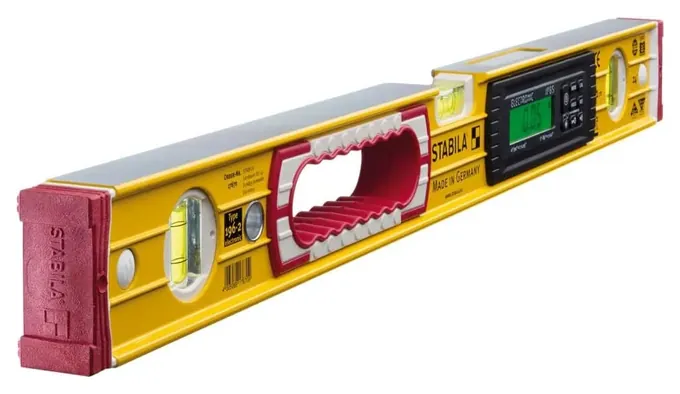
 Stabila TECH 196
$323
-
2
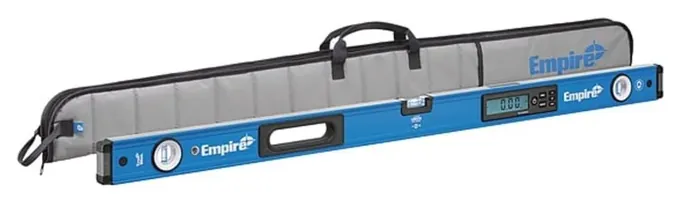
 Empire e105 48-Inch Digital Box Level
$180
-
3
 Klein Tools 935DAG
$32
-
4
 Klein Tools 935DAGL
$64
-
5
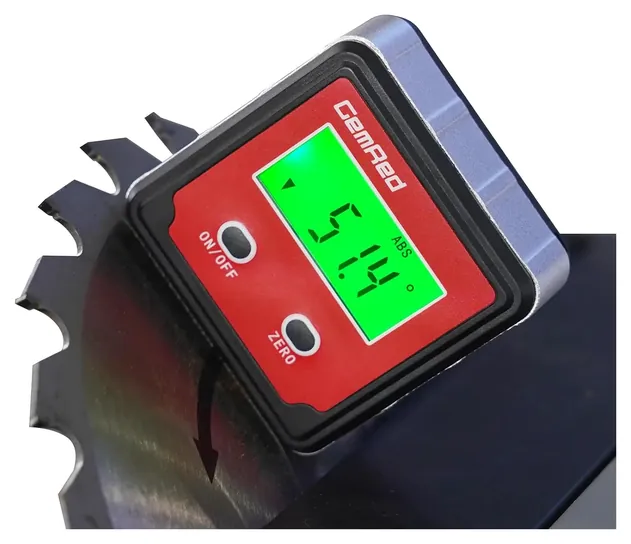
 GemRed Digital Angle Gauge
$19
-
6
 2PM Tools 10-Inch Digital Torpedo Level
$39
-
7
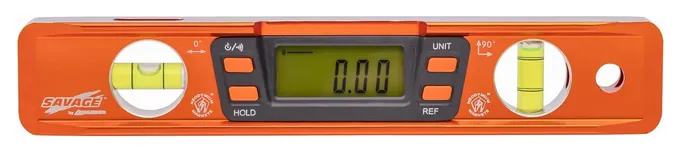
 Swanson Savage 9-Inch Digital Torpedo
$58
-
8
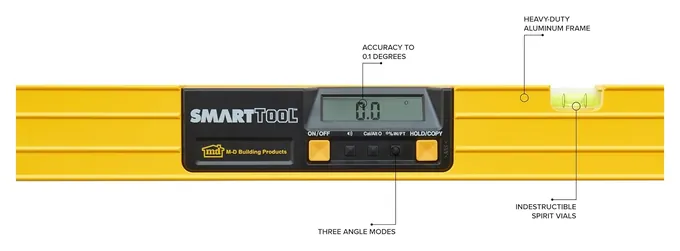
 M-D SmartTool Gen2 24-Inch
$116
-
9
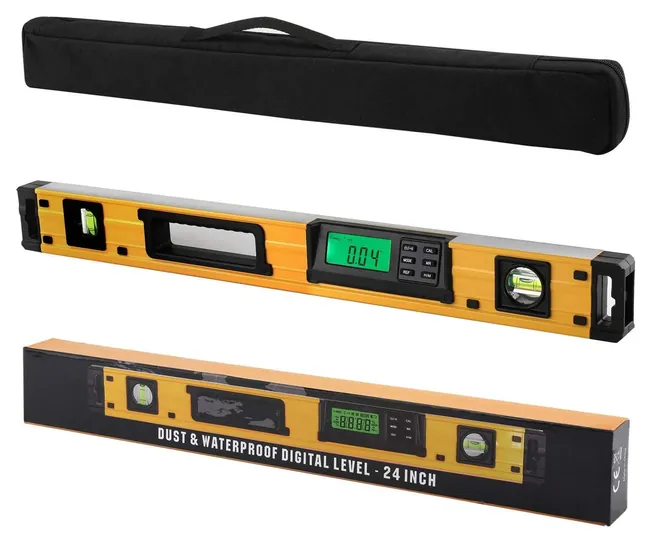
 2PM Tools 24-Inch Digital Level
$49
-
10
 Johnson Level 1760-4800
$155
From the manual
- Despite Stabila's no-calibration pitch, the manual still asks for a flip check before work and recalibration if readings differ by over 0.05 degree. p. 17
- Battery life is at least 400 hours with the display light off, but 80 hours or less on the brightest setting. p. 19
- Auto-off can be set to about 7.5 minutes or two hours by pressing the key and HOLD buttons together; the setting sticks. p. 15
- A roof-pitch mode reads slope in twelfths, such as 6/12, and beeps as you reach each step. p. 12
Why the Stabila TECH 196 is our top pick
Our pick and the runner-up, Empire's e105, are both rated to 0.05 degree at level and plumb,1,4 so the choice comes down to the angles in between, and to water. Stabila's current version, the TECH 196 DL, holds 0.1 degree at every other angle.1 The e105's manual gives 0.2 degree there, twice the error,4 which shows up when you set a ramp, a drain or a stair rail rather than a shelf.
The DL is also the one to rinse off. It's rated IP67, good for 30 minutes at a depth of one meter,2 and its manual lists at least 400 hours on two AA cells with the display light off.1 The Empire is IP65, its manual says never to immerse it, and it lists up to 150 hours.4 A finish carpenter who used eight digital levels for months for Fine Homebuilding called the earlier IP65 Stabila his hands-down favorite.5
The earlier TECH 196 is rated 0.2 degree between level and plumb, IP65 and at least 150 hours,3 close to the Empire's figures, so look for DL in the model name. The e105's 48-inch beam and inspect mode suit framing and repeat ramp checks.4
| Stabila TECH 196 DL | Earlier TECH 196 | Empire e105 48-inch | |
|---|---|---|---|
| Accuracy at level and plumb | ±0.05° | ±0.05° | ±0.05° |
| Accuracy at other angles | ±0.1° | ±0.2° | ±0.2° |
| Water and dust | IP67, brief dunk OK | IP65 | IP65, never immerse |
| Battery life | 400+ hours, light off | 150+ hours | Up to 150 hours |
Sources
- Stabila TECH 196 DL 1Operating instructions, US English, 2023 (PDF), p. 19 2Press release, September 2023
- Earlier TECH 196 3User manual, calibration-lab copy (PDF), p. 21
- Empire e105 4Operator's manual (PDF), p. 1
- 5Fine Homebuilding: “Digital levels: Is a brain better than a bubble?” (2013)
From the manual
- The frame and vials carry a limited lifetime warranty, the electronics one year, and shock damage from a drop isn't covered. p. 1
- It's rated IP65, yet the manual says never to immerse it; clean it with a damp, soft cloth. p. 1
- Use alkaline AA cells only; Empire rules out zinc-carbon batteries. p. 1
- It shuts off after 15 minutes idle by default; two buttons cycle the timer to 30 minutes, one hour or two hours. p. 1
Compare the specs
Swipe the table sideways to see every column.
| Product | Accuracy at level and plumb / other angles (± degrees) | Water and dust rating (IP code) | Batteries |
|---|---|---|---|
| 1. Stabila TECH 196 | 0.05 / 0.1 (earlier: 0.2) | IP67 (earlier: IP65) | 2 AA |
| 2. Empire e105 48-Inch Digital Box Level | 0.05 / 0.2 | IP65 | 2 AA |
| 3. Klein Tools 935DAG | 0.1 / 0.2 | IP42 | 2 AAA |
| 4. Klein Tools 935DAGL | 0.2 / 0.2 | IP42 | 2 AA |
| 5. GemRed Digital Angle Gauge | 0.2 (one figure) | None listed | 1 x 1.5 V |
| 6. 2PM Tools 10-Inch Digital Torpedo Level | — | — | — |
| 7. Swanson Savage 9-Inch Digital Torpedo | 0.029 (one figure) | None listed | 2 CR2032 coin cells |
| 8. M-D SmartTool Gen2 24-Inch | 0.1 / 0.1 | None listed | 9 V |
| 9. 2PM Tools 24-Inch Digital Level | — | — | — |
| 10. Johnson Level 1760-4800 | 0.1 / 0.2 | IP54 | 2 AAA |
Figures come from each maker's manual or spec page. The Stabila row shows the current TECH 196 DL, with the earlier TECH 196's ratings in brackets. GemRed and Swanson each give one accuracy figure without saying at which angles, and GemRed, Swanson and M-D list no IP rating. 2PM Tools publishes no manual or spec sheet outside its store listings, so its two levels are left blank.
Sources
- Stabila TECH 196 DL instructions, 2023 (PDF) Earlier TECH 196 manual, calibration-lab copy (PDF)
- Empire e105 operator's manual (PDF)
- Klein Tools 935DAG instructions 935DAGL instructions
- GemRed 82412 specifications
- Swanson Savage SVT200 SVT200 page, 2020 archive (batteries)
- M-D Gen2 SmartTool SmartTool Gen 2 manual (ManualsLib copy)
- Johnson Level 1760-2400 and 1760-4800 manual (PDF)
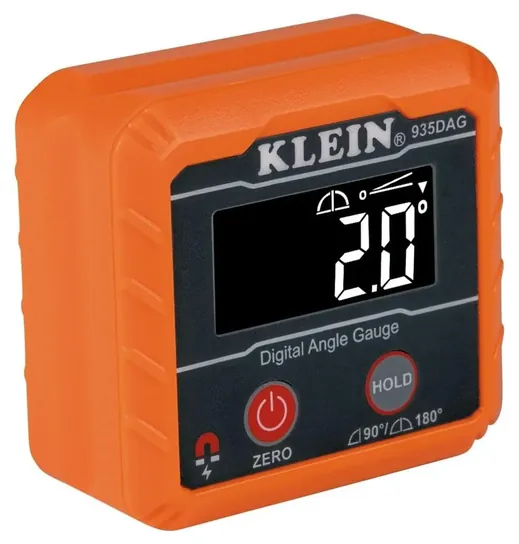
From the manual
- Its 0.1-degree accuracy holds only within a degree of 0, 90 and 180; elsewhere Klein rates it at 0.2, on the magnetic base. p. 1
- It turns itself off after 10 minutes of inactivity, and the low-battery icon appears with about 30 minutes left. p. 2
- It shows an error when tipped 30 degrees forward or back, so keep the base flat against the surface. p. 2
- Recalibrate on a flat surface: one reading with the display facing you, a second after turning the gauge 180 degrees. p. 2
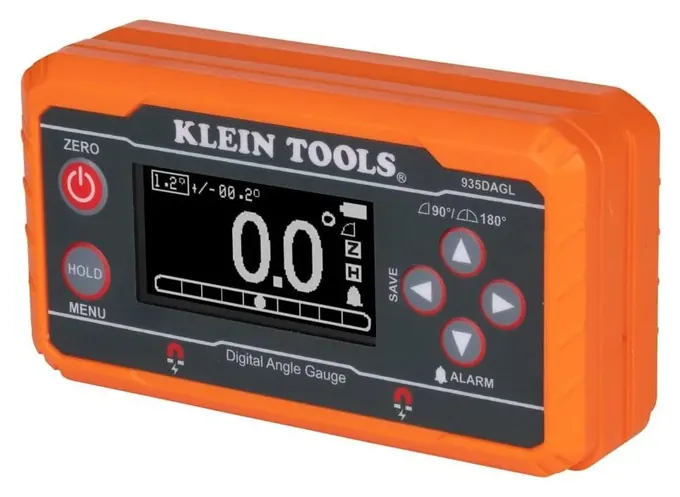
From the manual
- Accuracy is 0.2 degree on the magnetic base, but only 0.5 degree in bullseye mode lying on its back. p. 1
- Four pitch presets, from an eighth to a half inch per foot, set common drain slopes without math. p. 2
- Auto-off is 10 minutes by default; the menu offers 30 minutes instead. p. 1
- After a factory reset, Klein says to run both the single-axis and dual-axis calibrations before measuring. p. 2
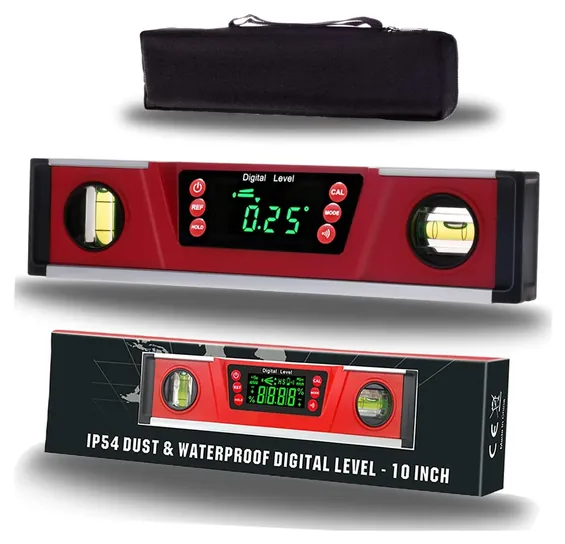

From the manual
- It shuts off after five minutes by default; holding MODE for three seconds switches the timer to two hours. p. 6
- Johnson makes checking calibration the user's job before every use; the CAL button runs a two-position flip. p. 9
- It's rated IP54, and the manual says to keep it dry and store it in its case. p. 10
- Two AAA cells last about 100 hours; remove them if it will sit for more than three months. p. 10
Editor's Notes
November 3, 2026, by Ezvid Wiki Editors:
We read the makers' manuals and spec sheets for eight of the ten picks and added a spec table, a section on why the Stabila leads, and notes from the manuals. We corrected the Empire's accuracy, which its manual puts at 0.05 degree at level and plumb, not about 0.03, and removed a magnet claim, since Empire sells this level in both magnetic and non-magnetic versions. The Klein 935DAG switches itself off after 10 minutes, so we replaced the old battery-drain warning.
October 14, 2026, by Ezvid Wiki Editors:
The Stabila TECH 196, rated to 0.05 degrees and the level professionals tend to buy for life, comes first. Since the 2021 version we dropped both Calculated Industries AccuMASTER models, which we couldn't find for sale, the Skil 12-inch, which is hard to find in stock, and the Bosch, which is now a pricey laser angle finder rather than a level. We added Klein's programmable 935DAGL, the GemRed angle gauge, a 2PM torpedo and Johnson's 48-inch box level, and we corrected the Stabila entry, which named a different model than the one we linked.
We ranked the levels on rated accuracy, readability, toughness, features and value, using makers' specifications, Fine Homebuilding's months-long trial of eight digital levels, woodworking forums and long-term owner feedback. That test found what makers rarely say: a digital level isn't more accurate than a good bubble level, just faster and easier to read, so most of these are rated to about a tenth of a degree. Only the Stabila, the Empire and the Swanson claim better.
Earlier notes
December 15, 2020, by Alexander Rennie:
We replaced the Digi-Pas DWL80E with the Klein Tools 935DAG, a superior handheld model backed by Klein’s dedication to high-quality performance. This new addition also has an auto-rotating screen, making it easy to read even when inverted.
We also removed the Digi-Pas Waterproof due to its quality control issues, and added the 2PM Tools Torpedo, a 24-inch model that is designed with an easy to read green backlit LCD readout. It’s also much cheaper than similar models of this length, making it a great choice for a tradesman that needs a high-quality tool that won't break the bank.
If you’re looking for a tool with a bit more versatility than the options here, this collection of builders levels should provide you with a good variety to choose from. You’ll find typical bubble-style models here, as well as laser-sight tools, and even high-end rotary levels.
If you’re solely interested in the convenience of laser models, these line lasers might be what you’re looking for. Most of these include handy magnets to secure them in place while you work.
December 19, 2019, by Rafael Perez:
Removed the General Tools ToolSmart because it is merely an angle finder with traditional bubble vials. Added the Empire 105.48. It's accurate to plus or minus 500th of a degree at 0 and 90 degrees. [2026 update: Empire's manual rates the digital readout to 0.05 degree at 0 and 90 degrees; only its bubble vials are rated finer, to 0.0005 inch per inch.] At 48 inches, it will come in handy to contractors who need to level out across long surfaces such as frames and floors - a shorter model won't detect slopes caused by warped or uneven stock. As with many Empire levels, the I-frame design is quite robust but lightweight enough to be used overhead comfortably for long periods of time. [2026 update: the e105 is a box-beam level, not an I-beam.]
September 12, 2019, by Kevin Flores:
Ultimately, the main advantage that a digital level has over the classic bubble level is to make readouts easier and faster to understand, eliminating much of the guesswork. This is especially valuable for those who have impaired vision, but also for anyone who uses a level day-to-day and wants to speed up their workflow. In fact, many of the digital levels on the market have retained the spirit vials of old, in case you want a backup way to check the alignment of a surface.
Since most digital levels operate at about the same margin of error, our ranking was influenced not so much by claims of accuracy but more so by a model's durability and features that improve the user interface -- such as a backlit display and audible indicator.
Having an audible indicator, which alerts you when you've achieved a target angle, can be crucial when working in situations that require you to face away from your level.
Our top pick, the Calculated Industries AccuMASTER PRO, has all the aforementioned features, plus a display that flips automatically when the tool is inverted, giving you a lot of flexibility with how you use it.
Also worth spotlighting is the General Tools ToolSmart, which takes the leap from digital level to smart level, and can save data to your phone or tablet via a Bluetooth connection.
How Accurate Is A Digital Level?
A digital level is a regular level with a tilt sensor and a screen.
A digital level is a regular level with a tilt sensor and a screen. It reads the angle as a number, and many can also show percent slope, inches per foot or millimeters per meter, which saves arithmetic when you set a drain or a ramp. After months of daily use, a finish carpenter writing for Fine Homebuilding found the digital readouts were no more accurate than good bubble vials; their advantage is speed, an exact number, and tones that tell you when you're level.
Most models are rated at 0.1 degree at level and plumb and 0.2 degree at other angles. A tenth of a degree is about 1.7 millimeters over a meter, or about 0.02 inch per foot: plenty for shelves, cabinets, decks and pipe slopes, but not for machinery setup. The Stabila and Empire are rated to 0.05 degree at level and plumb. If you set ramps, drains or stair rails, read the second figure too: the Empire, like most, loosens to 0.2 degree between level and plumb, while the current Stabila TECH 196 DL holds 0.1.
Length matters as much as the sensor. A short level follows every bump and dip, while a 24- or 48-inch beam averages over a longer stretch.
Angle Gauge, Torpedo Or Box Level?
Angle gauges, like the Klein and GemRed cubes, are a couple of inches across with a magnetic base. They're the tool for setting table saw and miter saw angles, bending conduit and checking the tilt of a machine. Zero one on a surface you trust first, then measure.
Torpedo levels are 9 to 12 inches long, usually with magnets and a V-groove for pipe, and they fit in a pouch for plumbing, electrical and HVAC work. Box levels of 24 inches suit cabinets, counters and general carpentry, and 48-inch levels suit framing, door and window openings and long ramps.
If you work on concrete, tile or masonry, look for a sealed level you can rinse. Stabila's current TECH 196 DL is IP67, which Stabila says survives half an hour at a depth of one meter; the earlier TECH 196 is IP65. The Empire's IP65 keeps out dust and spray, but its manual says never to immerse it. IP54 means dust- and splash-resistant only, and the Klein gauges' IP42 covers little more than drips. Magnets help on steel studs, ducts and pipe, but they also pick up metal filings.
Calibration And Care
Check a digital level before work that matters and whenever it's been dropped; Stabila's manual asks for a check before each job, after a hard knock and after a big temperature swing. Johnson Level suggests a flip test: take a reading on a flat surface, turn the level end for end, and take another; if the two differ by more than about 0.2 degree, run the calibration routine in the manual (Johnson Level). Stabila's own limit for its level is tighter, at 0.05 degree. Compare the screen with the bubble vials now and then too.
Woodworkers recommend checking an angle gauge against a good square before trusting it for 90-degree cuts (Fine Woodworking forum). Many of these levels switch off after five to 15 minutes idle, but the Stabila, Empire and Johnson can be set to stay on for two hours, which flattens batteries if you forget. Take the batteries out if you'll store a level for months.
The Swanson uses coin-cell batteries, which are dangerous if a child swallows one, so store spares out of reach. We found no recall of any level on this list in the U.S. Consumer Product Safety Commission's database; Klein's CPSC recalls are for clamp meters, voltage testers and power stations, not its levels.
How we researched this
Out of more than 30 digital levels and angle gauges compared, the ten picks were checked against the makers' own documents wherever they exist: Stabila's operating instructions for the TECH 196 DL and the earlier TECH 196, Empire's e105 operator's manual, Klein's 935DAG and 935DAGL instructions, Johnson's 1760-series manual, M-D's Gen2 SmartTool manual, and the GemRed 82412 and Swanson SVT200 spec pages. 2PM Tools publishes no manual, so its two levels rest on its own store listings. Fine Homebuilding's months-long trial of eight digital levels and Johnson Level's calibration guide shaped the buying advice. Neither the CPSC nor Health Canada lists a recall for any of these ten levels; the Klein recalls there are for clamp meters, voltage testers and power stations.
Sources (21)
- Fine Homebuilding: Digital levels: Is a brain better than a bubble?
- Johnson Level: choosing digital and electronic levels
- Stabila TECH 196 DL
- Stabila TECH 196 DL / 196 M DL operating instructions (US English, 2023)
- Stabila press release, 09/2023: TECH 196 DL and TECH 196M DL
- Stabila TECH 196 / 196 M (IP65, earlier model) user manual, calibration-lab copy
- Empire e105 digital levels operator's manual
- Empire Level: e105 Series digital box levels launch (lists magnetic and non-magnetic models)
- Klein Tools 935DAG instructions
- Klein Tools 935DAGL instructions
- GemRed 82412 digital angle gauge specifications
- Swanson Savage SVT200
- Swanson SVT200 product page, 2020 archive (batteries)
- M-D Gen2 SmartTool digital level
- M-D SmartTool Gen 2 manual (ManualsLib copy)
- Johnson Level 1760-2400 and 1760-4800 instruction manual
- Milwaukee REDSTICK digital level
- Fine Woodworking forum: digital angle gauges
- CPSC recalls
- CPSC: Klein Tools recalls Blackfire and Klein Tools power stations (2023)
- Health Canada: Klein Tools Non-Contact Voltage Tester (NCVT-1) recall
Frequently asked questions
Are digital levels more accurate than bubble levels?
Not inherently. They're faster and easier to read and give an exact number, but most are rated about as accurate as a good bubble vial.
How accurate are digital levels?
Most are rated to 0.1 degree at level and plumb and 0.2 degree at other angles. The Stabila and Empire claim 0.05 at level and plumb, and the current Stabila TECH 196 DL holds 0.1 at other angles.
How do I calibrate a digital level?
Take a reading, turn the level end for end on the same spot, and read again. If the readings differ by more than about 0.2 degree (0.05 for the Stabila), follow the calibration steps in the manual.
What size digital level should I buy?
An angle gauge for saws and conduit, a torpedo for tight spots, a 24-inch for cabinets and general work, and a 48-inch for framing.
Do digital levels need batteries?
Yes, for the display. Most box and torpedo levels have bubble vials too, so they still work as ordinary levels when the battery dies; the Klein angle gauges have none.
Can a digital level get wet?
It depends on the rating. Stabila's current TECH 196 DL is IP67 and can be rinsed or briefly dunked; the earlier TECH 196 is IP65. The Empire's IP65 handles spray, but its manual says never to immerse it, and Johnson's manual says to keep its IP54 level dry.
Can I use an angle gauge on a table saw?
Yes. Zero it on the saw table, put it on the blade and tilt the blade until it reads the angle you want. Check 90 degrees with a square.