The 9 Best Calderos
Updated by · How we research

Nonstick or bare cast aluminum? Nine calderos compared by size, lid, warranty and cooktop fit, with the IMUSA Traditional Caldero in first place. When users buy our independently chosen editorial picks, we may earn commissions to help fund the Wiki.
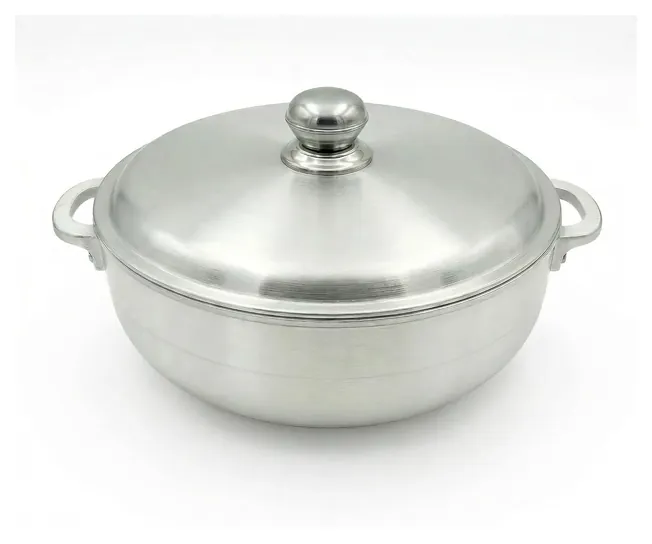
Bare cast aluminum builds a thick pegao, the crisp layer of rice at the bottom of the pot, while nonstick gives a thinner, softer one. A caldero is a wide, heavy pot with rounded sides and a snug lid, most often cast aluminum, used in Puerto Rican, Dominican, Cuban and Colombian kitchens for rice, beans and stews. Plain aluminum won't work on induction by itself.


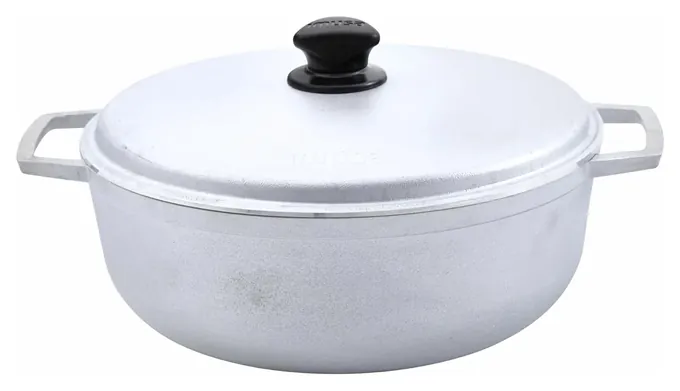
From the manual
- It isn't dishwasher safe: wash it once cool with mild soap and warm water, then dry it and let it air out before storing. p. 2
- Soak burnt-on rice for a few minutes instead of using oven cleaner, steel wool or scouring powder. p. 2
- The 90-day warranty covers only manufacturing defects, needs the original receipt and excludes commercial use. pp. 2-3
- For a claim, call or email IMUSA; the booklet says not to return the pot to the store or mail it in. pp. 2-3
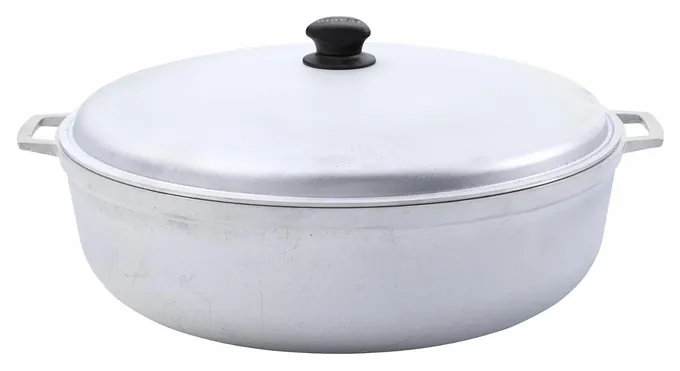
From the manual
- IMUSA lists it at nearly 18 inches across and about 8 inches tall, so measure the cabinet first. spec sheet
- The pot can go in the oven, but only without its cast aluminum lid. spec sheet
- IMUSA lists gas, electric and glass tops only, not induction. spec sheet
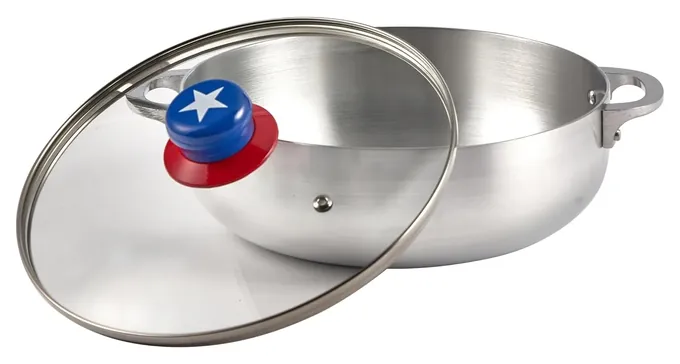
From the manual
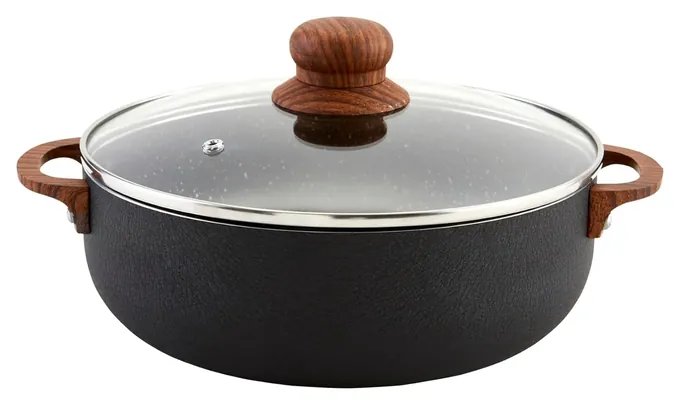
- IMUSA lists gas, electric and glass tops for it, not induction. spec sheet
- It goes in the oven only without the glass lid, which has a steam vent. spec sheet
- Hand wash only; IMUSA's care booklet says its cookware isn't dishwasher safe. care booklet, p. 2
From the manual
- IMUSA rates it for heat up to 350 F and, unlike its bare pots, doesn't call it oven safe. spec sheet
- IMUSA's disclosure names PTFE, PFA and FEP as the nonstick chemicals. IMUSA disclosure page
- Skip steel wool and scouring powder; soak stuck food instead. care booklet, p. 2
From the manual
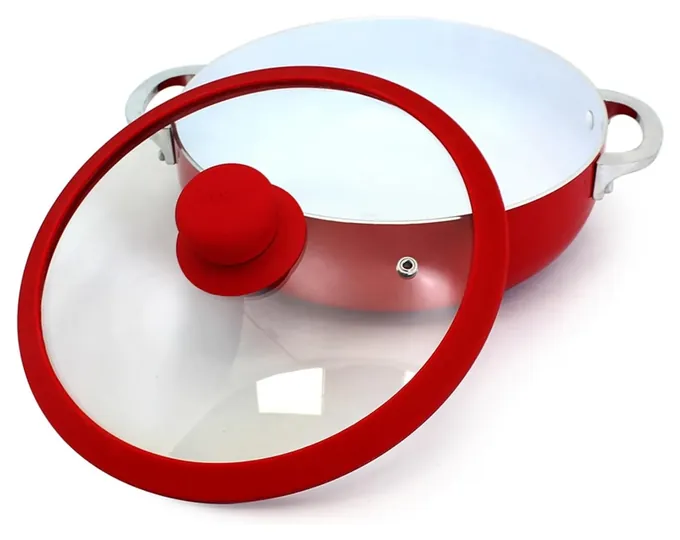
- It can go in the oven without the lid, and IMUSA rates it for heat up to 350 F. spec sheet
- The glass lid has a steam vent and a soft-touch red silicone rim. spec sheet
Editor's Notes
November 4, 2026, by Ezvid Wiki Editors:
We read IMUSA's spec pages, care booklet and warranty for its five pots here and added notes from them under each one. IMUSA's warranty runs 90 days, not the 30 we listed. The safety section now reports Seattle & King County's lead tests of IMUSA calderos and how to cut the risk, and we flagged conflicting coating details for the Boricua and dropped claims no source supports.
October 15, 2026, by Ezvid Wiki Editors:
A holdover from the old list, the IMUSA Traditional Caldero now leads: its bare cast aluminum is still the way to a good pegao. Most of the rest had vanished: the Farberware Buena Cocina, Imusa Colombian, GauchoGrillX Curado and American Dream Kitchen Sense are gone from sale. We also dropped the Snow Peak Cast Aluminum, which is really a camping pot, the restaurant-size Uniware Silver, the thinly reviewed Wee's Beyond Heavy Gauge and the Aramco Alpine Gourmet Set, since one good pot beats a stack of them for most kitchens.
The Traditional Caldero is now sold in a 7.5-quart size. The IMUSA Red Ceramic Caldero stays too. New picks cover what readers ask about most: the Universal Caldero, the IMUSA Jumbo Caldero for big batches, the IMUSA Boricua, nonstick options and an induction claim worth checking.
We relied on makers' specs and disclosures, cooking blogs, owner feedback and recall databases, and we read the FDA's warnings about lead in some imported aluminum cookware. None of the brands its alerts named is on this list. [2026 update: Public Health - Seattle & King County, whose cookware table the FDA cites, did lab-test calderos for lead, IMUSA's among them; the buyer's guide has the results.]
Earlier notes
September 8, 2020, by Karen Bennett:
The 6.9-quart Imusa Traditional joins the list today and although it resembles a traditional Dutch oven, it’s conveniently lighter and easier to maintain. It’s the perfect size for making big batches of rice, beans, and more, or to sear large pieces of meat before you roast them. It’s cast aluminum construction distributes heat evenly and is safe to use on either gas or electric burners. It replaces the Imusa Evolution, which is unavailable at this time. Also coming on board is the Aramco Alpine Gourmet Set, which brings you five sizes in total that range from two to 13 quarts. Use the smaller ones for side dishes like rice and beans, the medium one for stew, chili, or soup for your family, and the large one for when you’re throwing a party to serve a crowd. They become naturally seasoned over time, and both the pots and their lids are safe for use in the oven.
The Farberware Buena Cocina remains a popular choice, as it’s hard to beat when it comes to performance and durability. This 9.5-quart aluminum choice features a striking red exterior that will look great in many a kitchen, and its shatter-resistant glass lid fits snugly for quick and efficient cooking. In addition to the newly added Imusa model, our selection also features a couple of others from the same manufacturer, a company that originated in Colombia and has been producing aluminum cookware for nearly a century. The 4.8-quart Imusa Colombian boasts an elegant charcoal-colored hammered porcelain finish, while the 3.2-quart Imusa Ceramic offers a vibrant red exterior that makes it equal parts kitchen decor and functional cookware. If you go with a set with a nonstick coating, keep it looking and performing at its finest by using nylon or silicone cooking utensils that won’t create scratches.
February 11, 2019, by Gabrielle Taylor:
While all of the models on our list are made from aluminum, there are some distinct differences between them. The Farberware Buena Cocina, Imusa Colombian, and Imusa Ceramic all have nonstick coatings and transparent glass lids that make it easy to keep an eye on your food as it cooks. If you're looking for a caldero that can hold enough food for a large group, the American Dream Kitchen Sense, Uniware Silver, and Wee's Beyond Heavy Gauge all come in sizes with extra-large capacities. [2026 update: in acid tests on pots bought in 2019, Public Health - Seattle & King County found that Wee's Beyond calderos released lead above both of the FDA's reference levels. None of these three is on the current list.]
Special Honors
Town Food Service Caldero Town Food Service Equipment, a restaurant supply maker, sells cast aluminum calderos with cast aluminum lids in 6.7, 11.3, 18.5 and 22.6 quarts. The two largest go well past any home caldero, for restaurants, caterers and big gatherings. Restaurant supply dealers carry them, and stock varies, so check a few dealers for the size you want. townfood.com
What A Caldero Does, And Why Cast Aluminum
Stainless shrugs off acidic food, and enameled cast iron holds heat well but weighs far more.
Caldero is Spanish for cauldron (SpanishDict), but in Caribbean and Latin American kitchens it means a wide, fairly shallow pot with rounded sides and a tight lid, an all-metal pot made for rice. Most are cast aluminum, made by brands such as IMUSA and Universal in Colombia.
The shape matters for pegao, the crisp layer of rice that forms on the bottom when the pot is left alone over low heat (Delish D'Lites). Puerto Rican food blogger Kitchen Gidget says a caldero helps that crust form, though a large pot will do in a pinch (Kitchen Gidget).
Thickness counts too. One buying guide puts the sweet spot at 2.5 to 3 millimeters of cast aluminum and warns that thin stamped pots develop hot spots that scorch rice (WellWhisk). Bare, natural-finish pots darken and season with use and grip the rice for a thick pegao. Nonstick and ceramic-coated versions clean up faster, but they give up most of that crust.
If you'd rather avoid aluminum, stainless steel and enameled cast iron pots and Dutch ovens also cook rice. Stainless shrugs off acidic food, and enameled cast iron holds heat well but weighs far more. Neither builds pegao quite the same way.
Choosing A Size And Checking Your Cooktop
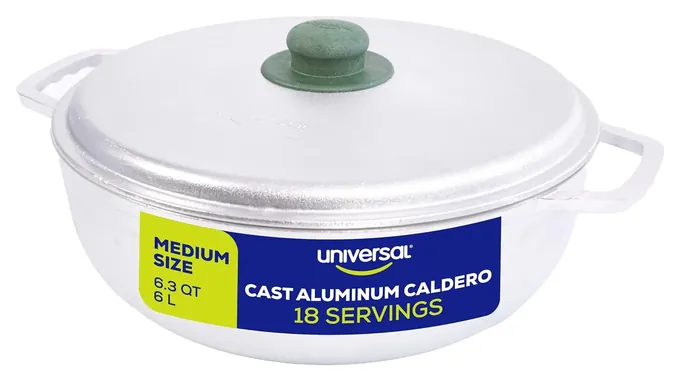
Rice roughly doubles or triples as it cooks, so the pot should be no more than about half full of raw rice and liquid. A common rule of thumb: 2 to 3 quarts for one or two people, beans or side dishes; 4 to 7 quarts for a family; 10 quarts and up for parties. Kitchen Gidget's arroz con gandules, made with 3 cups of rice, calls for a caldero of about 6 quarts (Kitchen Gidget). Universal rates its 6.3-quart pot for 18 cups of rice.
Treat listed dimensions with care. Several listings give sizes or weights that don't match the maker's own photo charts, so go by the capacity in the product title, and measure your cabinet before buying a jumbo pot. Very wide pots also overhang home burners, so they heat less evenly at the edge.
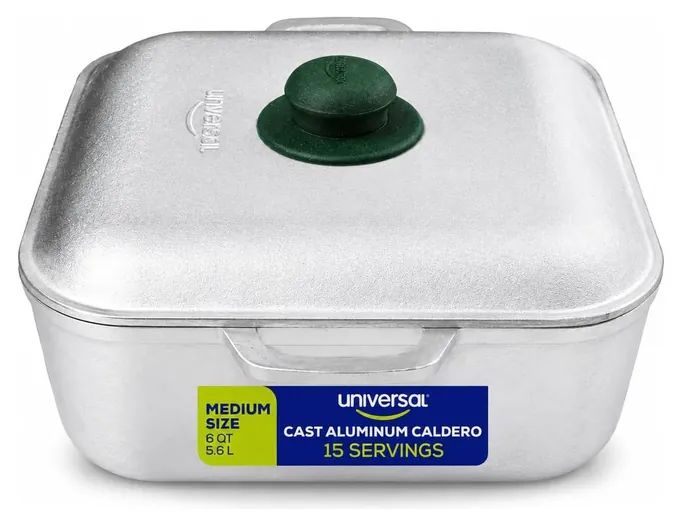
Check your stove. Plain aluminum isn't magnetic, so it doesn't work on an induction cooktop unless the base has a steel layer. Universal says its round pots aren't for induction, and few calderos claim to be. A magnet that sticks firmly to the bottom of a pot is a quick test. Gas, electric coil and glass-ceramic tops all work with standard calderos.
Food Safety And Care
Aluminum cookware is widely used. MedlinePlus, the National Library of Medicine's consumer site, notes that uncoated aluminum leaches only a very small amount into food, that anodized or sealed aluminum doesn't leach, and that aluminum cookware isn't considered a major risk for Alzheimer's disease (MedlinePlus).
Lead is a separate issue. The FDA has warned that some imported cookware made of aluminum, brass and aluminum alloys called Hindalium or Indalium can leach lead into food (Virginia Department of Health), and its alerts named labels such as Tiger White, Silver Horse and JK Vallabhdas (Tom's Guide). None of those labels is on this list, but calderos have been tested too. Public Health - Seattle & King County, whose cookware table the FDA cites (FDA), simmered a vinegar-strength acid in four IMUSA calderos bought online in 2021. After 15 minutes, the lead stayed well under the FDA's reference level for children. After the acid sat in the pots for 24 hours, all four exceeded it, though none reached the level set for pregnant people (Seattle & King County). Two Wee's Beyond calderos exceeded both. The table also lists an Alpine Cuisine aluminum steamer, a different product from the Alpine Cuisine pot here, that exceeded the child level after 24 hours. The table doesn't name the IMUSA models, and in July 2026 WXXI reported that a Nazareth University lab found 187 to 266 ppm of lead in three new IMUSA pots (WXXI).
In the same report, Clare Robinson-Henrie, head of the Coalition to Prevent Lead Poisoning, said acidic food and regular high heat can pull lead out faster, and that storing leftovers in the pot is riskier. So move leftovers out of a bare aluminum caldero once the meal is done, and keep long tomato, vinegar or citrus braises for a coated, stainless or enameled pot.
Nonstick coatings are a choice, not a hazard label. The FDA authorizes certain PFAS, such as PTFE, for nonstick cookware (FDA), while some states, including Minnesota, now bar PFAS in cookware. "PFOA-free" doesn't mean PFAS-free. IMUSA publishes a chemical disclosure page that names its nonstick chemicals and lists, by item number, the pots it won't sell in Minnesota (IMUSA).
For care, hand wash, let a hot pot cool before it meets cold water, use wooden or silicone tools on coated pots, and replace any pot whose coating peels. Aluminum handles get hot, so keep pot holders close.
How we researched this
This list came from about 20 calderos, including every size of the IMUSA and Universal lines. For the five IMUSA pots we read their spec pages, IMUSA's care booklet, warranty sheet and chemical disclosure page; Universal, Alpine Cuisine and Frynest publish no manuals, so those picks rest on seller listings. Public Health - Seattle & King County's table of cookware that leached lead, the FDA's lead alerts and MedlinePlus shaped the safety advice. The CPSC and Health Canada list no recall for any of these pots; the only IMUSA recalls found, both from 2016 in the U.S. and Canada, covered espresso makers.
Sources (22)
- SpanishDict: caldero vs. paila
- Delish D'Lites: Puerto Rican white rice with pegao
- Kitchen Gidget: Puerto Rican rice
- WellWhisk: caldero buying guide
- MedlinePlus: Choosing safe cookware
- Virginia Department of Health: FDA warns about imported cookware leaching lead
- Tom's Guide: FDA warns imported cookware could leach lead
- FDA: Authorized uses of PFAS in food contact applications
- IMUSA: Our Commitment (chemical disclosure)
- Town Food Service: Aluminum Caldero with Lid
- FDA: Letter to retailers on lead in certain imported cookware (Dec. 2024)
- Public Health - Seattle & King County: Cookware that released lead (PDF)
- WXXI News: Immigrants rely on these popular pots. But tests show a hidden danger
- IMUSA: Cookware use and care manual (PDF)
- IMUSA: Limited warranty (PDF)
- IMUSA: 7.5 Qt Cast Aluminum Caldero spec page
- IMUSA: 11.6 Qt Cast Aluminum Caldero spec page
- IMUSA: 3.2 Qt Boricua Polished Aluminum Caldero spec page
- IMUSA: 4.4 Qt Black Stone Nonstick Caldero spec page
- IMUSA: 3.2 Qt White Ceramic Caldero, Red, spec page
- CPSC: IMUSA recalls espresso makers (2016)
- CPSC recalls
Frequently asked questions
What is a caldero in English?
Caldero means cauldron in Spanish. In the kitchen, it's a wide, heavy pot with rounded sides and a tight lid, usually cast aluminum, used for rice, beans and stews in Caribbean and Latin American cooking.
What is the best caldero for rice?
A bare cast aluminum pot such as the IMUSA Traditional Caldero or the Universal Caldero. The uncoated surface builds pegao, the crisp rice crust at the bottom, which nonstick pots mostly lose.
What size caldero do I need?
About 2 to 3 quarts for one or two people, 4 to 7 quarts for a family, and 10 quarts or more for parties. A 3-cup batch of arroz con gandules wants a pot of about 6 quarts.
Are aluminum calderos safe?
MedlinePlus says uncoated aluminum leaches very little aluminum into food and isn't a major Alzheimer's risk. Lead is the open question: Seattle & King County found that four IMUSA calderos released lead above the FDA's level for children once acid stood in them for a day. Don't store leftovers or acidic food in a bare pot.
Do calderos work on induction?
Most don't, because aluminum isn't magnetic. Universal says its round pots aren't for induction. A few makers claim induction bases; check with a magnet.
Is there a stainless steel caldero?
Some stainless steel pots are sold as calderos, and they handle acidic food well. They don't build pegao the same way, and enameled cast iron is a heavier alternative.