The 7 Best Band Clamps
Updated by · How we research

Ratchet, crank-reel, steel and one-hand band clamps compared for frames, boxes, chairs and round work. The Bessey VAS-23+2K-CB leads for its long, even pull. When users buy our independently chosen editorial choices, we may earn commissions to help fund the Wiki.
A band clamp holds a glue-up, but it won't square it: the strap pulls a frame into whatever shape the joints allow, so check the diagonals before glue grabs. One strap squeezes all four corners of a frame or drawer at once, and it wraps chairs, barrels and hexagons that bar clamps can't reach. Framers and chair menders get the most use from one.


Editor's Notes
October 26, 2026, by Ezvid Wiki Admin:
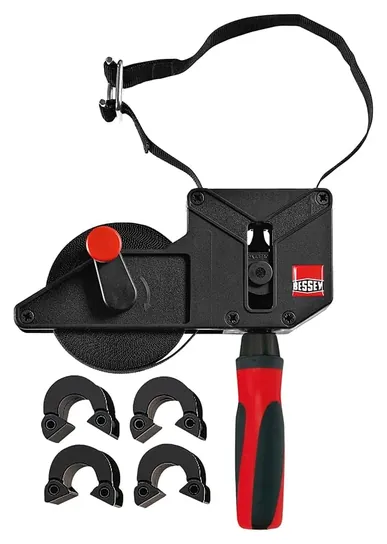
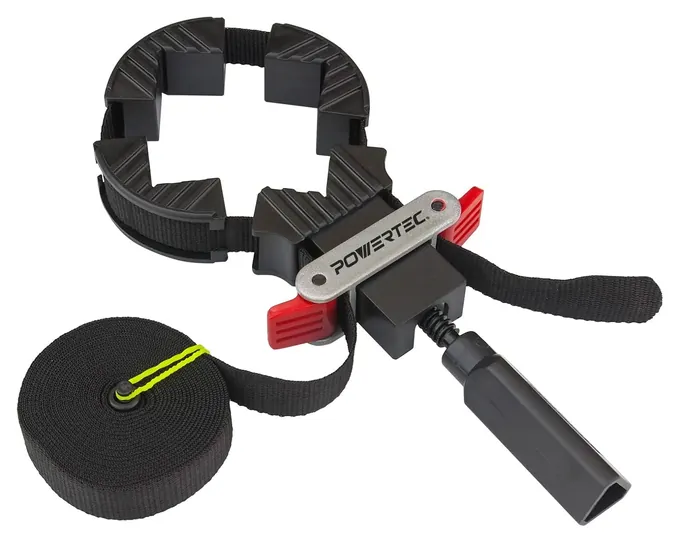
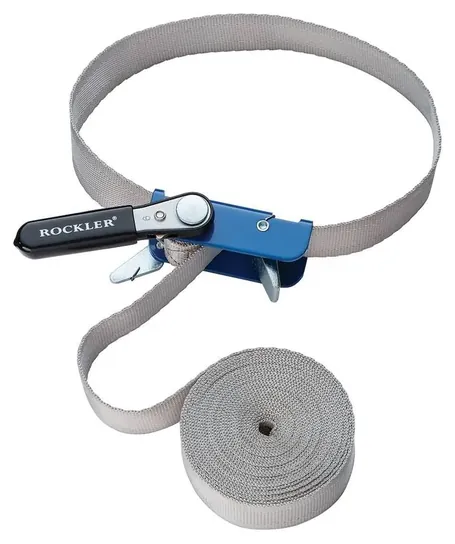
The Bessey VAS-23+2K-CB now leads this list. It replaces the older Bessey VAS23, which is no longer sold, and its crank reel and pivoting corner clips handle the widest range of shapes. The Powertec 71017 takes over from the Powertec 71122, the same clamp in another color, and the Rockler 58432 stays for chairs and round work.
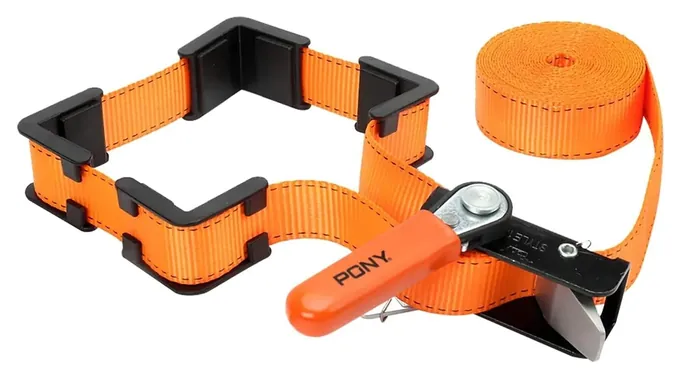
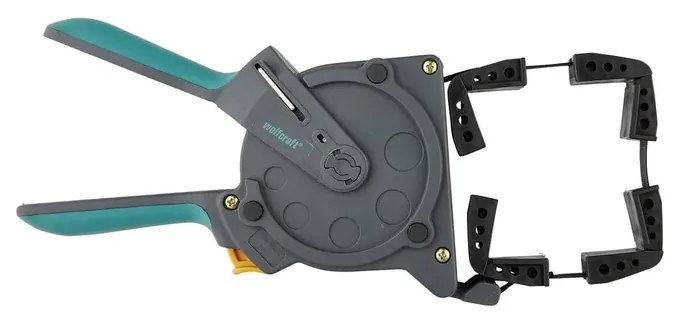
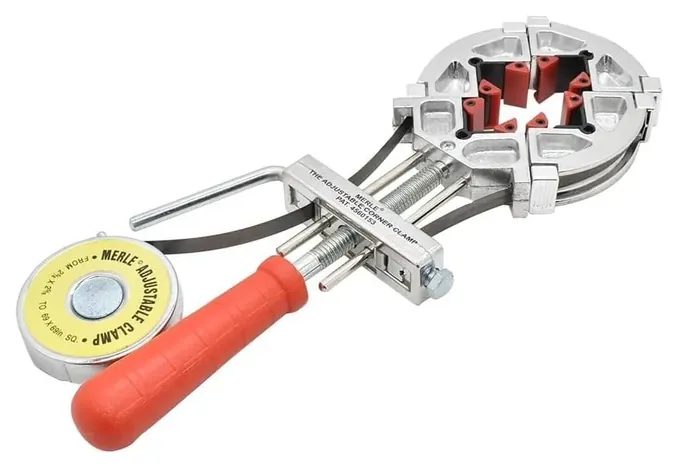
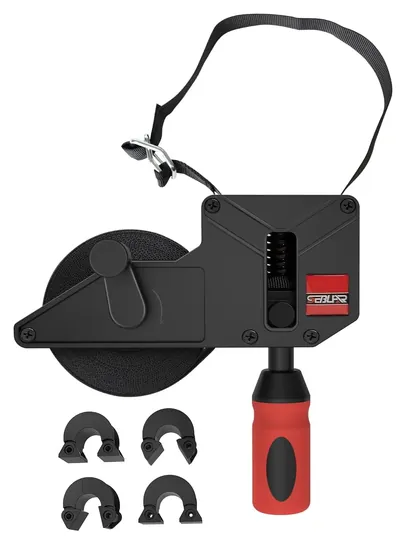
We added the Pony Jorgensen 1215 for its steel frame, the wolfcraft 3681000 for one-hand framing, the MLCS Merle MLC-4879 for heavy boxes and the Sebupar Variable Angle as a cheaper long strap. The Jorgensen T24143 and Deadwood Crafted Tools Multi-Angle have left the market, and we dropped the Pittsburgh 66220 because it's nearly sold out and little is published about it.
The evidence here is Pony's and Powertec's spec pages, Bessey's specs as woodworking retailers print them, one woodworker's review of the Merle, and patterns in owner feedback about slipping corners and worn straps. Hose clamps, exhaust bands and flooring straps share the name or the look, but they do a different job, so they're not here.
July 18, 2019:
Band clamps can save a user time on many tasks as an alternative to setting up an assortment of bar clamps. At some tasks, it is very difficult to achieve the same quality without them. The Rockler 58432 and the Jorgensen T24143 are high-quality clamps that can exert more than enough squeeze. They both have frames that ride flat on a workpiece which allows for an even distribution of force because the strap rides out nearly parallel to the surface.
For the purposes of this list, I did not include hose clamps or banding tools even though, arguably, both are band clamps. Hose clamps will generally come as either spring-type or screw-type. Spring-type clamps are self-tightening and therefore, strictly speaking, do not fit the properties associated with band clamps because they do not have bands, and they have no adjustable tightening mechanism. Screw-type clamps do have a strap, and they function on roughly the same principles that non-hose clamps utilize. However, they are more adequately categorized as 'components' and not 'tools' because they are meant to permanently hold and seal hoses and act as a part of a machine.
Banding tools also work on almost the exact principles that other band clamps use. However, they are excluded from this list because it would be misleading to categorize them as band clamps given that they end up doing none of the clamping. They are used to tighten steel bands that are then fixed with metal buckles. So what does the holding is a steel band - the banding tool itself does not hold loads.
Band clamps can exert dangerous pressure on objects. As such, common sense and safety precautions should be observed while using them.
Which Tensioner Fits Your Work
Steel-band clamps like the Merle trade fabric for a metal band that won't stretch.
Every band clamp is a strap, a set of corners and something that pulls the strap tight. The tensioner is what sets them apart. Quick-release nylon clamps such as the Powertec 71017 use levers to take up slack and a hand screw for the last bit of pressure. They're cheap and quick, but the frames are plastic.
Ratchet clamps like the Pony 1215 add a self-locking cam and a ratchet handle on a steel frame. Pony rates its 1-inch nylon band at 1,000 pounds. Crank-reel clamps, the Bessey type, wind the strap in from both ends at once and use corner clips that pivot from 60 to 180 degrees (Woodcraft), so they handle hexagons and octagons as well as rectangles.
Steel-band clamps like the Merle trade fabric for a metal band that won't stretch. A woodworker who reviewed one found it held box sides square better than fabric clamps, though it's stiffer to handle (Newton Makes). One-hand frame clamps, such as wolfcraft's, ratchet with a squeeze grip and suit framers who need the other hand on the work.
Strap Length And Corners
The strap has to go around the whole piece, plus a little slack for the tensioner. Add up the four sides. A 13-foot strap reaches around a frame about 3 feet square, a 15-foot strap about 3.5 feet square, and a 23-foot strap about 5.5 feet square. MLCS gives its 23-foot steel band a range of 2-5/8 to 69 inches square (MLCS). Long straps are slower to cinch on small work, so a shorter one is handier if you mostly make picture frames.
Fixed square corners are fine for frames, boxes and drawers. Pivoting clips matter only for multi-sided work. For round tops, barrels and chair rungs, take the corners off and let the strap bear on the wood; Powertec designs its jaws to come off for that. Hose clamps, exhaust bands and flooring straps show up in the same searches, but they do a different job and aren't covered here.
Gluing Up Without Racking The Frame
A band clamp holds a joint; it doesn't square it. The strap pulls the frame into whatever shape the joints allow, so dry-fit first, then measure both diagonals after each turn of the handle. Equal diagonals mean a square frame. Center each corner on its joint, or the frame can bow. Tighten in stages, and stop once glue beads along the seams: too much force crushes thin stock or racks a light frame.
Band clamps give modest pressure, which is plenty for miters and box joints but not a stand-in for bar clamps on thick panels. For a tall box, use two clamps, one near the top and one near the bottom. Release a loaded ratchet or reel slowly, because a crank handle can spin back when the pressure lets go (Newton Makes). Steel band edges can be sharp, and none of these clamps is rated as a tie-down. Powertec's page carries a California Prop 65 notice for its plastic parts.
How we researched this
We compared 20 band and strap clamps, read the makers' spec pages and retailer copies of maker specs for the finalists, one independent hands-on review, two roundups and owner feedback, and checked every brand for recalls with the U.S. Consumer Product Safety Commission. No lab has published tests of band clamps. Updated October 26, 2026 by Ezvid Wiki Admin.
Sources (8)
Frequently asked questions
Will a band clamp square up a picture frame?
No. It holds the joints closed but pulls the frame into whatever shape they allow. Check that the diagonals match before the glue sets.
How long a strap do I need?
Add up the four sides of the piece and allow some slack. A 13-foot strap covers frames up to about 3 feet square, and a 23-foot strap covers tables, drawers and round tops.
Is a band clamp strong enough for gluing panels?
Not usually. Band clamps give modest, even pressure that suits frames, boxes and chairs. Edge-gluing thick panels needs bar or pipe clamps.
Steel band or nylon strap?
A steel band doesn't stretch and suits heavy boxes, but it's stiff to thread and its edges can be sharp. Nylon and polyester straps are lighter, quieter on finished wood and easier to wrap around curves.
Can I use a band clamp on round or curved work?
Yes. Remove the corner pieces and wrap the strap straight around the piece. It works on barrels, round tabletops and chair rungs.