The 10 Best 12V Battery Isolators
Updated by · How we research

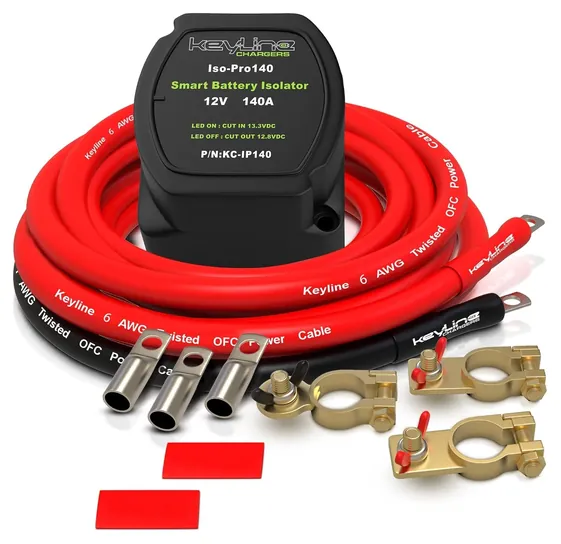
Ten dual-battery isolators and relays for trucks, RVs and boats, compared by type and amp rating. The KeyLine Iso-Pro140 kit leads because it ships complete. When users buy our independently chosen editorial choices, we may earn commissions to help fund the Wiki.
A relay-type isolator passes the alternator's full voltage to a second battery, while an old diode isolator loses most of a volt on the way and can leave an AGM battery short of full. That makes relays the right fit for lead-acid house batteries in older trucks, RVs and boats. Lithium banks and smart alternators usually need a DC-DC charger instead.


Editor's Notes
November 1, 2026, by Ezvid Wiki Admin:
The KeyLine Iso-Pro140 now leads, because its kit includes the cable, ground lead and terminals most people end up buying separately. This page now sticks to isolators and relays that charge a second battery. The Audew Disconnect Switch and Zoostliss Cut Off were on/off kill switches, a different tool, and neither is still sold. The Aopec R12140B and Ehdis Relay are no longer available either.
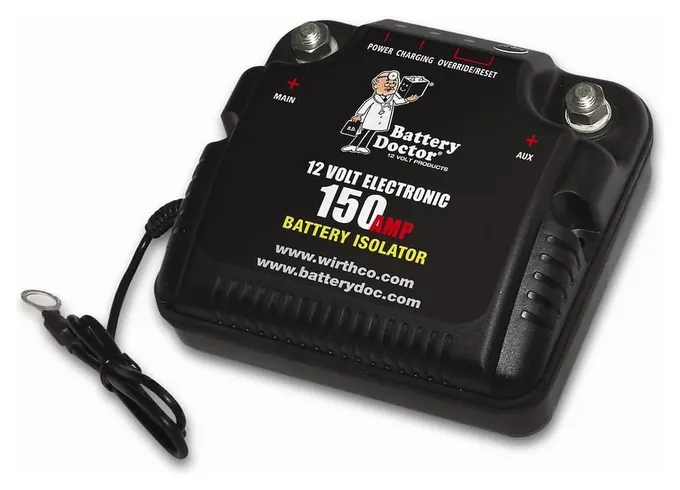
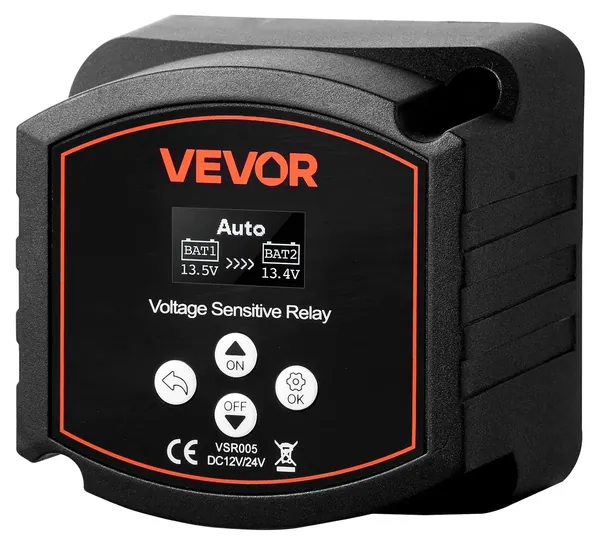
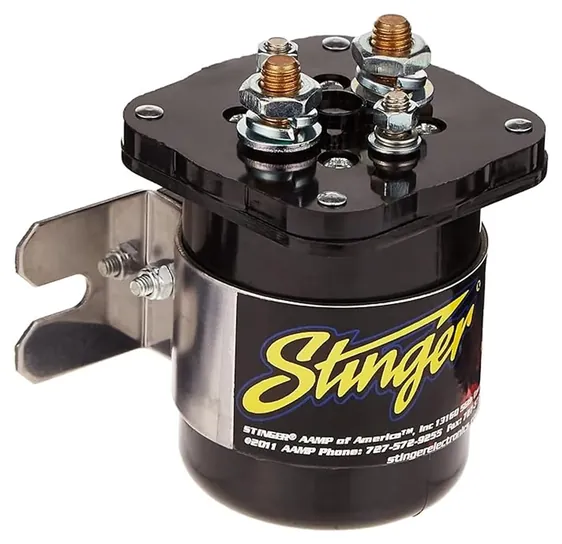
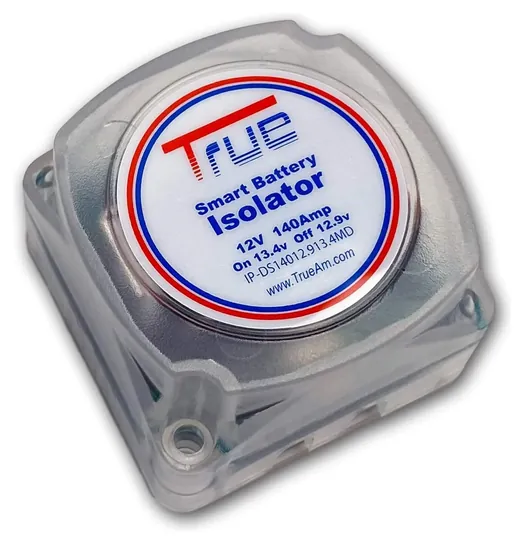
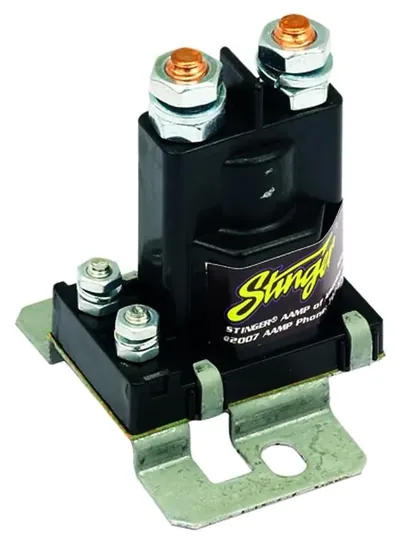
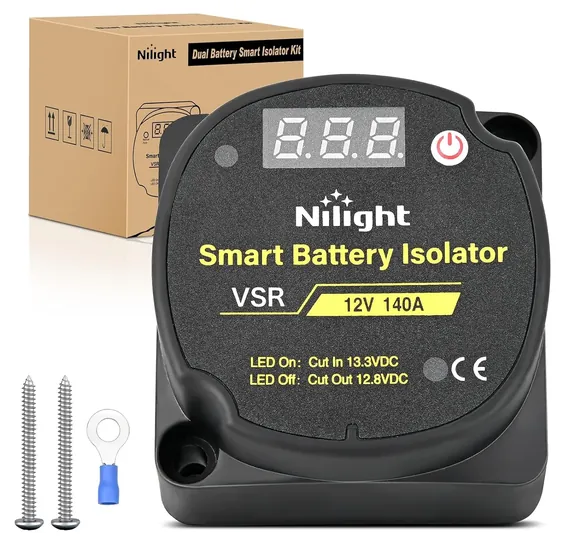
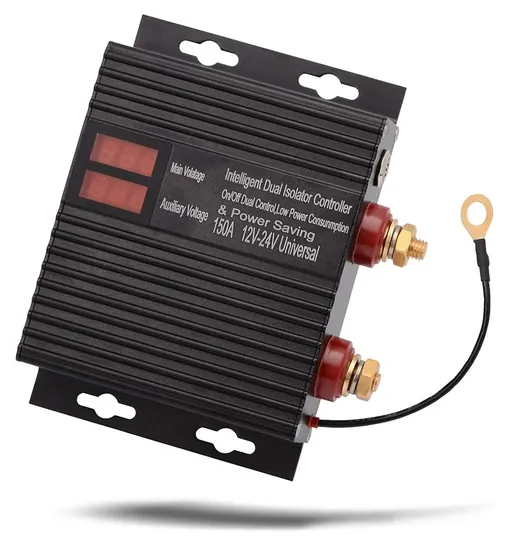
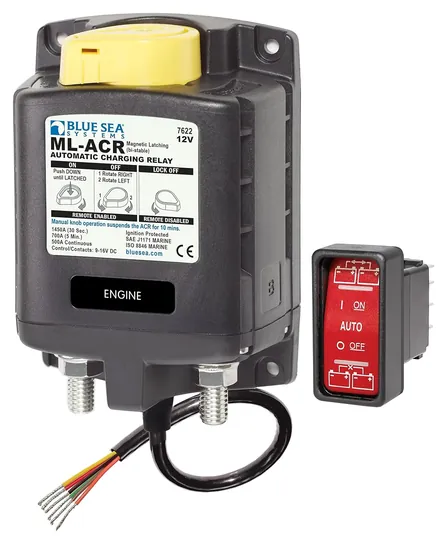
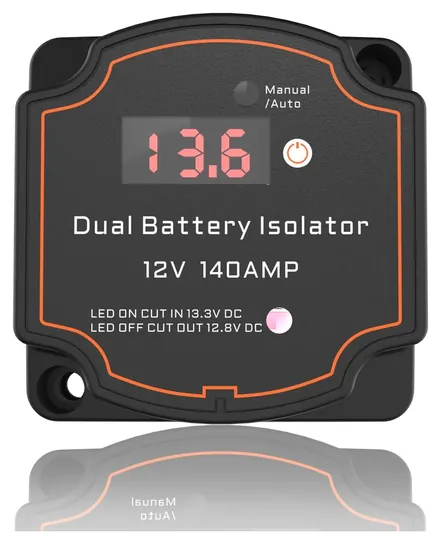
New are the VEVOR VSR005 for people who want to set their own voltages, the Stinger SGP32 for big stereo systems, the Blue Sea ML-ACR 7622 for boats, and two low-cost relays with voltage readouts, the Nilight 90333A and POWO BG006. The WirthCo Battery Doctor 20092, JayCorp True VSR12, Stinger SGP38 and NEWISHTOOL C60 stay.
Most of the evidence here is the connect and disconnect voltages makers publish, the WirthCo manual, and technical write-ups from Samlex and 4WDTalk on why relays beat diodes and when neither is enough. That last point matters: if your second battery is lithium or your truck has a smart alternator, read the guide before you buy.
March 02, 2021:
We spent a while digging through our existing choices, and eventually determined that most of them were still good picks for the category, but we did end up doing away with the Install Bay 5841730504, noting that it closely resembled some of our other relay-based choices, and noticing that it’s no longer listed on the company’s website — which led us to wonder whether this model might be facing discontinuation.
We also put some serious thought into axing the Zoostliss Cut Off and Audew Disconnect Switch, as neither of these options are actually isolators, with both essentially being simple kill switches. However, we decided that these picks were still worth including at the bottom of our list, for the benefit of users on a budget who don’t mind using devices like these to manually disconnect their secondary batteries when they’re not in use. That being said, the utility they offer is nothing close to some of the smart options higher up on our list, so please don’t think that we’re suggesting a disconnect as an apples-to-apples alternative to an isolator.
We added the NewishTool Switch Charge to our list, and it first caught our eye with its sleek, metallic housing, but what really held our attention was its integrated voltmeter, which takes simultaneous readings from both your batteries and displays them side by side on its simple LCD. As we included it on our list, we obviously think it’s a model well worth considering, but it should be noted that it offers no water resistance or accommodation for inrush current from motor loads, and its design also looks like it might not lend itself to as many installation options as some others.
For users looking for ways to help make sure their single-battery systems stay in ship shape, our rankings for solar battery maintainers may be of interest to you.
January 02, 2019:
While the Zoostliss Power isn’t constructed to handle a ton of current, reports indicate that it’s an ideal choice for light duty that provides remarkable value. A few models — such as the JayCorp Dual and KeyLine Smart — are designed with advanced technology that enables them to monitor the voltage of each battery individually to prioritize which requires focus for charging.
Special Honors
Victron Energy Cyrix And Argofet Victron Energy, a Dutch maker of marine and RV power gear, sells Cyrix battery combiners, microprocessor-controlled relays in 120-, 230- and 400-amp sizes, and Argofet isolators that lose about a tenth of a volt. Dealers carry them, and Victron's standard warranty runs five years. Its Orion chargers are the usual next step for lithium house batteries. victronenergy.com
REDARC Smart Start Isolators REDARC, an Australian maker of vehicle power systems, sells the Smart Start SBI12, a 100-amp isolator that connects at 13.2 volts and warns of faults, plus a version built to protect lithium batteries from deep drain. Its BCDC in-vehicle chargers handle smart alternators and solar. It's a common choice among overlanders. redarcelectronics.com
Relay, Diode Or DC-DC Charger
It closes when it sees charging voltage, so the second battery gets the alternator's full output, and opens when the voltage sags.
All three let one alternator charge a starting battery and a second "house" battery, but they do it differently, and the right one depends on the second battery and the vehicle.
A diode isolator is the oldest design. It's simple and has no moving parts, but current loses voltage crossing the diode. Samlex America puts the drop at about 0.6 to 0.7 volts, so the second battery charges slowly and often never fills. Victron's FET-based Argofet isolators cut that loss to about 0.1 volts at higher currents.
A voltage-sensitive relay, also called an automatic charging relay, is what most of this list uses. It closes when it sees charging voltage, so the second battery gets the alternator's full output, and opens when the voltage sags. A trigger-wired solenoid relay, like the Stinger units, does the same job but closes whenever the key is on.
A relay only works as well as the alternator feeding it. Many recent trucks and vans have smart alternators that drop their voltage to save fuel. 4WDTalk cites REDARC: these can drop as low as 12.3 volts once the starting battery is full, below the point where most relays close. If your truck has one, or if your second battery is lithium, a DC-DC charger is the better buy: it boosts and shapes the charge for the battery it feeds.
Amps, Cable And Fuses
Pick a unit rated for at least your alternator's output. A 140-amp relay covers most cars, pickups and RVs; heavy winch or audio setups and big marine alternators call for 200 amps or more.
The rating only holds if the cable matches it. The WirthCo manual asks for at least 6-gauge (14 square millimeter) cable for a second battery in the engine bay, and 4-gauge (20 square millimeter) for one at the back of the vehicle or on a trailer. Long runs need thicker cable, because voltage drops over distance. A 500-amp marine relay needs very heavy cable, up to 4/0 gauge, to carry its full rating, and that cable is a real part of the cost.
Fuse both battery leads. WirthCo calls for a 150-amp fuse or circuit breaker on the auxiliary lead. For boats, the American Boat and Yacht Council's guidance, as summarized by 4WDTalk, puts each fuse within 7 inches of the battery terminal. A good ground from the second battery to the chassis matters as much as the positive lead. If you're not comfortable with heavy 12-volt wiring, have an installer do it: a shorted battery cable can start a fire.
Switching Points, Overrides And Kill Switches
Most voltage-sensitive relays connect at about 13.3 volts and disconnect at about 12.8, the figures KeyLine and Nilight publish. Some wait before acting so a brief dip doesn't make them chatter: the Blue Sea ML-ACR 7622 connects after 30 seconds at 13.5 volts and opens after 30 seconds at 12.75, according to 4WDTalk. The REDARC SBI12 uses 13.2 and 12.6 volts. Adjustable models like the VEVOR VSR005 let you move these points.
Solar panels change the picture. A panel charging either battery can raise the voltage enough to close a relay with the engine off. That's usually fine, but it means the batteries are joined while parked.
A manual override or jump button joins the batteries on demand, so a charged house battery can help start the engine. WirthCo notes that its override needs at least 6 volts on the starting battery to work.
Last, a battery disconnect or kill switch is a different tool. It cuts a battery off to stop slow drains during storage or for safety during repairs, but it doesn't charge a second battery. Ozk Customs explains how split-charge relays fit into a camper's wiring.
How we researched this
We compared 20 isolators and relays, read the WirthCo manual and the published ratings and switching voltages for the 10 finalists, analyzed owner feedback for patterns, and checked every brand against U.S. Consumer Product Safety Commission recall records, which showed no isolator recalls. Technical guides from Samlex America, Victron Energy and 4WDTalk shaped the buyer's guide. We found no independent bench tests of these units.
Sources (10)
- Samlex America: Battery Isolator vs Automatic Charge Relay
- 4WDTalk: DC to DC Charger vs Battery Isolator
- WirthCo: Battery Doctor Isolator 20090 and 20092 User Manual
- Victron Energy: Argofet Battery Isolators
- Victron Energy: Cyrix Battery Combiners
- REDARC: Dual Battery System Isolators
- Blue Sea Systems: ML-ACR 7622 instructions
- KeyLine Chargers
- Ozk Customs: Split Charge Relay Systems
- U.S. Consumer Product Safety Commission: SaferProducts.gov
Frequently asked questions
What size battery isolator do I need?
Choose one rated for at least your alternator's output. A 140-amp unit covers most cars, pickups and RVs. Big winch, audio or marine setups need 200 amps or more, and the cable has to be thick enough for that current.
Can I use a battery isolator with a lithium battery?
Usually it's a poor match. A relay passes the alternator's voltage straight through, which may not suit a lithium battery's charging needs, and several makers rule lithium out. A DC-DC charger is the common recommendation. A few adjustable relays claim lithium support.
What are the types of battery isolators?
There are diode isolators, voltage-sensitive relays (also called automatic charging relays), trigger-wired solenoid relays and electronic isolators. Relays have no voltage drop; diodes lose about 0.6 to 0.7 volts.
How can I tell if a battery isolator is bad?
With the engine running, measure both batteries. If the starting battery reads above about 13.5 volts and the second battery stays lower and doesn't climb, the unit isn't connecting. A relay that never clicks or a status light that never changes also points to a fault or a bad ground.
Is a battery isolator the same as a battery disconnect switch?
No. A disconnect or kill switch simply cuts a battery off from the vehicle. An isolator lets one alternator charge two batteries while keeping accessories from draining the starting battery.